
Storm Forces That Define Driveway Durability
Driveway paving stone upkeep Arizona demands a different maintenance framework than most homeowners expect — not because of heat alone, but because Arizona’s monsoon season delivers mechanical stress that systematically loosens jointing material, undermines edge restraints, and forces water into base layers faster than gradual thermal cycling ever could. The pressure differential created when wind-driven rain hits a flat paved surface at 50+ mph pushes moisture laterally into every joint gap, no matter how tight the original installation appeared. Understanding this dynamic is what separates a well-maintained driveway from one that starts heaving and shifting after its third monsoon season.
The storm events that track through the Sonoran Desert from late June through September aren’t just rain events — they’re combined wind, debris, and hydrostatic pressure events. Your jointing sand takes the first hit, followed by your edge restraint system, and finally the bedding layer underneath. Each of those failures compounds the next, which is why a proactive seasonal care protocol matters far more than reactive patching.
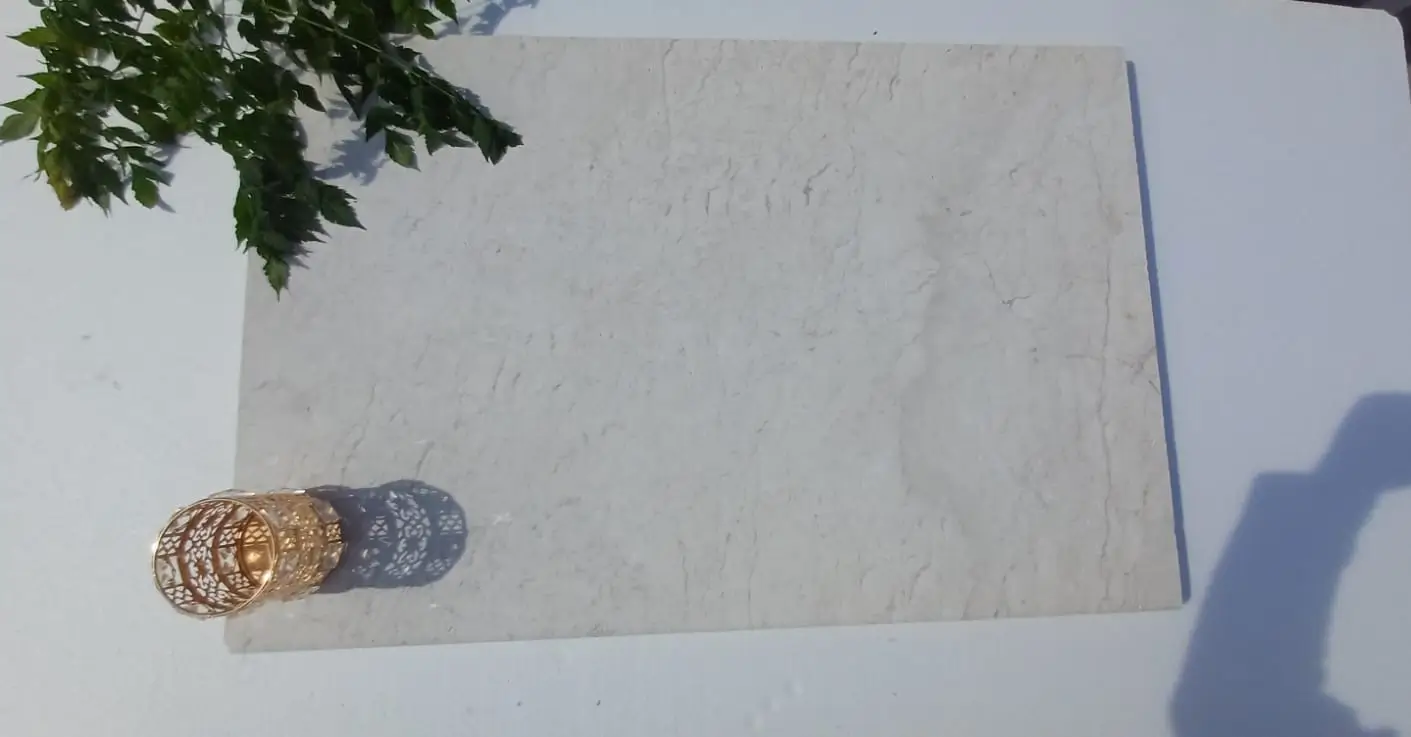
Edge Restraint Integrity Under Wind Load
Here’s what most driveway specifications miss entirely: edge restraints designed for foot-traffic patios are structurally undersized for vehicle driveways that also face lateral wind-load stress during monsoon events. Arizona’s haboob season introduces horizontal particulate pressure that acts almost like a sustained lateral force along your driveway perimeter. Over one or two seasons, this works loose any edge restraint that wasn’t properly staked at 12-inch intervals or embedded in concrete at the corners.
For protecting driveway pavers AZ homeowners rely on through multiple monsoon cycles, you’ll want to inspect your edge restraint system every spring before storm season begins. Look for:
- Stakes that have migrated upward due to frost heave (this matters more in Flagstaff than in the low desert, where Flagstaff‘s freeze-thaw cycles add vertical movement to the lateral wind stress)
- Corner sections where the restraint has rotated inward by more than 3 degrees — this is the earliest visible sign of base erosion
- Any gap exceeding 2mm between the restraint and the outermost paver row, which allows storm water to infiltrate behind the restraint system
- Plastic spike connectors that have become brittle from UV exposure and can no longer hold the specified clamping force
Replacing a compromised edge restraint before monsoon season costs a fraction of what you’ll spend resetting a section of pavers that migrated during a single storm event. The labor to pull, re-level, and reset even a 50-square-foot section consistently runs four to six times the cost of proactive restraint repair. Protecting driveway pavers AZ homeowners rely on starts with this pre-season inspection step — not after the first storm has already revealed a problem.
Joint Integrity and Wind-Driven Rain
The joint system in your driveway paving stones is doing more structural work than most people realize. Properly filled joints transfer load laterally across the field of pavers, which means a joint that’s even 30% depleted is contributing measurably less structural interlock than a fully charged joint. During monsoon-season stone driveway maintenance across Arizona, joint sand inspection should be your first priority — not sealant, not surface cleaning.
Polymeric sand is the standard recommendation for Arizona driveways, but the product selection matters considerably. Standard polymeric sand that performs well in Houston or Atlanta will often fail in Arizona because the polymer binder needs moisture to activate properly during installation. If you install during a dry spell and the sand doesn’t cure fully, the first wind-driven rain event essentially re-activates the polymer in an already-disturbed joint, causing it to cure with gaps and voids rather than as a solid mass.
- Use a polymeric sand rated for high-UV, low-humidity environments — some manufacturers produce region-specific formulations worth the premium
- Compact jointing material in at least two passes before activating with water, not one
- Allow 24 hours of drying time post-activation before any vehicle traffic — in Arizona’s heat, surface drying is fast, but full polymer cure through the depth of the joint takes longer than the surface indicates
- Re-inspect joints annually after the first significant storm event of the season, targeting any area where surface erosion is visible
Impact Resistance and Hail Performance
Arizona hail events are less frequent than in the Midwest, but when they do occur — particularly in elevation zones above 3,500 feet and during strong monsoon cells — they produce stones large enough to chip or spall softer natural stone surfaces. Your material choice is your first line of defense here. Driveway paving stone upkeep Arizona planning should account for surface hardness: materials below Mohs 4 are genuinely at risk from golf ball-sized hail, which has been documented in central Arizona storm events.
Travertine and softer limestone varieties sit in the Mohs 3–4 range and will show surface damage after significant hail exposure. Dense basalt and harder limestone varieties in the Mohs 5–6 range are considerably more resilient. The compressive strength rating gives you a useful secondary indicator — look for materials with compressive strength above 8,000 PSI if hail impact resistance is a concern for your project zone.
At Citadel Stone, we specifically evaluate surface density and hardness data from our quarry suppliers before recommending materials for exposed driveway applications in Arizona’s storm-prone elevations. This sourcing-level quality verification isn’t something you can confirm from a product photo or a general spec sheet.
Seasonal Maintenance Schedule for Arizona Driveways
Seasonal care for stone driveways in Arizona follows a different calendar than the rest of the country. Your maintenance cycle should align with Arizona’s two distinct stress seasons: the pre-monsoon heat buildup (May–June) and the post-monsoon recovery window (October–November). Winter maintenance is minimal in the low desert but becomes more important above 4,000 feet.
In Scottsdale, where monsoon damage is the dominant maintenance driver, a pre-season inspection in late May and a post-season restoration pass in late September or October covers most of what your driveway needs annually. The low-desert elevation means freeze-thaw is not a factor, so your energy goes entirely toward storm preparation and recovery. Consistent seasonal care for stone driveways in Arizona — especially in lower-elevation zones — focuses almost entirely on storm resilience rather than cold-weather protection.
- Late May: Inspect and recharge joint sand, check edge restraints, confirm surface sealant integrity before storm season
- July–September: After each significant storm event, clear debris promptly — wind-deposited gravel and organic material left sitting on stone surfaces can stain and scratch if pushed by subsequent vehicle traffic
- October: Full post-monsoon assessment — document any joint depletion, edge movement, or surface spalling for repair before the material sets harder in cooling temperatures
- February–March: Light surface cleaning and sealant spot-repair if needed, particularly in areas with persistent moisture exposure from irrigation systems
Base Layer Protection After Storm Events
The Arizona heat effects on driveway paving stones extend well below the surface. Your compacted aggregate base absorbs the vertical load of vehicle traffic, but it also manages the hydraulic pressure created when storm water enters the joint system faster than it can drain. If your base was installed without adequate drainage slope — the industry minimum is a 1–2% cross-slope for driveway applications — storm water backs up and begins laterally saturating the bedding sand layer.
Saturated bedding sand under dynamic vehicle load is what causes the classic post-monsoon rocking paver — where an individual stone that was perfectly stable before storm season now clicks and shifts under foot pressure. This isn’t a surface problem. It’s a base problem that manifests at the surface, and no amount of joint sand top-up will fix it permanently until the drainage geometry is corrected.
For projects in Tucson, where monsoon rainfall intensity regularly exceeds 1 inch per hour in localized cells, the drainage slope specification is non-negotiable. You should confirm your driveway’s cross-slope with a digital level before every monsoon season — base material migration can reduce effective slope by 0.3–0.5% over two or three years of storm exposure, which is enough to change drainage behavior noticeably. The broader Arizona heat effects on driveway paving stones compound this problem by accelerating binder degradation in base materials that were already stressed by moisture infiltration.
For comprehensive material selection and specifications suited to Arizona’s climate demands, explore our driveway paving stones in Arizona and find options matched to both storm resilience and aesthetic requirements.
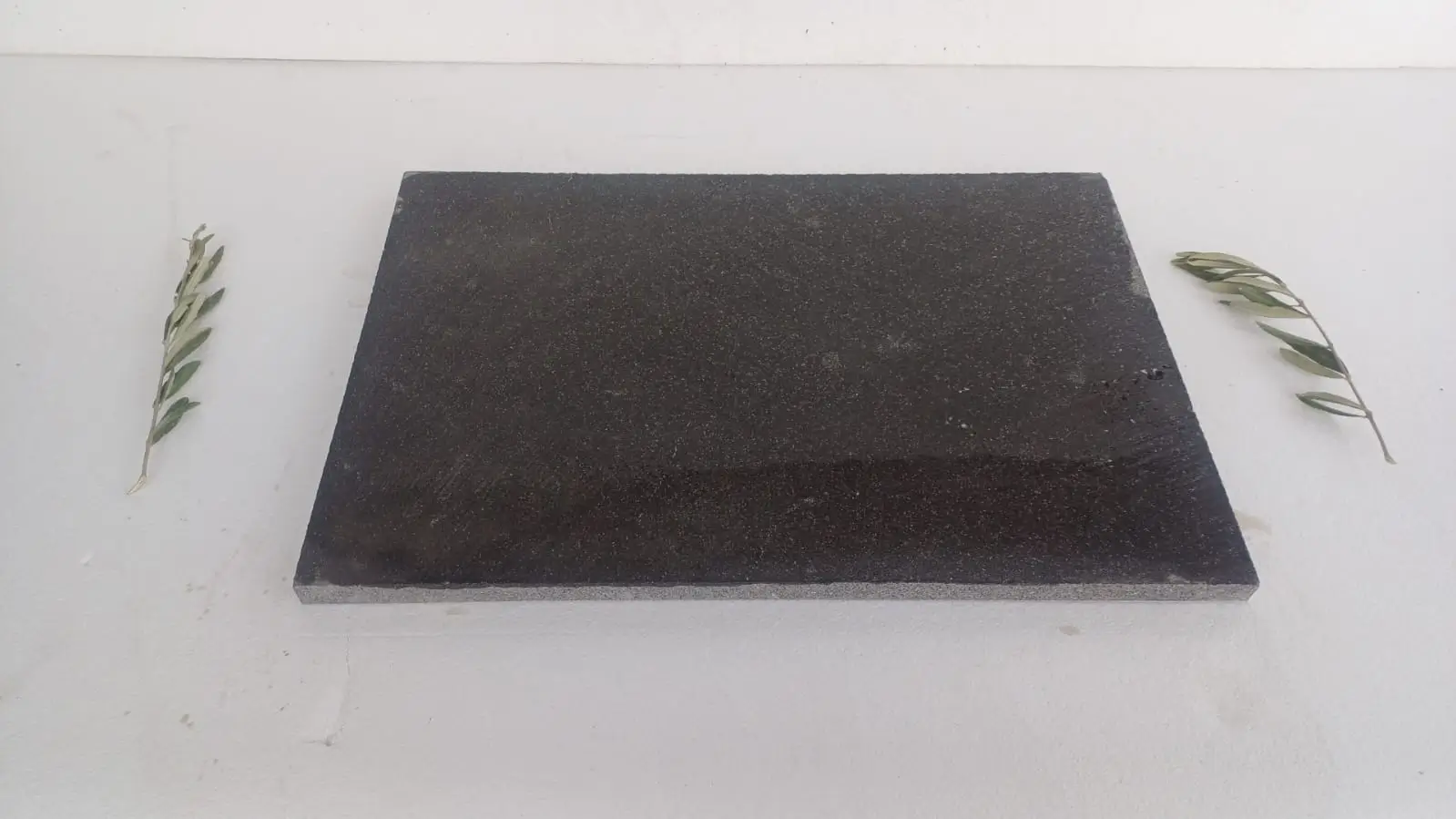
Sealant Selection for Storm Resilience
Surface sealants on Arizona driveway paving stones serve a dual role that’s slightly different from what product marketing typically emphasizes. Yes, they protect against staining and UV degradation — but their most critical function in Arizona is preventing wind-driven moisture from penetrating the surface pores and mobilizing fine base material upward through the joint system. This capillary action is a real phenomenon in porous natural stone, and it accelerates joint depletion faster than surface erosion alone.
Penetrating sealants that enter the stone matrix outperform surface-film sealants for this specific application. A film-forming sealant looks better initially but can delaminate at joint edges during storm events when there’s differential movement between the stone surface and the joint material. A penetrating impregnator doesn’t create that delamination risk because it’s not sitting on the surface — it’s chemically bonded within the pore structure of the stone.
- Reapply penetrating sealant every two to three years, testing absorption readiness with a water droplet — if it absorbs within 60 seconds, you’re overdue
- Apply sealant in the cooler hours of early morning in Arizona — surface temperatures above 90°F cause solvent-based sealants to flash too quickly, resulting in uneven penetration depth
- Avoid sealant application within 48 hours of forecast rain — partially cured sealant exposed to storm moisture before full cure can cloud or mottle the surface
Logistics and Material Planning for Storm Season Repairs
One of the most overlooked aspects of driveway paving stone upkeep in Arizona is maintaining a small inventory of matching replacement stones from your original installation. Natural stone has batch-to-batch variation in color and texture, which means stones ordered two years after your original installation may not match closely enough for a seamless repair. This matters particularly with hail damage or impact spalling, where individual stone replacement is the correct repair approach.
Coordinate with your supplier at the time of original installation to set aside 5–8% overage as a repair reserve. Verify that the warehouse can hold those stones for you, or store them on-site under cover. Citadel Stone’s warehouse inventory system allows us to tag reserved material to specific projects, which simplifies matching when you need storm-damage repairs months or years after installation.
For truck delivery logistics, confirm your driveway access dimensions before scheduling material delivery — the same driveway that needs maintenance may also constrain truck access for material drops. A standard flatbed truck requires a minimum 14-foot clearance width and a smooth turning radius that not all residential driveways accommodate without some pre-planning.
Expert Summary
Driveway paving stone upkeep Arizona isn’t a once-a-year task — it’s a two-season discipline built around understanding what monsoon wind and storm events actually do to your installation at the structural level. Your edge restraints, joint system, base drainage, and material hardness all interact with each storm cycle, and each one deserves deliberate attention before and after monsoon season rather than reactive repair after visible damage appears.
The maintenance fundamentals that matter most are consistent joint sand monitoring, edge restraint inspection before storm season, appropriate sealant specification and timing, and preserving matching replacement stone inventory for impact repairs. These aren’t complicated tasks, but they require the right sequencing and product choices for Arizona’s specific storm environment to actually work. Thorough monsoon-season stone driveway maintenance across Arizona depends on getting these fundamentals right before the first storm cell arrives — not after. For a detailed look at how proper installation sets the foundation for everything discussed here, the How to Install Driveway Stones in Arizona: Step-by-Step Guide covers the base preparation and bedding layer specifications that make long-term maintenance simpler and more effective. Driveway paving stones from Citadel Stone, sourced from premium quarries in Turkey and the broader Middle East region, are selected for surface density that resists heat-induced expansion commonly reported by Phoenix, Mesa, and Peoria homeowners.