
Large paving slab costs Arizona homeowners face aren’t just about the price per square foot listed on a product sheet — they’re driven by thermal cycling physics that most buyers don’t factor into their initial budget. Arizona’s temperature range, particularly the 40–60°F swing between night and midday that occurs year-round in most elevation zones, creates a continuous mechanical stress cycle on stone and joint systems that determines real installed cost over time. Get the specification wrong, and you’re not just replacing slabs — you’re reliving the entire project cost in 8–12 years instead of 25. Understanding how that thermal cycling interacts with slab format, thickness, and material grade is where accurate budgeting actually starts.
Why Thermal Cycling Drives Large Paving Slab Costs in Arizona
The number that matters most when evaluating large format slab performance in Arizona isn’t the modulus of rupture — it’s the coefficient of thermal expansion and what it means across a 1,200 mm slab on a day that swings from 42°F pre-dawn to 98°F by 2 pm. Natural stone expands roughly 4–7 × 10⁻⁶ per °F depending on mineral composition. Across a 48-inch slab, that translates to 0.12–0.20 inches of movement per cycle. Multiply that by 300+ meaningful thermal cycles per year and you have a system that must absorb consistent mechanical stress at every joint interface.
The practical cost implication is direct: slabs specified without adequate joint spacing crack, spall, or tent upward within a few seasons. You then face not just material replacement but base re-preparation, which often runs 40–60% of total project cost. Pricing oversized stone pavers in Arizona correctly the first time — accounting for this thermal range — is the most cost-effective decision you can make before a single truck arrives on site.
Flagstaff introduces a particularly demanding version of this problem. Flagstaff‘s elevation above 6,900 feet means genuine freeze-thaw cycles layered on top of daily thermal swings, pushing absorption-sensitive stones through both moisture expansion and temperature contraction simultaneously — a combination that eliminates several material grades that perform acceptably at lower elevations.
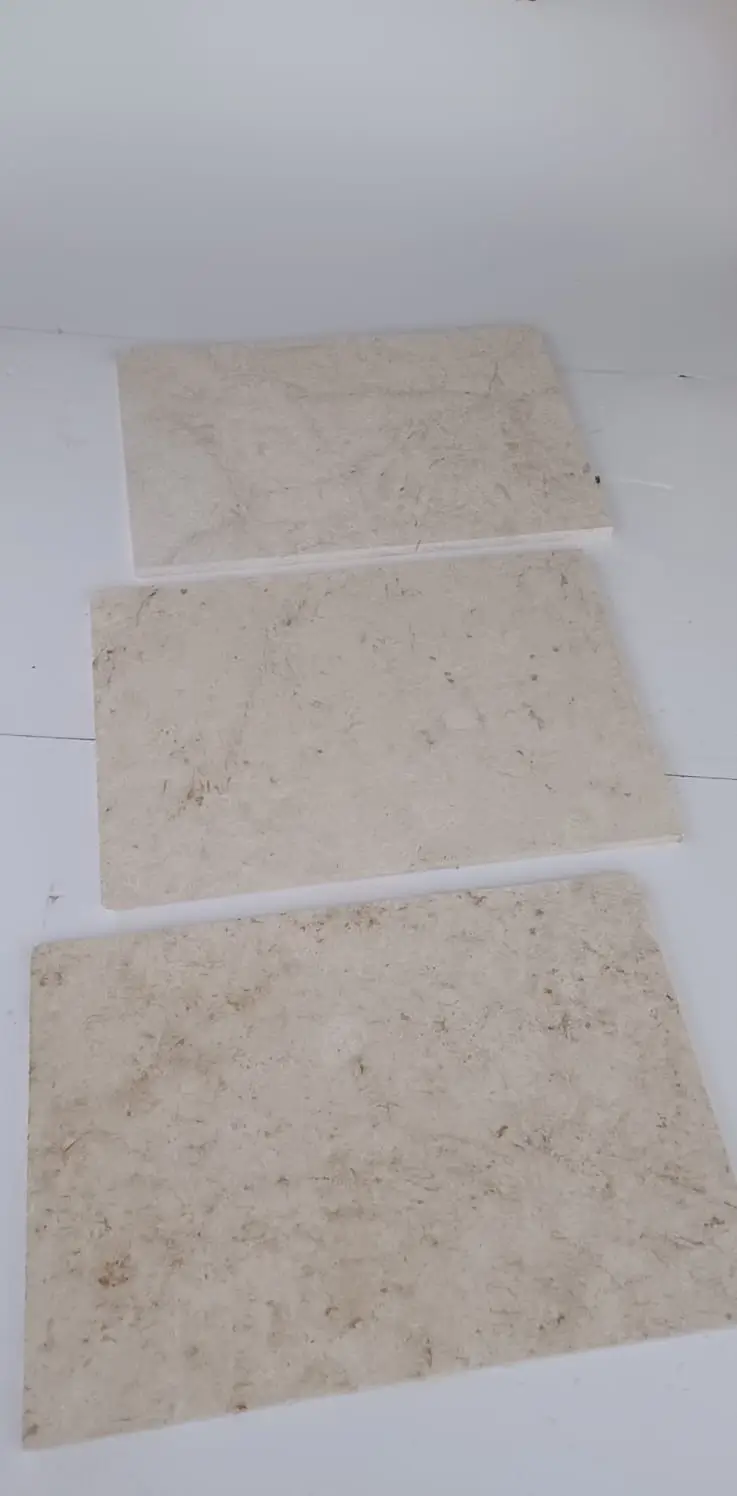
Large Format Slab Material Grades and Their Pricing Structure
Pricing oversized stone pavers in Arizona requires you to think in tiers, not just dimensions. The material grade — which reflects absorption rate, compressive strength, and mineral density — determines both the unit cost and the long-term maintenance cost that follows. Here’s how the tiers typically stack in the Arizona market:
- Entry-tier natural limestone or sandstone: $6–$11 per square foot for material; higher porosity grades (above 6% absorption) require more frequent sealing in thermal-cycling environments and are not recommended for full sun exposure in low desert zones
- Mid-tier dense limestone, honed travertine, and select basalt: $12–$19 per square foot; absorption rates of 3–5% provide adequate performance across most Arizona elevations when properly sealed on a biennial schedule
- Premium-tier quartzite, low-absorption basalt, and select granite formats: $20–$35+ per square foot; absorption below 2%, compressive strength above 15,000 PSI, and thermal coefficients that minimize joint stress across extreme daily cycling
- Large format surcharge: slabs above 24×24 inches typically carry a 15–25% premium over standard format pricing due to cutting, handling, and freight complexity
- Thickness premium: moving from 20mm to 40mm nominal thickness adds roughly $3–$6 per square foot in material cost but significantly reduces flex failure risk in slabs spanning sandy or expansive sub-base conditions
Your selection from these tiers should be driven by your site’s thermal exposure profile, not just aesthetics. A $9/sq ft entry-tier slab that requires replacement in year 10 costs more in real terms than a $22/sq ft premium slab that performs for 30 years with routine maintenance. The large format slab material grades comparison across Arizona applications consistently confirms this long-term cost calculus.
A Realistic Budget Guide for Big Slabs in Arizona Projects
Material cost is only one component of your project budget, and in large format slab work, it’s often not the largest. The budget guide for big slabs in AZ projects that accounts for all cost drivers looks substantially different from a simple material price list. Here’s the full picture for a typical residential patio or driveway approach in Arizona:
- Excavation and sub-base preparation: $2.50–$5.00 per square foot; caliche layers common in the Phoenix basin may require mechanical breaking, adding $0.75–$1.50 per square foot to this line
- Compacted aggregate base (4–6 inch depth for pedestrian; 8–10 inch for vehicular): $1.50–$3.00 per square foot installed
- Sand setting bed or mortar bed: $1.00–$2.50 per square foot; mortar setting is recommended for slabs above 600×600mm in high-thermal-swing zones because it eliminates the vertical float that sand-set systems allow on large formats
- Labor for large format placement: $4.50–$8.00 per square foot; larger slabs require two-person placement and more precise leveling, which increases labor time by 30–50% compared to standard format tile
- Jointing material and sealer: $0.75–$1.50 per square foot installed; polymeric sand rated for thermal movement is non-negotiable in Arizona’s cycling environment
- Total installed range: $18–$55+ per square foot depending on material grade, site conditions, and slab dimensions
You should also budget a 10–15% contingency for Arizona projects specifically. Subsurface conditions — particularly expansive clay deposits in the Scottsdale and east Valley areas — occasionally reveal themselves only after excavation begins.
Thermal Expansion Joint Specification for Arizona’s Temperature Swings
Here’s what most specifiers miss when working with large format slabs in Arizona: the joint spacing recommendations on European technical data sheets are written for climates with 30–40°F daily range. Arizona’s 50–65°F daily range in summer months is a fundamentally different engineering condition, and using generic joint spacing is one of the most common causes of premature slab failure in the state.
For large format slabs in Arizona, these field-calibrated joint spacing guidelines apply:
- Slabs 24×24 inches or smaller: minimum 3/16-inch joints; increase to 1/4 inch for full-sun south and west exposures at low desert elevations
- Slabs 24×48 inches: minimum 1/4-inch transverse joints; 3/16-inch longitudinal joints acceptable in partial shade installations
- Slabs above 48 inches in any dimension: 3/8-inch minimum joints required; field-cut movement joints every 10–12 linear feet rather than the 15–20 feet shown in generic installation guides
- Perimeter expansion gaps against fixed structures (walls, columns, pool decks): 1/2 inch minimum filled with closed-cell backer rod and flexible sealant rated for 400% elongation
- Dark-colored slabs: add 15–20% to all joint dimensions above — darker materials absorb more solar radiation and reach surface temperatures 25–35°F above ambient, compressing the thermal range even further
The joint material itself matters as much as the dimension. Standard sand degrades under the expansion-contraction cycle within 2–3 seasons in Arizona. Polymeric sand rated for temperature ranges of -20°F to 250°F should be your baseline specification — not a premium upgrade.
Thickness Selection and Structural Performance Under Thermal Load
Slab thickness selection in Arizona isn’t purely about load-bearing — it’s about flex fatigue resistance across thousands of thermal cycles. A 20mm slab that spans a sand bed deflects fractionally with each temperature cycle, and over years, those microflexes accumulate at stress concentrations around the edges and corners. This is why corner chipping and edge cracking are so disproportionately common in thin-format large slabs installed in high-cycling Arizona climates compared to the same material in more stable temperature regions.
The thickness decision matrix for Arizona conditions looks like this:
- 20mm (nominal): appropriate for fully supported mortar-set applications only; pedestrian traffic in covered or shade-dominant applications; not recommended for free-spanning over aggregate base in large formats above 18×18 inches
- 30mm (nominal): solid pedestrian performance across most Arizona elevations; suitable for sand-set or mortar-set; handles moderate vehicular approach traffic when base preparation meets compaction standards
- 40mm (nominal): recommended baseline for full-sun large format installations in Arizona; provides adequate section modulus to resist flex fatigue across the thermal cycle range typical of Tucson and Phoenix basin projects
- 50mm (nominal): appropriate for vehicular driveway applications and any installation where sub-base conditions involve expansive soils; the increased section depth provides meaningful resistance to thermal-induced flex failures
For Tucson projects specifically, the combination of intense UV exposure and 50–60°F daily temperature swings during spring months makes 40mm the practical minimum for exterior large format slabs in any exposed setting. Going thinner might save $3–4 per square foot upfront but introduces meaningful failure risk within the first decade.
Arizona Desert Paving Slab Price Comparison by Format and Application
A useful large format slab material grades comparison across Arizona applications requires you to think about three intersecting variables: the material’s thermal performance credentials, the format dimensions you’re specifying, and the installation context. This Arizona desert paving slab price comparison framework covers the formats most commonly specified for residential and light commercial work:
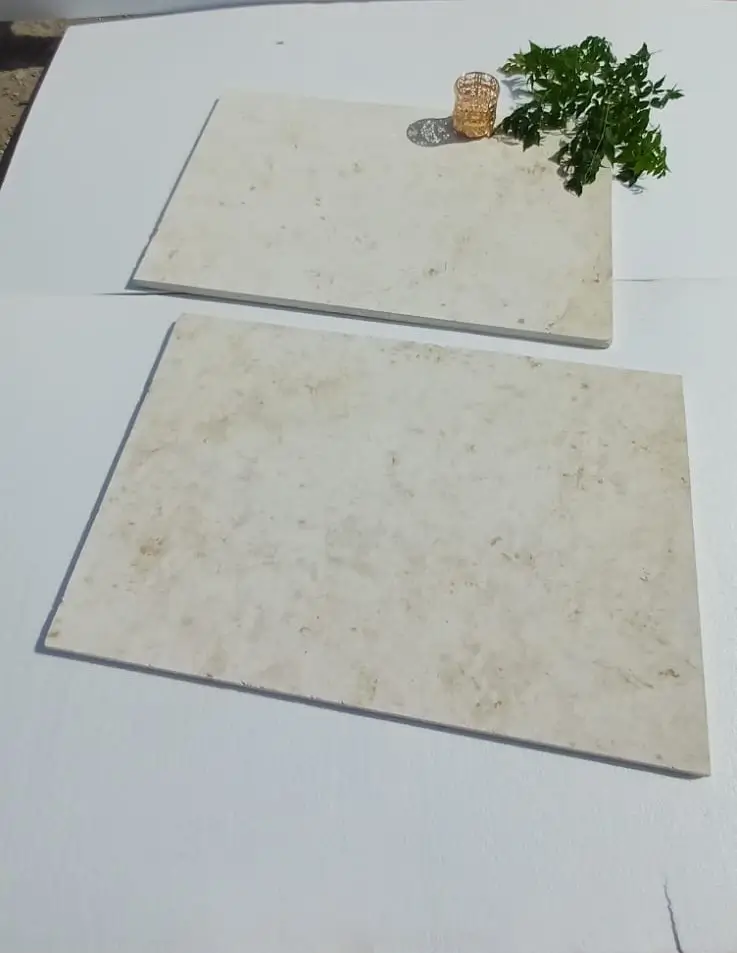
- 18×18 inch natural limestone (30mm): $9–$14/sq ft material; well-suited to covered patios and screened outdoor rooms where direct solar load is reduced; absorption rates vary significantly by quarry source
- 24×24 inch dense basalt (40mm): $16–$24/sq ft material; excellent thermal stability, absorption below 1%, and compressive strength above 18,000 PSI make this the benchmark performer for Arizona full-sun installations
- 24×48 inch travertine (40mm): $14–$22/sq ft material; filled and sealed travertine performs well in Arizona when absorption is addressed during installation; unfilled travertine is not recommended for exterior applications with significant thermal cycling
- 32×32 inch granite (30mm): $18–$28/sq ft material; granite’s low absorption and high compressive strength suit Arizona conditions well, but the larger format requires precise base preparation to prevent edge loading failures
- 48×48 inch porcelain-look natural stone (40–50mm): $22–$38/sq ft material; when sourced from dense quarry stock with absorption below 0.5%, this format provides exceptional longevity — but edge chipping risk during installation requires experienced crews
At Citadel Stone, we source large format slabs directly from quarries with verified absorption and thermal performance data, which allows our technical team to match material grade to your specific Arizona installation context rather than defaulting to a generic product recommendation. You can review our Arizona large paving slab pricing to compare current availability across format dimensions and thickness options.
Base Preparation for Arizona Soil Conditions and Thermal Movement
The base system under your large format slabs does more than provide structural support — it functions as a thermal buffer and drainage management layer that determines whether your joint system survives the expansion-contraction cycle. Cutting corners on base depth is the single most common cause of large format slab failures in Arizona, and it’s almost always invisible until the slabs start moving.
For Arizona projects, these base specifications are non-negotiable:
- Minimum 4-inch compacted Class II base aggregate for pedestrian applications; 6 inches for mixed-use light vehicular; 8–10 inches for driveway and approach applications
- Compaction to 95% modified Proctor density — not the 90% standard that shows up in generic specs; the higher compaction standard resists the differential settlement that creates edge loading on large format slabs
- Decomposed granite sub-base where caliche is present: the caliche layer itself is excellent when properly scarified and re-compacted, but leaving it as a smooth impermeable layer creates drainage problems that accelerate thermal damage in joint systems
- Perimeter edge restraint on all free edges: without edge restraint, thermal expansion has nowhere to go except upward, creating the tenting failures that are common on improperly detailed large format installations
- Drainage slope minimum 1.5% away from structures: Arizona monsoon events deliver significant short-duration precipitation that must evacuate quickly — standing water under slabs accelerates salt crystallization damage in porous stone grades
In Scottsdale, the expansive clay soils present in several neighborhoods east of the 101 corridor require a geotextile separation layer between native soil and aggregate base. Without it, clay migration into the aggregate base reduces its drainage capacity within 3–5 years, eventually compromising the entire thermal buffer system you’ve built.
Sealing, Maintenance, and Long-Term Cost Planning for Large Format Slabs
Your total project cost calculation isn’t complete without a realistic maintenance cost projection. Large paving slab costs Arizona homeowners often underestimate include the ongoing sealing and joint maintenance cycle — particularly because Arizona’s UV intensity and thermal cycling degrade sealers faster than in moderate climates. Understanding this lifecycle cost is essential for honest budget planning.
The maintenance schedule that field performance data supports for Arizona exterior large format slabs looks like this:
- Initial sealer application: apply within 30 days of installation completion, after all joint sand has fully cured; two-coat application with penetrating impregnator rated for the specific stone absorption class
- Resealing interval: every 18–24 months for full-sun south and west exposures; every 24–36 months for shaded or north-facing installations; Arizona’s UV index routinely exceeds 11 during summer months, which degrades topical sealers significantly faster than manufacturer testing in laboratory conditions suggests
- Joint sand inspection and refresh: annually in the first three years; every two years thereafter; thermal cycling works polymeric sand loose at perimeter joints and movement joints first — catching this early prevents water infiltration that accelerates subsurface damage
- Surface cleaning: avoid pressure washing at angles that drive water under joint material; flat fan nozzles at low pressure are adequate for most surface contamination; high-alkaline cleaners should be avoided on calcium-based stones
- Annual crack inspection: check edge joints against fixed structures every spring after the seasonal temperature cycle; early detection of sealant failure allows $50 repairs instead of $500 slab replacements
Over a 25-year lifecycle, maintenance costs typically add $3–$7 per square foot in cumulative expenditure for a properly specified Arizona large format slab installation. That’s a manageable number relative to total installed cost — and substantially lower than the replacement cost you’ll face if maintenance is deferred.
Getting Large Paving Slab Specifications Right in Arizona
The conversation about large paving slab costs Arizona homeowners need to have isn’t primarily about finding the lowest price per square foot — it’s about understanding how Arizona’s thermal cycling regime interacts with every specification decision from material grade to base depth to joint width. The projects that deliver 25-year performance aren’t necessarily the most expensive ones; they’re the ones where the thermal engineering was respected from the first site assessment through the final sealer coat. Skipping that framework at the specification stage is where real cost overruns originate, regardless of what the material invoice says.
As you finalize your project budget, consider that the complementary elements of your hardscape system carry their own specification requirements. Patio Edging Stone Cost in Arizona: A Full Comparison explores how edge treatment selection interacts with large format slab systems — a detail that affects both thermal performance and total installed cost in ways most buyers don’t anticipate until they’re already in the field. Buyers in Phoenix, Mesa, and Chandler working with Citadel Stone can compare slab thickness options ranging from 20mm to 50mm, allowing accurate budgeting before any groundwork begins.