
Surface degradation from UV exposure is the primary reason dark grey paving installations lose their visual appeal long before they fail structurally — and in Arizona, that degradation timeline is compressed dramatically compared to most other states. Installing dark grey paving in Arizona requires you to treat UV protection as a first-order specification decision, not an afterthought after the stone is already down. The intensity of solar radiation at Arizona’s latitude, combined with the reflective heat amplification from surrounding hardscape, accelerates oxidation and color fade in ways that catch a lot of homeowners off guard.
Why UV Exposure Drives Every Decision in This Climate
Arizona averages over 300 days of direct sun annually, and the UV index regularly climbs above 10 from April through September. For dark grey natural stone pavers, that sustained radiation load is the single biggest performance variable you’re working against. The stone itself doesn’t degrade mechanically — what you lose is the chromatic depth that makes dark grey so visually compelling in the first place. Unprotected stone surfaces begin to show a chalky, bleached undertone within 18 to 24 months in high-exposure Phoenix metro installations.
The mineralogy matters here too. Dark grey stone paving installation steps in Arizona need to account for the fact that the dark coloration in most basalt and dark limestone comes from iron-bearing mineral compounds — pyroxenes, magnetite, and chlorite — that are inherently reactive to prolonged UV and oxygen exposure. You’re essentially managing a slow oxidation process at the surface level. The good news is that this process is largely controllable with the right sealer chemistry and finish selection upfront.
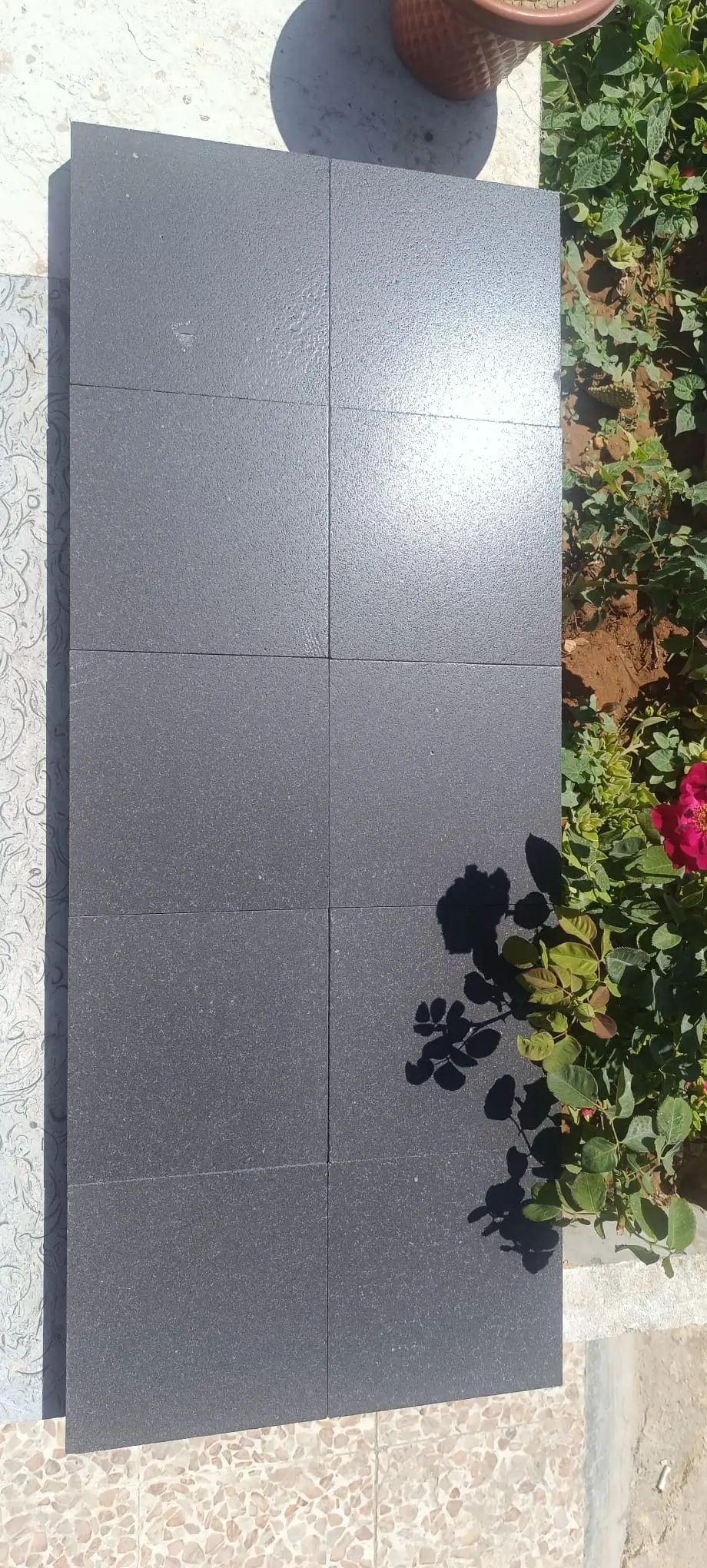
Your finish choice sets the baseline for how much UV resistance you’re starting with. A honed finish exposes more of the mineral matrix directly to the surface, which increases both UV vulnerability and absorption of solar-degrading compounds. A flamed or bush-hammered finish, by contrast, creates micro-surface texture that diffuses UV impact across a larger surface area and actually reduces the rate of chromatic fade measurably — typically by 15 to 25% compared to honed equivalents in equivalent exposure conditions.
Selecting the Right Material for Arizona UV Conditions
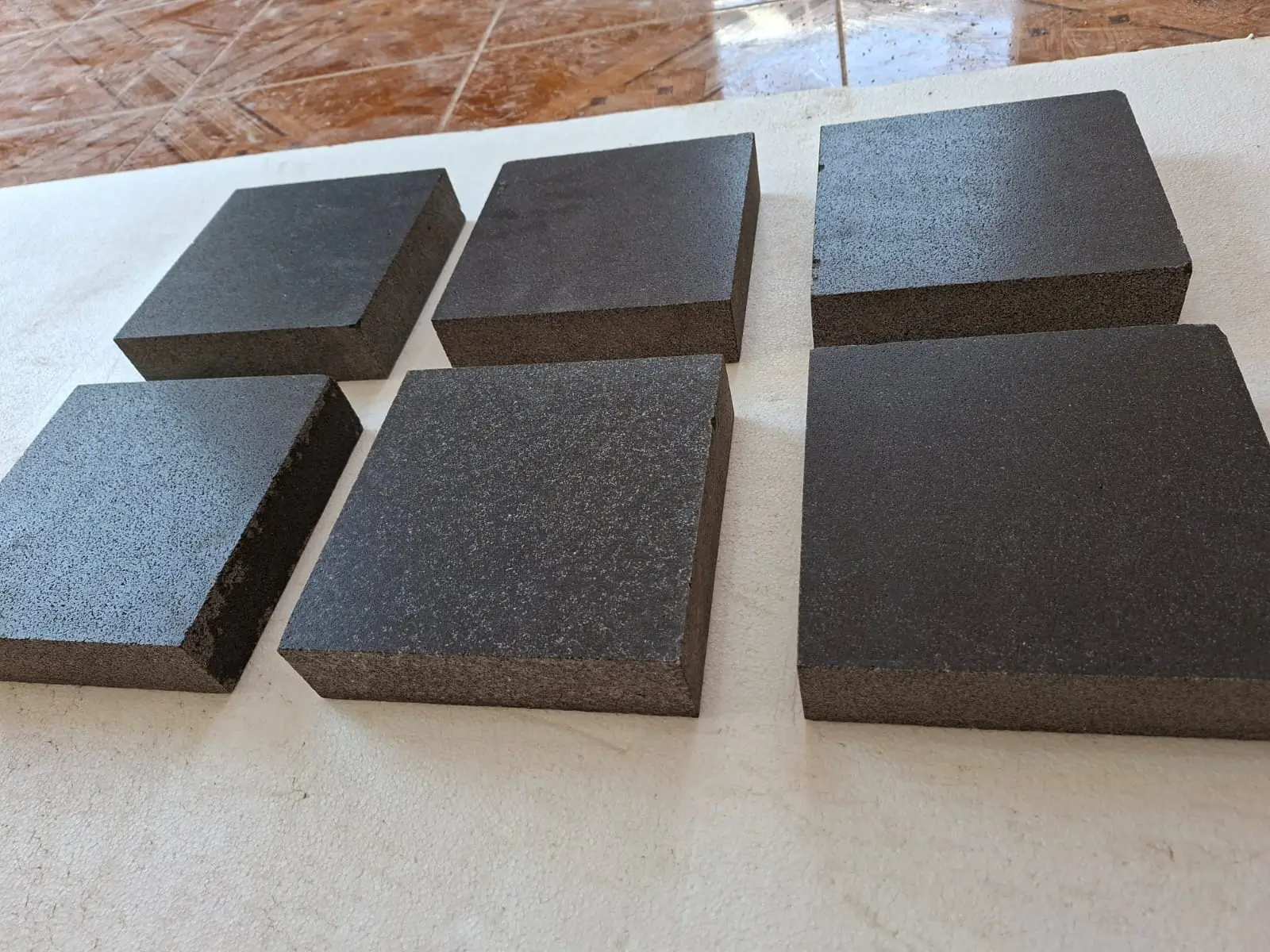
Dark grey natural stone paving across Arizona performs best when the source material has a high silica content and tight crystalline structure — both of which directly correlate with UV resistance. Dense basalt and hard grey limestone consistently outperform softer sedimentary options in long-term color retention under direct Arizona sun. You’ll want to verify absorption rates before specifying: look for water absorption below 0.5% per ASTM C97, which signals the closed pore structure that resists both UV-driven oxidation and the thermal cycling that compounds surface weathering.
- Basalt pavers with absorption below 0.3% provide the best long-term chromatic stability under Arizona UV loads
- Hard grey limestone with a flamed finish retains color depth significantly better than honed limestone at equivalent sun exposure
- Avoid soft grey sandstone or schist for high-UV applications — the open grain structure accelerates surface oxidation within the first season
- Thickness of 40mm (1.57 inches) or above provides sufficient thermal mass to moderate surface temperature spikes, which compounds UV degradation if left unaddressed
- Look for consistent grey tonality through the full depth of the stone — surface-only coloration fades to a visually inconsistent appearance much faster
At Citadel Stone, we inspect incoming material at the warehouse for color consistency through the full slab cross-section before it goes to inventory. Surface-only color saturation is one of the most common quality issues with imported dark stone, and it’s essentially invisible until 12 to 18 months after installation when UV exposure starts revealing the lighter substrate beneath.
Base Preparation for Arizona Desert Conditions
The compacted aggregate base is where your installation’s long-term structural performance lives — and in Arizona, the desert-rated paving slabs for AZ outdoor spaces you’re working with place specific demands on base depth and compaction standards. A minimum 6-inch compacted base of 3/4-inch crushed angular aggregate is the starting point for pedestrian applications, and you’ll want to push that to 8 inches for any surface that will see vehicular traffic or heavy furniture loads.
Projects in Peoria frequently encounter a layer of expansive desert clay at 12 to 18 inches below grade that can cause differential settlement if the base preparation doesn’t account for it. The standard approach is to over-excavate by 4 inches and install a geotextile fabric barrier before your aggregate base — this prevents clay migration upward into the aggregate over time while still allowing drainage through the profile.
- Compact your aggregate base in 3-inch lifts to a minimum 95% Proctor density — single-lift compaction in Arizona’s sandy desert soil leaves hidden voids that collapse under point loads
- Install a 1-inch screeded bedding layer of coarse concrete sand over the compacted aggregate before setting stone
- Slope the entire base profile at a minimum 1.5% grade for positive drainage — standing water under dark grey stone accelerates efflorescence, which visually mimics UV fading but has a different remediation path
- Allow freshly compacted base to cure for 24 hours minimum before setting stone — attempting to set same-day in Arizona’s heat causes aggregate to continue settling as moisture evaporates
Installation Sequencing and Heat Management
Arizona’s installation environment introduces a timing variable that most spec sheets don’t address: pavement surface temperatures regularly exceed 160°F during summer afternoons, and this directly affects your jointing sand and setting bed performance. Scheduling stone setting for early morning work windows — ideally starting before 7 AM and wrapping the main setting phase before noon — is essential to maintain workable conditions in both the bedding sand and any adhesive compounds you’re using at transitions.
Installing dark grey paving in Arizona’s East Valley, including areas like Tempe, means contending with some of the most intense solar loading in the metro, thanks to the combination of low elevation, minimal shade canopy, and dense hardscape surroundings that create localized heat amplification. For installations in these conditions, you should reduce your standard expansion joint spacing — from the typical 15-foot interval to 10 to 12 feet — to account for the thermal cycling range that dark stone absorbs versus lighter-colored alternatives.
Joint spacing adjustments aren’t optional in this climate. The difference in surface temperature between a dark grey paver and an adjacent concrete surface can reach 35 to 45°F under identical sun exposure. That differential creates shear stress at the perimeter of your installation where it transitions to other materials, and undersized expansion joints are the primary cause of edge cracking in the first two to three years after installation.
Sealing Schedules for Maximum UV Resistance
Sealer selection is where your UV protection strategy either holds or falls apart — and the Arizona outdoor paving installation guide for homeowners you’ll find from most generic sources consistently underspecifies this step. A penetrating silane-siloxane sealer is the baseline requirement for dark grey natural stone in Arizona; it doesn’t alter the surface appearance significantly but fills the pore structure against UV-oxidizing compounds and moisture infiltration simultaneously.
Apply the initial sealer within 30 days of installation, after the setting bed has fully cured. For maximum UV color retention, a secondary coat of a UV-inhibiting impregnator — specifically one containing an aromatic-free carrier fluid — should go on top of the penetrating base coat. The aromatic compounds in cheaper carrier fluids actually contribute to yellowing of the stone surface under UV exposure, which defeats the purpose entirely on dark grey material.
- Initial sealer application: within 30 days of installation completion on fully cured joints
- Resealing interval in Arizona: every 18 to 24 months maximum — the UV index and extreme thermal cycling consume sealer chemistry faster than in moderate climates
- Test sealer effectiveness with a water bead test annually — if water absorbs within 30 seconds rather than beading, the sealer has degraded and reapplication is overdue
- Apply sealer in early morning or evening only — sealer applied to hot stone (above 90°F surface temperature) flashes off before proper penetration occurs
- For surfaces under partial shade, resealing can be extended to 24 to 30 months, but full-sun surfaces should stay on the shorter 18-month cycle without exception
You can browse our dark grey paving for Arizona to review the specific stone options that pair best with penetrating UV-resistant sealers for long-term color performance in this climate.
Cutting and Edge Work in the Field
Field cuts on dark grey natural stone expose fresh mineral faces that have zero sealer protection — and in Arizona’s UV environment, those cut edges become the first place you’ll see differential weathering if you don’t address them immediately. Every cut edge needs to be sealed within the same work session it was made, ideally before the stone is even set in its final position.
Use a 14-inch continuous-rim diamond blade rated for the specific stone density you’re cutting. Segmented blades create micro-fracture lines along cut edges that are invisible at installation but become stress initiation points after a few thermal cycles. For dark grey stone paving installation steps in Arizona’s high-temperature transition seasons — where daily swings between 70°F and 115°F are common in cities like Phoenix — those micro-fractures can propagate into visible edge chipping within two to three years.
- Wet-cut all dark grey stone to prevent heat fracturing at the cut face — dry-cutting generates enough blade heat to create hairline fractures in dense basalt
- Seal cut edges within the same work session using a brush-applied penetrating sealer before setting
- For curved cuts or radius work, use an angle grinder with a turbo cup wheel rather than a straight blade — you’ll get cleaner mineral faces that seal more uniformly
- Allow cut edges to dry fully before applying sealer — moisture in the fresh mineral face prevents proper sealer penetration
Jointing and Surface Finishing After Installation
Polymeric jointing sand is the correct specification for desert-rated paving slabs for AZ outdoor spaces — standard kiln-dried sand migrates out of joints within two to three seasons due to the combination of thermal cycling and the occasional monsoon-season rainfall events that create surface wash. Polymeric sand locks in place once activated with water and cured, and it resists the ant and weed infiltration that unsupported joint sand invites.
Your joint width should be held to 3mm to 6mm for a clean, tight aesthetic that also minimizes UV-exposed joint area. Wider joints on dark grey stone create a visual contrast issue over time — as the stone surface is maintained and resealed, the joint material weathers at a different rate and the contrast becomes increasingly obvious. Keeping joints tight reduces this differential aging effect considerably.
After polymeric sand is swept in and activated, allow a full 24 hours of cure time before foot traffic and 72 hours before any furniture or fixture placement. Arizona’s low humidity actually accelerates the cure timeline slightly compared to manufacturer charts, which are typically based on 50% relative humidity — your actual cure time may run 15 to 20% faster in dry desert conditions.
Long-Term Maintenance and Color Retention Strategy
The maintenance schedule for dark grey paving in Arizona looks different than what most product documentation describes, because product documentation is rarely written with Arizona UV loads in mind. Your long-term strategy needs to treat the sealer layer as a consumable component of the installation — something you budget for and schedule proactively, not something you address reactively after the stone starts looking dull.
Annual inspection should cover both the water bead test for sealer integrity and a visual check for surface efflorescence — the white mineral deposits that migrate to the surface through moisture cycling. Efflorescence on dark grey stone is visually pronounced and is frequently mistaken for UV bleaching, but the remediation is completely different. Efflorescence requires a diluted acid wash followed by resealing; UV oxidation requires a color-enhancing penetrating treatment before resealing.
- Annual: water bead test, visual inspection for efflorescence and edge chipping, check expansion joint integrity
- Every 18 to 24 months: full resealing with UV-inhibiting penetrating sealer on all exposed surfaces and cut edges
- Every 5 years: professional surface cleaning with appropriate stone-safe detergent to remove cumulative oxidation products before resealing
- As needed: repair polymeric joint sand in any sections showing ant damage or weed intrusion — delay allows UV exposure to reach the setting bed directly through open joints
Citadel Stone can typically ship from warehouse inventory within one to two weeks for standard dark grey stone dimensions, which makes it practical to order small repair quantities as needed rather than stockpiling material on-site where it’s exposed to the same UV conditions it’s meant to resist.
Professional Summary
Installing dark grey paving in Arizona successfully comes down to one overarching principle: every decision you make — from finish selection and base depth to sealer chemistry and jointing sand type — should be evaluated through the lens of UV exposure and its downstream effects on the stone surface. The structural performance of quality dark grey natural stone paving across Arizona is rarely the problem; the chromatic and surface performance under sustained UV load is where installations succeed or fall short of expectations over a 20-year service life.
The best long-term results come from specifying dense, low-absorption stone with a textured finish, installing UV-inhibiting penetrating sealers within the first month, maintaining an 18 to 24-month resealing cycle, and keeping expansion joints sized for the thermal range dark stone actually experiences — not the generic spec. If your project scope extends beyond dark grey paving into complementary stone features, Rectangular Limestone Paver Running Bond Pattern for Litchfield Park explores how a different Citadel Stone material and pattern approach performs in another Arizona installation context worth considering alongside your primary specification.
Homeowners in Tucson, Mesa, and Chandler rely on Citadel Stone dark grey paving chosen for consistent thickness tolerances that support stable sub-base performance in Arizona’s extreme heat.