
Slope management is the variable that separates a rectangular limestone running bond Litchfield Park installation that performs for decades from one that shifts and settles within a few seasons. The Litchfield Park area sits within the West Valley’s complex topographic transition zone — where gentle caliche plains meet wash-cut terrain and engineered grading from decades of master-planned development. Getting your bond pattern right is only half the equation; the other half is understanding how your site’s elevation changes dictate every base decision beneath those pavers.
Why Running Bond Works for Arizona Terrain
The running bond — each course offset by half a unit from the one below — distributes point loads laterally across the field rather than concentrating stress at aligned joints. For sloped or graded sites, that load distribution matters enormously. Aligned joints on a grade act like fault lines; they channel hydrostatic pressure and concentrate movement during the brief but intense Arizona monsoon events. The staggered pattern breaks that pathway.
Rectangular limestone pavers in Arizona perform particularly well in running bond because the elongated format amplifies the lateral interlock. A 12×24 unit set in running bond creates twice the mechanical engagement of a square paver at the same joint spacing. Your drainage geometry also benefits — the longer dimension oriented perpendicular to slope creates a subtle check-dam effect at each course, slowing sheet flow and reducing scour at exposed joints.
- Running bond offsets joints by 50%, eliminating continuous fault lines across the field
- Elongated rectangular formats increase lateral interlock on sloped installations
- Staggered coursing channels surface water between joints rather than along them
- Load transfer is more uniform, reducing differential settlement on graded bases
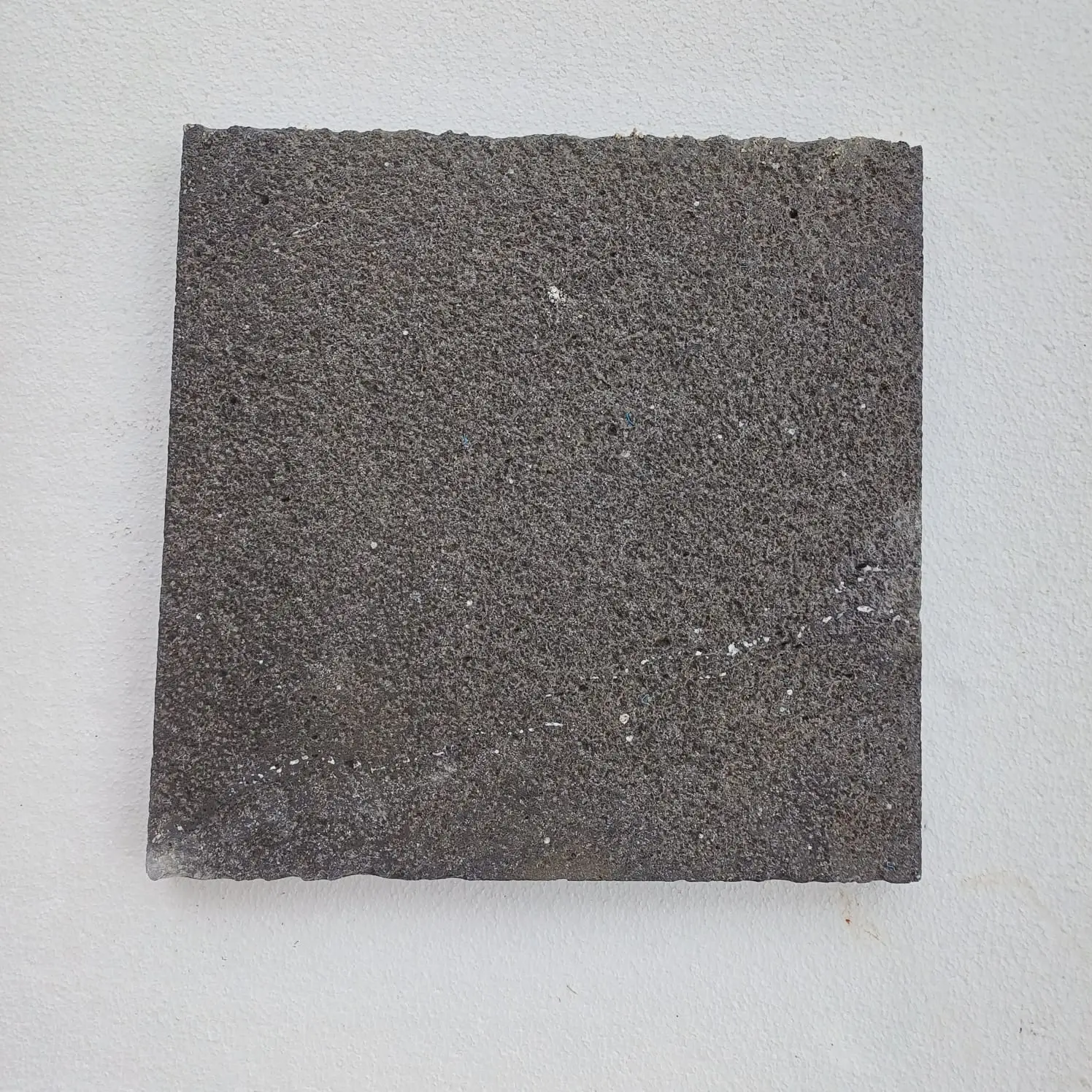
Terrain and Elevation Challenges in Litchfield Park
Litchfield Park’s residential and commercial sites occupy terrain that looks flat until you start reading the grades carefully. The area includes engineered pads with 1–3% imposed drainage slopes, natural wash adjacencies that require careful edge-of-field transitions, and older lots where imported fill over native alluvial soils creates inconsistent bearing capacity. You’re rarely working on truly flat ground, and the ground you’re working on often has a complex subsurface story.
The Litchfield Park classic patterns that hold up long-term — running bond included — are the ones installed with grade-aware base preparation. That means your compacted aggregate base isn’t a uniform depth across the field; it follows the subgrade profile while establishing the finished slope your drainage design requires. In practice, that often means 6 inches of compacted class II base on cut sections and 8–10 inches on fill sections, with geotextile fabric at the subgrade interface anywhere fill depth exceeds 4 inches.
Wash adjacency is a real concern in this area. Sites within 200 feet of a natural or engineered wash see episodic high-velocity sheet flow during monsoon events. Your perimeter edging specification has to account for hydrostatic uplift — mechanical stake-down edging installed at 12-inch intervals minimum, not the standard 18-inch spacing that works fine on flat suburban lots in Phoenix.
- Engineered pads typically impose 1–3% drainage slopes — verify actual grades before base design
- Fill sections over 4 inches require geotextile separation at the subgrade interface
- Wash-adjacent sites need reinforced perimeter edging with 12-inch stake spacing
- Subsurface bearing capacity varies significantly between cut and fill sections on the same lot
- Base depth should increase on fill sections to compensate for reduced subgrade stability
Base Preparation for Sloped Installations
Your base prep protocol for a traditional bond design on graded terrain starts with compaction verification — not just one pass but layer-by-layer testing. Each 2-inch lift of aggregate base should reach 95% Proctor density before you add the next lift. On sloped sites, the temptation is to rush this phase because the grade creates natural drainage and the base looks stable. Skipping proper compaction on a 2% slope leads to differential settlement that shows up as lippage in your running bond courses within 2–3 seasons.
Bedding sand depth matters more on sloped installations than on flat ones. Standard spec calls for 1-inch compacted bedding sand, but on grades above 1.5%, reduce that to 3/4 inch. Thicker bedding on a slope allows the pavers to migrate downhill under thermal cycling — you’ll see the bottom courses crowding and the upper courses opening gaps over time. The tighter bedding restrains that creep without compromising the screeding process.
For rectangular paver layouts in Arizona with significant grade changes, consider a step-down terrace approach rather than a continuous sloped field. Terracing at 12–18 inch vertical intervals with limestone risers controls drainage, reduces the running bond’s tendency to rack on steep grades, and creates a more visually compelling Arizona timeless arrangements aesthetic. The step transitions also function as expansion relief zones — no additional control joints needed within each terrace panel if the panel dimension stays under 15 feet.
- Compact aggregate base in 2-inch lifts to 95% Proctor density before adding each subsequent lift
- Reduce bedding sand to 3/4 inch on grades above 1.5% to prevent downhill paver migration
- Use geogrid reinforcement in base layers for slopes exceeding 3% with soft subgrade
- Terrace steep grades at 12–18 inch vertical intervals to manage drainage and reduce racking
- Verify finished slope with a 10-foot straight edge — maximum 1/8-inch deviation per linear foot
Limestone Material Performance on Graded Sites
Limestone’s natural porosity — typically 5–15% void ratio depending on formation — makes it responsive to moisture changes, and that responsiveness requires attention on graded sites where drainage isn’t uniform. Rectangular limestone pavers in Arizona installed on a slope experience differential moisture exposure: uphill faces dry faster after rain events, while downhill edges stay wet longer. Over years, that differential creates slight dimensional variation across the field — nothing structural, but it affects joint uniformity if you’re not sealing consistently.
Review our rectangular limestone pavers for the specific porosity ratings and absorption coefficients — those numbers directly inform your sealing schedule, and on a sloped installation where downhill edges stay wetter, you should plan on sealing those zones annually rather than on the standard biennial schedule.
Compressive strength requirements for graded patio and walkway installations should hit 8,000 PSI minimum — most quality limestone formations exceed 12,000 PSI, which gives you meaningful safety margin for point loads on grade. Thickness matters too: 1.25-inch nominal (true 1.18 inch) is adequate for pedestrian-only graded paths, but step up to 1.5-inch nominal for any application where wheeled loads — service carts, wheelbarrows, occasional vehicle overhang — are possible.
Joint Spacing and Drainage Geometry
The joint spacing decision for running bond on a sloped site has two competing pressures: drainage performance and structural interlock. Wider joints (3/8 to 1/2 inch) pass more water but reduce lateral restraint. Tighter joints (1/8 to 3/16 inch) maximize interlock but restrict drainage to the bedding layer, which can build hydrostatic pressure against the pavers during intense rain events.
For rectangular limestone running bond in Litchfield Park conditions, 1/4-inch joints filled with polymeric sand rated for 3/16- to 3/8-inch joint widths hit the balance point. The polymeric binder locks the sand in place against scour while maintaining enough permeability to relieve hydrostatic pressure. Verify your polymeric sand’s flex modulus rating — on sloped sites that see thermal cycling, rigid-cure polymeric sands crack and allow sand loss. A semi-flexible formulation with a 4–7% elongation rating before fracture is the appropriate specification for these conditions.
Drainage geometry also means planning your low point collection carefully. On a traditional bond design that runs top-to-bottom on a slope, the lowest course becomes a dam if it doesn’t have a defined outflow. Install a linear drain or at minimum a 4-inch aggregate-filled French drain trench at the downhill edge, sized for a 10-year storm event runoff from the paved area. In Scottsdale, that storm intensity typically calculates to 3–4 inches per hour for a 30-minute event — use that as your design parameter for Litchfield Park applications as well.
- 1/4-inch joints with semi-flexible polymeric sand balance drainage and lateral restraint
- Avoid rigid-cure polymeric sand on sloped sites subject to thermal cycling
- Install linear drain or French drain at downhill field edge sized for 10-year storm event
- Design drainage outflow before laying pavers — retrofitting it later damages the installation
- Confirm outflow elevation clears finished grade by minimum 1/2 inch to prevent backwater
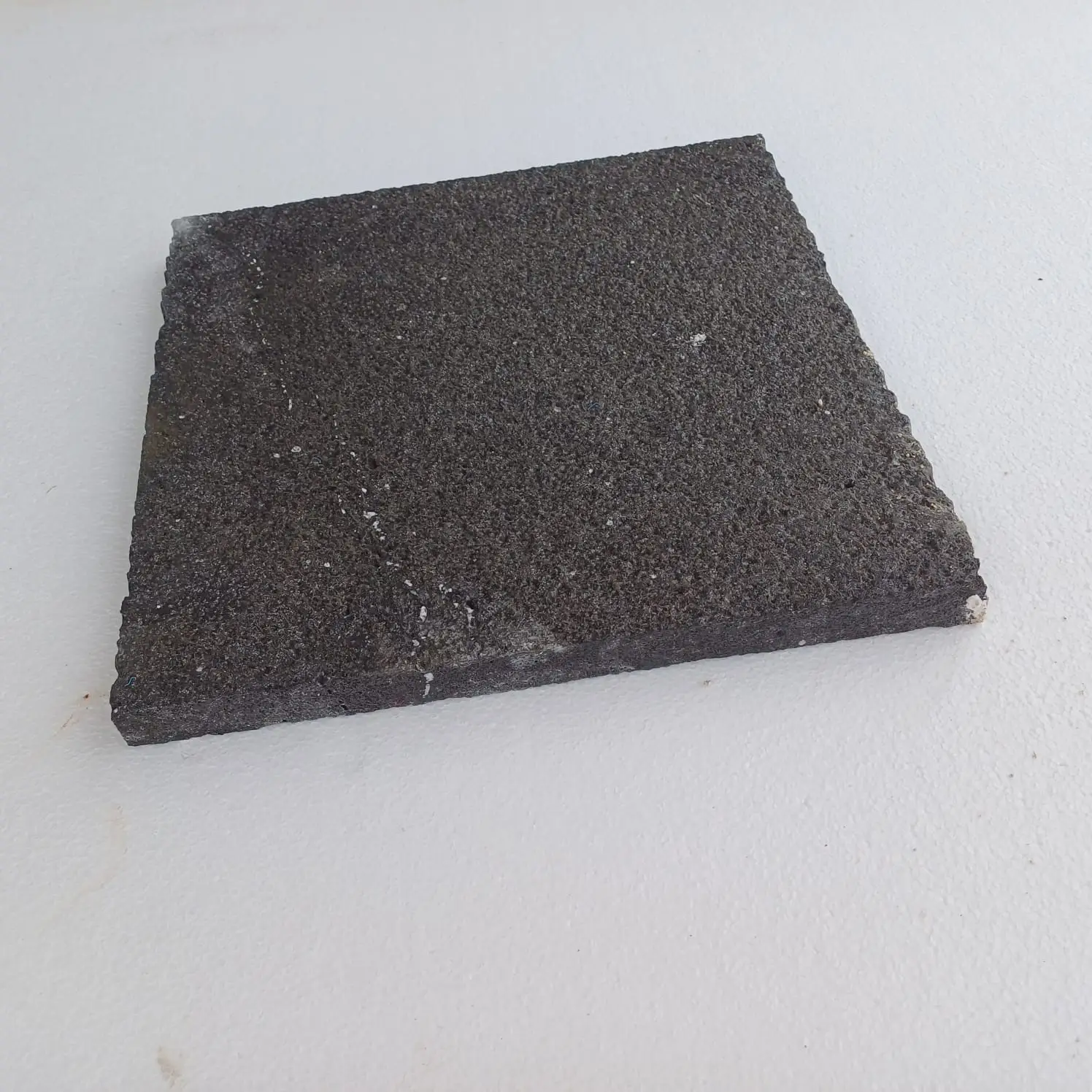
Layout Planning for Rectangular Running Bond
The layout planning phase for a rectangular limestone running bond Litchfield Park project is where most field problems originate — not in the installation itself. Starting from the wrong reference line on a graded site means your courses accumulate error as they step down the slope. Always establish your primary layout string line along the high side of the installation, not from a building face or edge that may not be truly level.
For Litchfield Park classic patterns that hold visual consistency across grade changes, the running bond offset must maintain exactly 50% throughout. On sites with angled edges or non-rectangular footprints — common in the curved garden designs prevalent in this area — pre-plan your cut course locations. Mark those cut lines during your dry layout phase, before any mortar or bedding goes down. Field-cutting limestone on a slope is workable but adds time; planning cuts in advance reduces that by 30–40%.
Expansion joint placement on sloped running bond fields follows a modified schedule from flat installations. Standard guidance calls for control joints every 15–20 feet in both directions. On grades above 1%, reduce the downhill interval to 12 feet while maintaining 15 feet across the slope. Thermal expansion is less problematic than differential movement from seasonal moisture cycling in the subgrade — your expansion joint schedule is really a settlement relief schedule on these sites.
- Establish primary layout string from the high side of the installation, not building face
- Maintain exact 50% running bond offset — accumulation error on slopes is amplified visually
- Pre-plan cut course locations during dry layout to minimize field cuts on grade
- Reduce downhill expansion joint interval to 12 feet on grades above 1%
- Use chalk snap lines every 4 courses to verify alignment hasn’t drifted during installation
Sealing and Maintenance on Sloped Limestone Fields
Sealing rectangular limestone pavers in Arizona on a sloped installation requires a different application technique than flat-field sealing. Penetrating sealers applied to a graded surface run downhill before full absorption — the result is heavy sealer concentration at the bottom courses and near-bare stone at the top. Apply sealer in 6-foot horizontal bands across the slope, allowing 15–20 minutes for penetration before moving to the next band down. This zoned approach ensures even absorption across the full field.
The sealing schedule for sloped Litchfield Park installations should differentiate by zone. Top and mid-field sections on a well-drained grade dry quickly and can maintain a biennial sealing cycle. Bottom courses that stay wet longer after rain events benefit from annual sealing in the first 3 years while the joint sand stabilizes, then shift to 18-month intervals once the field is fully consolidated. Citadel Stone’s technical team can review your specific site conditions and recommend the appropriate sealer chemistry — penetrating silane-siloxane for high-traffic areas, impregnating silicone for decorative zones where a slight sheen is acceptable.
Maintenance for Arizona timeless arrangements in limestone also includes periodic joint sand replenishment. Sloped fields lose joint sand faster than flat installations — rain scour and thermal cycling push sand toward the low end. Plan for a joint sand top-off every 3–5 years regardless of how the surface looks from above. Compressed-air blowing of joints before replenishment removes accumulated debris that blocks sand penetration.
Ordering Logistics and Project Planning
Planning your material order for a sloped rectangular paver layouts Arizona project requires accounting for cut waste that doesn’t apply to flat installations. Typical waste on a flat rectangular field runs 5–8%. Add 3–5% for slope-related cuts and another 2–3% if your site has curved or angled edges. Your total waste allowance should land at 10–15% for most Litchfield Park terrain conditions — order accordingly and confirm warehouse availability before committing to an installation start date.
Citadel Stone maintains warehouse inventory in Arizona specifically sized to support West Valley projects without the 6–8 week import lead times that can stall contractor schedules. For standard rectangular limestone sizes in the 12×24 and 16×24 formats most commonly used in running bond layouts, truck delivery to Litchfield Park typically schedules within 1–2 weeks of order confirmation. Coordinate your truck delivery timing with base prep completion — limestone pallets staged on a freshly compacted base add unwanted point loads before the base has cured to full density.
Projects in Tucson, where high-desert soils and elevation shifts present their own bearing-capacity challenges, often use a split-delivery approach for large-format sloped installations — first truck delivers perimeter and step materials, second truck delivers field pavers once perimeter work is complete and stable. That sequencing works well for Litchfield Park projects too, particularly where wash-adjacent sites require perimeter edge work to be fully cured before field installation proceeds.
- Budget 10–15% material waste for sloped sites with cut requirements
- Confirm warehouse stock availability before scheduling installation start date
- Coordinate truck delivery to avoid staging heavy pallets on freshly compacted base
- Consider split delivery for large fields — perimeter materials first, field pavers second
- Order all material from a single production batch to ensure color consistency across the field
Getting Your Rectangular Limestone Running Bond Specification Right
The rectangular limestone running bond Litchfield Park projects that hold up for 25 years share one common thread: the designer treated the site’s terrain as the primary specification driver, not an afterthought. Every decision — base depth, bedding sand thickness, joint width, sealing zone schedule, expansion joint interval — flows from understanding the grade, the drainage geometry, and the subgrade conditions underneath. The running bond pattern itself is the right choice for this terrain, but pattern alone doesn’t build performance. Your base and drainage design do that work.
Arizona’s landscape of complex terrain — from West Valley wash-cut flats to hillside developments — rewards the specifier who reads the land before reading the catalog. Rectangular limestone’s compressive strength, natural drainage characteristics, and long-term dimensional stability make it one of the best-suited materials for this work. The running bond’s staggered interlock handles the mechanical demands of graded sites better than stack bond or herringbone alternatives at comparable labor cost. Beyond patios and walkways, complementary limestone applications can elevate the full hardscape scope of your project — Large Format Limestone Paver Pool Deck Design for Carefree Resort Style explores how large-format limestone performs in another demanding Arizona environment, which may inform your material selections across the broader project. Five-star hospitality projects choose Citadel Stone’s large limestone paving slabs in Arizona for uncompromising quality.