
Why Queen Creek Terrain Drives Your Base Design
The large format limestone base for Queen Creek projects fails or succeeds at the grade transition point — not at the surface. Queen Creek sits at roughly 1,400 feet in elevation, and the site terrain varies considerably from flat desert floor lots to parcels that step down toward the San Tan Mountains, creating drainage catchment zones that will destroy an undersized base in a single monsoon season. Understanding how slope gradient, subsurface drainage velocity, and soil composition interact beneath your slab is the specification work that actually determines longevity.
Most large format limestone pavers in Arizona projects get specified correctly at the surface level — right stone thickness, right finish, right color — and then fail because nobody mapped the drainage path beneath them. Queen Creek’s alluvial soil zones shift dramatically across a single residential lot, and a base system that performs perfectly on the compacted fill portion of a yard can liquefy completely where native sandy loam begins. Your base preparation needs to account for that transition, not just the average condition.
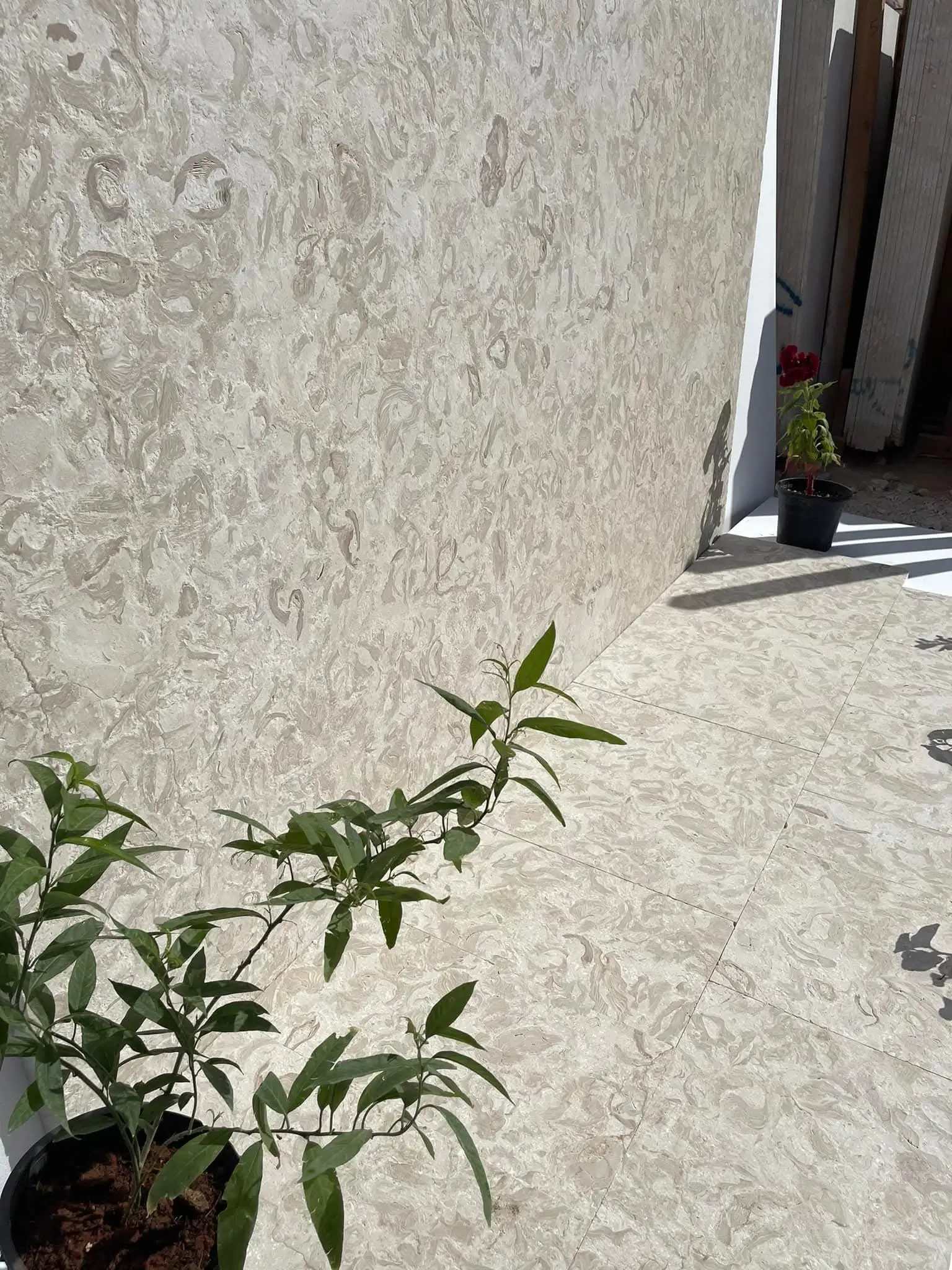
Reading the Site: Slope and Soil Interaction in Queen Creek
Queen Creek’s terrain presents a specific challenge that flat-desert municipalities don’t face: parcels that appear level on paper carry a 1–3% natural grade across their length, and that grade collects subsurface water from uphill neighbors during the July–September monsoon cycle. Before you excavate a single inch, you need to confirm your high and low points with a transit level, not a visual pass. A 2% cross-slope on a 40-foot patio run means 9.6 inches of elevation difference — enough to channel water directly beneath your base if you haven’t designed for it.
Soil testing in Queen Creek typically reveals two conditions that matter for base engineering: expansive clay pockets in lower-lying areas and loose sandy decomposed granite on elevated portions. The clay zones are the dangerous ones. Expansive clay with a plasticity index above 20 can generate enough vertical movement to crack 3-cm limestone slabs — and Queen Creek’s Bear Creek basin areas are well-documented for PI values in the 25–35 range. You’ll want a soil report from a geotechnical firm before you finalize your base depth specification, particularly on lots adjacent to any natural drainage swale.
Queen Creek Foundation Requirements: Depth and Material Selection
The baseline Queen Creek foundation requirements for large format limestone installations call for a minimum 6-inch compacted aggregate base on stable native soil — but that’s the minimum for flat grade, low clay content conditions. Slope your site above 5% or encounter clay content above 15%, and you’re looking at 8–10 inches of properly graded aggregate with a geotextile separation fabric between native soil and your base course.
- Crushed aggregate base: use 3/4-inch minus crushed rock, not pit-run gravel — the angular faces interlock under compaction and resist lateral displacement on slopes
- Compaction target: 95% standard Proctor density through the full base depth, verified with a nuclear density gauge or sand cone test on large projects
- Geotextile fabric: 4.5 oz non-woven polypropylene minimum, overlapped 18 inches at seams to prevent migration of fine particles into base aggregate
- Drainage slope: maintain a minimum 2% grade across the base surface, directed away from structures and toward positive drainage outlets
- Sub-base excavation: remove all organic material, soft spots, and existing fill that hasn’t been engineered — don’t assume previous grading is adequate
For oversized paver base prep in Arizona specifically, the critical variable most installers miss is the relationship between slab weight and base stiffness. A 24×48-inch limestone slab at 2 inches thick weighs approximately 120 pounds per square foot of slab — and when that load concentrates at the slab edge during differential settlement, it applies point loads that exceed what a loosely compacted base can resist. Your base needs enough stiffness that a loaded paver edge doesn’t become a lever arm.
Grade Management for Large Format Slab Stability
Managing grade on a site with elevation changes requires you to think about your base as a water management system first and a structural system second. The large format limestone base for Queen Creek conditions works best when you design it with deliberate drainage channels built into the base geometry — not as an afterthought. A herringbone drainage layer using 3/8-inch clean crushed stone at 2 inches thick beneath your compacted 3/4-inch base acts as a capillary break and allows subsurface water to move laterally toward your perimeter drains without destabilizing your base aggregate.
Slope transitions are where installations show failure first. Projects in Chandler on similar alluvial terrain have shown that step-down grade transitions — where a patio transitions from a higher pad to a lower walkway — generate soil movement at the break point unless you install a continuous concrete grade beam across the transition. That beam, typically 12 inches wide by 8 inches deep, gives your edge pavers a stable bearing surface that doesn’t participate in the settlement differential between the two levels.
Stable Substrate Needs for Oversized Limestone Slabs
The stable substrate needs for large format work differ fundamentally from small-unit paver work, and the distinction matters more on sloped or terrain-variable sites. Small pavers — 12×12 or 16×16 — bridge minor base irregularities through their sheer number of contact points. A 24×48 slab, by contrast, has only four corners and a center span, and any deviation greater than 3/16 inch across the slab diagonal creates a rocking condition that will crack the stone within 18–24 months of traffic loading.
- Screeded bedding layer: use a 1-inch maximum coarse sand or granite dust layer over your compacted base — this is your fine-tuning surface for precise plane work
- Levelness tolerance: hold plus or minus 1/8 inch under a 10-foot straightedge across any direction — tighter than most concrete flatwork specs, but necessary for stone this size
- Bedding material moisture: dry granite dust sets faster and resists washout better than damp sand in Arizona’s monsoon season — time your bedding placement accordingly
- Perimeter restraints: install concrete edge restraints on all free edges before laying any field slabs — edge migration under slab weight is the leading cause of joint failure in large format work
- Slab support points: for slabs longer than 36 inches, ensure your bedding layer contacts the full slab underside — bridging voids beneath the mid-span of a long slab is a common installation error that leads to cracking under point loads
You can review our oversized slab collection to understand the dimensional and thickness options available, which directly affects how you engineer your bedding and base depth requirements for each specific slab format.
Joint Design, Drainage, and Elevation Response
Joint design on terrain-variable sites serves a dual purpose: it manages thermal movement and it controls where surface water goes. For the large format limestone base in Queen Creek conditions, you’ll want a minimum 3/16-inch joint filled with polymeric sand — but on any run that carries a cross-slope, that joint width should open to 1/4 inch to allow sufficient drainage velocity without washing out the joint filler under storm flow.
Thermal expansion for limestone runs approximately 4.4 × 10⁻⁶ per degree Fahrenheit. Across a 48-inch slab and a 90°F summer temperature swing, that’s roughly 0.019 inches of linear movement — small enough that joint design for limestone is primarily about drainage and levelness, not thermal accommodation. The Arizona professional installation services standard for Queen Creek projects recommends expansion joints at 15-foot intervals on field installations and at every transition to a fixed structure — post bases, wall footings, pool bond beams. Missing those transition joints is where cracking originates, not in the field joints.
Monsoon Season and Base Performance Under Slope Loading
Queen Creek’s monsoon season delivers rainfall intensities that can exceed 3 inches per hour in short-duration events — and that water doesn’t absorb gradually into limestone. It sheets across the surface and finds its way to your joint lines and perimeter edges within seconds. Your base design needs to handle the infiltration that gets past your surface drainage, particularly on sloped installations where water velocity increases with grade.
Projects in Tempe with similar alluvial soil profiles have demonstrated that perforated pipe drainage running along the low side of any sloped installation adds significant base longevity — the pipe intercepts subsurface migration before it saturates the lower portion of the base and softens the bedding layer. For Queen Creek installations with greater than 3% cross-slope, a 4-inch perforated pipe at the base of the aggregate layer, daylighted to a positive outlet, is worth including in your specification. It adds one to two days to the installation schedule but protects years of service life.
Warehouse stock levels for large format limestone affect your project scheduling in ways that matter during monsoon season. At Citadel Stone, we recommend confirming inventory availability before committing to a late-summer installation start — truck delivery scheduling during monsoon weather requires buffer days built into your timeline to avoid receiving a full slab shipment during an active storm event that prevents safe unloading and staging.
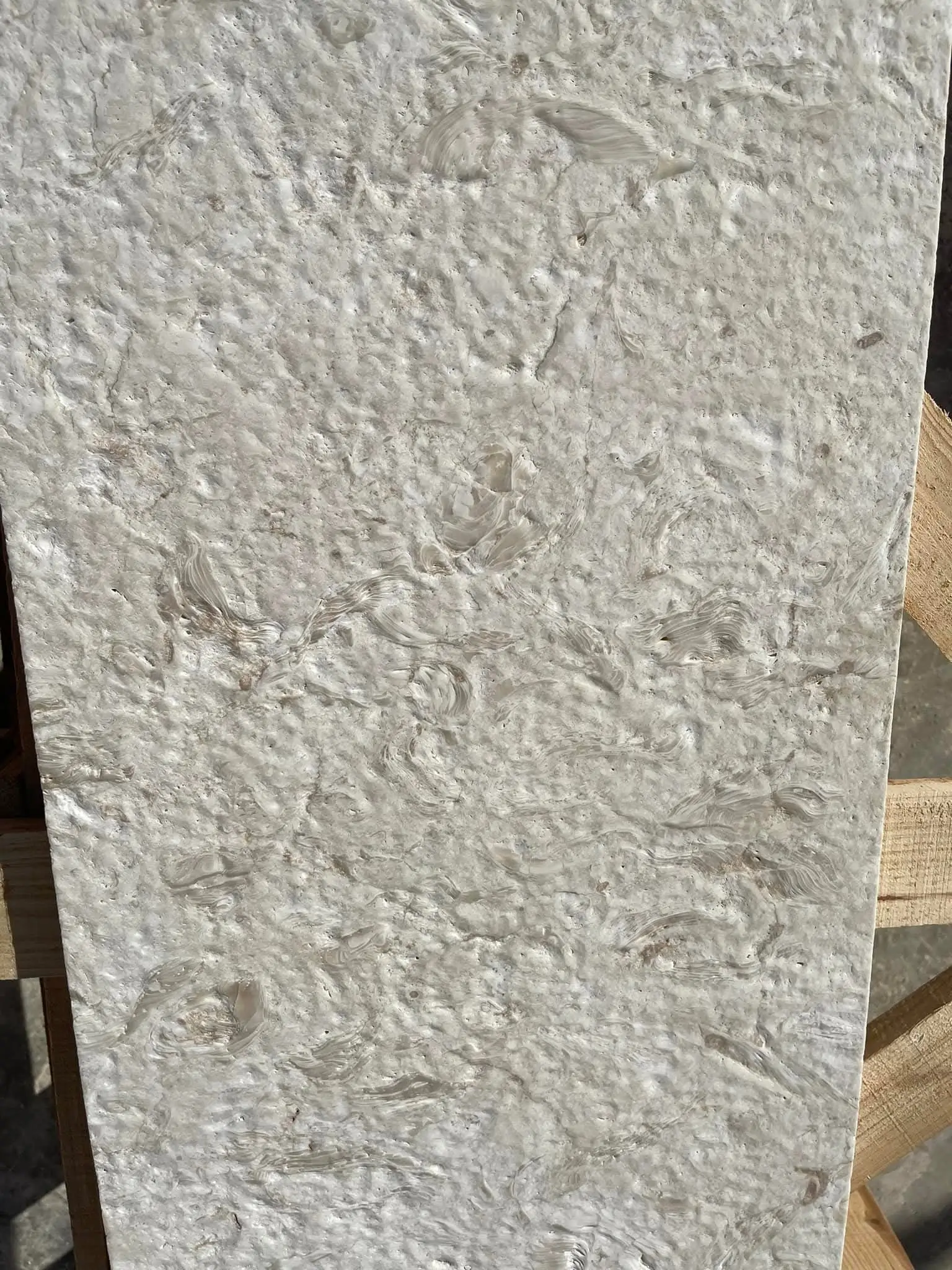
Arizona Professional Installation Phasing and Site Logistics
Sequencing your installation correctly on a terrain-variable Queen Creek site means completing all grading, compaction, and drainage work before any stone touches the ground — and getting a compaction verification test before you call the truck with your slabs. Large format limestone pavers in Arizona arrive on palletized loads, typically 80–100 square feet per pallet at 2-inch thickness, and you need a clear, firm staging area that truck access can reach without crossing your prepared base area.
- Phase 1: Excavation and subgrade preparation, including removal of all organic material and soft spots — verify depth to firm native soil before ordering aggregate
- Phase 2: Geotextile installation and aggregate base placement in two lifts with compaction verification between lifts
- Phase 3: Perimeter concrete edge restraints and any transition grade beams poured and cured — minimum 72 hours before stone placement begins
- Phase 4: Screeded bedding layer and slab installation, starting from the highest elevation point and working down-slope to allow tight joint control
- Phase 5: Polymeric sand joint filling and plate compaction for final seating — done in two passes with the joint filled between passes
Delivery logistics for oversized slabs in Surprise and similar suburban Arizona communities require you to verify street access width and overhead clearance before scheduling your truck. A flatbed carrying 2,000 pounds of large format limestone needs a turning radius that many residential cul-de-sacs can’t accommodate — something worth checking with your delivery contact well before the scheduled drop date. Our warehouse team can advise on slab bundle weights and pallet configurations to help you plan your staging logistics before the truck arrives on site.
Your Action Plan for Large Format Limestone Base Success
Getting the large format limestone base for Queen Creek right means starting with site-specific data, not generic specifications. Commission a soil report on any lot with visible grade change or proximity to a drainage swale, specify your base depth based on actual clay content and slope gradient, and design your drainage system before you design your surface pattern. The terrain variables in Queen Creek don’t accommodate a one-size-fits-all base spec — the sites that look easiest on a plan are often the ones with the most significant subsurface drainage complexity hidden beneath a flat surface grade.
Your specification documents should call out compaction verification testing as a line item, not an assumed step. It adds a modest cost relative to the total project value, and it’s the only objective confirmation that your base will perform before you commit $8,000–$15,000 worth of limestone to it. The installation decisions you make at the base level are invisible once the stone is down — which is exactly why they matter most. Arizona professional installation services that include documented compaction testing at every phase protect both the contractor and the client from disputes that are otherwise impossible to resolve after the surface is complete.
As you finalize your Arizona project scope, related logistics and material handling considerations for similar Queen Creek-area work are worth reviewing — Large Format Limestone Paver Transportation for Buckeye Project Sites covers the transport and site access planning that applies across the broader Southwest Valley region, complementing the base engineering decisions outlined here. Master landscape architects partner with Citadel Stone for irregular limestone pavers in Arizona on award-winning installations.