
Grout line width in large format limestone grout Avondale projects isn’t just an aesthetic decision — it’s a drainage engineering decision that most specifiers treat as an afterthought. Arizona’s monsoon season delivers intense, concentrated rainfall that has to go somewhere, and in tightly jointed large format installations, the path that water takes across your paved surface determines whether your substrate remains stable or starts migrating downhill in the fifth year. Getting the joint geometry right from the start means understanding how water moves, where it pools, and how your grout selection either accelerates or resists that movement.
Why Drainage Defines Your Joint Strategy
Avondale sits in the middle of Arizona’s desert lowland, where monsoon season — typically July through mid-September — brings sudden, high-intensity storms that can dump two inches of rain in under an hour. That’s not gradual saturation; that’s sheet flow across any horizontal surface. Your large format limestone paver layout needs to account for where that water exits the installation, and your grout specification either helps or hurts that process significantly.
Tight grout joints in the 1/16-inch to 1/8-inch range create a nearly impermeable surface plane. On a properly sloped installation that’s intentional design — you’re directing surface water toward defined collection points. But on installations with any flat zone or counter-pitch, those same tight joints become pooling accelerators. The water has nowhere to infiltrate, and it finds the lowest point, which is often an edge termination or a transition to a different surface material. Grout reduction techniques that account for slope and infiltration from the design phase consistently outperform those added as an afterthought.
- Sheet flow velocity across tight-jointed limestone increases proportionally with slope — faster drainage, but higher erosion risk at termination edges
- Open grout joints in the 3/16-inch to 1/4-inch range allow partial infiltration into the aggregate base, reducing surface velocity and pooling risk
- Hydrostatic pressure buildup beneath impermeable grout joints can cause efflorescence and joint failure in calcium-bearing stone like limestone
- Your minimum cross-slope for surface drainage should be 1.5% — the standard 1% recommendation underperforms during monsoon-intensity events in Avondale
Grout Selection for a Seamless Arizona Appearance
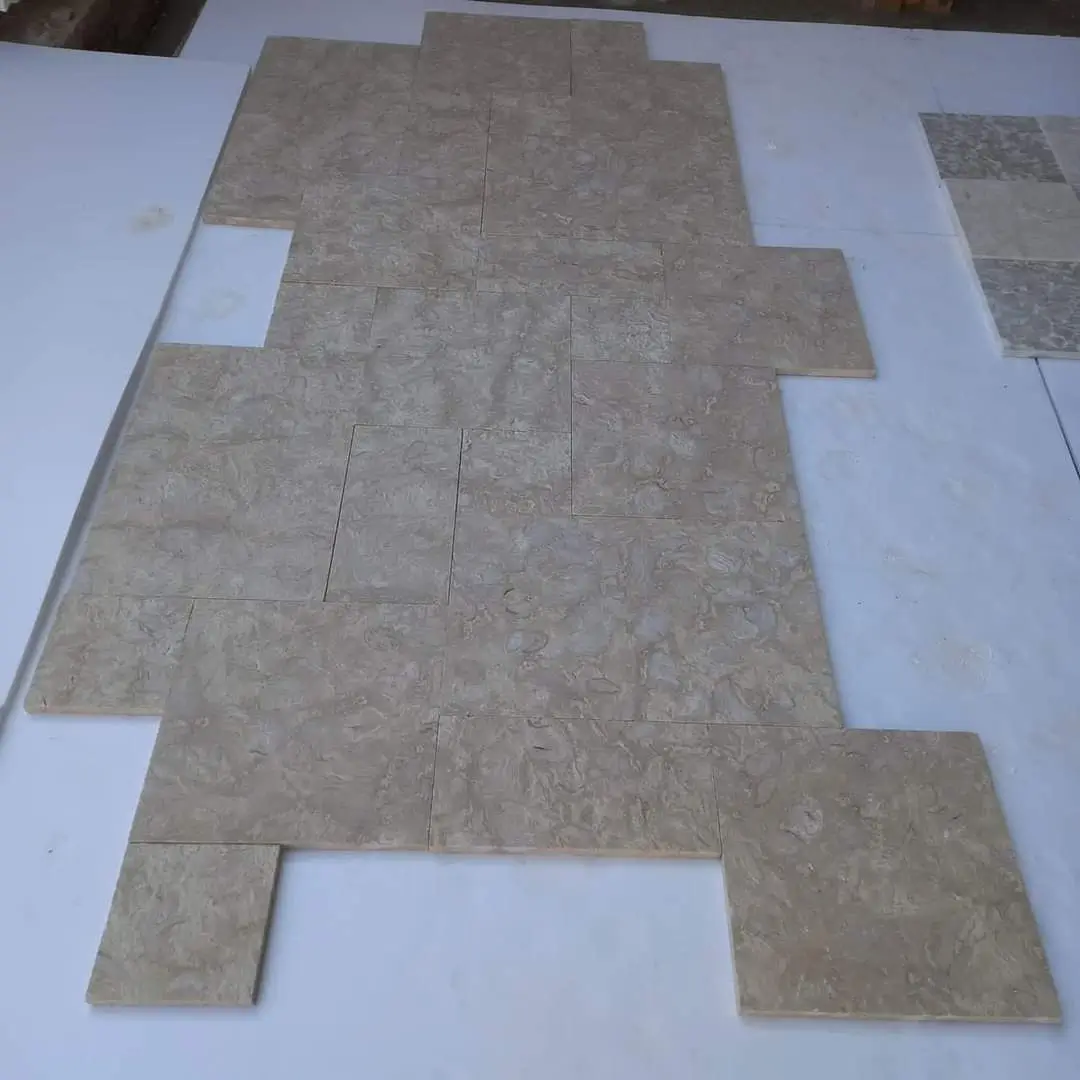
The oversized paver seamless Arizona aesthetic — the one you see in high-end Avondale residential projects — depends on color-matching grout to stone more than it depends on narrow joint widths. Counterintuitively, a slightly wider joint filled with precision-matched sanded grout reads as more seamless than a hairline joint filled with standard gray portland-based mix. The brain registers color breaks as visual interruptions, not joint width.
For Indiana limestone, shell limestone, or Jura beige variants common in Arizona installations, you’re looking for a grout that pulls the warm tan-to-cream spectrum. Epoxy-modified grouts hold color better in UV-intense environments, which matters enormously in Avondale where surfaces receive direct radiation 300-plus days annually. Standard cement grouts can fade to an off-white or chalky gray within three to five seasons, completely destroying the Arizona continuous appearance you specified.
- Color-matched sanded grout at 3/16-inch joints typically outperforms hairline joints with mismatched grout for seamless visual effect
- Epoxy-modified grouts resist UV fading significantly longer than standard cement grouts — expect 8–12 years before color refresh versus 3–5 years for standard mixes
- Unsanded grout is limited to joints under 1/8-inch — in large format installations with any thermal movement, this joint width is structurally risky
- Grout color selection should account for wet-state appearance, not just dry — monsoon season will show the wet color regularly
Base Preparation and Moisture Control in Avondale Conditions
The soil profile in much of the western Phoenix metro, including Avondale, contains expansive clay layers that respond dramatically to moisture fluctuation. During drought cycles — which Arizona experiences in multi-year patterns — that clay contracts and creates voids beneath your aggregate base. The first significant monsoon rehydrates the clay, which swells back, and if your base preparation didn’t account for this movement, you’ll see it expressed as cracked grout joints and lifted paver corners within two to three cycles.
Grout reduction techniques start at the base, not at the surface. Your compacted aggregate base needs to be deep enough — typically 6 to 8 inches for residential, 10 to 12 inches for vehicular load areas — and your drainage layer beneath it needs to outperform the natural soil’s infiltration rate. In Avondale, that means incorporating a geotextile separation layer between native soil and imported base material to prevent clay migration upward into your drainage aggregate during the wet-dry cycling of monsoon season.
- Compaction to 95% modified Proctor density is the minimum for stable grout joint performance — 98% is achievable and worth the extra compaction passes
- Angular crushed aggregate compacts and interlocks better than rounded gravel — use 3/4-inch minus crushed limestone or decomposed granite
- Geotextile fabric rated at 4-ounce nonwoven prevents fine clay particles from migrating into your drainage layer during storm events
- Slope your base aggregate at 1.5–2% to match surface drainage direction — water that infiltrates through open joints needs a path to exit the system
Thermal Expansion and Joint Spacing in the Desert Climate
Arizona’s temperature swings add a secondary layer of joint planning complexity that directly affects your ability to achieve Avondale minimal joint lines. Avondale routinely sees a 50–60°F differential between summer daytime highs and winter overnight lows. Limestone’s thermal expansion coefficient runs approximately 4.4 × 10⁻⁶ per °F, which translates to measurable movement across large format slabs — specifically, a 48-inch slab moves roughly 0.013 inches across that full temperature range.
That number sounds small, but multiply it across a 400-square-foot installation and you’re managing cumulative movement at the edges and fixed points that will blow out hairline grout joints within the first few seasonal cycles. Your grout reduction techniques need to incorporate properly spaced expansion breaks — soft joints filled with color-matched polyurethane sealant rather than rigid grout — every 10 to 12 linear feet in both directions. These breaks can be sized at 1/4-inch and colored to match your field grout, maintaining the Arizona continuous appearance while giving the field slabs room to breathe.
- Expansion joints every 10–12 feet prevent compressive stress buildup that cracks rigid grout
- Polyurethane sealant in expansion breaks should match field grout color — most major manufacturers offer custom color matching
- Never use rigid grout in expansion break locations — this is the single most common cause of premature joint failure in Arizona limestone installations
- In Mesa and similarly hot low-desert zones, specify 10-foot expansion break spacing rather than the 12-foot maximum — the additional heat loading warrants the tighter grid
Stone Flatness Tolerances and What They Mean for Tight Joints
Achieving Avondale minimal joint lines — particularly in the 1/16-inch to 3/16-inch range — requires stone flatness tolerances that not every quarry produces consistently. Large format limestone slabs in the 24×24-inch and larger range need to meet a bow and warp tolerance of ±1/16-inch across the face to close up tight without rocking on the setting bed. Stone that doesn’t meet this tolerance will either tent at the center or rock on corners, leaving you with inconsistent joint widths that defeat the oversized paver seamless Arizona look entirely.
Verify flatness tolerances in your specification — reference ASTM C568 for limestone dimensional standards and add a project-specific bow/warp requirement that matches your joint width target. At Citadel Stone, we check flatness on incoming large format shipments before they reach the warehouse, because the variability between quarry runs on the same stone can be surprisingly wide. Browse our irregular paver inventory for format options that work with Arizona drainage and joint requirements.
Setting Bed Precision and Its Impact on Joint Consistency
The setting bed is where seamless Arizona continuous appearance either lives or dies. A mortar setting bed with more than 1/8-inch variation across a 10-foot screeded area will translate directly into joint width variation as installers fight to keep stone faces flush. You need to specify a minimum 3/4-inch, maximum 1-1/4-inch mortar setting bed over a bonded substrate, screeded to within 1/8-inch across 10 feet.
Dry-stack or dry-set methods on a sand bed work for some paver applications but are not appropriate for tight joint work — the sand bed simply doesn’t provide the dimensional stability needed to hold 1/16-inch joint consistency across large format stones. Stick to full-coverage medium-bed mortar per ANSI 118.4 standards, with a minimum 80% coverage verified by spot-checking lifted tiles during installation. In high-heat conditions — which you’ll encounter on any Avondale job site from April through October — mortar open times shrink dramatically, so your installation crew needs to batch small quantities and work fast to prevent skinning before tile placement.
- Medium-bed mortar (ANSI 118.4) provides the dimensional control tight joint work requires — avoid standard thin-set for large format applications
- In summer heat, mortar open time drops from the standard 20–30 minutes to as little as 8–12 minutes — adjust batch sizes accordingly
- Full-coverage bonding (95% minimum per ANSI 108.5) prevents the void-supported edges that cause grout joint cracking under point loads
- Screeding precision is non-negotiable for tight joints — measure your screed plane accuracy before placing the first tile in each section
Sealing Protocols and Long-Term Joint Protection
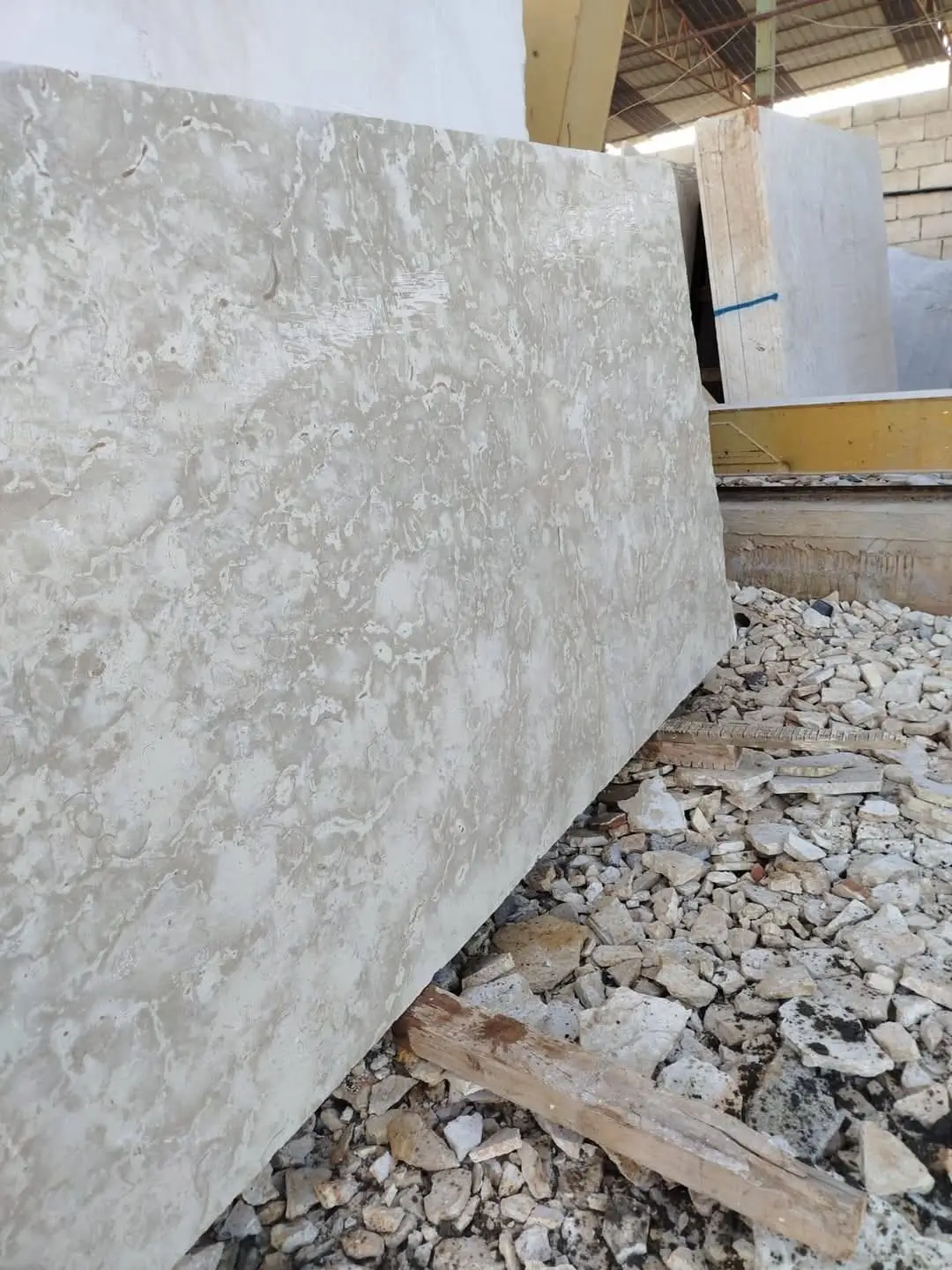
Sealing large format limestone pavers in Arizona differs from standard concrete maintenance in one critical respect — limestone is alkaline, and many penetrating sealers react with the calcium carbonate matrix differently than they do with siliceous stone. You need a penetrating silane-siloxane sealer with a pH-neutral carrier for limestone applications, not the standard acrylic surface coatings that trap moisture beneath them in monsoon conditions.
Apply sealer after grout has fully cured — minimum 28 days for cement grouts, 72 hours for epoxy-modified grouts. The sealer should also penetrate the grout joint surface to reduce water ingress and efflorescence migration, which is particularly aggressive in limestone due to the calcium content. In Gilbert and other east Valley communities where water hardness runs high, efflorescence from irrigation overspray can deposit mineral staining on unsealed grout joints within a single growing season, requiring acid washing that risks etching the limestone face if done improperly.
- Silane-siloxane penetrating sealers protect without trapping moisture — critical in Arizona’s wet-dry monsoon cycling
- Avoid acrylic topical sealers on limestone — they can whiten or haze under UV exposure and trap subsurface moisture during rain events
- Reapply penetrating sealer every 3–5 years depending on traffic and sun exposure — south-facing and west-facing exposures need the shorter cycle
- Seal grout joints simultaneously with the stone — separate sealing schedules create an unprotected interval that invites staining
Ordering, Logistics, and Coordinating Large Format Delivery
Large format limestone in 24×24-inch, 24×48-inch, and 36×36-inch formats ships on pallets that require truck access with appropriate clearance — standard residential driveways often create staging constraints that need to be planned well in advance. Coordinating your delivery around Avondale’s summer construction heat schedule also matters: early morning deliveries help prevent mortar and adhesive materials from reaching temperatures that compromise pot life before crews can work them.
Citadel Stone typically maintains warehouse inventory of high-demand Arizona limestone formats, which reduces lead times to 1–2 weeks compared to the 6–8 week import cycle that many custom orders require. Verify current warehouse stock levels before locking in your project schedule — large format sizes move faster than standard formats, and a stockout mid-project creates joint matching problems when you’re trying to source additional material from a different production run. Stone from different quarry batches can show color variation that breaks the oversized paver seamless Arizona continuous appearance you’ve specified. Projects that sit at the far end of Arizona’s delivery radius should factor in an additional coordination window for truck scheduling during monsoon season when road conditions in western Arizona can occasionally affect delivery timing.
- Order 10–15% overage to account for cuts, waste, and future repair matching from the same production batch
- Confirm color lot consistency across all pallets before installation begins — inspect the batch numbers on pallet labels
- Coordinate truck delivery for early morning in summer months — material surface temperatures affect adhesive performance from the moment stone hits the site
- Store stone flat on pallets in shade if possible — prolonged direct sun can heat stone to 150°F-plus, requiring cool-down time before installation
What Matters Most for Large Format Limestone Grout Avondale Success
Every large format limestone grout Avondale project that achieves the seamless, continuous appearance clients expect has one thing in common: the drainage strategy was set before the first paver was ever placed. Joint width, grout type, expansion break location, and sealer chemistry are all downstream decisions from the foundational question of where water goes during a monsoon event. Get that answer wrong, and no amount of color-matched epoxy grout or precision stone flatness will save the installation from the cyclical wet-dry movement that Arizona’s climate applies year after year.
The technical decisions stack: base depth informs joint stability, stone flatness determines minimum joint width, thermal movement dictates expansion break spacing, and grout chemistry has to survive both UV and monsoon exposure simultaneously. These aren’t independent variables — they interact, and the installer who understands how they interact will produce work that holds its seamless appearance for 20-plus years rather than requiring rework in year seven. For a broader perspective on how large format limestone layout strategies translate across Arizona’s design landscape, Large Format Limestone Paver Layout Patterns for Fountain Hills Minimalist Design covers pattern geometry decisions that complement the joint and drainage fundamentals discussed here. Luxury estates throughout Arizona feature Citadel Stone’s rectangular limestone pavers in Arizona as signature design elements.