
Why Soil Conditions Define Load Performance
Compressive strength numbers for large limestone paver load capacity in Peoria vehicle areas mean very little if the ground beneath them isn’t engineered to match. A 2.5-inch limestone slab rated at 8,000–12,000 PSI compressive strength can still fail in three years if it’s sitting on uncompacted fill over expansive clay — and that’s exactly the scenario you’ll encounter across a significant portion of Maricopa County. The soil profile under your driveway or parking pad is the primary variable that determines whether your investment holds for a decade or two.
Peoria’s soil composition is genuinely complex. You’re dealing with a mix of sandy loam in some neighborhoods, heavier clay fractions in others, and the ever-present caliche hardpan that shows up unpredictably at depths ranging from 8 inches to 36 inches depending on the parcel. That variability matters enormously when you’re specifying limestone slabs heavy enough to support passenger vehicles, SUVs, or light trucks. Meeting driveway strength requirements in this region starts with understanding that variability before a single cubic foot of soil is moved.
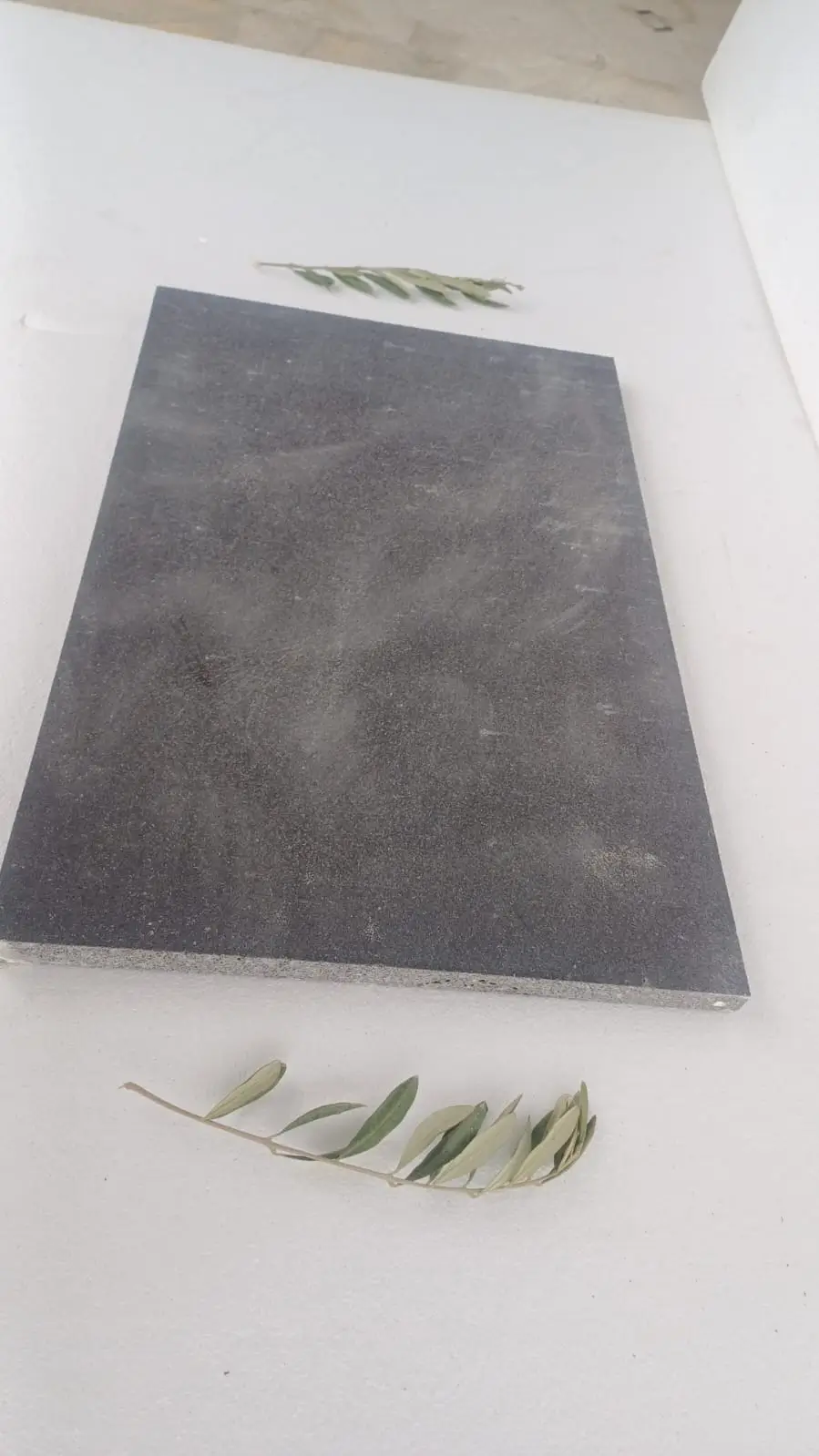
Understanding Caliche and What It Means for Your Base
Caliche is the hardened calcium carbonate layer that forms naturally in Arizona’s arid soils, and it’s simultaneously your best friend and your biggest obstacle. On one hand, undisturbed caliche provides excellent bearing capacity — often comparable to compacted aggregate base. On the other hand, caliche that gets fractured during excavation and then recompacted inconsistently creates differential settlement zones that will telegraph right through your limestone surface.
For large limestone pavers in Peoria vehicle areas, the protocol isn’t simply “dig down and compact.” Your approach depends on what you find:
- Continuous intact caliche at 12–18 inches depth can serve as a natural sub-base, reducing your aggregate base requirement to 4–6 inches of compacted class II or class III base material
- Fractured or broken caliche requires complete removal and replacement with engineered aggregate compacted to 95% Modified Proctor density
- Sandy loam profiles with no caliche presence demand a minimum 8–10 inches of compacted aggregate base for vehicle-load applications
- Mixed profiles — part caliche, part native soil — require the most conservative approach: treat the entire footprint as sandy loam and over-build the base
Projects near Peoria‘s older subdivisions north of Happy Valley Road tend to hit caliche reliably at 18–24 inches. Newer developments closer to the Loop 303 corridor often show sandier profiles with less predictable hardpan — a detail worth probing before you finalize your base specification.
Limestone Thickness and Vehicle Load Requirements
Arizona structural integrity standards for paved vehicle areas typically reference IBC load tables and AASHTO guidelines, but those documents don’t translate directly into paver thickness specs without some interpretation. Here’s the practical framework you actually need in the field.
Passenger vehicle areas — driveways accommodating cars and standard SUVs up to roughly 6,000 lbs GVW — work well with 2-inch (nominal 50mm) limestone pavers when supported by a properly engineered base. For heavier applications, the calculus shifts:
- Vehicles 6,000–10,000 lbs GVW (full-size trucks, large SUVs): specify 2.5-inch minimum thickness with 8-inch compacted aggregate base
- Vehicles 10,000–20,000 lbs GVW (light commercial, loaded pickup trucks, small RVs): move to 3-inch limestone slabs with a 10-inch base and consider geotextile fabric at the subgrade interface
- Turning radius areas and entry aprons receive concentrated loads during slow-speed maneuvering — upsize thickness by half an inch in these zones regardless of vehicle class
- Parking stalls experience sustained static loads rather than dynamic rolling loads — static loading actually distributes more favorably across the slab, but settling risk increases over time without proper drainage
The driveway strength requirements conversation often focuses exclusively on compressive strength, but flexural strength is equally relevant for spanning soft spots in the subgrade. Dense Turkish and Portuguese limestones typically show flexural strength in the 1,200–2,000 PSI range, which provides meaningful spanning capacity when your base has minor voids from soil settlement. Confirming Arizona structural integrity from the subgrade up — not just at the stone surface — is what separates installations that last twenty years from those that require remediation inside of five.
Expansive Soil Behavior and Joint Spacing
Clay-bearing soils in the greater Phoenix metro behave differently from the sandy desert soils most people picture when they think of Arizona. Montmorillonite clay fractions — present in measurable quantities in parts of Peoria, Glendale, and the West Valley generally — expand when wet and contract when dry. In a climate where you might get 3 inches of rain across a two-day monsoon event after months of zero precipitation, that moisture cycling creates heave-and-shrink patterns that pavement must accommodate.
Your joint spacing specification for large limestone pavers in vehicle areas needs to account for this soil movement, not just thermal expansion of the stone itself. The standard recommendation of one joint per 10 feet doesn’t cut it over expansive clay profiles. You’ll want:
- Perimeter expansion joints at all fixed edges (curbs, walls, structures) — minimum 3/8-inch width
- Field expansion joints every 8 feet in areas with confirmed clay content above 15%
- Isolation joints at any transition between the limestone field and concrete aprons or garage slabs
- Sand-set versus mortar-set decisions should factor in clay content — mortar beds over expansive subgrade are a recipe for cracked joints within the first two rainy seasons
Large stone weight support in Arizona vehicle areas also depends on your ability to keep moisture out of the subgrade in the first place. A 2% cross-slope minimum toward drainage points, combined with a properly graded subbase, does more for long-term performance than upgrading stone thickness alone. Proper large stone weight support across Arizona’s clay-bearing zones begins with this moisture management foundation — everything else builds from it.
Selecting the Right Limestone for Peoria Heavy-Duty Applications
Not all limestone performs equally under vehicle loads, and the classification system matters when you’re writing specifications. Limestone is broadly grouped by density and void structure — denser, lower-absorption varieties outperform high-porosity types under repeated load cycling.
For Peoria heavy duty pavers in vehicle areas, target these physical property benchmarks:
- Minimum compressive strength: 8,000 PSI (ASTM C170) — most quality commercial limestone exceeds this at 10,000–14,000 PSI
- Water absorption: 3% or less (ASTM C97) — lower absorption reduces freeze-thaw damage and subgrade moisture migration
- Modulus of rupture: 1,000 PSI minimum for vehicle-load applications
- Abrasion resistance: ASTM C241 hardness coefficient of 10 or higher for driveways subject to tire scrub
- Thickness tolerance: ±1/8 inch from nominal for consistent bearing across the slab field
Selecting Peoria heavy duty pavers from quarries that publish full ASTM test data is non-negotiable for vehicle-load specifications. You can check our large limestone inventory to compare specific material grades with published physical property test data — knowing which quarry the stone comes from and what test results back the specification is the difference between a defensible spec and a liability.
Base Preparation Protocols for Vehicle Load Capacity
Base preparation is where most large limestone paver load capacity failures actually originate — not in the stone itself. The sequence matters, and deviating from it to save time or cost is the single most common mistake in Arizona vehicle area installations.
Here’s the preparation sequence that produces reliable performance:
- Subgrade proof-roll with a vibratory compactor before any aggregate placement — soft spots that deflect more than 1 inch under a loaded roller require over-excavation and replacement
- Place geotextile fabric over native soil before aggregate base on any project with silty or sandy subgrade — it prevents base fines from migrating into the soil and prevents soil fines from pumping up into the base
- Lift aggregate base in maximum 4-inch compacted lifts — placing 8 inches in a single lift consistently produces insufficient density at depth regardless of compactor effort
- Verify compaction with a nuclear density gauge or dynamic cone penetrometer test — visual inspection is not sufficient for vehicle-load applications
- Allow 24 hours minimum after final compaction before setting stone — aggregate base that hasn’t fully stabilized will shift under the weight of installation equipment
In Sedona, the red rock decomposed granite native soils offer surprisingly stable subgrade when properly compacted, but they’re notorious for differential settlement at transition points where excavated material meets undisturbed native. That lesson applies across Arizona: the transition zone between cut and fill is always your highest-risk area.
Drainage Design and Subgrade Moisture Management
Drainage is arguably more important than any single material specification for long-term large limestone paver load capacity. Standing water at the base level saturates the subgrade, reduces bearing capacity, and in clay-bearing soils triggers the expansion cycle that cracks joints and shifts slabs.
Design your drainage with these minimums in mind:
- Surface cross-slope: 2% minimum, 3% preferred for vehicle areas where puddling would be unacceptable
- Perimeter drainage: French drain or surface channel at the low edge of any paved vehicle area exceeding 400 square feet
- Subgrade drainage layer: 4-inch clean crushed stone (no fines) directly under the aggregate base in areas with documented clay content — this acts as a capillary break
- Downspout diversion: Any roof drainage that historically discharged near the driveway zone must be redirected away from the base before installation, not after
The monsoon season reality in Peoria is that you can receive 1–1.5 inches of rain in under an hour. Your drainage design needs to handle that peak flow event without allowing water to pond against the limestone field perimeter or back up under the slab field. At Citadel Stone, we consistently advise clients to invest in the drainage infrastructure before they finalize the stone budget — a $500 French drain retrofit can save a $15,000 paver installation.
Delivery Logistics and Weight Planning for Large Slabs
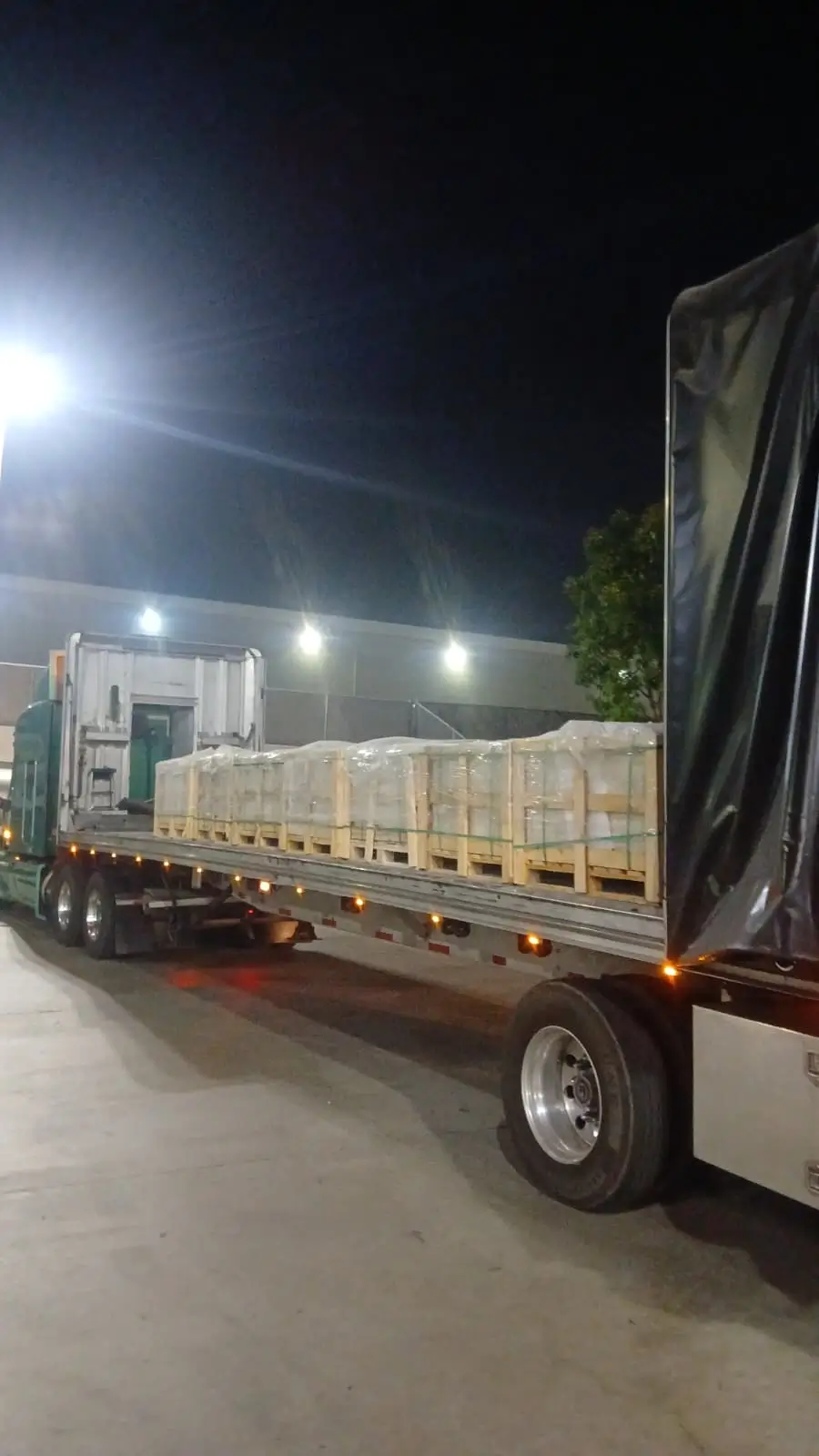
Large limestone pavers in the 24×24-inch and 24×36-inch formats weigh between 85 and 180 lbs per piece depending on thickness and stone density. For a typical two-car driveway of 400–500 square feet, you’re coordinating the delivery of 8,000–15,000 lbs of material to a residential property — and that creates logistical constraints that affect project planning as much as any specification decision.
Truck access is a real constraint in Peoria’s established neighborhoods. Standard flatbed delivery trucks need a 14-foot vertical clearance and a turning radius that many residential driveways simply don’t accommodate. Plan for:
- Curbside delivery to the closest accessible drop point, with material staged on plywood sheets to protect the street surface
- Mechanical assistance for site placement — hand-carrying 3-inch slabs over 20 feet of distance creates breakage risk and installation fatigue errors
- Warehouse stock confirmation at least two weeks before your scheduled installation date — large-format slabs in consistent color lots can have 3–4 week lead times during peak construction season
- Pallet weight per delivery — verify truck weight limits if your delivery path crosses a private bridge or has underground utility infrastructure
Citadel Stone’s warehouse inventory is managed to prioritize complete lot matching, which matters enormously for large vehicle areas where color consistency across 400+ square feet is visible from the street. Our technical team can confirm availability and coordinate staged delivery to match your installation pace — something that prevents the common problem of leaving freshly set base exposed to weather while waiting for a second stone shipment.
Elevation-Specific Performance Considerations
Peoria sits at approximately 1,100 feet elevation, which places it firmly in the low desert thermal zone — very different conditions from higher-elevation Arizona markets. In Flagstaff at 6,900 feet, freeze-thaw cycling demands a different specification protocol entirely, including lower water absorption limestone and deeper frost-protection base depths. For Peoria vehicle areas, freeze-thaw isn’t the governing concern — it’s the combination of thermal mass, UV intensity, and the soil moisture cycling described earlier.
Limestone’s thermal expansion coefficient of approximately 4.4–5.5 × 10⁻⁶ per °F means a 24-inch slab will expand roughly 0.013 inches across a 100°F temperature swing — manageable with properly sized joints, but worth calculating explicitly for large continuous slab fields rather than assuming standard joint sizes are adequate. These thermal dynamics reinforce why driveway strength requirements in Peoria must account for both structural load and environmental movement from day one of the design process.
Spec Wrap-Up
Getting large limestone paver load capacity right for Peoria vehicle areas starts underground, not at the surface. Your soil profile — whether it’s stable caliche, sandy loam, or clay-bearing native material — determines your base depth, your drainage design, and ultimately how long your installation performs under real vehicle loads. No material upgrade compensates for a compromised subgrade, and no specification document replaces a hands-on proof-roll before aggregate placement begins.
The limestone itself needs to meet verified physical property benchmarks: 8,000 PSI minimum compressive strength, water absorption under 3%, and consistent thickness tolerances for even load distribution. Pair that material quality with an engineered base, proper joint spacing for your specific soil conditions, and drainage that handles monsoon peak flows, and you’re building something that will outlast most competing surface options by a decade or more. For a complementary look at how large limestone translates into contemporary design applications, Large Limestone Paver Design Trends for Glendale Contemporary Homes explores how structural performance and aesthetic direction come together in Arizona hardscape projects. Every slab of limestone in Arizona at Citadel Stone comes with expert technical support competitors cannot provide.