
Large limestone paver design trends for Glendale contemporary homes don’t begin with aesthetics — they begin with what the material can physically endure. Arizona’s storm season delivers wind-driven rain, hail impact loads, and pressure fluctuations that expose every weak joint, every under-prepared edge, and every format choice that wasn’t engineered for mechanical stress. Choosing the right large format limestone isn’t just about how your outdoor space looks on a calm afternoon — it’s about how it holds together when the monsoon hits and the wind gusts push into the 50- to 60-mph range.
Why Storm Resistance Starts With Format Size
The shift toward large format limestone — think 24×24, 24×36, and 36×36 slabs — isn’t purely a contemporary outdoor aesthetics decision. Larger formats reduce the total number of joints across your paved surface, and fewer joints means fewer points of vulnerability when wind-driven rain starts forcing water laterally under the field stone. You’ll see this especially on elevated patios and pool decks in Glendale where the exposure is direct and there’s nothing to break the wind load before it hits your installation.
The weight distribution benefit matters here, too. A 36×36 limestone slab at 2 inches nominal thickness can reach 90 to 110 pounds per piece, and that mass works in your favor during high-wind events. Lighter, smaller formats can shift — especially when haunch mortar or bedding sand hasn’t been compacted correctly beneath them. For large limestone pavers in Arizona, that physical mass is a design advantage that no amount of edge restraint can fully replicate.
- 24×24 format: balances maneuverability with joint reduction — good baseline for residential patios
- 24×36 format: increasingly popular for contemporary pool surrounds, reduces grout lines by roughly 30% vs. 18×18 layouts
- 36×36 format: maximum impact resistance per square foot, but requires mechanical handling equipment during installation
- Irregular large formats: avoid for storm-exposed applications — inconsistent edge geometry compromises joint integrity under lateral pressure
Glendale Modern Paver Styles That Hold Up to Weather
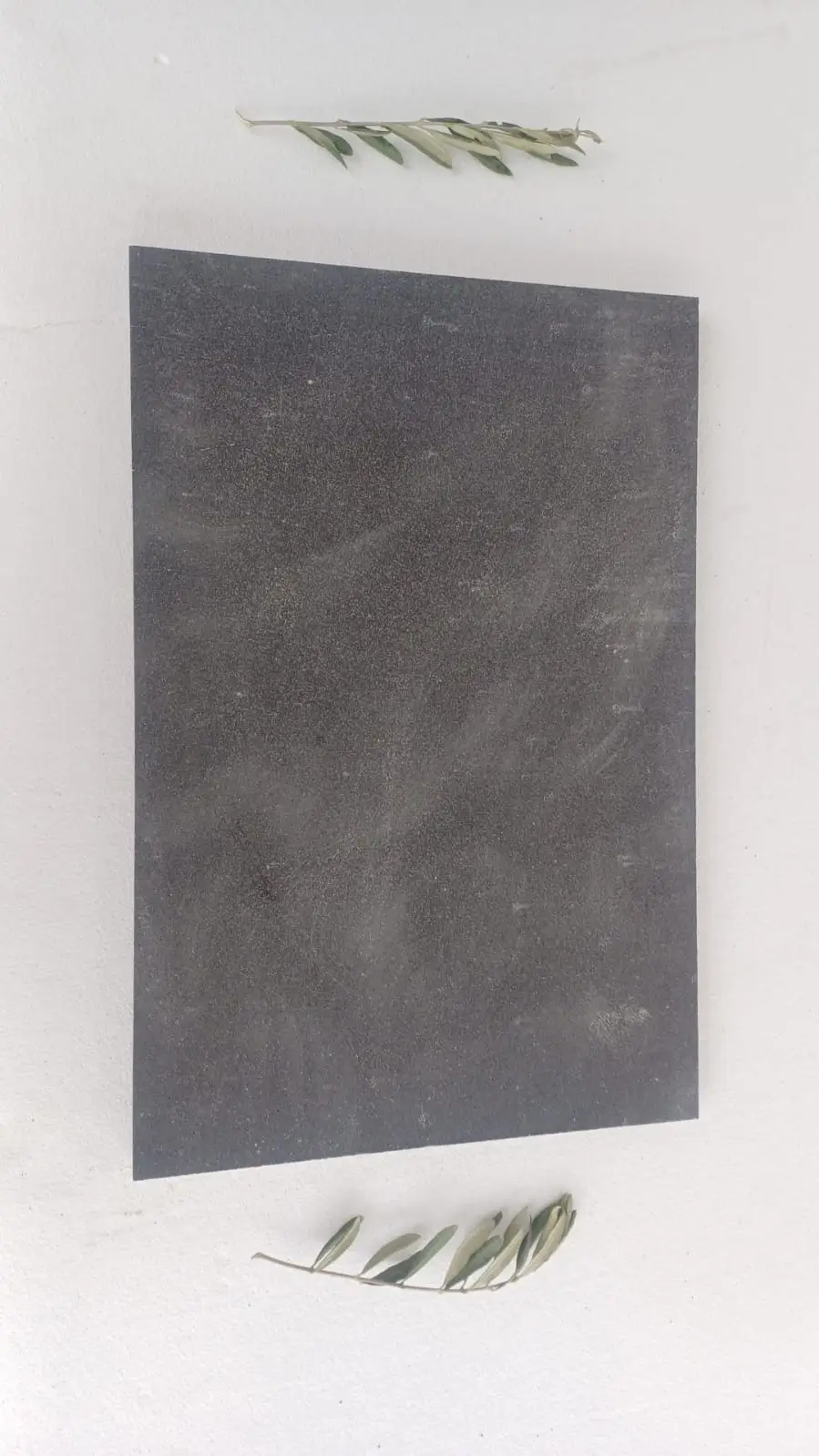
Contemporary outdoor aesthetics in Glendale have evolved considerably over the last decade, and the defining shift is away from tumbled, rustic finishes toward cleaner, more linear expressions. Honed and sandblasted limestone surfaces dominate the modern palette here — they read crisp and architectural against stucco exteriors, and they perform better under repeated hail strike cycles than polished finishes, which develop surface micro-fractures that eventually become visible spalling.
Glendale modern paver styles lean heavily toward warm cream, buff, and greige limestone tones, which photograph beautifully against the desert landscape and maintain visual coherence with the surrounding palette. From a purely structural standpoint, these lighter toned stones also tend to come from denser limestone formations — the coloration correlates with lower porosity in many quarry-specific selections, which matters when you’re thinking about water infiltration under storm conditions.
- Honed finish: matte surface that absorbs minor hail impacts without propagating fractures — the practical choice for Glendale storm exposure
- Sandblasted finish: adds grip coefficient improvement and disguises minor weathering — suitable for walkways and pool perimeters
- Sawn-cut edges: sharper geometry that looks contemporary and creates tighter joint tolerances for better wind-driven rain resistance
- Tumbled edges: avoid on storm-exposed applications — the irregular edge creates inconsistent joint widths that underperform under lateral pressure
Arizona current patterns in contemporary hardscape also show a strong move toward monochromatic large-slab layouts — running bond in 24×48 formats, stacked joint in 36×36 — where the visual interest comes from scale and shadow rather than color variation. This works directly in your favor from a storm performance standpoint, since consistent format sizes allow uniform joint depths and edge restraint sizing across the entire field.
Edge Restraint Engineering for Arizona Wind Loads
Here’s what most design-focused specifications miss entirely: the edge restraint system is the single most critical storm-resistance element in any large format limestone installation. The field pavers get all the attention, but it’s the perimeter condition that determines whether your installation moves under lateral wind load or stays locked in place through a monsoon season.
For large format slabs in an exposed Glendale location, aluminum or steel edge restraint spiked at 12-inch intervals is the minimum spec — not the 18 or 24-inch spacing that’s common on residential installs. Under sustained wind loads, the cumulative lateral force on a 400-square-foot patio can exceed what loosely spaced restraint can hold, especially when the bedding layer beneath hasn’t fully consolidated. In Mesa, where caliche hardpan sits relatively shallow, the sub-base sometimes creates a harder bearing surface that actually increases the transfer of lateral load to the perimeter — tighter spike spacing compensates for that rigidity differential.
- Spike spacing: 12 inches on center for large format limestone in exposed locations (upgrade from standard 18-inch residential)
- Restraint height: match to the full depth of the paver — a 2-inch slab needs 2-inch restraint minimum
- Corner reinforcement: double-stake the interior corners where wind load concentrates
- Concrete haunch alternative: for maximum permanence, a poured concrete haunch at the perimeter beats any mechanical restraint system
Joint Integrity Under Wind-Driven Rain
Joint integrity is where large format design trends Arizona specifications intersect directly with performance engineering. The contemporary preference for tight joints — 1/8-inch to 3/16-inch gaps between slabs — looks clean and modern, but it demands a more sophisticated approach to joint fill than standard polymeric sand. Under wind-driven rain at 40-plus mph, water doesn’t just fall vertically onto your patio. It drives laterally and finds its way into joint openings with real pressure behind it.
Epoxy-modified joint mortars have become the professional standard for tight-joint large format installations in exposed Arizona locations. They set harder than standard polymeric sand, resist washout under hydrostatic pressure, and don’t develop the shrink-crack pattern that opens up standard sand joints after the first heavy monsoon. The trade-off is that epoxy mortars are less forgiving if the bedding layer settles unevenly — any differential movement in the sub-base will crack the joint rather than allow minor adjustment. Your base preparation has to be right before you commit to rigid joint fill.
For projects in Gilbert and similar East Valley communities where expansive clay soils introduce seasonal heave, a slightly wider 1/4-inch joint with a quality polymeric sand rated for large format applications often outperforms the rigid epoxy approach — the minor flexibility prevents systematic cracking across the entire field. Large format design trends in Arizona don’t operate identically across all soil types, which is why soil testing before specification matters more than most homeowners realize.
Hail Impact Resistance and Limestone Density
Arizona hail events are underestimated in stone specifications. The storms that roll through the Phoenix metro from July through September can produce hailstones ranging from pea-sized to golf ball diameter, and at terminal velocity those impacts exert point loads that reveal the difference between a dense, tight-pored limestone and a softer, more porous formation.
The density metric you want is an apparent specific gravity above 2.55 (ASTM C97 measurement) — limestone in this range has the crystalline structure to absorb impact energy without surface spalling. Many imported limestone products that price attractively sit below 2.50 specific gravity and look fine initially, but develop visible surface fractures and pop-outs within two or three Arizona storm seasons. At Citadel Stone, we source specifically from quarry operations that provide third-party density and absorption testing with each production batch — it’s the only reliable way to ensure consistent performance across a full project’s material requirement.
- Target apparent specific gravity: 2.55 or higher (per ASTM C97)
- Maximum water absorption: 3.5% by weight — above this, storm water infiltration accelerates freeze-thaw-equivalent stress cycling from daily thermal swings
- Modulus of rupture: request minimum 800 PSI for large format slabs — thinner slabs at lower MOR values crack under point hail impact at span edges
- Surface hardness: Mohs 3.5 to 4 is typical for quality limestone — sufficient for hail impact resistance without requiring exotic material upgrades
Large Format Design Trends: Arizona Layout Patterns for Storm Performance
Large format design trends in Arizona show a clear directional preference for running bond and linear stack patterns — and both happen to outperform ashlar or random patterns under storm loading conditions. Here’s the underlying reason: consistent, repeating joint lines allow you to engineer drainage channels. In a running bond layout, you can align the long joints to direct water flow toward perimeter drains, turning what’s a structural necessity into a design feature that disappears visually at normal viewing distance.
The Yuma market demonstrates this principle clearly — installations along the Colorado River corridor deal with both wind exposure and periodic ground saturation, and the projects that survive a 10-year cycle without joint failure or edge lifting are almost universally running bond layouts with deliberate 1 to 2 percent drainage slope built into the base. The contemporary outdoor aesthetics and the drainage geometry reinforce each other when you plan them together from the start rather than treating them as separate specifications.
For patio and courtyard applications where you want maximum visual impact from the large format stone, consider a modified stack joint with an offset every third or fourth course. This creates the clean, contemporary line that dominates current Glendale modern paver styles while maintaining structural redundancy — no two parallel joints are long enough to allow a full-width crack propagation path across the installation.
Selecting Limestone Thickness for Structural Performance
Thickness selection for large format limestone in storm-exposed Arizona applications is a structural decision, not just a cost variable. The relationship between span width and thickness determines whether a large slab cracks under its own weight when the bedding layer shifts — and monsoon-season water infiltration into poorly compacted base material is exactly the kind of event that tests this relationship.
For 24×24 slabs, 1.5-inch nominal thickness is technically adequate on a well-prepared base, but 2-inch nominal is the professional specification for any exposed or semi-exposed installation. For 24×36 and larger formats, 2 inches is the minimum you should specify — the longer unsupported span across the 36-inch dimension creates real bending stress under point loads, and the material savings from dropping to 1.5 inches don’t justify the long-term performance risk. Our technical team advises clients that stepping down to thinner material on large format slabs is the most common specification decision that leads to replacement calls inside five years.
Warehouse stock availability in Arizona typically runs to 2-inch material more reliably than 1.5-inch for large format limestone — the market has moved toward thicker specification in recent years, and the supply chain reflects that preference. Confirm warehouse inventory levels for your specific format and thickness before finalizing your project timeline, since lead times on special-order thickness can stretch to four to six weeks through standard truck delivery channels. Arizona current patterns in procurement show that projects specifying 2-inch material move to installation faster precisely because warehouse supply aligns with that standard.
For projects that combine large format field stone with complementary architectural elements, Citadel Stone brick format pavers provide a scaled-down option that transitions well from large format to detail zones like steps, borders, and raised edge features.
Sealing for Storm Water and UV in Arizona
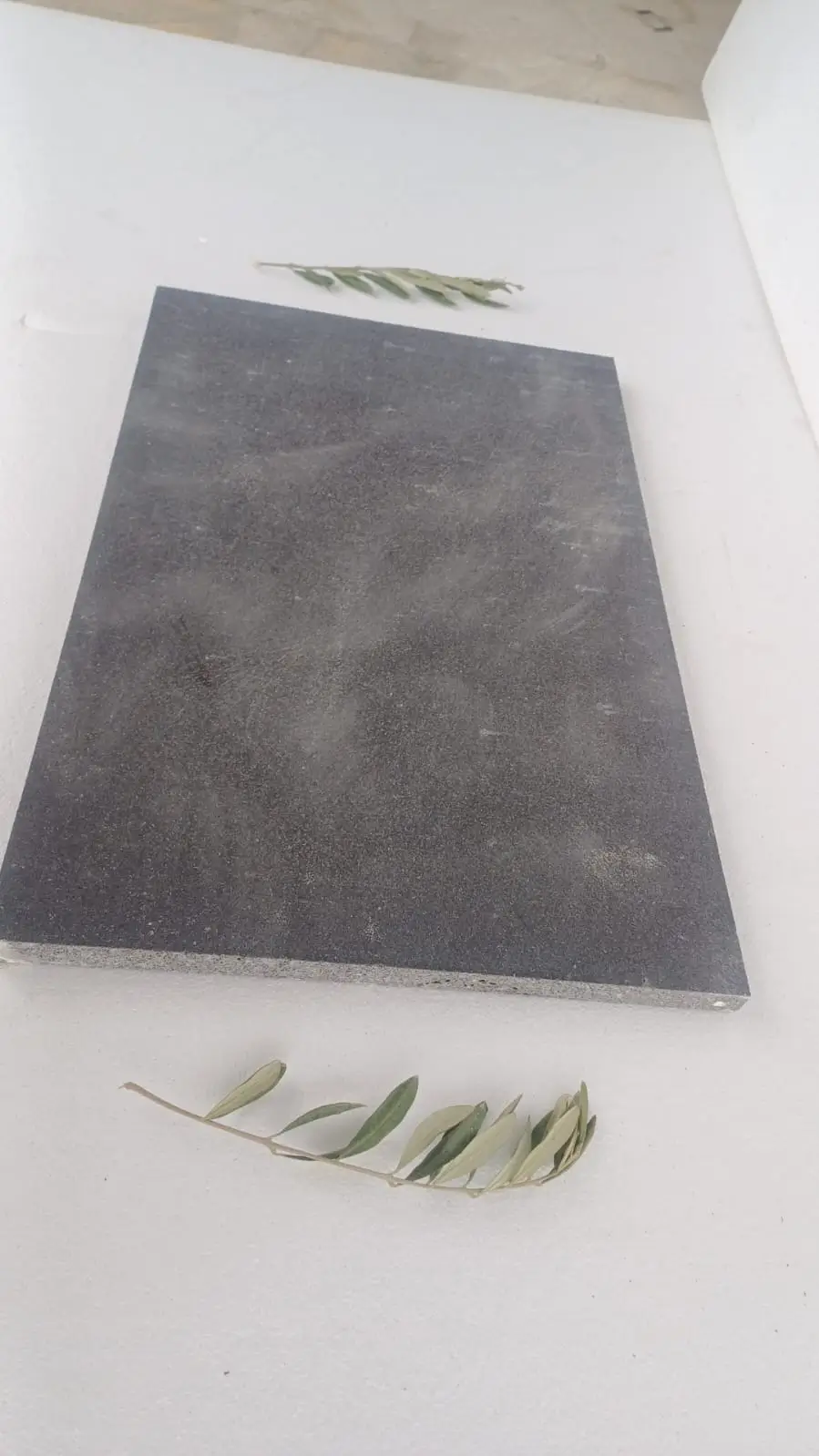
Sealing large limestone pavers in Arizona requires a two-threat approach — you’re managing UV degradation and storm water infiltration simultaneously, and the products that excel at one don’t always perform at the other. Penetrating impregnators rated for natural limestone are the professional standard for the field stone itself, applied after a full 28-day curing period from initial installation. They work below the surface to line pore walls without building a film layer that traps moisture during rain events.
The joint sealer is a separate specification from the field stone sealer — a common oversight that leads to joint washout even when the stone itself is protected. A silicone-modified joint sealant applied over cured polymeric sand extends the joint’s resistance to wind-driven rain penetration and reduces the erosion that typically opens up 1/8-inch joints to problematic 3/8-inch gaps within two to three storm seasons. Reapplication every two years keeps the joint protection active without requiring full joint replacement.
- Field stone sealer: penetrating silane-siloxane blend, applied at manufacturer specified coverage rate — do not over-apply, excess sealer pools in low spots and traps storm water
- Joint sealant: silicone-modified, compatible with the polymeric sand or mortar in use
- Resealing schedule: field stone every three to four years, joint sealant every two years in full-exposure installations
- Application timing: avoid sealing within 48 hours of anticipated rain — Arizona storm forecasting in monsoon season makes this a real logistical challenge worth planning around
Specifying Large Limestone Pavers for Glendale Performance
Large limestone paver design trends for Glendale contemporary homes are converging on a profile that’s both visually sophisticated and mechanically sound — large format slabs, clean honed finishes, tight sawn-cut joints, and layout patterns that manage storm water as a deliberate design element rather than an afterthought. The contemporary outdoor aesthetics driving today’s project requests aren’t in conflict with storm and wind resistance when you specify the material, thickness, edge restraint, and joint system as an integrated system from the start.
Getting those decisions right before the first stone goes down determines your project’s long-term performance. As you plan your installation, related maintenance planning is equally important — Large Limestone Paver Maintenance Schedule for Tempe Properties offers a structured framework for ongoing care that applies directly to Glendale installations as well. Citadel Stone’s large limestone slabs in Arizona inventory represents decades of cultivating elite quarry relationships.