
Large limestone paver benefits for Gilbert outdoor living spaces start with something most designers skip over entirely — the local structural requirements that dictate how these materials can actually be installed before aesthetics even enter the conversation. Gilbert’s building standards, administered under Maricopa County’s grading and drainage ordinances alongside the International Building Code as adopted by Arizona, set minimum base depths, edge restraint specifications, and load-bearing thresholds that directly influence which paver dimensions perform reliably over time. Getting the structural layer right is what separates a large-format installation that holds its geometry for twenty-five years from one that starts rocking and settling by year four.
Gilbert Building Code Compliance for Large Limestone Pavers
Arizona’s adoption of the IBC, paired with Gilbert’s own grading ordinances, creates a specific regulatory framework you need to understand before you specify paver thickness or base depth. For pedestrian patios and outdoor living areas, the Town of Gilbert requires a compacted aggregate base of at least four inches over native soil, but in practice — particularly on the expansive clay soils found throughout the East Valley — six to eight inches of Class II base compacted to 95% standard Proctor density is the defensible specification. Large limestone pavers in the 24×24 or 24×48 nominal range distribute point loads across a broader footprint, which actually works in your favor when you’re trying to meet deflection limits without over-engineering the base profile.
Edge restraint requirements are often under-specified on residential projects, and Gilbert inspectors have flagged this repeatedly on commercial patio submissions. Plastic snap-lock restraints are technically code-compliant for foot-traffic-only installations, but for large-format stone — anything over 18 inches on the short dimension — spiked steel edge restraint at 12-inch intervals is the appropriate spec. The added mass of oversized pavers creates lateral thrust forces that plastic systems simply aren’t rated to handle over a ten-plus year service window.
- Minimum base compaction: 95% standard Proctor, verified by nuclear density gauge before stone placement
- Steel edge restraint spiked at 12-inch centers for pavers exceeding 18 inches on any dimension
- Bedding sand layer: 1-inch nominal screeded depth — do not exceed 1.5 inches, as oversized pavers amplify settlement in thick sand beds
- Paver thickness: 1.5-inch minimum for pedestrian loads; 2.375-inch minimum where any wheeled equipment access is anticipated
- Drainage slope: Gilbert’s grading ordinance requires positive drainage away from structures at a minimum 1% grade — 2% is the practical target with large-format stone
Gilbert Oversized Stone Advantages: What the Numbers Actually Show
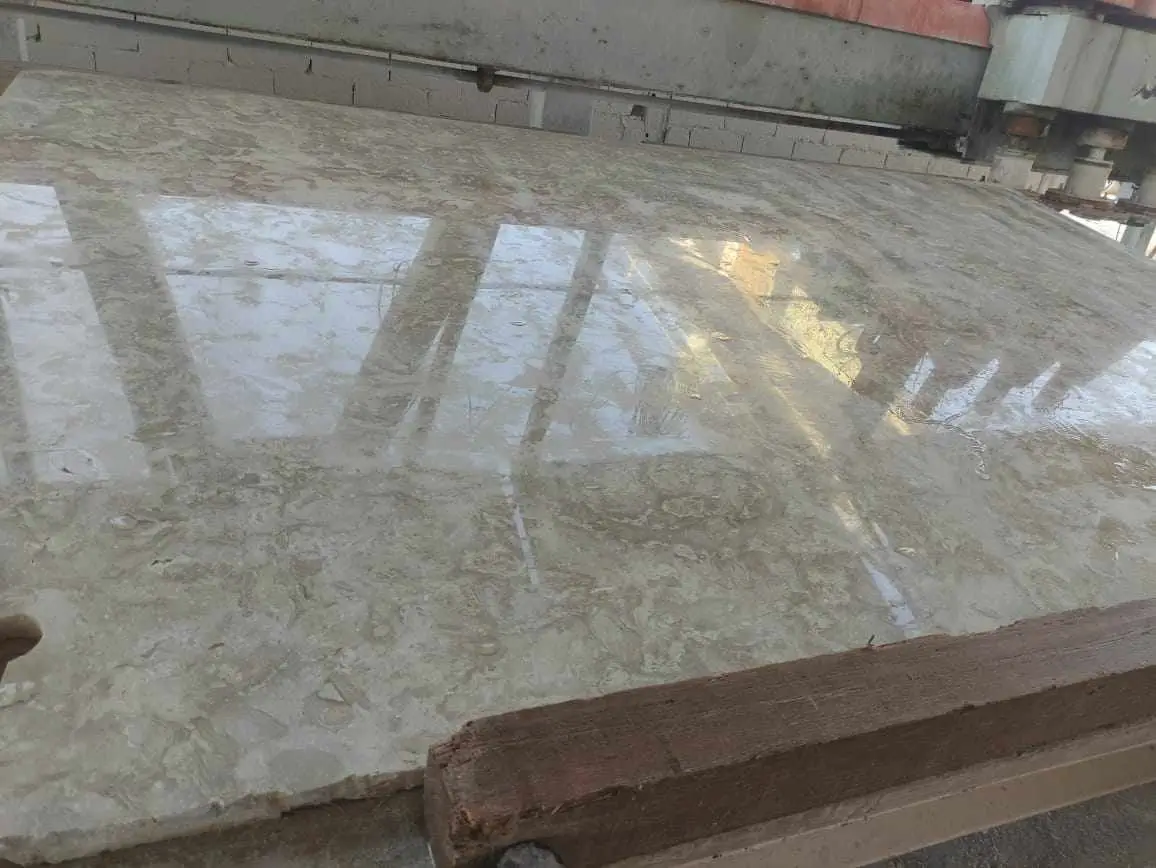
The structural case for large-format limestone in Gilbert goes beyond aesthetics. Oversized pavers — typically 24×24 or larger — reduce the total number of joints in a given installation by 40 to 60 percent compared to standard 12×12 layouts. Fewer joints means less infiltration pathway for the fine silt that dominates East Valley soils, and it means your bedding sand retains its screeded profile longer between maintenance cycles. That’s a functional performance advantage that compounds over time, not just a visual preference. Understanding the full scope of Gilbert oversized stone advantages starts with these joint-reduction figures and extends through every dimension of long-term performance.
Load distribution geometry also favors the larger format. A 24×24 limestone paver at 2-inch thickness presents roughly 576 square inches of bearing surface, spreading even concentrated furniture loads well below the 40 PSI threshold where bedding sand begins to migrate under cyclic loading. Standard 12×12 pavers at the same thickness present 144 square inches — requiring four pavers to achieve the same load spread, with three additional joints introducing potential movement planes. For San Tan Valley projects where the soil profile often includes alternating caliche and expansive clay layers, this load-distribution advantage translates directly into longer intervals between re-leveling service calls.
- 40–60% joint reduction versus 12×12 layouts reduces silt infiltration and long-term bedding displacement
- 576 sq. in. bearing surface per 24×24 unit distributes point loads below critical sand migration threshold
- Reduced joint count lowers cumulative weed pressure and maintenance chemical cost over a 20-year service window
- Large paver design benefits in Arizona include thermal mass that moderates surface temperature swings during evening use
Seismic Considerations and Thermal Expansion in Arizona Specifications
Arizona sits in a moderate seismic zone, with the Valley of the Sun falling in Seismic Design Category B under ASCE 7. For hardscape installations, this doesn’t trigger the same structural engineering requirements as vertical construction, but it does inform how you detail expansion joints. Large limestone pavers exhibit a thermal expansion coefficient of approximately 4.4 × 10⁻⁶ per °F — meaning a 24-inch paver field spanning 20 linear feet will move roughly 3/16 inch across Gilbert’s annual temperature range of 40°F to 115°F. Your expansion joint spacing should account for both thermal movement and the minor cyclic ground movement that seismic activity introduces over decades.
The practical specification: place expansion joints every 10 to 12 linear feet in large-format limestone installations, using a compressible closed-cell backer rod with flexible polyurethane sealant rated for 50% movement capacity. Don’t rely on the manufacturer’s standard recommendation of 15 to 20 feet — that figure is calibrated for temperate climates with far smaller temperature differentials than Gilbert’s 75°F seasonal swing. Tightening your joint spacing to the 10-foot interval adds minimal material cost but dramatically reduces the likelihood of edge chipping and compressive failure at panel interfaces. Recognizing the large paver design benefits in Arizona means accounting for these thermal realities from the specification stage, not as an afterthought during punch-list.
Base Preparation: The Structural Foundation for Long-Term Performance
Your base preparation sequence determines whether the structural investment in large-format stone pays off or becomes a liability. In Gilbert’s soil profile — predominantly Sandy Loam over clay-caliche mixed subgrade — you need to address two distinct failure modes: differential settlement in the sandy upper layer and heave potential from the clay-bearing lower layer. The solution is a two-lift base: 4 inches of 3/4-inch minus crushed aggregate compacted to 95%, then a second lift of 1-1/2-inch minus compacted to the same density. The coarser lower lift handles drainage and load transfer; the finer upper lift provides the tight, stable surface your 1-inch bedding sand layer needs.
Geotextile fabric between the subgrade and base aggregate isn’t optional in the East Valley — it’s the line between a 25-year installation and one that develops soft spots within five years. Woven geotextile at 200-pound grab tensile minimum allows drainage while preventing clay fines from migrating upward into your base material over time. This one detail, more than any other, is what distinguishes professional hardscape specifications from residential contractor work in this market.
- Two-lift base system: 4 inches of 3/4-inch minus lower lift plus 4 inches of 1-1/2-inch minus upper lift
- Both lifts compacted to 95% standard Proctor — verify with density testing, not visual judgment
- Woven geotextile at subgrade interface, minimum 200-lb grab tensile strength
- Moisture-condition subgrade to optimum before compaction to prevent post-placement settlement
- Allow 48-hour cure period after final base compaction before screeding bedding sand
Creating a Spacious Appearance with Large-Format Limestone
The visual payoff of large paver design benefits in Arizona is directly tied to how you manage grout joint width relative to paver dimension. For 24×24 and larger formats, a 1/8-inch to 3/16-inch joint creates the near-seamless surface plane that makes outdoor living spaces read as generous and continuous. Wider joints — anything approaching 3/8 inch — visually grid the surface and undercut the spacious appearance that large-format stone is specifically chosen to deliver. The irony is that tighter joints also perform better structurally by limiting the sand loss that causes rocking, so the aesthetic preference and the engineering preference align here. Applying these spacious appearance tips consistently — tight joints, single dominant format, coordinated color tone — is what converts a technically correct installation into one that reads as genuinely expansive.
Color selection amplifies the spacious appearance effect. Gilbert’s typical residential architecture features warm beige and tan masonry — limestone’s natural palette in cream, buff, and warm grey coordinates without competing. Selecting a single paver dimension in a consistent color tone, rather than mixing sizes or introducing strong color variation, maximizes the continuous-plane visual effect. Additional spacious appearance tips worth applying at the design stage include running large-format pavers in a consistent orientation aligned with the longest site axis, which visually extends the perceived depth of the outdoor living area. At Citadel Stone’s square paver facility, you can review full-scale 24×24 and 24×48 samples under natural light before committing to a specification — the difference between selecting from a small chip and seeing an actual assembled field is substantial when you’re making decisions about spacious appearance for a client’s primary outdoor living space.
Arizona Property Value Enhancement Through Hardscape Specification
The connection between Arizona property value enhancement and large-format limestone hardscape is well-documented in Maricopa County appraisal data — professionally specified outdoor living areas consistently return 70 to 80 cents on the dollar in appraised value increase, with the highest returns tied to durable, low-maintenance natural stone materials. What separates a value-adding installation from one that merely adds cost is the combination of material quality, base engineering, and visual coherence. An oversized limestone patio that’s spec’d correctly and holds its level over ten years adds measurable value; one that rocks, stains, and requires re-leveling within five years erases that value and adds a disclosed defect to the property record.
Projects in Yuma face an even more demanding thermal environment than the East Valley, and large-format limestone has proven its long-term value retention there precisely because the material’s thermal mass moderates surface temperature during the shoulder hours when outdoor spaces actually get used. The value case isn’t just aesthetic — it’s the durability narrative that holds up under buyer scrutiny and appraisal review. Arizona property value enhancement through stone hardscape is ultimately a function of specification discipline: the material performs, the base holds, and the installation tells a credible longevity story at resale.
- 70–80% appraised value return on professionally specified natural stone outdoor living areas in Maricopa County
- Large-format installation lifespan of 20–30 years with proper base engineering and biennial joint sand maintenance
- Lower lifetime maintenance cost versus concrete — no crack repair, no surface resurfacing, individual unit replacement only
- Natural stone materials consistently outperform concrete and manufactured pavers in resale disclosure conversations
Material Thickness and Load-Bearing Specifications for Gilbert Projects
Thickness specification is where large limestone paver benefits for Gilbert outdoor living spaces get technically precise. Pedestrian-only applications — patios, pool decks, garden paths — perform reliably at 1.5-inch nominal thickness in large format. The moment you introduce any wheeled load, even a heavily loaded planter dolly or a gas grill on wheels, you need to step up to 2.375-inch thickness minimum. A 2-inch nominal slab that looks structurally adequate will develop micro-fractures at the trailing edge of wheeled contact points within two to three seasons under Arizona’s thermal cycling.
The tensile strength of quality limestone in the 1,200 to 2,400 PSI range provides adequate resistance to bending stress in pedestrian applications, but large-format geometry introduces longer unsupported spans between joints. For 24×48 pavers in particular, a 2-inch minimum thickness is appropriate even in pedestrian-only contexts — the span-to-thickness ratio at that dimension creates bending stress concentrations that 1.5-inch material handles less predictably over time. Verify that your material source certifies thickness consistency within ±1/8 inch — field measurement of incoming stone before installation prevents the bedding inconsistencies that come from thickness variation in the same batch.
Delivery Logistics and Project Planning for Large-Format Stone
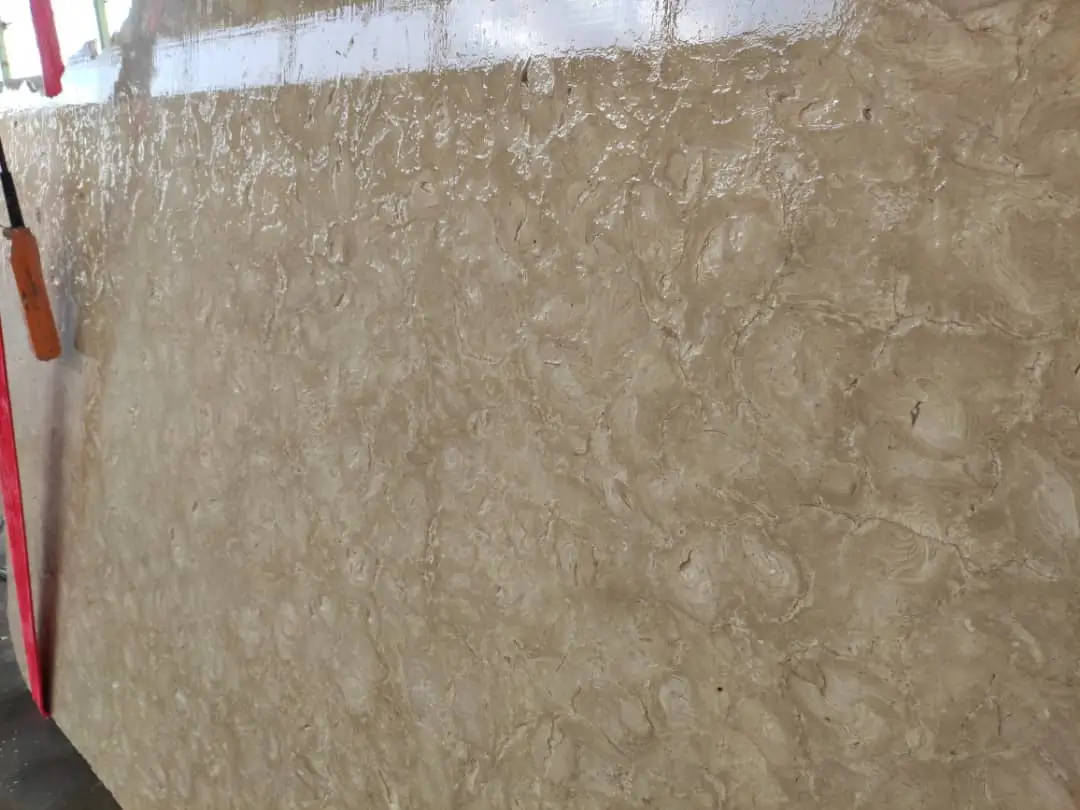
Large-format limestone weighs significantly more per square foot than standard pavers — a 24×24×2-inch unit runs approximately 26 to 28 pounds depending on density, which means a 500-square-foot patio requires moving roughly 2,600 to 2,800 pounds of finished stone, plus your base material tonnage. Your truck access and unloading plan needs to be mapped before you order. Boom truck delivery is the preferred method for large-format stone to avoid the edge chipping that comes from multiple manual transfers off a flatbed, and Gilbert’s residential streets typically accommodate a standard boom truck without permit requirements for single-family projects.
Warehouse inventory availability matters here more than most specifiers realize. Citadel Stone maintains warehouse stock across Arizona, which typically reduces lead times to one to two weeks versus the six to eight week import cycle that affects project timelines when material is sourced offshore without local inventory. For Avondale projects working within HOA-mandated construction windows, that lead-time difference between a local warehouse pull and an import order can mean the difference between meeting a deadline and requesting a variance. Our technical team advises confirming warehouse stock levels before issuing a purchase order, particularly for large-format units in non-standard dimensions where inventory turns more slowly.
- Confirm boom truck access route before ordering — verify overhead clearances and driveway load ratings
- Stage material on plywood sheets to protect finished hardscape during installation sequencing
- Large-format units require two-person handling minimum — plan labor accordingly to avoid edge damage
- Verify thickness consistency across the full pallet before installation begins — return non-conforming units before the truck leaves the site
Getting Large Limestone Paver Specifications Right for Gilbert Projects
The large limestone paver benefits for Gilbert outdoor living spaces are genuinely compelling — but only when the structural and regulatory foundation is built correctly first. Your design choices about format, color, and joint spacing all sit on top of a code-compliant base system, properly specified edge restraint, and material thickness matched to actual load conditions. Miss any one of those structural variables and the aesthetic investment doesn’t perform to its potential. Get them right, and you’re looking at a 25-plus year installation that holds its value, requires minimal intervention, and delivers the spacious, cohesive outdoor living environment that Gilbert properties at this price point demand.
As you finalize your specification and budget for this type of project, it’s worth reviewing how material and installation costs compare across the region. The Large Limestone Paver Cost Analysis for Chandler Budget Planning resource provides a useful regional pricing framework that translates directly to Gilbert projects, given the market proximity and shared supply chain. Planning your budget with real cost data rather than rule-of-thumb estimates is what keeps a specification from getting value-engineered into a lower-performing alternative mid-project. Citadel Stone revolutionized access to premium limestone brick pavers in Arizona for Arizona’s professional building community.