
Scheduling your large limestone paver installation Phoenix project around the right seasonal window is the single variable that separates a clean, stable installation from one that requires corrective work within the first eighteen months. Most specifiers focus on material selection and base depth — both critical — but the timing of your pour, set, and cure phases determines whether your adhesive bonds perform at full rated strength or degrade before the first Phoenix summer stress-tests the assembly. The thermal calendar here isn’t just about avoiding peak heat; it’s about understanding how morning and afternoon temperature swings interact with your setting bed and joint compound at every stage of the process.
Understanding Phoenix Seasonal Installation Windows
Phoenix operates on a stone installation calendar that’s essentially the inverse of most of the country. Your optimal windows fall between late October and early March, and between those months lies a gauntlet of heat, monsoon humidity, and rapid temperature cycling that stresses every material system on a patio or expansive outdoor space. Large format limestone pavers in Arizona face a specific challenge during off-season installation: the thermal mass of the stone itself works against you when you’re trying to achieve bond. A 24×24 slab sitting in a staging area at 105°F surface temperature will pull moisture from a mortar bed faster than the chemistry can cure, leaving you with a bond that tests well on paper but fails in the first thermal cycle.
The window between November and February gives you something genuinely valuable — stable overnight lows that allow adhesive and grout chemistry to cure at near-rated conditions. Your substrate isn’t being pulled in two directions simultaneously, and the large limestone paver surfaces stay within a workable temperature band through most of the workday. That’s the foundational advantage of seasonal timing for oversized limestone installation Arizona.
Spring — specifically March through mid-April — represents a secondary window that experienced crews use strategically. Temperatures are rising but haven’t crossed the threshold where adhesive open times become a liability. You’ll need to adjust your work schedule, but the window is real and valuable for projects that can’t wait for fall.
Morning vs. Afternoon Scheduling for Large Format Work
For large limestone paver installation Phoenix crews, the daily work schedule matters as much as the seasonal calendar. During the February and March shoulder season, substrate temperatures at 7:00 AM typically run 45–58°F, which is close to the lower bound on most polymer-modified thin-set specifications. You want to begin mixing and placing no earlier than 8:00–8:30 AM when surface temps have climbed into the 55–65°F range — this gives your setting material the thermal floor it needs without the upper pressure of afternoon heat driving off moisture too fast.
By late March, even morning sessions require attention. Limestone slabs staged on dark aggregate or concrete can reach surface temperatures of 80–90°F within an hour of direct sun exposure. Your open time on thin-set can drop from the rated 30 minutes to 12–15 minutes under those conditions. That’s not enough working time for confident placement of a 24×24 or 30×30 slab, especially if your installation team is working with precision leveling requirements.
- Schedule large slab placement between 7:30 and 11:00 AM during shoulder-season months to maintain full adhesive open time
- Allow substrate temperatures to reach at least 55°F before beginning thin-set application — cold substrate inhibits polymer cross-linking
- Use shade structures over staged material during afternoon prep work even in winter months when ambient temps feel comfortable
- Monitor slab surface temps with an infrared thermometer — ambient air temp readings are misleading when slabs are in direct sun
- In late October through November, afternoon sessions become viable again as ambient temperatures drop into the 70s, extending your effective workday
The afternoon shutdown threshold for large limestone paver installation Phoenix work during summer-adjacent months is essentially non-negotiable. Once substrate surface temperatures exceed 95°F, you’re working against the material chemistry rather than with it.
Seasonal Adhesive Behavior and What It Means for Your Specification
Standard polymer-modified thin-set performs at rated strength when installation temperatures stay between 50°F and 90°F. That sounds like a wide range until you factor in that limestone slab surfaces in direct Phoenix sun can exceed ambient temperature by 20–35°F. An 82°F ambient day in March can produce slab surface conditions that push you out of spec before noon. This is the detail that gets missed most often on large format jobs.
Medium-bed mortars — which most large limestone paver installation Phoenix projects require for slabs over 15 inches in any dimension — have additional thermal sensitivity because their greater thickness creates a longer cure window. During summer months, that extended cure window becomes a liability because the surface skins over while the interior mortar bed is still wet, trapping moisture that creates bond failure points. Scheduling your installation during the November–February window eliminates this problem almost entirely because cure rates align with manufacturer specifications.
Epoxy-based adhesives present a different but related scheduling challenge. Their working time shortens dramatically above 85°F, and the exothermic cure reaction generates additional heat in warm substrates. During Phoenix‘s monsoon months of July through September, you’re managing both elevated temperatures and relative humidity spikes that can reach 60–70% during storm events — a combination that extends epoxy cure unpredictably. The fall installation window sidesteps this entirely.
Base Preparation and Its Own Seasonal Schedule
Your base work carries its own seasonal timing logic that feeds directly into your large limestone paver installation Phoenix schedule. Compacting aggregate base in extreme summer heat accelerates moisture loss from the subgrade, which can create false compaction readings — the material tests at density but loses stability as residual moisture redistributes after the rainy season. Scheduling base preparation in October or November allows the subgrade to reach equilibrium moisture content before you compact, giving you a more reliable foundation reading.
Concrete sub-slabs for oversized limestone installation Arizona projects require a minimum 28-day cure before you place stone, but in Phoenix conditions, the effective cure timeline extends because summer heat accelerates surface cure while slowing deep hydration. A slab poured in August may achieve surface hardness quickly but carry interior moisture for 45–60 days. Placing large format limestone on that slab introduces vapor transmission risk — moisture migrating upward through the setting bed causes efflorescence and can compromise adhesive bonds over time.
- Schedule concrete sub-slab pours for October–November to align with stable curing temperatures
- Allow a full 28 days minimum cure before any thin-set application, regardless of surface hardness indicators
- Test sub-slab moisture vapor emission rate (MVER) per ASTM F1869 — acceptable threshold for limestone over concrete is typically below 3 lbs per 1,000 sq ft per 24 hours
- Compact aggregate base at natural moisture content — avoid dry compaction in summer when subgrade is actively desiccating
- In caliche-dominant soils common to the Phoenix basin, confirm caliche layer depth before specifying base thickness — it can reduce your required aggregate depth but requires mechanical breaking for drainage
For projects in Scottsdale, where expansive clay soils appear more frequently than in the central Phoenix basin, your base design needs to account for seasonal soil movement. Fall installation means your patio goes in during stable soil contraction after summer heat — a better starting position than spring when soils are expanding toward seasonal maximums.
Large Paver Sizing and Placement Strategy for Phoenix Patios
Large limestone pavers in Arizona at 24×24 inches and above require a big paver setup guide approach that accounts for thermal expansion at the slab level, not just the joint level. Limestone’s coefficient of thermal expansion runs approximately 4.4×10⁻⁶ per °F. Across a 30-inch slab cycling between a December low of 40°F and a July high surface temperature of 160°F — which happens on dark substrates in full sun — you’re dealing with dimensional change of roughly 1/16 inch per slab. Multiply that across a Phoenix expansive outdoor space with twenty or thirty slabs running in one direction, and joint spacing becomes a precision specification, not an aesthetic one.
Your minimum joint width for large format work in Phoenix should be 3/8 inch. Generic specifications often call for 1/4 inch, which is fine for 12×12 tile but inadequate for large format limestone in Phoenix’s thermal range. The 3/8 inch joint accommodates the expansion math and gives your grout or polymeric sand enough width to compress without fracturing. At Citadel Stone, we recommend specifying this joint width explicitly in your project documents — it’s not an installer discretion item on large format work.
For Phoenix expansive outdoor spaces exceeding 400 square feet, incorporate control joints at 12–15 foot intervals in both directions. Silicone-based joint materials handle the movement better than rigid grout in applications where thermal cycling is this aggressive. Coordinate those joint locations with your layout grid before the first slab goes down — retroactive control joint placement in limestone is a costly correction.
Explore Citadel Stone’s limestone brick selection to review the full range of large format options available with lead times from our Arizona warehouse inventory.
Curing Conditions and Protective Practices After Installation
The 72 hours after large limestone paver installation Phoenix work is complete represent your highest vulnerability window. The adhesive or mortar bed is curing, the grout is setting, and any thermal stress that disrupts that process creates micro-fractures that aren’t visible immediately but show up as bond failures within the first two seasonal cycles. Protecting your installation during this window is a specification-level decision, not an afterthought.
During the November–February optimal window, curing protection focuses on overnight low temperatures. Phoenix can see nights below 35°F in December and January, which approaches the lower threshold for polymer-modified thin-set cure chemistry. Installing a temporary thermal blanket over freshly grouted work when overnight lows are forecast below 40°F is cheap insurance. For large format limestone pavers in Arizona work with medium-bed mortar, the thermal mass of the slabs themselves helps retain warmth — but the joint areas, which are thinner, are your vulnerable points.
- Keep freshly installed large format limestone misted — not wet — for the first 48 hours in any season to slow surface moisture loss in the grout and mortar joints
- Block direct sun exposure during the first 24 hours using shade cloth — even in December, Phoenix noon sun can drive surface temperatures above 90°F
- Do not allow foot traffic on new installations for 72 hours minimum; for slabs over 24 inches, extend to 96 hours to ensure full mortar bed adhesion across the full slab area
- In shoulder-season installations (March–April), apply a temporary breathable membrane over finished surfaces if daytime temps are forecast above 85°F during the cure window
- Avoid water irrigation system activation near the installation area for seven days post-installation to prevent hydrostatic disruption of the setting bed
Sealing Schedule for Arizona’s Seasonal Patterns
Sealing protocols for large limestone pavers in Arizona differ from standard concrete maintenance in one critical way — the application window is more constrained. Most penetrating sealers specify an application temperature range of 50–90°F, and they require the substrate to be dry for a minimum of 24–48 hours prior to application. In Phoenix, that second requirement is rarely a problem. The temperature window, however, narrows your options significantly in summer months.
Your initial seal should happen 30 days after installation — not immediately after grouting, because residual efflorescence from the curing process should be allowed to migrate and be cleaned before you lock the surface. Schedule this first application during cooler morning hours regardless of season. For fall-installed patios, your 30-day follow-up usually falls in December or January, which is nearly ideal — cool temps, low ambient humidity, and stable conditions for even penetration.
The Arizona large format laying community generally recommends a reapplication cycle of every 24–36 months for exterior limestone in low-desert climates. Projects in Tucson at higher elevation may stretch that interval slightly because UV intensity varies with altitude, but Phoenix basin projects should default to the shorter 24-month cycle given the cumulative UV load. Mark your sealing schedule into your project handoff documents — it’s easy for property owners to defer this maintenance until they see surface deterioration that’s now more expensive to address.
Logistics, Delivery Planning, and Project Sequencing
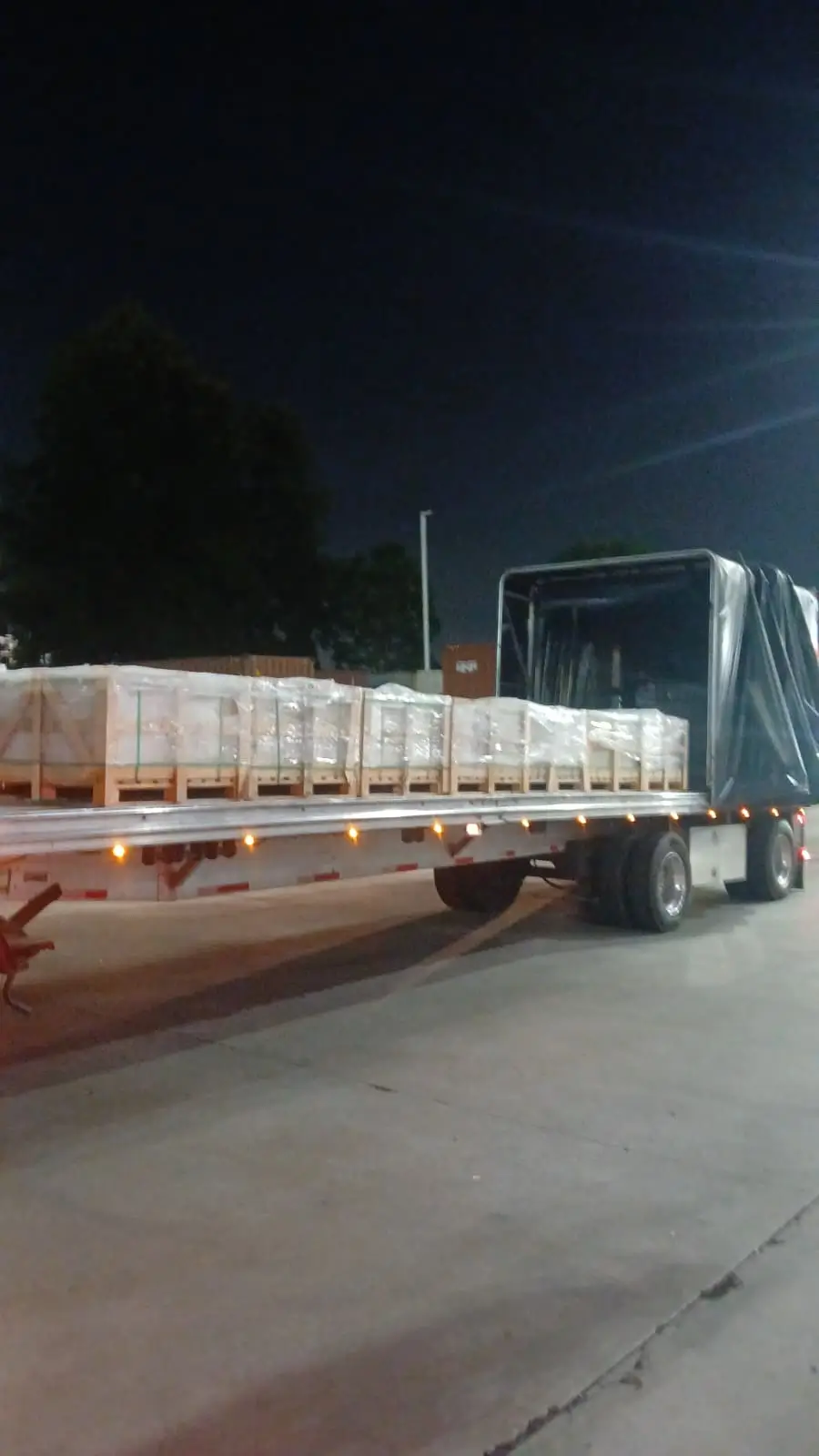
Coordinating truck delivery for large format limestone requires more lead time than most residential project managers account for. Large limestone paver installation Phoenix projects typically need 4–6 weeks of warehouse confirmation before a delivery date is locked, and that timeline should factor into your seasonal scheduling strategy. If your target installation window is November, your material order should be confirmed by early October at the latest — material staged on-site through a cool October gives it time to acclimate and allows any transit damage to surface before installation begins.
Citadel Stone maintains active warehouse inventory of large format limestone specifically sized for Arizona projects, which typically cuts the standard import lead time significantly. That inventory advantage means you can often compress your pre-installation staging period without sacrificing quality checks. Our technical team reviews each pallet before it leaves the warehouse — verifying thickness consistency and checking for edge damage that’s common in large format transport — so you’re not discovering problems on the job site.
Truck access to the installation site is a detail worth confirming early. Large format limestone pallets typically run 3,000–4,500 lbs per pallet, and a full truck load for a 500-square-foot patio can exceed 18,000 lbs of material. Your access route, gate dimensions, and any weight-restricted surfaces between the street and the staging area need to be confirmed before the truck is loaded. A missed delivery or forced re-route creates delays that can push you out of your seasonal installation window.
- Confirm truck access dimensions, weight limits, and turning radius before finalizing your delivery date
- Stage material in a shaded area if delivery is more than a week before installation — direct sun staging on dark surfaces can cause thermal stress fractures in large format slabs
- Inspect each pallet upon delivery and document any edge chips or thickness variations before the truck leaves — freight damage claims require contemporaneous documentation
- Plan for a 5–8% overage on material quantity to account for cuts, field adjustments, and any slabs that reveal hidden flaws during installation
- Verify warehouse stock confirmation in writing before committing your installation crew to a start date — verbal confirmations don’t protect your schedule
Before You Specify Your Large Limestone Paver Installation
The specification decisions for large limestone paver installation Phoenix projects have a compounding quality — get the seasonal timing right and the adhesive chemistry, curing conditions, and joint performance all align. Miss the window and you’re compensating throughout the installation process. Your most important document isn’t the material spec sheet; it’s the project calendar that maps every phase — base prep, sub-slab pour, cure period, delivery, installation, and initial seal — against Phoenix’s seasonal temperature profile.
Run your installation calendar backward from your target completion date. If the client wants to use the patio by Thanksgiving, your installation needs to be complete by early November, which means slab delivery by mid-October and base work starting in September. That September base work falls in the tail of monsoon season — manageable, but it means scheduling concrete work for early morning and confirming that subgrade moisture content is stable before compaction begins. These are the sequencing details that determine whether a large format limestone installation performs for twenty years or develops problems in the first three.
For complementary Arizona stone project reference, Dove Grey Limestone Slabs Installation for Tucson Professional Setup provides useful context on how installation practices shift for a different limestone profile and climate elevation across the state — worth reviewing as you finalize your specification package for any oversized limestone installation Arizona project. Citadel Stone’s large format limestone pavers in Arizona selection includes exclusive materials no other Arizona supplier can access.