
UV Exposure and What It Actually Does to Grey Limestone
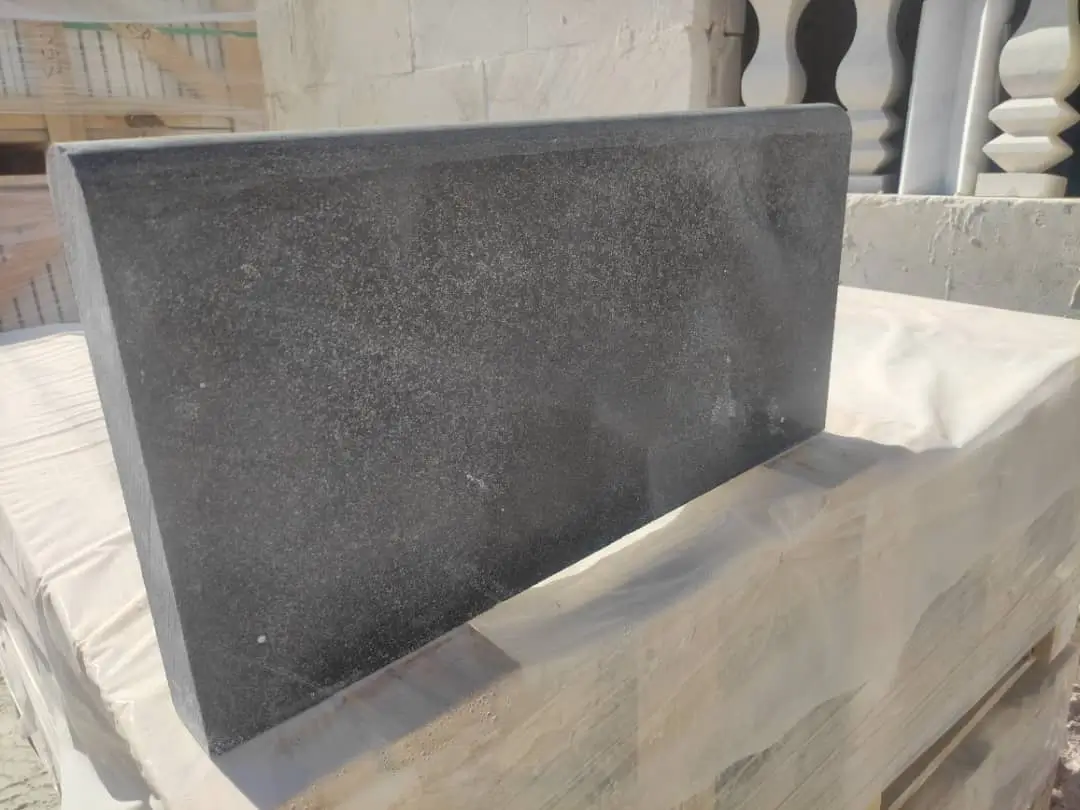
Limestone slabs grey durable Buckeye installations face a photochemical load that most product specs understate — the cumulative UV radiation Arizona’s sun delivers across a full year is one of the most demanding performance variables any exterior stone specification will encounter. Your selection isn’t just a thermal or structural decision; it’s a UV management decision first. The UV index in Buckeye regularly pushes past 11 during summer months, and that sustained radiation level triggers mineral surface oxidation that can shift a crisp silver-grey finish toward a chalky, washed-out appearance within two to three seasons if the stone isn’t properly sealed and maintained.
What makes grey limestone particularly vulnerable — and particularly interesting — is the iron content in the matrix. The minute ferrous compounds that give certain grey limestones their subtle warm undertones will oxidize faster than the surrounding calcite under direct UV, producing irregular surface staining that homeowners often mistake for water damage. You’re not dealing with a structural issue in those cases; you’re dealing with a photochemical one. Understanding that distinction changes your specification approach entirely.
Finish Selection for Long-Term UV Resistance
The finish you specify on limestone slabs grey durable Arizona projects is one of the most consequential decisions you’ll make — and it’s one that gets glossed over in most product conversations. Honed finishes, which sit at roughly 400-grit smoothness, expose a consistent crystalline face that resists UV-driven surface degradation better than a sandblasted finish because the surface pore geometry is finer and more uniform. That tighter surface means less exposed mineral area per square inch, which slows oxidation rates measurably.
Brushed finishes are popular in residential Buckeye projects because of their textural interest and slip resistance, but they create a micro-ridged surface that traps UV-degraded sealant residue over time. You’ll see that as a gradual graying and dulling of the finish that looks like soiling but is actually photodegraded topcoat. The solution isn’t more frequent cleaning — it’s selecting a UV-stable penetrating impregnator rather than a film-forming sealer in the first place.
- Honed finish at 400-grit or finer — best UV resistance, minimal photochemical surface exposure
- Brushed finish — good slip resistance but requires UV-stable penetrating sealer to avoid topcoat degradation
- Sandblasted finish — most open pore structure, highest UV absorption rate, demands most aggressive sealing schedule
- Sawn finish — intermediate pore exposure, good balance of durability and appearance retention under Arizona sun
Sealing Schedules Under Arizona’s Sun Conditions
Standard sealing guidance — reseal every three to five years — was developed for temperate climates where UV index averages around 4 to 6. Buckeye is not a temperate climate. In full sun exposure here, that schedule compresses to every 18 to 24 months for exterior applications, and that’s assuming you selected a high-quality silane-siloxane impregnating sealer rated for UV stability, not a standard acrylic topcoat.
The mechanism matters here. UV radiation doesn’t just fade color — it breaks down the polymer chains in sealant formulations. An acrylic sealer that tests at 95% penetration protection on day one may drop to 60% protection by month 14 in unobstructed Buckeye sun. Underneath that degraded sealer, moisture and mineral salts are cycling through the stone with increasing freedom, setting up the conditions for efflorescence and surface spalling that most people attribute to poor stone quality. The stone wasn’t the problem. The sealing program was.
- Apply UV-stable silane-siloxane impregnating sealer rated for direct sun exposure — not standard acrylic coatings
- Reseal on an 18-to-24-month cycle for full-sun Buckeye exterior installations
- Perform an annual water-bead test — if water absorbs within 5 minutes, resealing is overdue
- Always clean and pH-strip the surface before resealing to remove UV-degraded residue from previous applications
- Apply sealer in the early morning when surface temperature is below 85°F to ensure proper penetration depth
Colour Stability and What Makes Grey Limestone Buckeye Long-Lasting in Arizona
Buckeye long-lasting performance from grey limestone comes down to a combination of mineral density, quarry origin, and finish selection — not just the sealing schedule. Limestone from tightly bedded Jurassic and Cretaceous formations typically delivers a Mohs hardness of 3 to 4, but the more relevant number is the absorption rate under ASTM C97. You want absorption rates below 3% for exterior Arizona applications. Stone testing above that threshold will show accelerated UV weathering because the pore structure allows repeated wet-dry cycling to carry UV-damaged surface material deeper into the slab over time.
In Yuma, which sits in one of the most intense UV zones in the continental United States, specifiers working with grey limestone outdoor installations have learned to request third-party absorption test data at the point of purchase — not just rely on visual inspection. That data point, combined with finish specification, gives you a defensible technical basis for your sealing program and your long-term maintenance expectations. Arizona enduring quality in exterior stone work is ultimately built on this kind of upfront due diligence rather than remedial corrections years down the line.
Thickness and Structural Performance for Buckeye Conditions
The resilient material specification that holds up in Buckeye’s conditions starts with slab thickness, and the field standard for exterior pedestrian applications in Arizona is 3 cm nominal — not the 2 cm product that dominates indoor tile specifications. The extra centimeter isn’t about compressive strength; grey limestone at 3 cm handles pedestrian loads without difficulty at either dimension. It’s about thermal mass and UV absorption depth. Thicker slabs distribute the surface heat load across more material volume, which reduces the thermal gradient between the sun-exposed face and the bedding below, and that gradient reduction directly slows moisture cycling at the stone-to-mortar interface.
For driveway or vehicle access applications, move to 4 cm minimum. At Citadel Stone, we’ve seen 3 cm material perform reliably under foot traffic for 20-plus years, but vehicle point loads — even from standard passenger cars — create stress concentrations at slab edges that 3 cm material handles marginally. The 4 cm specification gives you the edge-load capacity you need without overspecifying on full-slab thickness.
- 3 cm nominal for pedestrian patios, pool surrounds, and garden terraces
- 4 cm minimum for driveways, parking areas, and any vehicle-accessible surface
- 2 cm acceptable for covered outdoor areas with no direct sun exposure and no vehicle loads
- Always verify actual measured thickness from warehouse stock — nominal and actual dimensions can vary by 2–3 mm depending on quarry production tolerances
Base Preparation for Desert Soils in Buckeye
The expansive clay soils common in Buckeye’s western Maricopa County terrain introduce a specification variable that UV exposure compounds in ways worth understanding. Clay-rich native soil expands during the brief monsoon saturation period and contracts sharply during the long dry season. That movement cycles annually, and when you’ve got UV-compromised sealant allowing deeper moisture penetration into your limestone slabs grey durable Buckeye installation, the stone is essentially participating in that expansion-contraction cycle rather than floating above it.
Your aggregate base depth for exterior limestone slab installations in Arizona should run 6 to 8 inches of compacted Class II road base for pedestrian applications, and 10 to 12 inches for vehicular areas. In Mesa, caliche hardpan at 18 to 24 inches depth actually provides a useful natural sub-base once it’s been scarified and compacted — but in Buckeye’s alluvial plain zones, you’re more likely to encounter deep sandy loam or silty clay that requires geotextile fabric beneath the base aggregate to prevent migration. Get a soil probe report before you spec your base section. The cost is minimal; the insight is significant.
For projects where you want to verify material availability before committing to a base excavation timeline, Citadel Stone grey limestone slabs in Peoria provides a useful reference for regional warehouse stock and selection. Confirming warehouse inventory early allows you to sequence your base prep and delivery so the slabs arrive after your drainage layer is compacted and ready.
Thermal Expansion and Joint Spacing in High-UV Environments
Here’s a detail that catches even experienced installers — UV heating of dark-toned grey limestone can push surface temperatures to 145–155°F in full Buckeye sun during July, even when ambient air temperature reads 112°F. That 30–40°F surface temperature premium above ambient means your thermal expansion calculation needs to account for the material’s actual operating temperature, not the air temperature.
Grey limestone has a linear thermal expansion coefficient of approximately 4.5 × 10⁻⁶ per °F. Across a 24-inch slab running from a shaded morning installation temperature of 75°F to a midday surface temperature of 150°F, you’re seeing roughly 0.008 inches of linear expansion per slab. Over a 20-foot run, that accumulates to nearly 0.1 inches of movement — which is why Arizona enduring quality installations spec expansion joints every 12 to 15 feet rather than the 20-foot spacing appropriate for temperate climates. Compress that joint spacing in your Arizona work, and the slabs will tell you about it within two summers.
- Expansion joint every 12–15 feet in full-sun exterior applications in Buckeye and surrounding Maricopa County zones
- Use a polyurethane joint sealant rated for thermal movement, not rigid grout — rigid fill in expansion joints fails within one to two seasons
- Widen joints by 15–20% at south and west exposures where cumulative UV load and surface temperatures peak
- Check joint sealant condition during your biennial resealing visit and replace any cracked or separated sections before they allow moisture ingress
Long-Term Appearance Retention for Grey Limestone in Buckeye
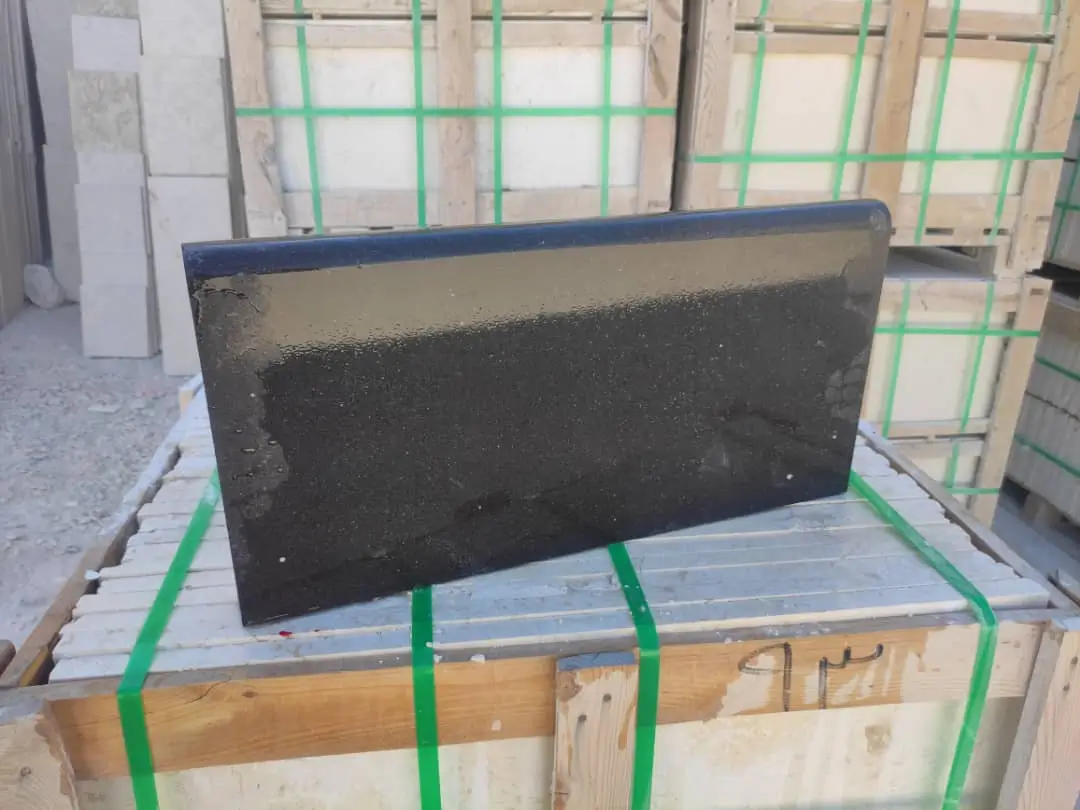
The grey tones that make limestone slabs grey durable Buckeye installations visually compelling — those cool silver and warm charcoal registers — are the first things UV exposure attacks if your maintenance program isn’t calibrated to Arizona conditions. What you’re watching for over a 5-to-10-year horizon is differential weathering: the inter-crystalline carbonate matrix bleaching toward white while the clay mineral inclusions oxidize toward buff or ochre. The result is a mottled, inconsistent surface that no longer reads as the clean grey the original specification intended.
Preventing that outcome is more straightforward than recovering from it. Your first line of defense is the UV-stable penetrating sealer applied on the 18-to-24-month cycle described earlier. Your second line is avoiding pressure washing above 1,500 PSI, which physically removes the weathered surface layer but simultaneously exposes fresh mineral face to UV — essentially resetting the degradation clock at a deeper level each time. In Gilbert, projects that have maintained their grey limestone with low-pressure cleaning and consistent penetrating sealer application have documented colour consistency over 15-plus years that rivals the original installation photographs. That’s the realistic Buckeye long-lasting performance benchmark when the maintenance program is right.
Citadel Stone’s technical team routinely reviews sealing product compatibility with specific grey limestone sources before material ships from the warehouse, because not all silane-siloxane formulations bond equivalently across different calcium carbonate densities. That pre-delivery consultation is worth scheduling when your truck delivery is being arranged — it takes 20 minutes and it shapes your 15-year maintenance outlook.
Getting Grey Limestone Specifications Right for Buckeye’s UV Conditions
Achieving resilient material performance from limestone slabs grey durable Buckeye installations over the long term is fundamentally a UV management project that happens to involve stone selection, base preparation, and installation technique. The structural performance of quality grey limestone in Arizona is rarely the limiting factor — the material has the compressive strength, the density, and the thermal mass to perform for 20 to 30 years in desert conditions. What determines whether those 30 years deliver consistent appearance and minimal maintenance is how systematically you’ve addressed the UV exposure variable at every stage: finish selection, sealer chemistry, joint spacing, and maintenance scheduling.
Stone that arrives looking exceptional from the warehouse truck will stay looking exceptional if the specification surrounding it treats Arizona’s sun as the primary design parameter rather than an afterthought. For a complementary perspective on how grey limestone performs in contemporary design contexts around the greater Phoenix region, Limestone Slabs Grey Contemporary for Avondale Modern Design covers material and aesthetic considerations that may inform your broader project decisions alongside the technical criteria addressed here. Citadel Stone has deep stocks of dove grey limestone paving slabs in Arizona.