
Storm Resilience Starts With Material Choice
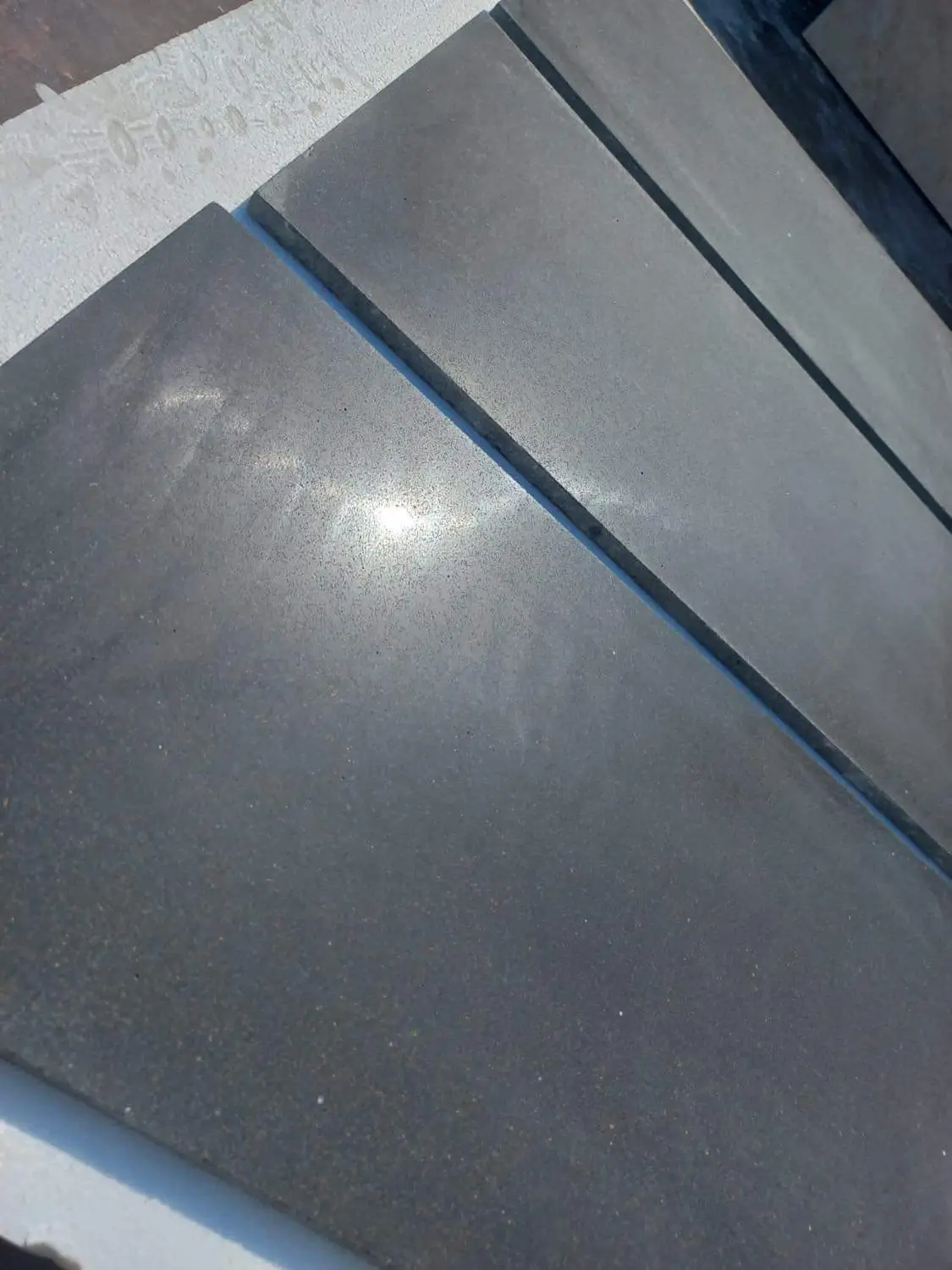
Light grey limestone reflective Gilbert projects face a mechanical stress test that most specifiers underestimate — the lateral force of wind-driven rain against exposed paver joints, combined with the impact energy of hail strikes on surface faces. In Gilbert and across the East Valley corridor, monsoon-season gusts regularly exceed 60 mph, and the shear stress those winds place on paving systems depends almost entirely on material density and edge restraint integrity. Light grey limestone with a compressive strength above 10,000 PSI handles those impact loads without surface spalling, while its reflective face remains intact for the long term.
What makes this material particularly suited to Arizona’s storm profile isn’t just hardness — it’s the combination of low porosity and consistent bed thickness that keeps joint sand locked in place even during wind-driven saturation events. The material’s interconnected pore structure, when properly sealed, resists the hydraulic pressure of storm water trying to undermine the base from below. You’ll want to get that sealing protocol right before the first monsoon hits your installation.
Wind Load and Joint Integrity Under Arizona Storms
The joint failure pattern seen most often after monsoon events isn’t cracking — it’s sand migration. Wind-driven rain enters the joint at a near-horizontal angle, and if your polymeric sand wasn’t properly activated or your joint depth is less than 1.5 inches, you lose the binding matrix within two or three storm cycles. For light grey limestone paving in Arizona, specify a minimum joint depth of 1.75 inches and use a polymer-modified joint compound rated for hydrostatic wash resistance rather than standard polymeric sand.
Edge restraint is the second failure point. Concrete edge restraint should be continuous — no gaps — and spiked at 12-inch intervals with 10-inch galvanized spikes driven into a compacted base. For projects in Chandler, where expansive clay soils shift during the wet season, that base compaction spec matters as much as the restraint hardware itself. Loose base material under wet conditions allows the restraint to heave, which then opens paver edges to wind-driven uplift.
- Polymeric joint sand must be rated for hydrostatic wash resistance — standard grades fail after two to three monsoon seasons in Gilbert
- Joint depth minimum of 1.75 inches prevents sand migration under lateral wind-driven rain
- Edge restraint spikes at 12-inch spacing, 10-inch galvanized, driven into compacted aggregate base
- Concrete perimeter edging must be continuous — even small gaps become wind-entry points that widen progressively
- Expansion joints every 12 to 14 feet (tighter than inland specs) accommodate both thermal cycling and storm-related base movement
Hail Impact Resistance and Surface Durability
Hail events in Gilbert produce stone sizes that reach 1.5 to 2 inches in diameter during severe monsoon supercells — enough impact energy to chip softer natural stone like some sandstones or lower-density travertines. Light grey limestone at a density of 160 to 165 lbs per cubic foot handles that impact load without surface fracture, provided your thickness specification is correct. For pedestrian applications, a 1.25-inch nominal thickness is adequate, but for areas exposed to heavy furniture, planters, or vehicle overhang, step up to 2 inches minimum.
The surface finish also plays a role in impact resilience. A honed or bush-hammered finish distributes impact stress more evenly than a highly polished face, and it maintains its reflective quality through minor surface events without requiring re-finishing. The natural grain structure of quality light grey limestone provides micro-texture that resists both impact spalling and the abrasive effect of wind-carried debris during storm events — fine gravel, sand, and organic material that act like sandpaper at 60 mph.
Reflective Performance and Gilbert Light Enhancement
The Gilbert light enhancement value of this material is measurable — light grey limestone reflects between 55 and 70 percent of incoming solar radiation depending on surface finish and moisture content. That figure is the Solar Reflectance Index (SRI) range that puts this material well above concrete pavers (typically 35 to 45 SRI) and significantly above darker natural stones. For patios, driveways, and pool surrounds, that reflective performance translates directly into reduced surface temperature and increased ambient brightness in shaded areas adjacent to the paving.
Here’s the detail most specifiers miss on light grey paving reflective Arizona projects: reflectance isn’t static across the storm season. During periods of heavy dust deposition — which follows major haboob events — surface reflectance can drop by 15 to 20 percent until the next rain or manual cleaning cycle. Building a post-storm rinse into your maintenance schedule keeps the brightness boost consistent across the full year. A light pressure wash at 1,200 PSI removes dust without disturbing sealed joints, and that’s the correct pressure ceiling — above 1,500 PSI you risk erosion of the joint compound surface.
- Solar Reflectance Index (SRI) range for light grey limestone: 55 to 70 depending on finish and moisture
- Honed finish maintains reflectivity after minor surface impacts better than polished faces
- Post-haboob dust reduces reflectance by 15 to 20 percent — plan a light pressure wash cycle after major dust events
- Maximum pressure wash: 1,200 PSI to protect joint integrity and sealed surfaces
- Adjacent vertical surfaces benefit from reflected light — pool walls, exterior cladding, and shaded entry areas all gain measurable Arizona illumination increase
Base Preparation for Storm Drainage Performance
Storm drainage geometry is where light grey limestone installations either succeed or fail under Arizona’s monsoon load. Gilbert receives an average of 8 to 9 inches of annual rainfall, but roughly 60 percent of that falls in intense 30- to 90-minute events between July and September. Your base preparation must handle that surge volume without allowing hydrostatic pressure to build beneath the paver layer. A compacted crushed aggregate base of 6 to 8 inches for pedestrian areas, or 10 to 12 inches for driveway applications, gives you the drainage capacity and structural stability those events demand.
The slope specification is equally non-negotiable. A minimum 2 percent cross-slope — ideally 2.5 percent — directs storm runoff away from structures and prevents the ponding that drives water into joints under wind conditions. Projects in Tempe, where lot grades are often nearly flat, require careful grading work before base installation rather than relying on the paver layer itself to manage drainage. At Citadel Stone, we frequently consult on base prep specifications during the planning phase, because correcting drainage geometry after installation is far more costly than getting it right in the base course. For a complementary perspective on material performance in the greater Phoenix metro, Citadel Stone dove paving limestone in Tempe covers how dove-toned limestone variants perform across similar installation conditions.
Thickness and Load Specifications for Arizona Storm Conditions
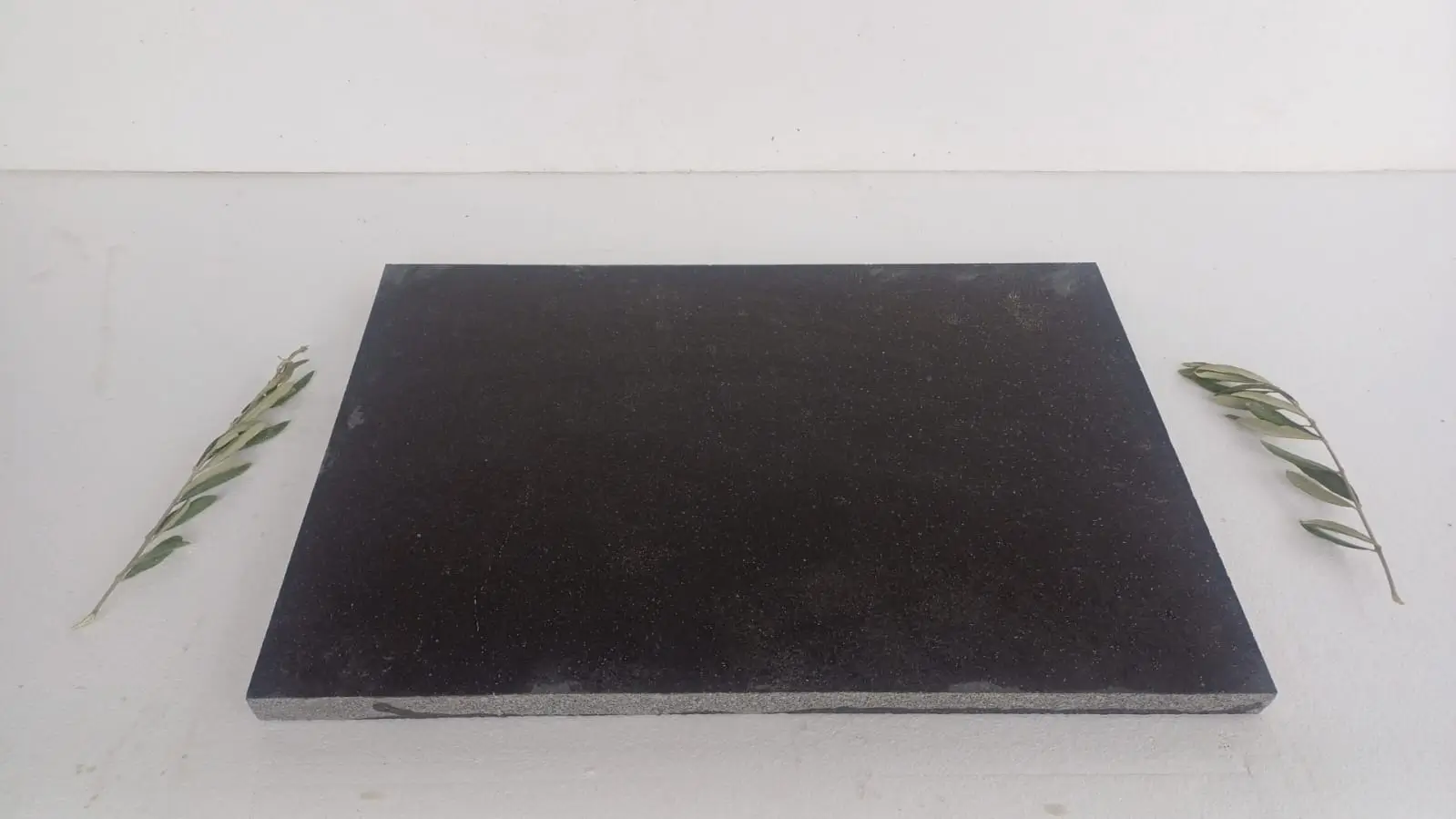
The mechanical stress from storm events reinforces what structural load requirements already demand: don’t underspec thickness. Light grey limestone paving in Arizona for standard pedestrian applications calls for 1.25-inch nominal thickness as the minimum, but a 1.5-inch slab gives you meaningful additional resistance to edge chipping from windborne debris impact and better load distribution on the compacted base during saturation events when base materials temporarily lose some bearing capacity.
For driveway or vehicle-accessible applications, the threshold moves to 2.5 to 3 inches nominal. At that thickness, the limestone’s own dead weight contributes to restraint stability — heavier slabs are less susceptible to wind-driven uplift at exposed edges, particularly on raised terrace installations or elevated patio areas where wind loads are amplified. The slab weight per square foot at 2.5 inches for quality light grey limestone runs approximately 30 to 33 lbs — a figure worth confirming with your warehouse before finalizing your structural base specification, since slight density variations between quarry batches affect load calculations.
- Pedestrian minimum: 1.25-inch nominal, recommended 1.5-inch for wind-exposed or elevated locations
- Driveway and vehicle-accessible: 2.5 to 3-inch nominal for combined structural and wind-uplift resistance
- Slab weight at 2.5 inches: approximately 30 to 33 lbs per square foot — confirm with warehouse for batch-specific density
- Elevated or raised terrace applications require thicker slabs due to amplified wind load exposure
- Base saturation during storm events temporarily reduces bearing capacity — thicker slabs distribute that load more safely
Sealing Protocols for Storm and Wind Resistance
Sealing light grey limestone paving in Arizona serves a different primary function than in moderate climates — here, the seal’s job is storm protection first, stain resistance second. A penetrating silane-siloxane sealer at 15 to 20 percent solids content penetrates the limestone’s pore matrix to a depth of 3 to 4 mm, creating a hydrophobic barrier that resists wind-driven water intrusion without altering the surface’s reflective character. Film-forming sealers, by contrast, create a surface layer that wind-carried debris abrades and haboob dust infiltrates, requiring more frequent reapplication and periodic stripping.
Your sealing schedule for Arizona conditions should target application every 24 to 30 months for penetrating sealers, with a visual inspection after each monsoon season. The inspection trigger is simple: pour 2 tablespoons of water on the surface. The brightness boost from the material’s reflectance remains consistent when the water beads — when it absorbs within 60 seconds, it’s time to reseal. Projects in Surprise on the west side of the metro experience higher dust load from the open desert margin, which accelerates sealer surface contamination and typically shortens that interval to 20 to 24 months.
Ordering Logistics and Storm Season Timing
Project timing around Arizona’s storm season affects both installation quality and material delivery logistics. Avoid scheduling final paver installation during the peak monsoon window — typically July 15 through September 15 — not because the material can’t get wet, but because joint compound curing requires a minimum 48-hour dry window that becomes unreliable during that period. Schedule your truck deliveries and base preparation for May or June, so the pavers are set and joints are fully cured before the first storm cell arrives.
Citadel Stone typically maintains warehouse stock of light grey limestone in multiple thickness ranges, which means lead times for standard profiles run 1 to 2 weeks rather than the 6 to 8 week import cycle that custom-sourced material requires. Confirm stock availability early — truck delivery scheduling to East Valley project sites fills up quickly in the April through June installation window as contractors rush to beat the monsoons. Your project manager should lock in a delivery date at least three weeks before your target installation start, particularly for larger orders where multiple truck loads are needed.
- Avoid final installation and joint curing during peak monsoon window: July 15 through September 15
- Target base prep and paver setting for May or June for full cure before storm season
- Confirm warehouse stock of required thickness profiles at least three weeks before install date
- Multiple truck deliveries for large orders require coordinated scheduling — the April to June window books quickly
- Joint compound requires 48-hour dry cure minimum — plan installation days around weather forecasts during shoulder season
Expert Summary
The complete light enhancement analysis for light grey limestone reflective Gilbert projects comes down to a straightforward principle: the material’s reflective and optical performance is only as durable as the structural and joint system holding it in place through storm season. Consistent Arizona illumination increase is achievable year-round, but only if edge restraints are properly anchored, joint sand is storm-rated, base drainage is engineered for surge events, and sealing is maintained on a schedule that accounts for dust and wind exposure specific to the East Valley.
Thickness specification, base depth, and drainage slope aren’t aesthetic decisions — they’re the load-bearing framework that keeps your light grey paving reflective and intact through years of monsoon cycles, haboob events, and the mechanical stress that Gilbert’s storm profile delivers. As you finalize your complete specification, complementary stone applications across Arizona’s residential market offer useful comparative data — Light Grey Limestone Paving Modern for Chandler Contemporary Homes explores how the same material family performs within contemporary architectural contexts in the broader metro area. At Citadel Stone, we supply light grey limestone paving engineered for Arizona’s full storm and illumination demands, backed by hands-on technical guidance from specification through delivery. We provide limestone slabs grey in Arizona for seamless wall cladding.