
Timing Is the Specification Nobody Talks About
Dove limestone elegant Litchfield Park projects rise or fall on one variable most designers never put in their specs — the installation window. You can select the finest material, hire an experienced crew, and nail your base preparation, but if the stone goes down in the wrong seasonal conditions, joint integrity suffers within the first two summers. The thermal mass of dove limestone means it absorbs and holds heat differently than concrete or travertine, which directly affects mortar and adhesive cure behavior during critical setting periods. Understanding those windows is the first design decision your project needs, not the last.
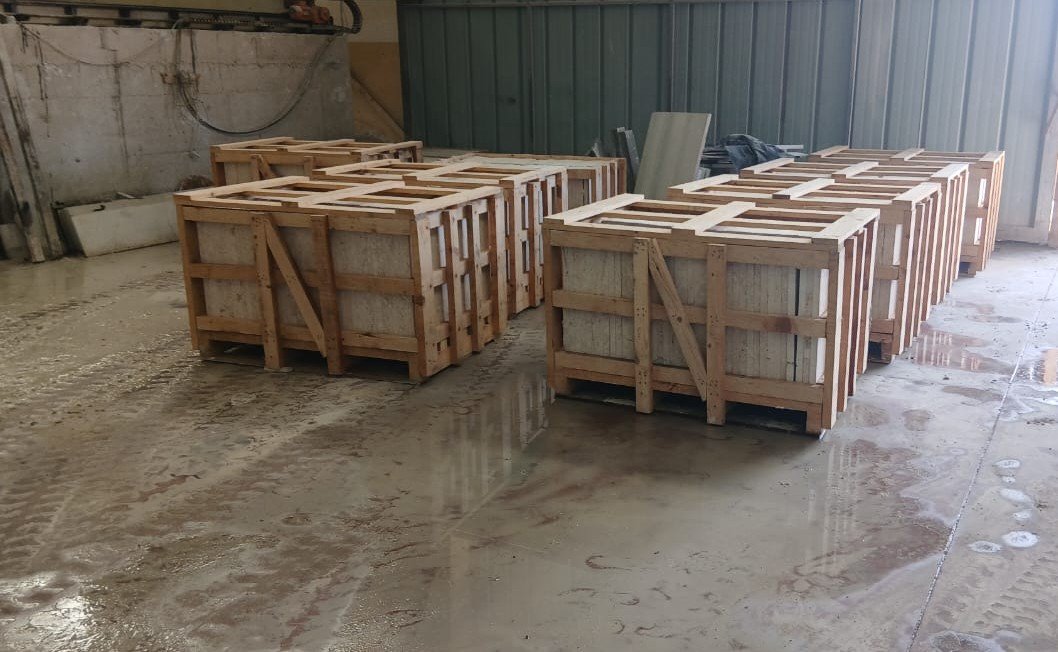
Arizona’s Seasonal Installation Calendar for Dove Limestone
Arizona’s climate doesn’t just run hot — it runs in distinct installation-friendly and installation-hostile bands that experienced crews schedule around every year. Your optimal window for dove limestone paving in Arizona runs from mid-October through late March, when ambient temperatures hold between 55°F and 85°F during working hours. That range keeps polymer-modified setting mortars and flexible adhesives in their designed cure-rate envelope, which is critical for a dense, fine-grained stone like dove limestone that doesn’t forgive movement during the green stage. For specifiers seeking an Arizona upscale selection that performs reliably across decades, scheduling discipline is the starting point.
- October through March: preferred installation window, full-shift productivity possible
- April and September: transitional months requiring morning-only scheduling
- May through August: avoid full installation; limit to prep, base compaction, and dry-layout work
- Nighttime temperatures below 50°F in December and January require adhesive-warming protocols
Morning vs. Afternoon Scheduling: The Practical Breakdown
Your crew scheduling needs to treat morning and afternoon as two different job sites during the transitional months of April and September. Morning work — roughly 5:30 AM to 11:00 AM — gives you rising but manageable substrate temperatures and stable adhesive behavior. Dove limestone’s cream-to-grey palette absorbs moderate heat gradually, which means your setting bed stays workable longer in the early hours than it would with darker stone.
Afternoon work after 12:30 PM in those transitional months creates a different problem set. The stone itself becomes a heat sink, and laying fresh material against a thermally loaded base disrupts cure uniformity. You’ll see differential curing between the top and bottom of the adhesive layer, which shows up 18 to 24 months later as lippage or hollow spots under point-load areas. In Avondale, where western sun exposure is intense and patios are often fully open, crews experienced with dove limestone routinely call afternoon work at noon from April through October and shift to pre-dawn starts.
- Start time 5:30–6:00 AM for maximum daily output in warm months
- Stop adhesive application by 10:30 AM when temperatures are rising fast
- Use mid-afternoon for cutting, dry layout, and joint preparation only
- Resume setting in late afternoon only if substrate temperature has dropped below 95°F
How Seasonal Temperature Affects Adhesive and Mortar Performance
The interaction between dove limestone’s density and setting materials is nuanced in ways that generic installation guides miss entirely. Dove limestone sits at a relatively low water absorption rate — typically under 3% by weight — which means it doesn’t draw moisture from the mortar bed the way more porous stones do. That’s an advantage in normal conditions, but in summer heat it means the adhesive is losing moisture to evaporation rather than substrate absorption, accelerating skinning on the exposed surface.
Polymer-modified mortars that work beautifully in November become genuinely difficult in June without modification. You need to select summer-grade adhesives with extended open times of at least 45 minutes at 90°F ambient — and you still need to work fast. Some installers in Arizona’s low desert zone switch to a back-butter-only application on the stone itself during hot months, eliminating the bed layer entirely on thinner 20mm slabs. This approach reduces the adhesive mass exposed to ambient heat and improves bond coverage when time is compressed. Check with your material supplier about compatible system recommendations before you commit to a product, especially for dove limestone elegant Arizona installations where the heat differential from season to season is dramatic.
Curing Conditions and What They Mean for Your Project Timeline
Your project timeline needs to budget for curing periods that shift seasonally, not just materially. In the October-through-March window, standard polymer-modified mortar systems reach functional cure in 24 to 48 hours and full cure in 7 to 14 days — allowing you to grout and load the surface on a reasonable contractor schedule. In summer installations (which we recommend avoiding for full paving work), that timeline can compress dangerously. Rapid cure sounds efficient but actually reduces the crystalline bonding strength in cement-based systems by 20 to 30% when temperatures exceed 95°F during the first 12 hours.
For Yuma-area projects where summer installation sometimes can’t be avoided due to client schedules, the practical protocol involves shade cloth over freshly laid stone for the first 72 hours and periodic misting of the stone surface — not the joints — to moderate heat absorption. This slows the cure rate back into an acceptable range without introducing water into the joint system. The elegant appearance of dove limestone during this stage is actually a useful indicator: if the surface looks consistently matte rather than showing dry patches, your moisture management is working.
- Optimal curing temperature range: 60°F to 80°F ambient during the first 24 hours
- Avoid loading the surface for 48 hours minimum in cool-season installations
- Extend no-load period to 72 hours for summer-schedule emergency installations
- Do not apply joint sand or grout until mortar has reached initial set — at least 24 hours in favorable conditions
- In December and January, protect fresh installations from temperatures below 40°F with insulating blankets overnight
Why Dove Limestone Elegant Litchfield Park Projects Demand Refined Scheduling
Litchfield Park’s architectural character leans toward considered, formal outdoor environments — the kind of spaces where the sophisticated choice of paving material needs to perform as elegantly as it looks. Dove limestone elegant Litchfield Park installations carry a specific design expectation: consistent joint lines, uniform surface tonality, and no lippage or settlement that would break the visual plane of a refined courtyard or formal entry walk. Achieving that result reliably is a scheduling problem as much as a material problem.
The Litchfield Park microclimate sits in the Sonoran Desert’s lower elevation band with considerable afternoon solar exposure on south and west elevations. Your project scheduling should account for the fact that the elegant, light-toned surface of dove limestone actually works in your favor for long-term performance — its higher solar reflectance reduces thermal loading compared to darker stones, which means less expansion stress on joints over seasonal cycles. The Litchfield Park refined taste standard that defines these projects extends from material selection all the way through installation sequencing; no part of the process is decorative. But that same reflectance does nothing for adhesive behavior during initial installation, which requires the same heat-management discipline as any other paving material in this climate.
For reference on material performance in comparable Arizona contexts, our grey paving limestone slabs share many of the same installation-timing considerations and offer a useful comparison point for specifiers working across multiple Litchfield Park projects.
Base Preparation and Seasonal Ground Conditions
Your base preparation schedule interacts with seasonal timing in ways that affect final paving performance more than most specs acknowledge. Arizona’s desert soils go through a subtle but real moisture cycle — summer monsoon season (July through September) introduces soil moisture that can affect compaction quality and sub-base stability. The refined taste standard for Litchfield Park projects means you’re typically working with compacted aggregate bases of 4 to 6 inches over native soil, which behaves differently when placed after monsoon rains have softened the ground surface.
The practical guidance here is to schedule base work in October after the monsoon moisture has dissipated but before winter cooling makes compaction harder to verify with standard proctor testing. A compacted base placed in dry October conditions gives you a stable foundation that won’t shift when the first monsoon of the following July arrives. In San Tan Valley, where caliche layers sit close to the surface in many residential lots, base preparation actually benefits from slightly elevated moisture during excavation — the caliche breaks more cleanly when not completely desiccated, which is a useful field advantage of working in late September or early October.
- Schedule base excavation in September or October for optimal soil conditions
- Avoid base compaction within 48 hours of significant monsoon rainfall
- Verify compaction with a plate compactor to 95% modified proctor density before paving begins
- Install edge restraints during base preparation, not after paving — they’re harder to seat correctly in dry, set soil
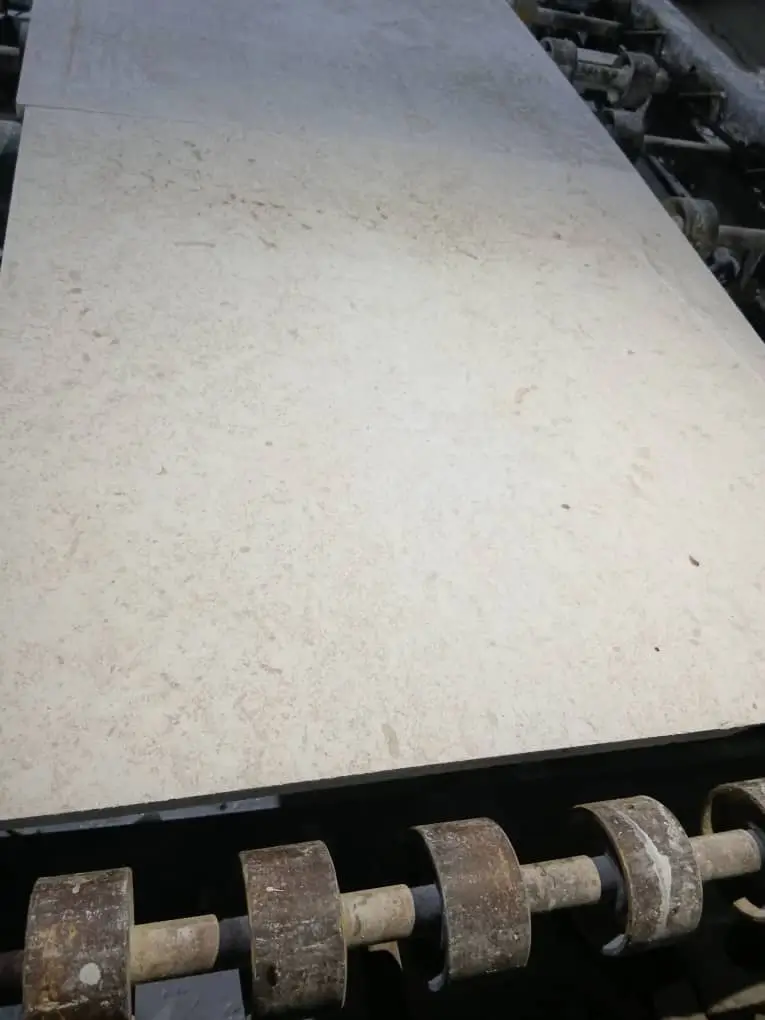
Warehouse Logistics and Project Planning Around Arizona Seasons
Your material ordering timeline needs to align with your installation window, not just your design schedule. At Citadel Stone, we maintain warehouse stock on dove limestone slabs in multiple thicknesses, but the October-through-March installation window creates genuine demand peaks that compress warehouse availability. Ordering 8 to 10 weeks before your planned installation start gives you enough buffer to receive material, allow it to acclimate to Arizona conditions in covered storage, and deal with any truck delivery scheduling constraints around the holiday period in December.
Acclimation matters more than most project schedules accommodate. Dove limestone shipped from warehouse storage in cooler conditions and placed immediately on a sun-heated sub-base can show temporary color variation as the stone equilibrates to Arizona ambient conditions. This isn’t a defect — it resolves within 2 to 4 weeks of exposure — but on high-visibility Litchfield Park installations where the Arizona upscale selection standard applies, you want your client to see the final appearance from day one. Storing delivered material on-site under shade cloth for 5 to 7 days before installation solves this entirely. Our warehouse team can also confirm matching lot numbers across your full project quantity before you commit to a schedule, which is essential when consistent surface tonality defines the project’s success.
- Order material 8 to 10 weeks before your target installation start
- Confirm truck delivery access with your driver — Litchfield Park’s residential streets have weight and turning-radius constraints
- Store pallets on level ground away from direct sun during pre-installation acclimation
- Verify warehouse stock of matching lot numbers for full project quantity before committing to a schedule
- Plan a 10% material overage to account for cuts, pattern adjustments, and any on-site damage
Sealing Schedule: Timing Your First and Subsequent Applications
The sealing schedule for dove limestone paving in Arizona follows a different rhythm than the installation itself. Your first seal application should happen no earlier than 28 days after installation — allowing full mortar cure — and no later than 60 days, before the stone accumulates enough surface contamination to affect sealer penetration. In practical terms, this means an October installation gets its first seal in November, which is ideal: cool temperatures, low UV intensity, and low wind create near-perfect conditions for penetrating sealer absorption.
Subsequent sealing at 2-year intervals should be scheduled for October or November as well, for the same environmental reasons. Applying penetrating sealers in summer creates two problems: the sealer solvent flashes before adequate penetration depth is achieved, and heat-expanded stone pores close as the stone cools, trapping partially cured sealer at the surface rather than within the matrix. The dove limestone elegant appearance that defines a sophisticated choice in a refined Litchfield Park installation depends on sealer applied correctly — streaky, surface-resident sealer looks dramatically worse on light-toned dove limestone than on darker materials because the uneven sheen shows clearly against the stone’s subtle warmth.
Dove Limestone Elegant Litchfield Park: Scheduling as a Design Decision
The design decisions that define a dove limestone elegant Litchfield Park installation aren’t made at the stone yard — they’re made on a calendar. Your seasonal timing for base work, stone placement, adhesive selection, curing management, and first sealing are as important to the finished result as the material specification itself. The good news is that Arizona’s climate gives you a genuinely excellent installation window from October through March, and that window aligns well with typical residential construction schedules in the Litchfield Park area.
For Arizona stone projects that share Litchfield Park’s emphasis on refined outdoor living, related design work can also inform your material palette — Dove Grey Limestone Paving Slab Courtyard for Carefree Private Spaces explores how dove grey limestone performs in a similarly considered private courtyard context, making it worth reviewing as a complementary reference for specifiers working across the region. Plan your installation window first, source your material with adequate lead time, and the elegant performance of dove limestone will deliver results that genuinely match Litchfield Park’s standards for decades. We are the limestone paving grey Arizona source for discerning homeowners.