
Structural compliance sets the foundation for every successful dark grey limestone sophisticated Chandler installation — and that’s not a metaphor. Arizona’s building environment requires specifiers to reconcile Maricopa County’s soil bearing capacity data, ADA slope requirements, and local grading ordinances before a single paver touches the ground. The material’s compressive strength, typically ranging from 8,000 to 14,000 PSI for dense dark grey limestone, makes it a technically sound choice — but only when your base system, slab thickness, and joint design align with what the regulatory framework actually demands. Chandler’s rapid commercial and residential growth has pushed municipal inspectors to enforce edge restraint and drainage specifications more rigorously than most designers anticipate.
Code Compliance and Structural Foundations for Chandler Projects
Chandler falls under Maricopa County’s jurisdiction for most structural and grading permits, and the requirements carry real teeth. Your project will need to demonstrate a minimum compacted subgrade bearing capacity of 1,500 psf for residential pedestrian paving — and that figure climbs to 3,000 psf or higher for vehicular-rated applications. Dark grey limestone sophisticated Chandler specifications must account for a minimum 4-inch compacted Class II base course for foot-traffic zones, extending to 6–8 inches under driveways or porte-cochère applications where point loading from vehicles concentrates stress on a relatively small surface area.
- Minimum paver thickness of 1.5 inches for pedestrian applications, 2.375 inches or greater for vehicular zones per IBC load table guidance
- Edge restraint systems must be mechanical — plastic or aluminum extruded restraints pinned at 12-inch intervals minimum, not relying on adjacent structures or landscape borders alone
- ADA-compliant cross-slope cannot exceed 2% on accessible routes, which affects how you detail your bedding sand layer to achieve precision grade
- Chandler’s grading ordinances require positive drainage away from structures at a minimum 2% slope within the first 10 feet, which must be engineered into your layout before stone placement begins
- Permit requirements for hardscape projects exceeding 500 square feet in impervious coverage may trigger a drainage study under Maricopa County’s post-construction stormwater management rules
One detail that trips up a lot of designers is the joint sand specification under code. Polymeric sand is not universally accepted as a structural joint filler for vehicular paving in Chandler — your permit drawings may need to specify ASTM C144 mortar sand or a compaction-tested bedding aggregate to satisfy plan check. Verify with the city’s development services department before the project goes to bid.
Seismic Considerations and Expansive Soil Management
Arizona sits in a low-to-moderate seismic zone (ASCE 7 Site Class C to D across much of the Valley), but don’t let the modest hazard rating lead you to underengineer your base. Expansive clay soils remain the dominant structural concern across Chandler’s older residential subdivisions, where seasonal shrink-swell cycles produce differential movement that unseats pavers far more reliably than any seismic event. Your geotechnical investigation — required for projects over a certain footprint — should test for plasticity index (PI) values above 15, which signal soils that need either over-excavation and replacement or a moisture-conditioned lime-treated subgrade before base placement.
In Flagstaff, the freeze-thaw cycle creates an entirely different structural challenge: frost line depth of 18–24 inches demands a significantly deeper aggregate base than anything required in the Valley. Dark grey limestone paving in Arizona’s high-elevation markets must meet those deeper base requirements while managing the additional dead load on reinforced concrete structural slabs. Chandler specifiers benefit from the warmer climate here — frost heave isn’t a concern — but that doesn’t mean base design is simple. Caliche layers at 24–36 inches can actually complicate drainage geometry if they’re not properly perforated or redirected through engineered French drains.
- Expansive soil PI above 15 requires lime stabilization or full over-excavation to 24 inches with imported select fill
- Caliche hardpan, when present, should be either scarified and compacted as subgrade or perforated for drainage continuity — not left as-is beneath a closed aggregate base
- Geotextile fabric between subgrade and aggregate base prevents fines migration over time, extending base life by 8–12 years in clay-adjacent soils
- Expansion joints at maximum 15-foot intervals (not the 20-foot intervals commonly cited in generic specs) accommodate limestone’s thermal expansion coefficient of approximately 3.6–4.8 × 10⁻⁶ per °F
Refined Design Principles for Dark Grey Limestone in Upscale Arizona Spaces
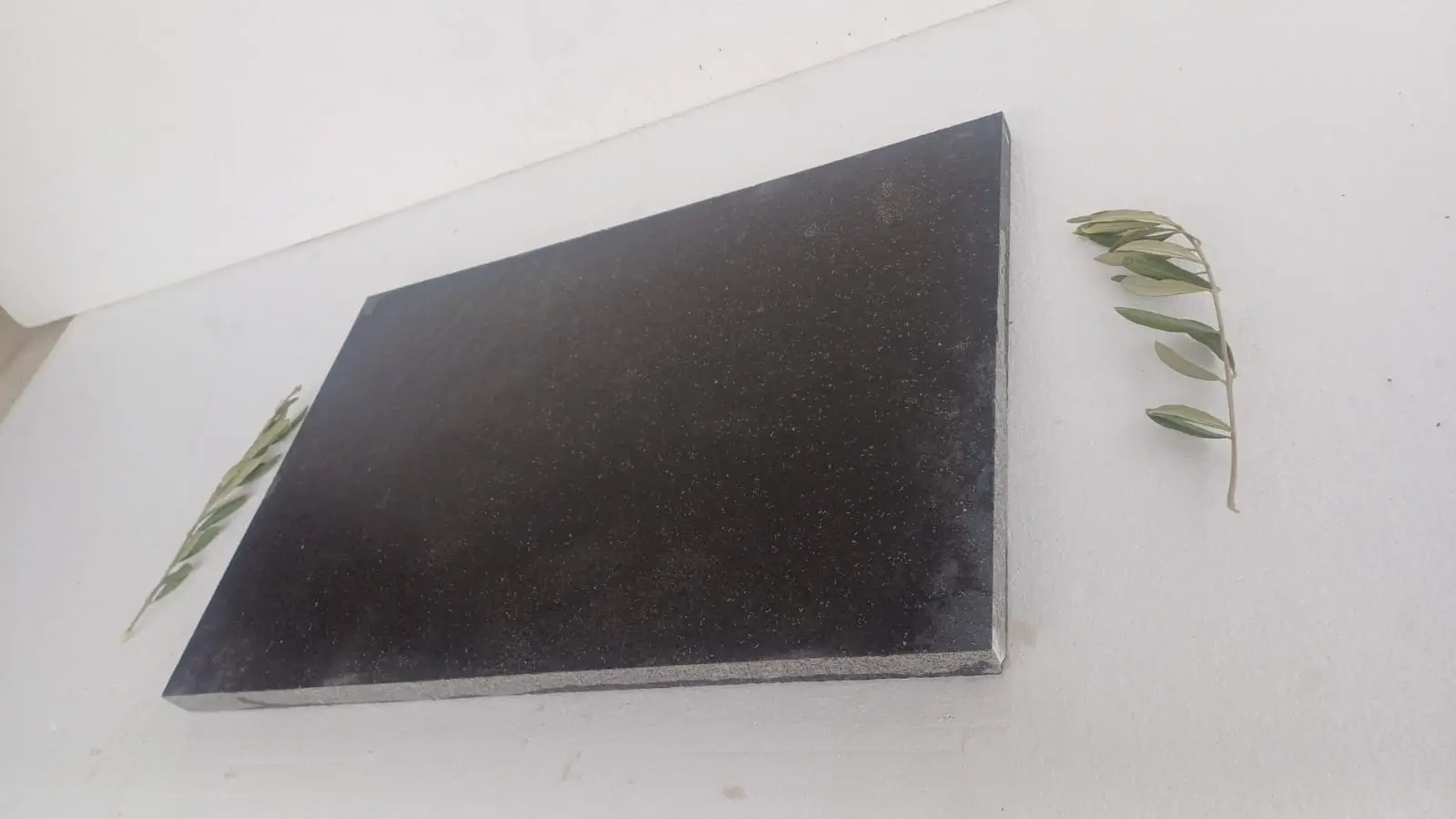
The refined design value of dark grey limestone in a Chandler context comes from contrast management — the way deep charcoal and graphite tones anchor a composition without competing with the landscape’s natural palette. Arizona upscale aesthetics tend toward a mineral-forward visual language: bleached stucco, warm concrete block, and desert plantings in silver-green. Dark grey paving sophisticated Arizona projects achieve tension against those warm neutrals that lighter stones simply cannot produce. The visual weight grounds outdoor living areas and gives the space a defined floor plane that reads as intentional and premium rather than incidental.
Slab sizing choices amplify or undermine that effect significantly. Large-format pieces — 24×24 inches or 24×36 inches — minimize visual noise across expansive Chandler outdoor rooms, allowing the stone’s natural cleft texture and tonal variation to carry the surface. Smaller formats like 12×12 or modular mixed sizing introduce a craft-forward energy that works well in courtyards and entry paths but can feel busy on pool decks over 600 square feet. You’ll want to specify honed or bush-hammered finish rather than natural cleft for pool perimeter applications, as the refined texture improves slip resistance ratings without sacrificing the material’s sophisticated character within Chandler elegant spaces.
Material Thickness and Load-Bearing Specification
Dark grey limestone sophisticated Chandler projects need thickness specifications that match the actual load conditions — not just what looks proportional to the slab size. A 24×24-inch paver in 1.5-inch thickness performs fine under pedestrian traffic but will show stress fractures at mortar joints within 3–5 seasons under consistent vehicular loading. The rule of thumb that holds up in practice: for every 10,000 lbs of vehicular load capacity you need to design for, move to the next nominal thickness tier.
- 1.5 inches (nominal 40mm): pedestrian walkways, pool decks, covered patios with no vehicular access
- 2.0 inches (nominal 50mm): light vehicular — golf carts, residential driveways with occasional passenger car access
- 2.375 inches (nominal 60mm): standard residential driveways, delivery vehicle zones
- 3.0 inches or greater: porte-cochère, commercial pedestrian plazas with emergency vehicle access, loading areas
The bedding layer matters as much as the paver itself. A 1-inch screeded bedding sand layer (ASTM C33 fine aggregate) gives you the setting precision you need to hold grade and accommodate minor subgrade irregularity. Going thicker than 1.5 inches of bedding sand creates a compressible layer that allows rocking under load — a failure mode that’s frustratingly common and entirely preventable. At Citadel Stone, we recommend confirming your material thickness specification before warehouse fulfillment is initiated, because dimensional tolerances vary between quarry production runs and substituting a thinner stock item mid-project creates real compliance exposure.
How Dark Grey Limestone Performs Across Arizona’s Climate Zones
For projects in Sedona’s red rock corridor, dark grey limestone reads differently than it does in Chandler’s suburban context — the contrast with iron-oxide sandstone creates a dramatic, gallery-quality composition that draws heavily on Sedona‘s design tradition of material contrast. Performance-wise, the higher elevation (4,350 feet) introduces UV intensity and temperature swing that tests surface sealers more aggressively than Valley applications. Resealing should be scheduled every 18 months rather than the 24-month cycle that works in Chandler, and sealer selection should lean toward penetrating silane-siloxane chemistry rather than film-forming acrylics, which chalk and peel at altitude.
Dark grey limestone paving in Arizona’s low-desert locations, including Chandler, Peoria, and the broader Valley corridor, performs best when you account for the differential between ambient and surface temperatures. On a 110°F afternoon, your paver surface can reach 145–155°F under direct exposure. That heat load doesn’t damage the stone — limestone handles it without issue — but it does accelerate joint sand breakdown and challenges foot comfort for barefoot use around pools. Designing with 30–40% shading coverage from pergolas or canopy structures keeps surface temperatures in a functional range without compromising the Arizona upscale aesthetics you’ve specified.
For a broader look at how grey limestone performs across different Arizona microclimates, weathered grey limestone in Lake Havasu offers useful comparative context on surface finish durability under intense UV and waterfront humidity conditions.
Drainage Engineering and Slope Code Requirements
Drainage is where most permit rejections originate on Chandler hardscape projects. The city’s post-construction stormwater management ordinance, aligned with Maricopa County’s MS4 permit requirements, imposes runoff rate and volume controls on projects that alter more than a threshold area of pervious surface. Your limestone paver layout needs a grading plan that directs sheet flow to approved collection points — either a dedicated drain system or a landscape infiltration zone — rather than allowing concentrated discharge onto adjacent properties or public right-of-way.
- Minimum 1% cross-slope on all field paving areas ensures positive drainage without creating a trip hazard under ADA guidelines
- Linear channel drains at the low edge of sloped runs prevent ponding that, over time, saturates bedding sand and compromises joint integrity
- Permeable joint infill (chip-graded crushed stone rather than sand) is an option for lower-load pedestrian areas where maintaining some pervious surface ratio helps with stormwater compliance
- Downspout discharge must be directed away from limestone fields or intercepted before it reaches the paving field — concentrated water flow from roof drainage creates erosion channels in bedding sand at joint intersections
In Peoria, master-planned communities often have HOA drainage covenants that overlay city code — a second compliance layer that catches designers off guard. Always request the CC&R drainage exhibit before finalizing your paving layout, because setback requirements from retention basins affect where you can place your stone field and how grade must transition to the basin edge.
Surface Finish Selection and Slip Resistance Standards
Your surface finish choice for dark grey limestone sophisticated Chandler projects carries regulatory weight, not just aesthetic preference. ANSI A137.1 establishes the Dynamic Coefficient of Friction (DCOF) threshold at 0.42 minimum for level interior wet areas — and while there’s no single federal standard for exterior hardscape, most commercial projects adopt the 0.60 DCOF minimum as the defensible benchmark for pool deck and exterior pedestrian surfaces. Natural cleft limestone typically tests at 0.55–0.70 DCOF depending on texture depth, while honed finishes drop to 0.40–0.55 before sealing and can fall below 0.42 when wet-sealed with a film-forming product.
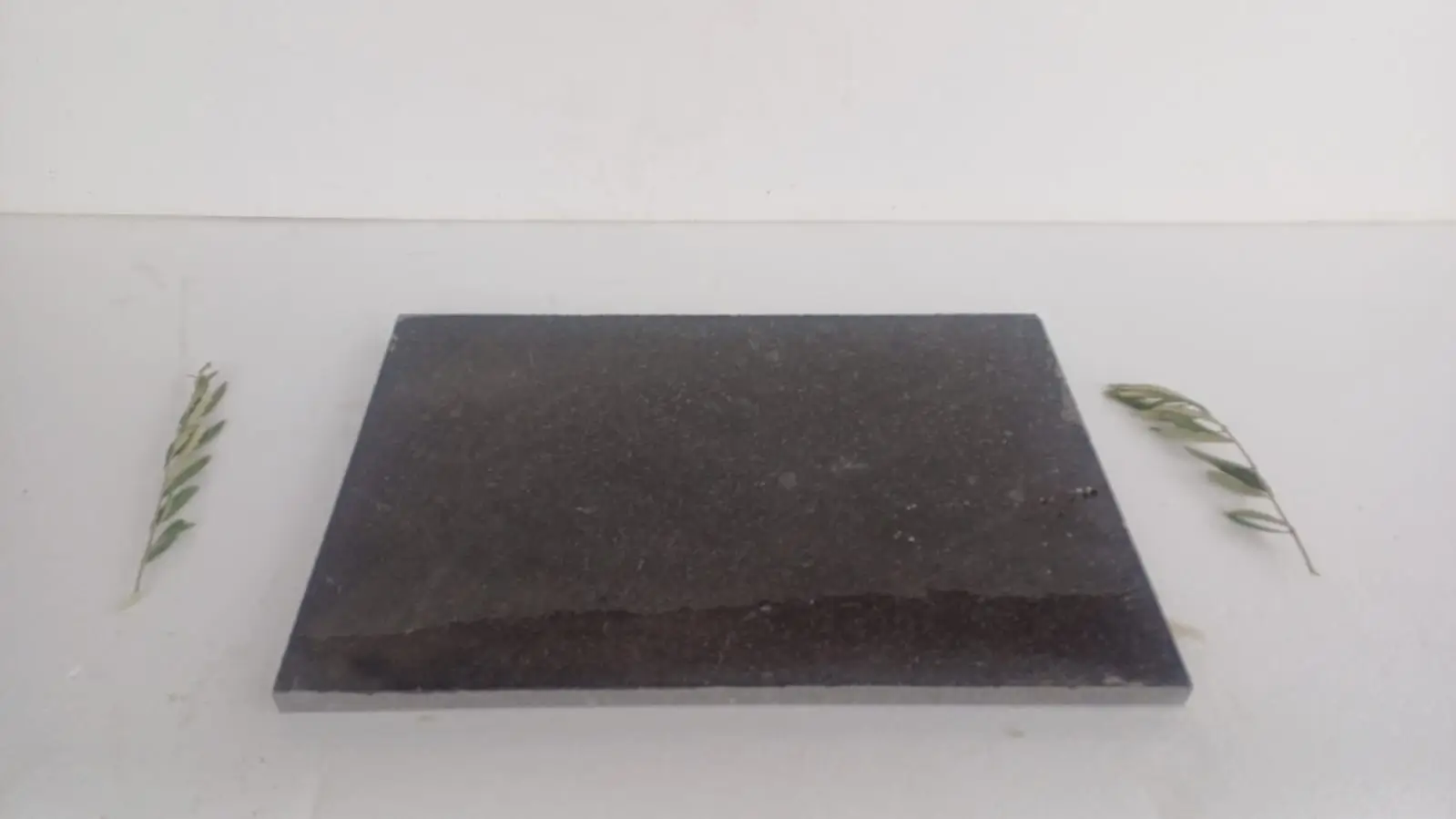
- Natural cleft finish: highest friction, most visual texture — ideal for pool surrounds, steps, and entry paths
- Bush-hammered finish: mechanically textured to a consistent profile, DCOF typically 0.60–0.75, excellent for commercial exterior applications
- Honed finish: smooth, refined design visual character — use only in covered, non-slip-critical areas or with a penetrating sealer that doesn’t reduce DCOF
- Sandblasted finish: intermediate texture, good UV stability, appropriate for covered outdoor dining or shaded courtyard applications
Chandler elegant spaces often call for a mix of finishes within a single project — honed for the interior-adjacent covered patio, bush-hammered for the pool deck perimeter, and natural cleft for the approach path. Coordinating those finishes across a single dark grey limestone palette creates visual coherence while meeting differentiated slip resistance requirements at each zone. Verify that your stone supplier can source all three finishes from the same quarry lot; tonal variation between production runs is more pronounced than most specifications acknowledge.
Ordering, Warehouse Logistics, and Project Planning
Lead time management is a genuine field problem that derails more dark grey limestone sophisticated Chandler projects than any specification error. Imported limestone from Spanish, Portuguese, or Turkish quarries typically runs a 10–14 week cycle from order confirmation to truck delivery — longer during peak European summer and winter holiday production shutdowns. Domestic quarry sources in Texas and Indiana can cut that to 4–6 weeks, but the color range for true dark grey skews toward blue-grey rather than the graphite-charcoal tones most Arizona upscale aesthetics projects are after.
Citadel Stone maintains warehouse inventory of dark grey limestone formats specifically calibrated for Arizona commercial and high-end residential timelines, which typically reduces delivery lead time to 1–3 weeks for standard sizes. Coordinating your truck delivery schedule with your base contractor’s compaction timeline matters more than most people plan for — you want your aggregate base fully compacted and rested for at least 72 hours before stone arrives on site. Receiving a full pallet stack on an insufficiently cured base and then running a forklift or pallet jack across it can produce rutting that takes half a day to remediate.
- Order a 10–12% overage on square footage for cut waste, breakage, and pattern matching at borders and transitions
- Confirm warehouse stock includes matching trim pieces — bullnose coping, step treads, and pool coping profiles — before finalizing your order to avoid mismatched tonal batches
- Request a sample board from the production lot before warehouse fulfillment, especially for projects with large visible runs where tonal consistency is critical to the refined design intent
- Schedule truck access to your site during the base installation phase — some Chandler HOA communities restrict delivery windows or require commercial vehicle permits for trucks above a certain GVW
Moving Forward with Dark Grey Limestone in Chandler
Getting dark grey limestone sophisticated Chandler right means starting with code compliance and structural engineering before you finalize any aesthetic decisions. The base depth, edge restraint specification, drainage geometry, and paver thickness need to be resolved against Maricopa County and Chandler municipal requirements before your material order is placed — because the structural specification determines your format options, not the other way around. Your refined design vision for Arizona upscale aesthetics holds up over the long term only when the foundation underneath it satisfies both the regulatory environment and the real-world load conditions the project will see.
Beyond Chandler, grey limestone paving continues to play a strong role across adjacent Valley communities where similar structural and aesthetic demands apply. If you’re exploring contrast applications for neighboring projects, Dark Grey Limestone Paving Contrast for Mesa Light Accents covers how dark stone pairs with lighter material tones across a complementary Arizona hardscape palette. Plan your project with the full picture — code requirements, material performance, and design intent — in place from the start, and you’ll avoid the costly mid-project adjustments that come from treating any one of those layers as secondary. We are the limestone paving grey Arizona supplier that puts quality first.