
Specifying a grey limestone slab pool surround for a Prescott project demands a sharper focus on mechanical durability than most designers initially bring to the table. The high desert corridor around Prescott experiences wind events that routinely exceed 50 mph during monsoon season, and the hail strikes that come with those storms create point-load impacts capable of fracturing under-specified stone. A grey limestone slab pool installation that performs for 25 years here isn’t just about aesthetics — it’s about selecting material with the compressive strength, edge integrity, and joint system to absorb repeated mechanical stress without compromise.
Why Storm Resistance Defines Prescott Pool Design
Most specifiers approaching a Prescott aquatic project think first about reflectivity and barefoot comfort. Those are real considerations, but the mechanical demands of the climate should be driving your material specification before anything else. Prescott sits at roughly 5,400 feet elevation, and that altitude amplifies storm intensity — wind-driven rain doesn’t just wet the surface, it infiltrates joints at lateral pressure, and freeze-thaw cycling at that elevation means any water that enters a compromised joint can expand and crack the substrate beneath.
Grey limestone’s inherent density — typically in the 150–160 lb/ft³ range for quality dimensional slabs — gives it genuine mass advantage over lighter calcium silicate or concrete pavers when wind loads create uplift forces on an exposed pool deck. Thinner, lighter materials can actually shift on their bedding layer during sustained gusts if edge restraint isn’t executed properly. The weight of a properly specified grey limestone slab pool surround works in your favor the moment a storm rolls in from the northwest.
Impact Resistance and Hail Performance
Hail is genuinely underestimated in Arizona pool deck specifications. Prescott’s elevation places it squarely in a hail-prone corridor, and golf-ball-sized hail events — producing impact energies above 12 ft-lbs — have been documented in Yavapai County multiple times in recent years. Your material needs to absorb that impact without spalling or fracturing at the surface.
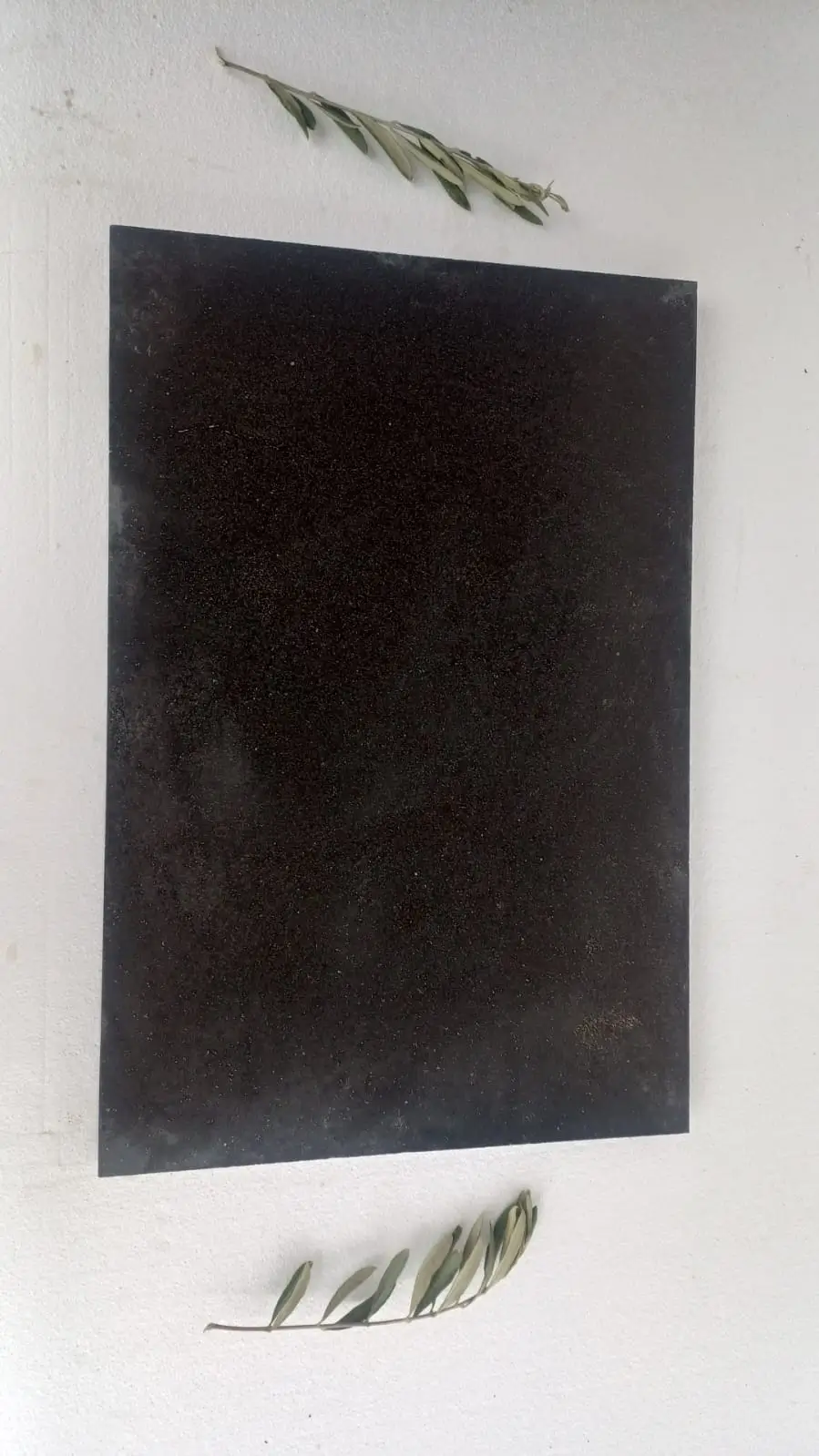
Grey limestone performs well in this context because of how its crystalline matrix distributes impact energy. The interlocking calcite grain structure dissipates force laterally rather than concentrating it at the point of contact, which is why you’ll see surface scuffing on limestone long before you see fractures, unlike some slate or sandstone alternatives that cleave along lamination planes. For pool surrounds specifically, you’ll want slabs with a minimum modulus of rupture of 1,000 psi — quality grey limestone consistently tests at 1,200–1,500 psi, giving you meaningful safety margin above that threshold. Arizona poolside sophistication begins with material selection that can withstand these mechanical realities.
- Specify slab thickness at a minimum of 1.25 inches for pedestrian pool deck zones — 1.5 inches for any area that receives wheeled equipment or furniture
- Compressive strength above 8,000 psi provides adequate hail impact resistance for most Prescott exposure conditions
- Avoid any slab with visible micro-fractures or bedding plane separations — these propagate under repeated impact loading
- Tumbled or heavily textured finishes concentrate impact stress differently than honed surfaces — honed performs more predictably under point-load events
Edge Restraint and Joint Integrity Under Wind-Driven Rain
Here’s what most pool deck specifications miss entirely: wind-driven rain at 40+ mph creates lateral hydraulic pressure at joints that exceeds what standard polymeric sand is engineered to resist long-term. The joint system on a grey limestone slab pool surround isn’t just about aesthetics — it’s a mechanical barrier against subsurface erosion. Once fine material migrates out from beneath your slabs, you get differential settlement, and that’s when cracked coping and rocking field slabs become your problem mid-season.
For Prescott installations, specify polyurethane-based joint compound rather than standard polymeric sand for any joint under 3/8 inch. Polyurethane maintains flexibility across the temperature range you’ll encounter — from 18°F on a January night to 95°F on a July afternoon — without becoming brittle or cracking. Standard polymeric sand becomes friable below 28°F and loses adhesion on rehydration cycles, which is exactly what happens every time a monsoon storm soaks the deck after a dry stretch.
Edge restraint is the other critical system. Aluminum channel restraints rated for 700 lb/linear foot lateral load are the minimum for a perimeter installation in a high-wind zone. Hidden spike systems driven into a compacted aggregate base at 24-inch centers provide the secondary mechanical hold that keeps your perimeter from walking outward under repeated thermal and wind cycling. Those spikes should be at 18-inch centers on any exposed corner or peninsula section of the pool surround where wind acceleration is highest.
Base Preparation for Arizona High Desert Conditions
The base system under your grey limestone slab pool installation does more structural work in Prescott than it would in a lower-elevation, calmer climate. Storm events that deliver 1–2 inches of rainfall in under an hour create subsurface hydrostatic pressure that a poorly drained base transmits directly to your stone layer. A base that drains vertically at a rate fast enough to prevent that pressure buildup is non-negotiable for grey paving slab aquatic Arizona projects at this elevation.
A minimum 6-inch compacted Class II base aggregate (3/4-inch crushed, well-graded) over a properly scarified and compacted subgrade provides the drainage rate you need — roughly 20 gallons per square foot per hour through a 6-inch column at standard compaction density. For pools with adjacent planters or landscape zones, install a positive-drainage perimeter at the outer edge of the aggregate base so storm runoff has an exit path rather than backing up under the stone field. In Prescott, the caliche soil layers common at 18–30 inches depth can actually serve as a load-bearing advantage once properly broken up and recompacted — but they create a drainage barrier if left intact beneath a permeable base.
- Compact subgrade to minimum 95% Standard Proctor density before placing any aggregate
- Install geotextile fabric at the subgrade interface to prevent clay migration into aggregate voids
- Maintain 1/8 inch per foot minimum slope across the entire slab field for surface drainage
- Avoid calcium-rich fill material near pool shell edges — it can leach into the aggregate base and reduce drainage porosity over time
Grey Limestone Paving Slabs Thermal Behavior at Elevation
Prescott’s elevation creates a thermal range that’s more extreme than what most Arizona pool projects encounter. The diurnal temperature swing can hit 40°F in a single day during transitional seasons — 55°F at dawn, 95°F mid-afternoon. Grey limestone paving slabs in Arizona at this elevation cycle through that range daily, and your joint spacing needs to account for the resulting linear expansion.
Limestone’s coefficient of thermal expansion runs approximately 4.4 × 10⁻⁶ per °F. Across a 40°F daily temperature swing, a 24-inch slab will expand roughly 0.004 inches. That sounds negligible per slab, but across a 20-foot run of deck, it accumulates to nearly 0.04 inches of net movement — enough to blow out a rigid joint if you haven’t provided adequate accommodation. Maintain 3/16-inch minimum joint width throughout the field, and install full expansion joints at 10-foot intervals in any run exceeding 15 feet. Reduce that interval to 8 feet at any section that receives direct western afternoon exposure, where surface temperatures will routinely hit 130–140°F in summer.
In Sedona, where similar elevation conditions apply, grey limestone installations with inadequate expansion joints develop characteristic diagonal cracking within 18–24 months — not from load, but purely from accumulated thermal stress. The fix costs more than getting it right at installation. Water surround elegance in mountain-adjacent Arizona settings depends as much on these invisible joint decisions as on material selection itself.
Slip Resistance and Wet Surface Performance
Pool surrounds demand slip resistance that performs across the full wet-dry cycle — not just when the surface is misted, but when it’s fully saturated from a monsoon downpour hitting while the pool is in active use. The static coefficient of friction (SCOF) target for wet pool deck surfaces is a minimum of 0.60 per ANSI A137.1. Quality grey limestone with a brushed or sandblasted finish consistently tests at 0.65–0.72 wet SCOF, which gives you the performance margin needed for a high-use residential or light commercial aquatic setting.
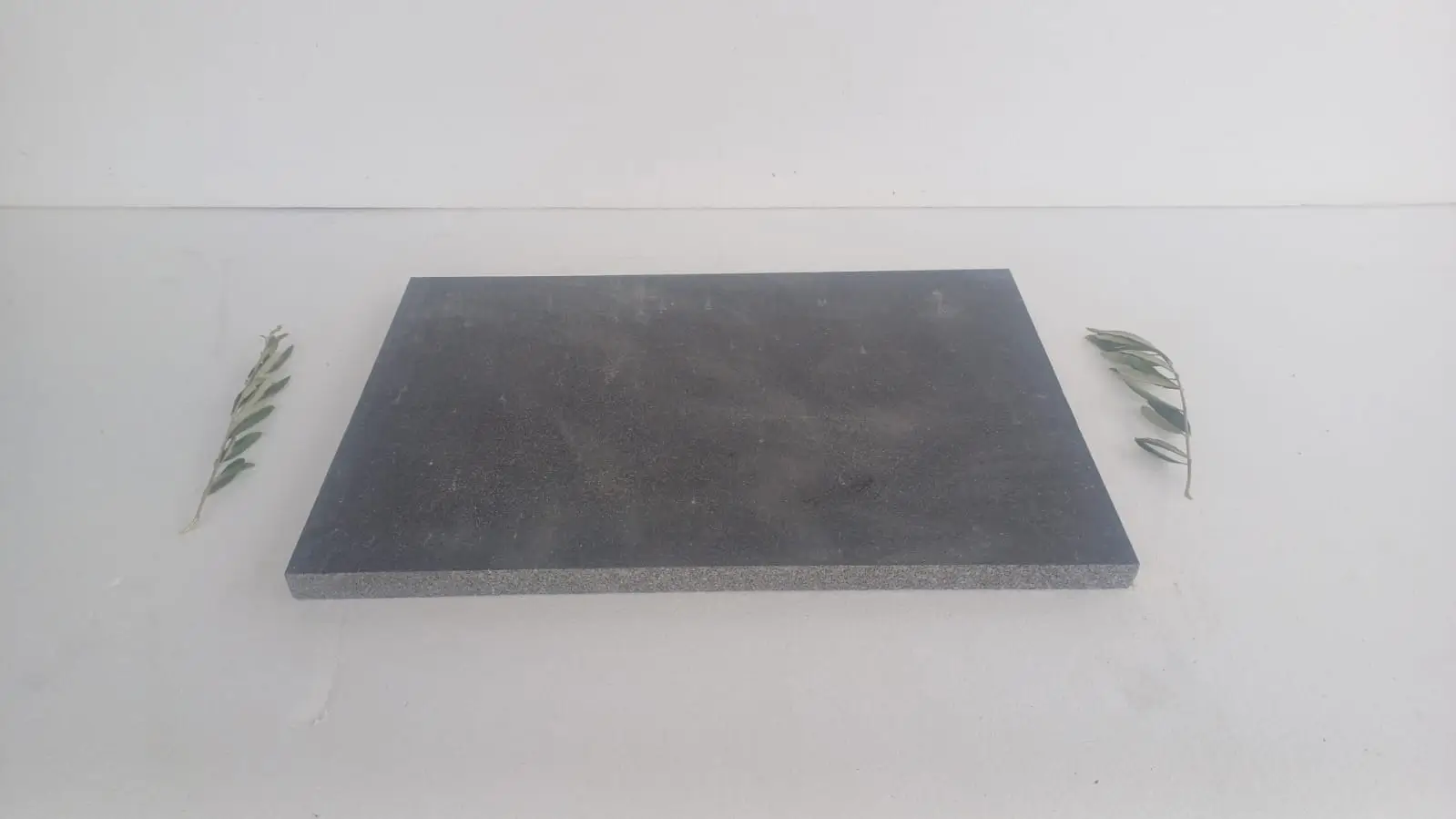
Avoid polished finishes entirely for pool surround applications — they test at 0.35–0.45 wet, which is below code minimum and genuinely dangerous on a wet deck. A light bushhammer texture achieves both the slip resistance you need and a refined visual quality that reads as intentionally designed rather than utilitarian. That texture also helps the grey limestone slab pool surround maintain its visual character as it weathers — minor surface accumulation settles into the texture recesses and actually enhances the natural stone appearance over time rather than creating the dingy look you’d get on a smooth surface.
Sealing for Storm Resilience and Long-Term Performance
The sealing protocol for grey limestone paving slabs in Arizona pool surrounds differs significantly from what you’d apply to an interior floor or a covered patio. You’re dealing with UV exposure, pool chemistry splashout, wind-driven debris abrasion, and the moisture cycling from storm events — all simultaneously. A penetrating impregnating sealer with a siloxane or silane base is the right chemistry here, not a film-forming topical sealer.
Penetrating sealers work by lining the pore walls of the limestone rather than bridging them at the surface. This means storm water that infiltrates the surface doesn’t get trapped below a film layer — it moves through and out. Film-forming sealers fail in pool environments because they delaminate under pool chemical exposure and the constant wet-dry cycling, creating the bubbling and peeling visible on inferior installations. Apply your impregnating sealer in two coats at initial installation, with the second coat applied before the first has fully cured — typically 20–40 minutes after the first coat — to maximize penetration depth into the limestone matrix.
Reapplication interval for a Prescott exposure condition is every 2–3 years rather than the standard 4–5 year cycle you’d see on a less exposed installation. The UV intensity at 5,400 feet degrades siloxane chemistry faster than at lower elevations, and wind-driven sand abrasion mechanically scours the sealed surface layer over time. For the Peoria region at lower elevation, a 4-year cycle is typically adequate — Prescott’s conditions demand the shorter interval. Test sealer effectiveness by sprinkling water on the surface — if it beads into distinct droplets, the sealer is active. If it flattens into a wet patch within 30 seconds, it’s time to reseal.
- Use penetrating siloxane or silane chemistry — avoid acrylic or urethane film-forming sealers in pool environments
- Clean the surface thoroughly with a pH-neutral stone cleaner and allow 48 hours of dry time before sealing
- Apply in temperatures between 50–85°F for proper sealer cure — avoid sealing in direct sun when surface temperature exceeds 90°F
- Never apply sealer to wet stone — moisture in the pores prevents penetration and causes the sealer to cure at the surface rather than below it
At Citadel Stone, we recommend verifying that your sealer is rated for both limestone and pool chemical exposure before purchase — not all penetrating sealers carry both ratings, and pool chlorine chemistry at elevated concentrations will degrade sealers not specifically tested for that exposure. Our technical team can help confirm compatibility for the specific product you’re specifying. We maintain warehouse inventory of grey limestone slabs in dimensions suited for Arizona aquatic projects, and verifying stock levels early in your project timeline prevents the delays that come from waiting on import shipments.
For projects where you want to review material options in detail, the warm grey limestone paving available on our Arizona product page gives you current specifications and thickness options with direct ordering capability.
Prescott Aquatic Luxury Design Integration
The water surround elegance that grey limestone delivers in a Prescott setting comes partly from how the material reads in the high desert light. At 5,400 feet, the UV index is consistently 1–2 points higher than Phoenix, and that intensified light makes the cool grey tones of limestone appear more luminous and refined than they would at lower elevations. The natural veining in quality grey limestone — typically fine silica or clay mineral inclusions running through the calcite matrix — catches that intense light at an angle and creates the visual depth that distinguishes this material from poured concrete or precast alternatives.
Prescott luxury pool design works best when the stone palette references the regional geology rather than fighting it. The grey limestone slab pool format, with its rectilinear geometry and restrained color range, complements the rocky terrain and native vegetation that characterize the Prescott landscape. Specify the grey limestone paving slab in 24×24-inch or 24×36-inch formats for the primary deck field, with 12×24-inch accent strips at the coping transition if you want to create visual articulation without introducing a contrasting material. That single-material approach also simplifies your long-term maintenance program significantly.
Grey paving slab aquatic Arizona projects benefit from the cooler surface temperature that limestone provides compared to dark-toned pavers. Even in Prescott’s summer heat, the light grey reflectivity keeps surface temperatures 25–35°F lower than charcoal or dark grey alternatives — a meaningful comfort factor for barefoot pool use mid-afternoon. Arizona poolside sophistication in mountain-adjacent settings has increasingly moved toward natural stone surrounds precisely because the material performance matches what high-elevation desert living demands.
Getting Your Grey Limestone Pool Surround Specification Right
The specification decisions that define a successful grey limestone slab pool installation in Prescott trace back to three priorities: mechanical durability against storm and hail loads, a joint and edge restraint system that resists wind-driven infiltration, and a sealing protocol calibrated for the UV intensity and thermal cycling at elevation. Your base preparation establishes whether the installation drains properly through monsoon events, and your slab thickness selection determines whether hail impacts leave scuffs or cracks.
Prescott’s conditions are more demanding than most of Arizona, but they’re entirely manageable when the specification addresses mechanical stress directly rather than treating this project like a low-desert installation. Material density, joint compound chemistry, edge restraint load rating, and sealer reapplication interval are the four variables that separate a 12-year deck from a 25-year deck in this climate. Get those right, and the grey limestone pool surround delivers the water surround elegance the project demands without requiring the remediation costs that cut-corner specifications inevitably produce. As you finalize your material approach, you may also find it useful to review complementary thickness and structural standards — Grey Limestone Paving Slab Thickness Standards for Marana Support covers related slab dimensioning decisions that apply across Arizona limestone projects. Our light grey limestone paving in Arizona is cooler to the touch than darker stones.