
Structural compliance and base engineering are what separate a grey limestone slab pattern Laveen project that holds for two decades from one that shifts and settles within three years. Before you select your layout — stacked bond, running bond, or a multi-format mix — you need to reconcile Arizona’s specific load-bearing and drainage requirements with the pattern geometry you’re designing. Pattern choice isn’t just aesthetic; it directly affects joint alignment, base stress distribution, and long-term slab stability under vehicular or pedestrian loading.
Code Compliance and Base Requirements in Laveen
Maricopa County’s grading and drainage ordinances govern most residential and commercial hardscape in Laveen, and they carry real consequences for your slab thickness and sub-base specification. You’ll need to confirm whether your project falls under the county’s standard residential standards or requires engineered drawings — anything over 1,000 square feet of impervious surface in a low-lying lot typically triggers a drainage study. Grey limestone paving slabs in Arizona specified at 40mm (roughly 1.6 inches) handle standard pedestrian loads, but bump that to 50mm for any driveway approach or vehicular-rated zone.
Your base profile should follow a minimum 4-inch compacted Class II aggregate base for pedestrian use, scaling to 6–8 inches for light vehicular. Maricopa County’s soil reports flag the Laveen area for expansive clay content in certain micro-zones near agricultural transition land — if you hit clay below 12 inches during excavation, your geotextile separation fabric becomes non-negotiable, not optional. This directly influences which pattern layout works structurally, because some configurations concentrate joint stress at corners rather than distributing it across a continuous bond line.
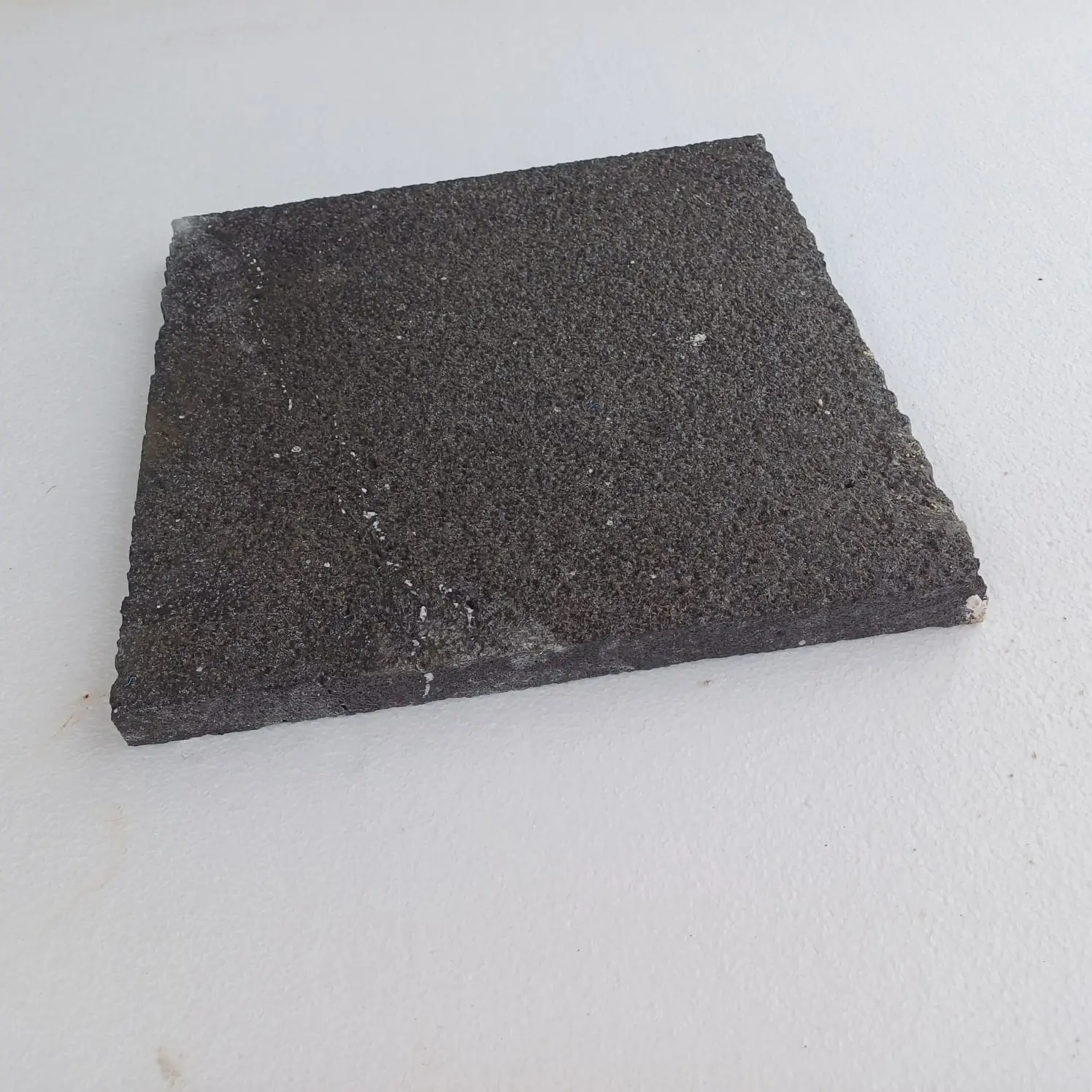
Pattern Geometry and Its Structural Logic
The grey limestone slab pattern Laveen designers rely on most — the mixed-format ashlar layout — isn’t just popular for aesthetics. It distributes point loads across multiple slab edges simultaneously, which reduces deflection stress at any single joint. You’re essentially creating an interlocking gravity system rather than a series of independent floating plates.
Here’s what most specifiers overlook when mixing formats: the contact ratio between adjacent slabs changes with every size combination. A 600×900, 600×600, 300×600 mix achieves roughly 85–90% edge contact when properly sequenced — compared to a single-format grid that sits at 100% edge alignment but concentrates all movement at perfectly continuous joint lines. That continuous joint line becomes a failure vector in active soils.
- Running bond (offset 1/3 or 1/2) — strongest structural performance for rectangular slabs on stable sub-base
- Ashlar multi-format — best for visual interest and load distribution on mixed-soil conditions
- Pinwheel or basket weave — pattern interest is high but requires precise leveling; any base settlement reads immediately in the geometry
- Random flagstone layout — accommodates irregular slab dimensions but demands tighter mortar bed tolerance (±3mm across 3 meters)
- Grid or stacked bond — visually clean, structurally adequate for pedestrian zones, but joint alignment amplifies any sub-base inconsistency
For Phoenix metro projects where Laveen sits at the southwestern edge, the desert pavement soil types transition quickly — you can encounter sandy loam, caliche, and clay-heavy fill within the same 500-square-foot project footprint. Your pattern selection needs to account for this variability by favoring layouts with shorter individual slab spans and greater grey paving slab combinations Arizona contractors can sequence efficiently across variable sub-base conditions.
Grey Limestone Performance Under Arizona Conditions
Grey limestone paving slabs in Arizona perform well in the Sonoran Desert climate, but that performance is conditional on material density. You want a minimum absorption rate below 3% (ASTM C97) for any exterior installation in this region — anything above that threshold pulls moisture during monsoon season and releases it under 110°F surface temperatures in a way that accelerates micro-fracturing at the slab face.
The grey colorway specifically offers a reflectance advantage in Laveen’s sun exposure without the stark contrast of white stone. Mid-tone grey limestone typically reflects 35–45% of solar radiation — enough to keep surface temperatures 15–20°F lower than charcoal or dark basalt under direct afternoon sun. This matters for both comfort and for thermal expansion management at your joints.
- Thermal expansion coefficient for quality grey limestone: approximately 4.8–5.5 × 10⁻⁶ per °F
- Recommended expansion joint spacing: every 12–15 feet in Laveen’s temperature range, not the 20-foot generic figure
- Joint width for mixed-format layouts: 8–12mm filled with polymeric sand rated for temperatures above 130°F surface exposure
- Surface texture requirement: minimum R10 slip resistance rating (DIN 51130) for any poolside or wash-adjacent application
Mixing Slab Formats for Visual Variety Without Structural Compromise
Achieving genuine Laveen mixed layouts that hold up structurally starts with understanding the aspect ratio rule — no individual slab in your mix should exceed a 3:1 length-to-width ratio when set on a granular base without mortar. That 900×300mm slab looks dramatic in the showroom but behaves like a cantilever arm if the bedding layer has even minor voids beneath it.
The most reliable mixed-format approach for grey paving slab combinations Arizona projects use combines a primary module (600×600mm or 600×900mm) with a secondary module exactly half or one-third the primary size. This generates a mathematically consistent repeat unit that eliminates awkward cuts at field edges and perimeter borders. You can achieve sophisticated pattern interest without introducing structural irregularity.
At Citadel Stone, we recommend building your pattern layout on paper first at 1:20 scale before committing to material orders — the number of cut pieces changes dramatically between a 45-degree diagonal layout and a standard orthogonal mix, which affects your waste factor by 8–15%.
Projects in Scottsdale that have adopted the 3-size ashlar mix consistently report higher client satisfaction scores than single-format grid installations — not just for aesthetics, but because the varied joint pattern conceals minor level variations that inevitably appear over time in active desert soils. The arizona design variety available through multi-format grey limestone slab pattern Laveen layouts makes them the specification of choice for discerning residential clients across the metro.
Ordering, Logistics, and Material Planning
Your material order for a mixed-format grey limestone slab project requires more planning precision than a single-size purchase. Each format runs in separate warehouse stock allocations, and a shortage of your secondary module mid-project forces pattern changes that compromise your design intent. Confirm warehouse availability of all three formats simultaneously before finalizing your design.
Truck delivery to Laveen sites requires attention to the access constraints on agricultural roads in the southwestern corridors — some streets lack the turning radius for full flatbed delivery, particularly on residential lots south of Baseline Road. Coordinate with your supplier on crane offload versus hand-bomb options when your driveway approach is under 12 feet wide. A truck that can’t complete delivery on schedule puts your installation window at risk during summer months when mortar bed open times drop from 30 minutes to under 15 minutes in direct sun.
- Order 10–12% overage on primary format modules to account for cuts and breakage
- Order 15–18% overage on secondary and tertiary modules — they carry more cuts per unit
- Verify warehouse stock of all formats simultaneously, not sequentially
- Schedule truck delivery in the early morning during June through September to keep material surface temperatures below 95°F at time of installation
- Request material batch certification to confirm consistent density and color range across all format sizes
At Citadel Stone, we source grey limestone directly and perform density and absorption checks at our warehouse before orders ship — this step catches batch inconsistencies that would otherwise show up as color variation after sealing.
Design Perspectives That Define Arizona Pattern Work
The design value of a grey limestone slab pattern extends well beyond visual texture — it carries architectural weight that connects your hardscape to the broader built environment. In Laveen’s emerging residential developments, the shift toward multi-format natural stone reflects a broader Arizona design variety trend away from homogeneous concrete toward materials that develop character over time.
Specifying cement grey limestone materials for your pattern mix gives you a tonal foundation that bridges modern minimalism with the region’s desert vernacular. The natural variation in grey limestone — where individual slabs carry slightly different iron and silica concentrations — means your multi-format layout looks curated rather than manufactured.
The design detail that separates strong Arizona pattern work from average installations is border treatment. A single-format perimeter course in a contrasting size creates visual containment without requiring a different material — a 200×600mm soldier course border around a mixed-field ashlar layout reads as intentional design language rather than an afterthought edge restraint.
Sealing and Maintenance for Mixed-Format Installations
Sealing protocols for grey limestone paving slabs in Arizona differ from standard concrete maintenance because limestone’s open pore structure requires impregnating sealers rather than film-forming products. A film-forming sealer traps moisture below the surface in a mixed-format installation where joint width varies — you’ll see whitish hazing at 6–18 months in Laveen’s monsoon conditions.
Your initial sealer application should happen after the polymeric sand has fully cured — typically 72 hours minimum after the final compaction and wash-down. Apply two coats with a 4-hour window between applications in temperatures below 95°F ambient. In Tucson-style applications where alkaline soils and higher elevation contribute to distinct weathering patterns, a pH-neutral impregnating sealer rated specifically for calcareous stone prevents the efflorescence that commonly appears in the first monsoon season after installation.
- First sealer application: 72 hours post-installation completion
- Resealing interval: every 2–3 years in full sun exposure, every 3–4 years in covered or shaded areas
- Joint sand top-up: inspect annually and refill to 90% joint depth before monsoon season
- Cleaning: pH-neutral stone cleaner only — avoid acidic driveway cleaners that etch limestone faces
- Stain treatment: address oil or organic staining within 48 hours using a poultice application to prevent deep penetration
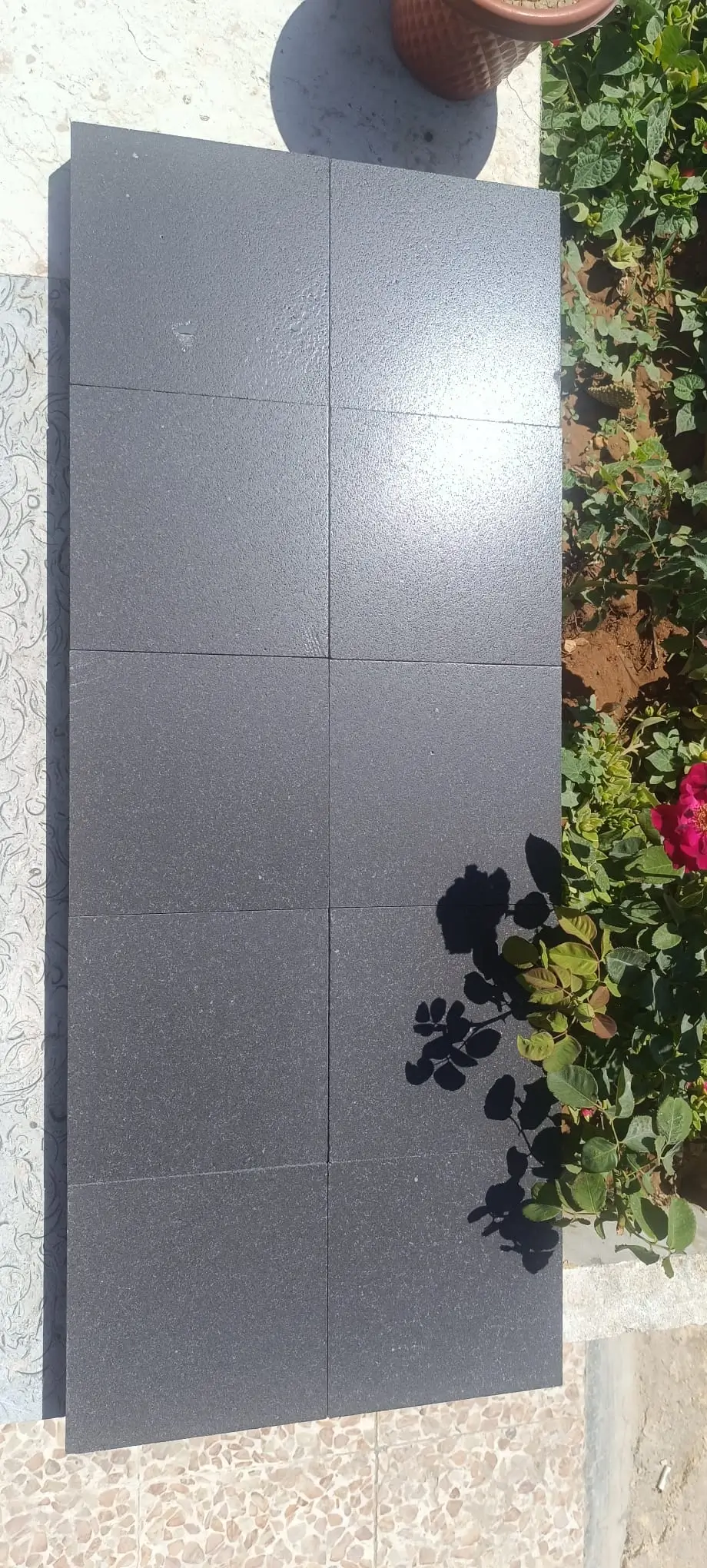
Edge Restraint and Joint Detailing for Arizona Installations
Edge restraint is the single most underspecified element in residential grey limestone slab pattern projects across Laveen and the wider Maricopa County area. Without a rigid perimeter restraint — either a concrete haunching or a purpose-made aluminum edge rail spiked at 24-inch intervals — your pattern will migrate outward over the first two monsoon seasons as soil moisture fluctuates. That migration is progressive and non-reversible once it starts.
Concrete haunching at the perimeter works well for permanent installations where the edge aligns with a curb, wall footing, or step structure. For freestanding field installations, aluminum edge restraint at 3mm minimum thickness handles the lateral pressure from a 600kg/m² loaded surface without deflecting. Your choice between the two depends on the design’s perimeter geometry — curved layouts require spike-type restraint, not haunching.
- Minimum haunching width: 150mm (6 inches) beyond the last slab edge
- Haunching depth: match your aggregate base depth plus 50mm into undisturbed subgrade
- Spike interval for aluminum edge restraint: 18 inches in straight runs, 12 inches on curves
- Joint width consistency: maintain ±2mm tolerance across the entire installation to prevent polymeric sand failure at wide gaps
What Matters Most for Your Grey Limestone Slab Pattern Laveen Project
Getting a grey limestone slab pattern Laveen project right comes down to two decisions made before the first slab is placed: sub-base engineering and pattern module selection. Every aesthetic outcome depends on those two structural foundations being correctly specified for the specific soil conditions, load profile, and drainage geometry of your site. The visual variety you’re designing for — the Laveen mixed layouts, the format combinations, the border definition — all of that performs as intended only when the structural layer beneath it is correctly executed.
Your project’s long-term performance also depends on material consistency across all format modules in your pattern mix. Sourcing all formats from the same production batch ensures color uniformity and density matching — a detail that matters significantly once the sealer brings out the natural stone variation. If your project extends into adjacent areas or future phases, consider exploring how large-format slabs handle complementary applications — Grey Limestone Paving Slab Large Format for Litchfield Park Modern Look covers how oversized modules perform in a related Arizona design context worth reviewing as you finalize your specifications.
The structural requirements, pattern logic, and material standards covered here apply whether you’re specifying 200 square feet of courtyard or 2,000 square feet of driveway approach. The scale changes; the principles don’t. Citadel Stone offers dove grey limestone paving slabs in Arizona in single sizes for grid patterns.