
Scale and Design Language in Litchfield Park
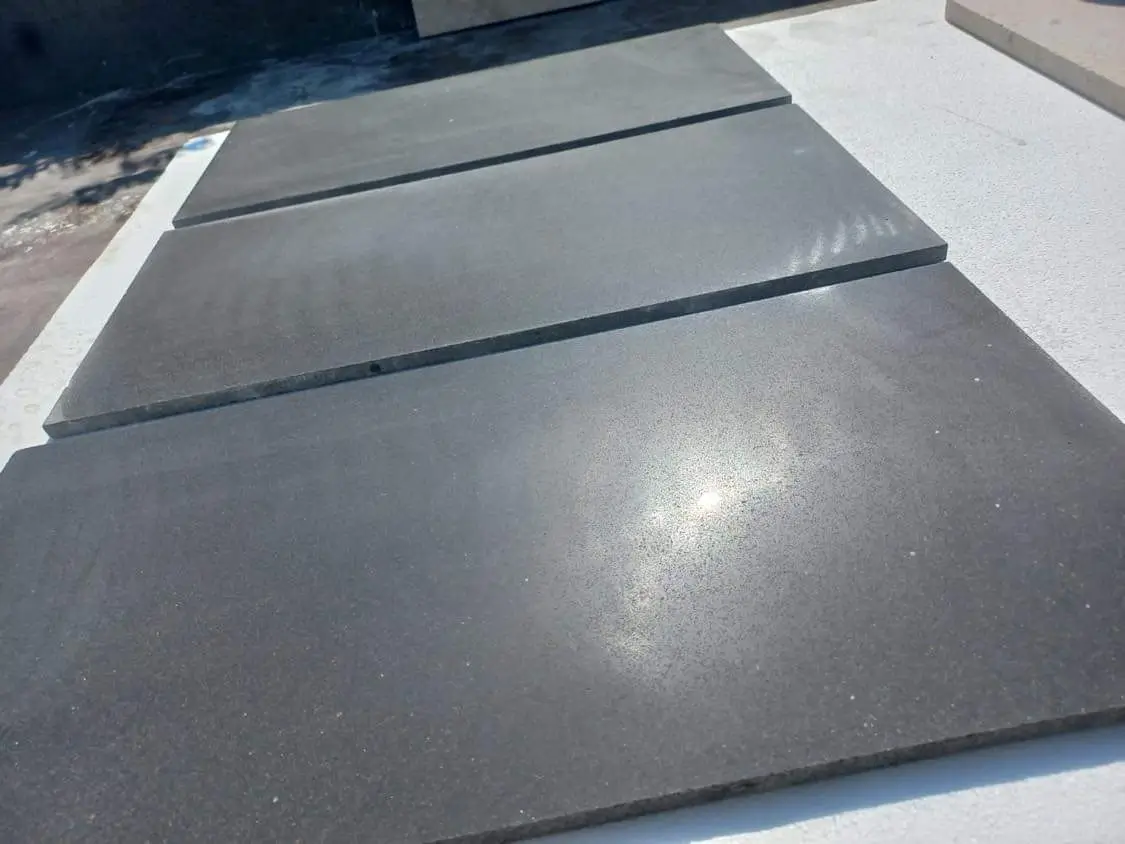
Grey limestone slab large Litchfield Park projects demand a material that speaks the same visual language as the homes themselves — expansive, horizontal, and grounded in the desert palette. The elongated proportions of oversized limestone formats aren’t just a stylistic preference; they actively reinforce the low-slung rooflines and wide covered patios that define contemporary Arizona living. Litchfield Park’s thoughtful, master-planned character means you’re designing into a context where material scale genuinely matters to the coherence of the finished space.
The grey limestone tones prevalent in these formats — warm silver, dove charcoal, and dusty blue-grey — sit in natural dialogue with the region’s desert scrub and mountain backdrops. You’re not fighting the landscape with these slabs; you’re extending it. The material’s muted, complex grey reads differently across morning and evening light in ways that polished concrete or porcelain simply can’t replicate, and that optical depth is exactly what draws serious landscape designers to natural stone over engineered alternatives.
Format Sizing for Modern Minimalism
Litchfield Park oversized formats — typically 24×48 inches, 24×24 inches, or custom 32×64 slabs — do something architecturally important that smaller modular pavers can’t achieve. They reduce the visible joint-to-surface ratio dramatically, which creates the seamless, floating-floor aesthetic that contemporary design depends on. Fewer joints mean fewer visual interruptions, and in a 2,000 square foot outdoor living space, that difference is immediately legible to anyone standing in the space.
Your joint spacing should run between 1/8 and 3/16 inches for the tightest visual result, though you’ll need to build in thermal accommodation thoughtfully given Arizona’s temperature swings. Grey paving slab large sizes Arizona projects require expansion joints every 12 to 15 feet — not the generic 20-foot recommendation you’ll sometimes see in product sheets written for temperate climates. That compression load at high temperatures is real, and closing it off without relief joints creates edge lift that no amount of setting mortar will hold permanently.
- 24×48 inch format delivers the strongest horizontal emphasis for rectangular outdoor rooms
- 24×24 inch pairing works well for transitional zones between covered and uncovered areas
- Staggered 1/3 offset bond pattern reduces grout line visibility while maintaining structural integrity
- Random length formats introduce natural variation without sacrificing the minimal joint aesthetic
- Thickness of 1.25 to 1.5 inches handles typical residential foot traffic and patio furniture loading
Desert Xeriscaping and Stone Integration
The integration between grey limestone slabs and xeriscaped planting is one of the strongest design arguments for this material in the Litchfield Park context. Agave attenuata, desert spoon, and ironwood trees all carry the same grey-green undertones that the limestone’s surface reflects — it’s a chromatic conversation that happens at the material level without any designer intervention. The organic texture of tumbled or brushed limestone finishes also provides a visual bridge between the precision of architectural hardscape and the irregular forms of native planting.
Projects in San Tan Valley offer a useful reference point here — the caliche-heavy soil conditions common across the western Phoenix metro create excellent sub-base stability once properly addressed, and the natural drainage characteristics of grey limestone perform well in the episodic heavy rain events Arizona experiences between extended dry periods. Your decomposed granite surround and grey slab field should share a common design vocabulary: both materials express geological time, mineral character, and a surface roughness that reads as intentional rather than unfinished.
The detail that matters most in xeriscaping integration is edge transition. Your limestone slab field needs a defined edge condition — either a buried soldier course, a steel angle, or a precision-cut border — where it meets decomposed granite or planted beds. Without it, the DG migrates onto the slab surface and compromises both the clean joint line and the stone’s sealed surface over time.
Surface Finish Selection for Arizona Context
The finish you specify on grey limestone slab large format material makes a significant difference to both the design outcome and the performance envelope in Arizona conditions. A sawn-cut face delivers sharp, contemporary lines and a consistent surface texture, but it will register every scuff and surface deposit more visibly than a brushed or honed alternative. For outdoor terraces in full Arizona sun, brushed finishes are consistently the better long-term choice.
- Brushed finish: suppresses specular reflection, reduces heat perception underfoot, masks minor surface wear
- Honed finish: smooth, matte surface that reads elegantly in covered loggia and interior-adjacent zones
- Sawn face: precise and architectural, best reserved for vertical applications or deeply shaded areas
- Flamed finish: aggressive texture with highest slip resistance — useful for pool surrounds but visually heavy in minimal contemporary schemes
Here’s what most specifiers miss on finish selection: the grey limestone surface finish also affects sealing penetration depth. A brushed surface with its open pore profile accepts penetrating sealers more readily than a honed face, which means better long-term stain resistance without multiple sealer applications. You’ll typically achieve full penetration with one coat on brushed material versus two coats on honed — a meaningful difference across a large-format terrace. For guidance on maintaining that sealed surface over time, Grey Limestone Paving Sealing Requirements for Carefree Protection covers the sealing cycles and product specifications that keep Arizona limestone performing at its best.
Base Preparation for Large Slab Stability
Large-format limestone slabs are fundamentally unforgiving of inadequate base preparation — far more so than modular pavers where point loads distribute across many smaller units. A single 24×48 slab concentrates its support demands across a relatively large unsupported span, which means your sub-base uniformity and compaction standard matter at a different level of precision than typical paver work.
For residential terrace applications in the Litchfield Park area, a minimum 6-inch compacted Class II base aggregate is your starting point. In areas with irrigated landscaping adjacent to the slab field, extend that to 8 inches and add a geotextile separation fabric between the native soil and aggregate to prevent migration over time. Your setting bed — whether wet mortar or unbound compacted sand — needs to be screeded to within 1/8 inch across any 10-foot span before slab placement begins. That tolerance sounds tight until you’re looking at a lippage problem in a 24×48 grid that requires slab removal and resetting.
Projects near Yuma introduce an additional variable worth noting: the fine-grained, low-cohesion sandy soils in that region require compaction verification at 95% modified Proctor density before you build up your aggregate base — native soil settlement under large slab formats in those conditions creates differential movement that standard residential specs don’t anticipate.
Indoor-Outdoor Continuity with Grey Limestone
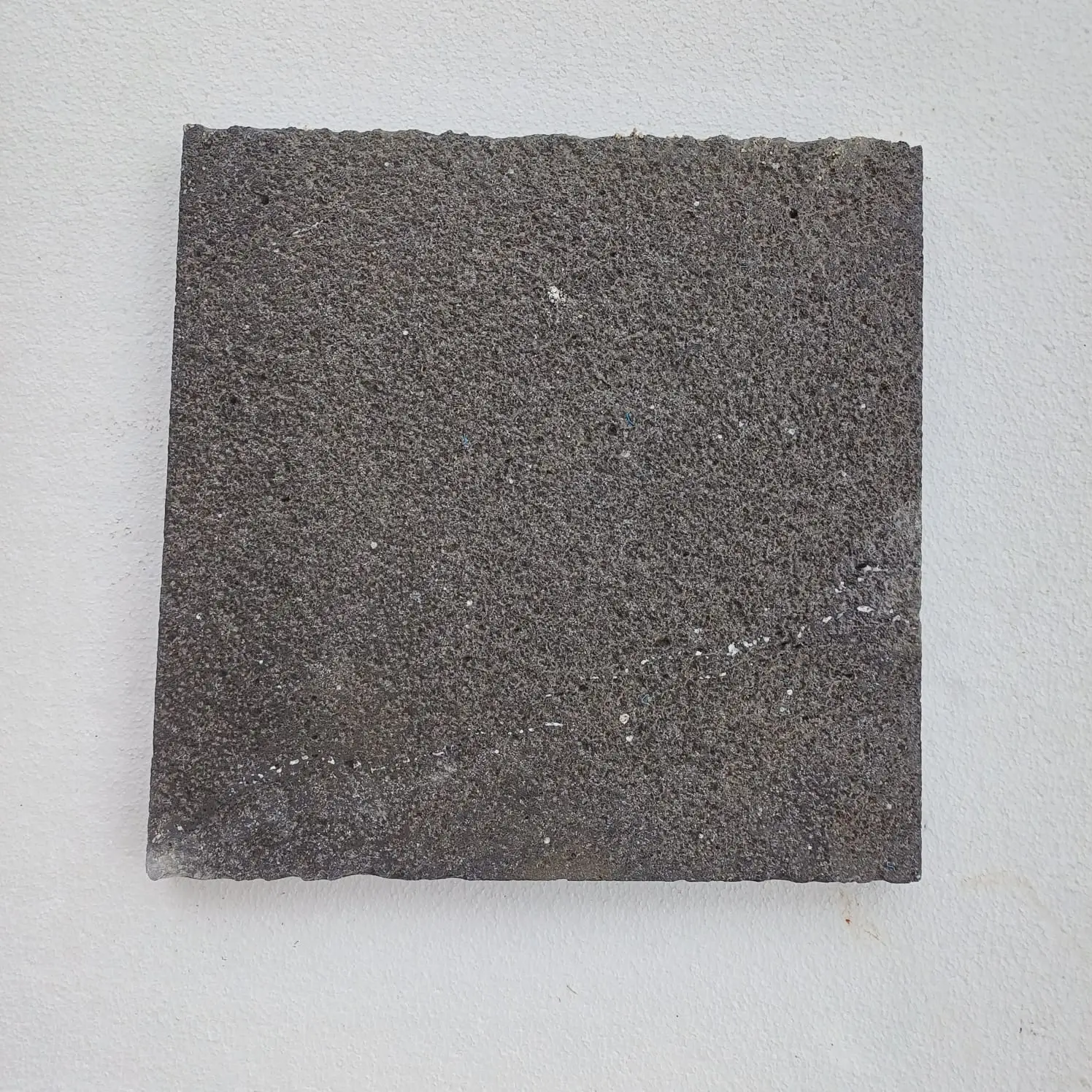
Contemporary Arizona architecture’s signature move is the dissolution of the threshold between interior and exterior space, and grey limestone slab large format material is one of the most effective tools for executing that continuity. The practical challenge is coordinating slab format, finish, and thickness across the interior-exterior transition while maintaining the visual seamlessness the design demands.
Your interior floor specification will typically be at finished floor height, which creates a threshold condition with the exterior terrace that needs explicit detailing. In most cases, a 1/4-inch slope differential across the threshold is the maximum you can achieve while maintaining accessibility compliance and preventing water ingress under open bi-fold or sliding door systems. The exterior slab field needs to be set with a 1-percent cross-slope away from the building — tight enough to be invisible to the eye, effective enough to drain Arizona’s monsoon events without ponding.
The visual approach that works consistently well: use the same grey limestone at interior and exterior, but shift the finish. Honed inside, brushed outside. The shared material and format creates continuity; the finish shift signals the transition and provides the appropriate slip resistance outdoors without breaking the design logic. For projects that extend this language to other areas of the Arizona landscape, exploring textured grey limestone paving in Flagstaff demonstrates how the same material family performs across very different regional conditions.
Colour Palette and Material Coordination
Coordinating grey limestone slabs with the broader material palette on an Arizona contemporary project requires understanding the stone’s undertone range. Grey limestone isn’t a single chromatic value — quarry batches will shift between warm taupe-grey, cool blue-grey, and neutral silver-grey depending on the deposit zone and the batch cut. Arizona contemporary design — particularly in Litchfield Park’s higher-value residential market — rewards precision in material coordination.
- Warm grey limestone coordinates with stucco in sand, mushroom, and desert rose tones
- Cool blue-grey limestone reads exceptionally well against corten steel, black aluminum framing, and concrete masonry unit walls
- Neutral silver-grey is the most versatile option when your architectural palette includes both warm wood and cool metal elements
- Request sample panels from warehouse stock before committing to full quantity — batch variation is real and should be assessed under natural light, not showroom lighting
At Citadel Stone, we receive consistent requests for large-format grey limestone samples ahead of specification sign-off, and we always recommend assessing those samples at the actual project site rather than in an office. The way Arizona’s high-angle summer sun reads off a brushed grey surface at noon versus a low-angle winter afternoon is significant, and it should inform your final selection. Our technical team can also help you identify batch consistency across the warehouse inventory before truck delivery is scheduled, which is particularly important for large terrace installations where mid-project batch changes create visible tonal shifts.
Arizona Contemporary Scale and the Minimal Palette
Arizona contemporary scale as a design philosophy is defined by restraint — fewer materials used across larger surfaces, with quality of execution carrying the visual weight. Grey limestone slab large format paving is precisely aligned with that philosophy because the material’s inherent visual complexity means you don’t need pattern variation, colour contrast, or ornamental detail to make a terrace interesting. The stone does that work independently.
The proportional relationship between slab format and outdoor room size matters more than most designers initially account for. A 24×48 slab in a 400 square foot terrace reads as confident and contemporary. The same format in an 800 square foot outdoor living zone with an attached pool deck creates a genuinely architectural result. In Avondale, where newer residential construction is pushing lot sizes and outdoor room dimensions upward, grey limestone paving slabs in Arizona are increasingly specified at the 800-plus square foot scale — and the results consistently outperform smaller-format alternatives in photographic representation and resale response.
The discipline required for modern minimalism also extends to restraint in accessory elements. Your outdoor furniture, planting containers, and lighting fixtures need to be curated against the grey limestone field with the same intentionality as the stone selection itself. The grey limestone slab large format paving gives you an authoritative foundation; what you build on top of it determines whether the result reads as genuinely architectural or merely expensive.
Decision Points for Your Grey Limestone Specification
Your grey limestone slab large Litchfield Park specification comes down to a sequence of decisions that need to be made in the right order — format before finish, finish before sealer, sealer before setting bed specification. The format determines your joint pattern and expansion joint layout. The finish determines your sealer selection and penetration expectation. The sealer type informs your setting bed moisture management requirements. These aren’t independent choices; each one constrains the next.
Sourcing and logistics deserve early attention on large-format projects. Warehouse lead times for oversized grey limestone formats typically run two to three weeks from stock confirmation to truck delivery, and you’ll want to verify slab availability across a consistent batch before your installation team is mobilised. Coordinating delivery to coincide with base preparation completion — rather than staging slabs on-site for extended periods — protects the material from jobsite damage and reduces handling logistics significantly. The investment in pre-specification technical consultation pays back in project flow and material consistency in ways that post-problem remediation never does. Our dove grey limestone paving in Arizona is perfect for creating seamless indoor-outdoor flow.