
What Thermal Cycling Really Does to Grey Limestone Walkways in Buckeye
Grey limestone walkways in Buckeye face a performance challenge that gets underestimated constantly — not the peak summer heat itself, but the relentless daily temperature swing that can exceed 40°F between a desert midnight and a mid-afternoon high. Limestone’s thermal expansion coefficient sits around 4.4 × 10⁻⁶ per °F, which means a 30-foot walkway section experiences roughly 1.6mm of net dimensional change across that daily range. Multiply that by 365 cycles per year, and you’re looking at cumulative joint stress that separates properly engineered installations from the ones that start rocking and cracking within five years.
The mechanism isn’t mysterious once you understand it. Each expansion-contraction cycle works the bedding mortar or polymeric sand at the joint edge in a micro-shear pattern. Stone that fits perfectly at installation develops progressively looser seating as the years accumulate, and the symptom — rocking pavers — is often mistaken for base failure when the real culprit is joint material that couldn’t accommodate the thermal range. Your specification needs to account for this from the first line.
Expansion Joint Layout for Arizona’s Temperature Range
Standard residential paving guidelines often recommend expansion joints every 20 feet. For grey limestone walkways in Buckeye, you should bring that interval down to 12–15 feet. Here’s the engineering reason: Buckeye’s ground-level temperature range — not air temperature, but surface stone temperature — can reach from roughly 45°F on a clear January night to over 150°F on exposed stone in July. That’s a 105°F operational range, not the 60–70°F range assumed by most generic joint spacing tables.
Calculating the required joint width uses the formula: ΔL = α × L × ΔT. Using limestone’s expansion coefficient of 4.4 × 10⁻⁶/°F, a 15-foot (180-inch) run across a 105°F range yields roughly 0.083 inches of movement. Your joint filler needs to accommodate at least that width with a 20% safety margin — so 3/16-inch minimum at the joint face. Polyurethane sealants in the 25–50% movement accommodation class handle this comfortably; standard Portland-based mortars do not.
- Space isolation joints at 12–15 foot intervals along the walkway run
- Widen joints at transitions to concrete structures, walls, or fixed edges to 1/4 inch minimum
- Use ASTM C920 Type S Grade NS polyurethane sealant for joint material in exposed walkway conditions
- Never bridge an isolation joint with sand set polymeric material — use a proper compressible filler below the sealant bead
- Orient joints perpendicular to the primary walkway direction to prevent differential plane movement
Freeze-Thaw Reality in a Hot-Climate State
Most Arizona homeowners hear “freeze-thaw” and dismiss it as a northern problem. Projects in Buckeye sit at roughly 1,000 feet elevation in the Sonoran Desert, and while hard freezes are uncommon, overnight temperatures regularly dip below freezing during December and January — particularly in open areas with no thermal mass from structures. That’s enough to initiate freeze-thaw cycling in any pore water that has saturated the stone or the bedding layer.
Grey limestone in the sedimentary family typically carries a water absorption rate between 0.5% and 3.5% depending on the specific quarry and formation. Higher-porosity material from certain Mediterranean sources can absorb enough moisture during monsoon season that subsequent cold nights create hydraulic pressure within the pore network. Spalling along the stone’s upper face is the diagnostic symptom — you’ll see it as shallow flaking that looks like surface delamination. The fix isn’t resurfacing; it’s correct material selection before installation.
- Specify limestone with ASTM C568 water absorption below 1.5% for Buckeye’s freeze-thaw exposure category
- Request freeze-thaw durability test results (ASTM C880 or equivalent) from your supplier before committing to a material
- Avoid material with visible bedding plane orientation parallel to the walking surface — this dramatically increases delamination risk under freeze-thaw stress
- Confirm that your base aggregate achieves 95% compaction so water doesn’t pool at the bedding interface during monsoon infiltration
Base Preparation and Thermal Mass Considerations
The base system under grey limestone walkways in Buckeye serves two simultaneous functions that most specifications treat as one: load distribution and thermal buffering. Your compacted aggregate base acts as a thermal sink, moderating the rate at which temperature change reaches the bedding layer. A 6-inch crushed granite base holds significantly more thermal inertia than a 4-inch base — this slower thermal response reduces the peak differential stress between stone and bedding on the most extreme temperature-swing days.
Buckeye’s native soils trend toward sandy loam with caliche deposits at varying depths. That caliche layer is actually valuable as sub-base when it’s intact and properly prepared, but it creates localized drainage restriction that can concentrate pore water exactly where you don’t want it. You’ll need to verify the caliche depth in your specific walkway corridor and plan perforated drainage at those transition points if the layer sits within 24 inches of finish grade.
For Yuma projects with similar desert base conditions, the aggregate base specification typically mirrors what works in Buckeye — 3/4-inch crushed granite or decomposed granite at 6 inches compacted, with geotextile separation fabric at the native soil interface. The fabric prevents migration of fines into the drainage layer, which is the failure mode most commonly blamed incorrectly on surface material quality.
Stone Thickness for Pedestrian Walkway Loading
Residential pedestrian walkways in Buckeye typically warrant 1.25-inch to 1.5-inch nominal thickness for grey limestone pavers, assuming a properly prepared base. That range handles standard foot traffic, occasional loaded cart or wheelchair loads, and the point-load stress from furniture legs at seating areas along the path. Pushing below 1.25 inches on a dry-laid system introduces brittleness risk, particularly at cut edges where the stone has less natural cross-section to resist bending stress.
Thickness selection for grey limestone paving in Arizona also interacts with freeze-thaw performance. Thinner stone has less thermal mass, meaning it cycles through its temperature range faster and more aggressively than thicker material. At 1.5 inches, the stone moderates its own surface-to-substrate temperature differential more effectively — a detail that shows up in long-term joint integrity data but rarely makes it into residential specs.
- 1.25 inches: minimum acceptable for residential pedestrian walkways with full 6-inch compacted base
- 1.5 inches: preferred specification for high-use routes or connections between primary living areas
- 2 inches: commercial-grade applications or any route with frequent wheeled equipment access
- Never specify below 1.25 inches for dry-laid natural stone in a thermal cycling environment
- Edge cuts that reduce nominal thickness by more than 30% should be avoided at structural zones
Grey Paving Pathway Design for Arizona Movement Flow
Designing Buckeye pedestrian routes with grey limestone involves more than choosing a slab size and running it in a straight line. The thermal cycling reality you’re managing actually informs pathway layout geometry. Longer continuous runs accumulate more total expansion than segmented or offset patterns, which is one practical reason why herringbone and offset coursing outperform simple running bond for Buckeye walkway connections — they break the continuous stress line into shorter segments naturally.
For walking connections between a home entry, pool deck, and outdoor living structure, you’re typically dealing with 30–60 linear feet of pathway. At those lengths, your joint strategy and coursing pattern directly determine whether the installation walks comfortably at year fifteen or starts showing differential settlement at year eight. The grey limestone format you specify also affects perceived pathway width — wider-format slabs (24×24 or 18×36) make narrow walkways feel more expansive, but they also mean fewer joints per linear foot, which puts more stress concentration on each individual joint.
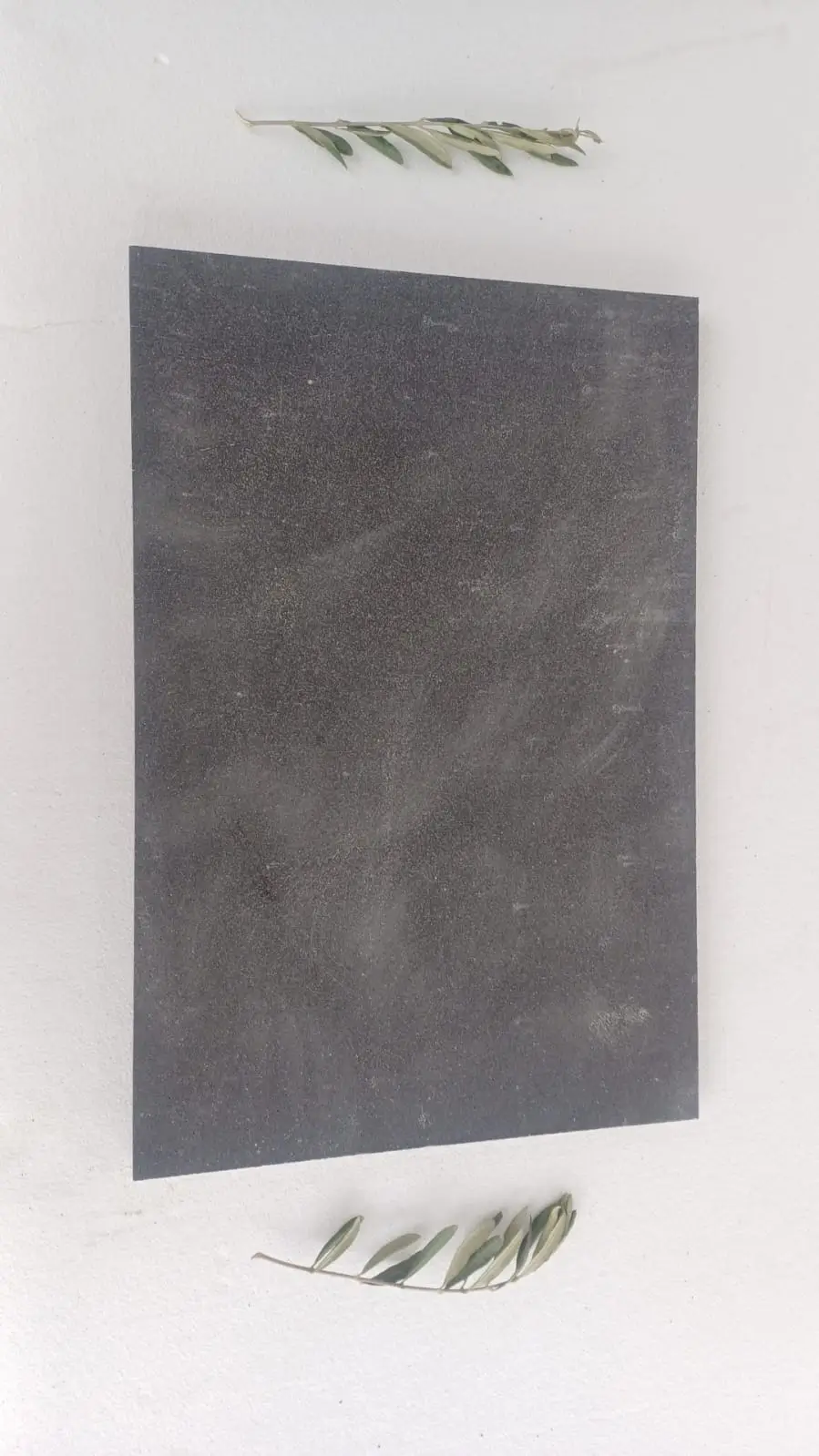
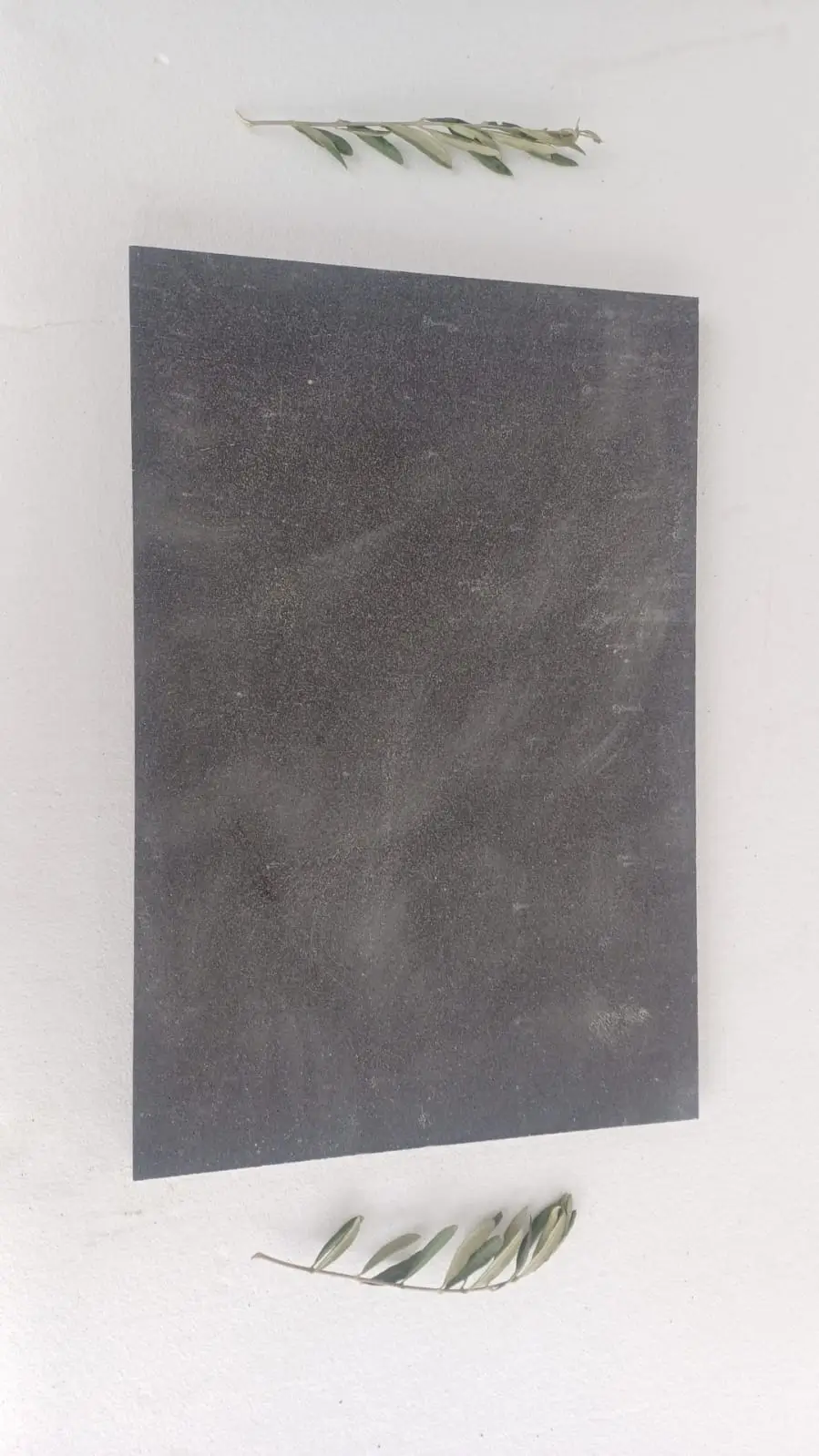
Specifying brushed dove grey limestone paving for Buckeye walkway connections gives you the tonal consistency that reads well under Arizona’s high-contrast light while providing a naturally non-slip brushed texture that outperforms polished or honed finishes in surface friction under wet conditions.
Sealing Schedule for High-Thermal-Cycling Environments
Sealing grey limestone walkways in Buckeye requires a different approach than the standard “seal once and check annually” advice you’ll find in generic stone care guides. The thermal cycling environment accelerates sealant degradation at the stone surface — UV exposure combined with the daily expansion and contraction breaks down penetrating sealant bonds faster than in temperate climates. A penetrating silane-siloxane sealer applied every 18–24 months is the appropriate maintenance interval for Buckeye’s exposure conditions, not the 3–5 year cycle appropriate for Pacific Northwest climates.
Sealant application timing matters more than most homeowners realize. Scheduling initial sealing and re-sealing during moderate temperature windows — ideally when surface stone temperature is between 50°F and 85°F — produces consistently better penetration depth than applying on a hot afternoon. Applying sealant to stone that has been sitting in 130°F direct sun causes immediate flash evaporation of the carrier solvent, leaving inadequate penetration depth. Early morning application in spring or fall gives you the optimal absorption window. Your contractor should verify stone surface temperature with an infrared thermometer before opening the first container.
- Use penetrating silane-siloxane sealer rated for limestone porosity and UV exposure
- Re-seal every 18–24 months in Buckeye’s thermal cycling environment
- Apply only when stone surface temperature reads 50–85°F
- Test sealer absorption with a water droplet test before each application — if water still beads strongly, the existing sealant hasn’t fully degraded
- Clean stone thoroughly and allow 48 hours of dry conditions before sealer application
Ordering, Warehouse Lead Times, and Project Scheduling
Project timing for grey limestone walkways in Buckeye should account for material lead time as a primary scheduling variable — not an afterthought. At Citadel Stone, we recommend confirming warehouse stock availability before finalizing your contractor start date, since natural stone inventory fluctuates with quarry production cycles and regional demand. From our warehouse to a Buckeye job site, logistics typically run 5–10 business days once a confirmed order is placed against available stock.
Truck delivery access is worth verifying during the planning phase, particularly for residential Buckeye properties in newer subdivisions where street widths and turn radii may restrict standard flatbed access. A smaller split-load truck delivery costs more per pallet but avoids the risk of a full truck that can’t complete the turn onto your street and has to off-load at the curb — which creates its own material handling chain. Checking delivery access early protects your installation schedule and prevents the kind of last-minute logistics scramble that compresses your contractor’s prep time.
For Gilbert and Mesa projects pulling from the same warehouse supply, lead time windows run similarly, though demand peaks in late winter and early spring as the installation season accelerates. Ordering four to six weeks ahead of your planned start date gives you comfortable buffer across all central Arizona markets.
Arizona Movement Flow: Getting the Specification Right
The decisions that determine long-term performance for grey limestone walkways in Buckeye aren’t made during installation — they’re made during specification. Expansion joint placement, stone thickness, base depth, sealant schedule, and material absorption rating are all locked in before a single paver touches the ground. Getting any one of these wrong doesn’t show up immediately; it shows up in years four through eight as rocking stone, opened joints, or surface delamination that a casual observer misreads as a material quality issue.
Arizona movement flow for pedestrian connections depends on grey paving pathway design that respects the thermal environment as a primary engineering constraint, not a secondary concern. The daily temperature swing in Buckeye is a real structural force acting on your installation, and designing for it explicitly is what separates walkways that look good at the ten-year mark from those that needed attention at the five-year mark. Your specification documents should include thermal expansion calculations, joint material specification by ASTM class, and a maintenance schedule tied to the local climate interval — not a generic national recommendation.
For projects where the walkway connects to defined garden or landscape border zones, the detailing at that edge transition carries as much importance as the field installation. Complementary stone applications for Buckeye and surrounding Arizona communities extend the same thermal design logic to edge conditions between walkway and planted areas. Grey Limestone Paving Border Accents for Avondale Garden Definition covers how those edge conditions can be detailed for both aesthetics and long-term stability in Arizona’s thermal environment. Our limestone grey paving in Arizona offers a natural variation that man-made pavers cannot match.