
Grey limestone textures Fountain Hills specifiers select most often aren’t chosen for aesthetics alone — the terrain here demands it. Fountain Hills sits on a series of elevated plateaus and descending desert slopes where grade management, drainage geometry, and surface friction all interact simultaneously. The texture you specify isn’t just a finish decision; it’s an engineering variable that determines how water moves across your surface, how foot traffic performs on a pitch, and how long your base stays intact beneath the stone.
Why Terrain Drives Texture Selection in Fountain Hills
The hillside topography around Fountain Hills creates drainage challenges that flat desert installations simply don’t face. Slopes that shed water quickly can erode compacted base material if surface texture doesn’t create sufficient hydraulic resistance — essentially slowing sheet flow before it builds momentum. Your texture choice acts as a passive drainage control mechanism, and in high-grade applications, it’s as important as your drain placement.
Polished or honed finishes on sloped installations are a documented failure pattern. They reduce friction below 0.5 on the coefficient of friction scale, which falls beneath the ASTM C1028 wet-surface threshold for pedestrian safety. On a 3-percent or steeper grade — common on Fountain Hills driveways and terraces — that becomes a liability issue, not just a performance one.
- Surface texture affects hydraulic resistance on grades above 1.5 percent
- Coarser finishes slow sheet water flow, protecting base compaction
- Friction coefficients below 0.6 wet are inappropriate for sloped exterior use
- Texture depth correlates directly with drainage dwell time on pitched surfaces
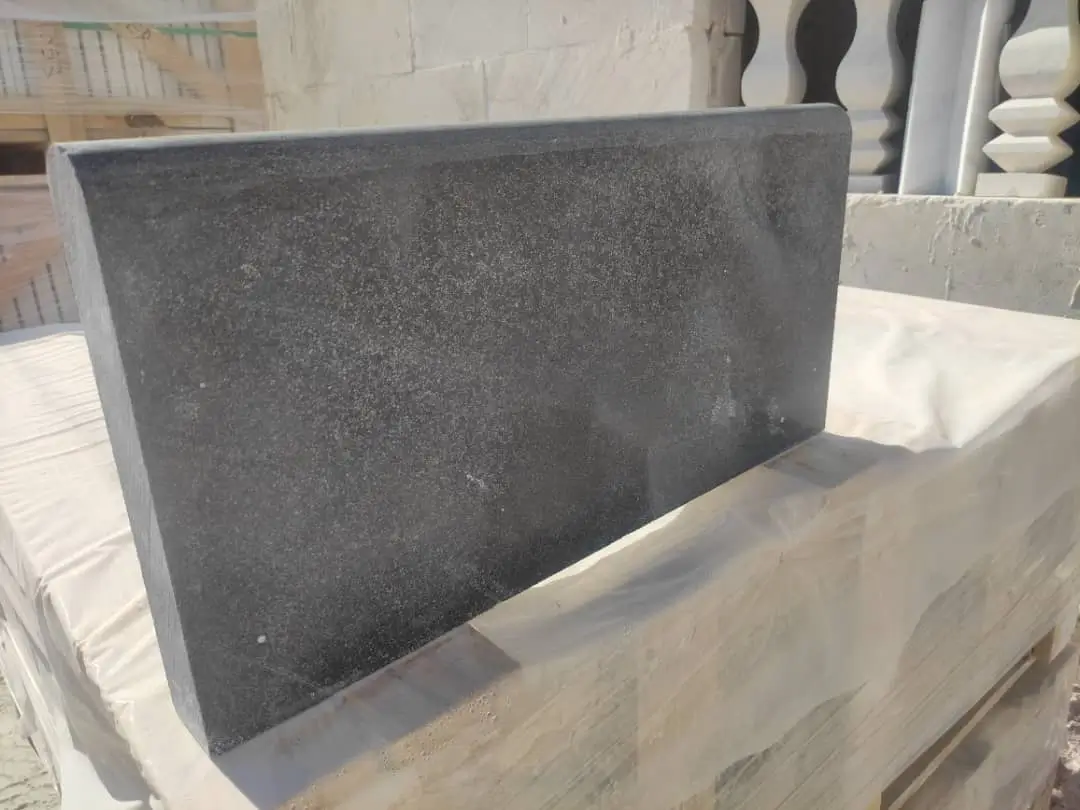
Sawn Cut Finish: The Baseline Option for Arizona Terrain
Sawn cut grey limestone delivers a relatively smooth but matte surface that sits at the mid-point of the texture spectrum. The blade marks left by diamond sawing create micro-channels — typically 0.5 to 1.0 mm deep — that provide modest directional drainage without significantly increasing surface roughness. For nearly-flat terraces within 0 to 1 percent grade, sawn cut performs well and offers a clean architectural appearance.
For Fountain Hills projects where grade transitions are moderate, sawn cut is a reasonable starting choice. The limitation appears when your layout spans multiple elevation changes. Sawn cut’s micro-channels run parallel to the cut direction, so if your installation runs perpendicular to slope, the channels can actually trap water rather than shed it. Orienting sawn cut pavers with channels running down-slope corrects this — a field detail most spec sheets don’t mention. Fountain Hills finish choices at this texture level reward careful paver orientation planning.
- Micro-channel depth: 0.5–1.0 mm depending on blade speed
- Coefficient of friction (wet): approximately 0.55–0.65
- Appropriate for grades: 0–2 percent with correct paver orientation
- Compatible with standard polymeric joint sand
- Requires sealing every 3–5 years in Arizona UV exposure conditions
Brushed and Antiqued Texture for Hillside Slope Installations
Brushed grey limestone undergoes mechanical wire-brushing after cutting, which opens the surface pore structure and raises the texture profile to 1.5–3.0 mm depth variation. That may not sound significant, but it moves the wet coefficient of friction up to approximately 0.70–0.80 — well within the safe zone for slopes up to 5 percent under normal pedestrian loading. For grey limestone textures Fountain Hills projects that include terrace stairs, pool surrounds, or sloped walkways, brushed finish is the professional minimum.
The antiqued variant takes the brushing process further, adding tumbling or edge treatment to round corners and deepen texture irregularity. This creates what effectively becomes a natural drainage network across the face of each paver. In San Tan Valley, where desert soil expansion during monsoon season creates vertical movement in base layers, the antiqued finish’s irregular face actually accommodates minor differential settling better than a sawn flat surface — the eye reads slight variation as intentional rather than as evidence of movement. The Arizona tactile differences between brushed and antiqued surfaces become especially apparent after the first monsoon season, when pedestrian feedback on real installations confirms the performance gap.
Flamed Finish: High-Performance Texture for Arizona’s Demanding Sites
Flamed grey limestone involves passing a high-temperature torch across the sawn surface, which causes the calcite crystals to fracture and pop — creating a deeply textured, highly irregular surface profile of 3.0–5.0 mm. The result is the highest-friction natural stone finish available without surface coatings, typically yielding wet coefficients of friction between 0.80 and 0.95 depending on specific limestone density and the flaming protocol.
For Fountain Hills terrain challenges, the flamed grey limestone paving slabs specification becomes the obvious choice for grades exceeding 4 percent, for commercial entry approaches, and for any surface where elderly or mobility-impaired users will be regular pedestrians. The grey paving surface options Arizona designers select for high-traffic sloped areas consistently point toward flamed finish as the performance benchmark. The surface also outperforms other finishes in Arizona tactile differences under thermal cycling — the fractured crystal face expands and contracts at the micro-scale rather than at the joint level, which means thermal stress gets distributed across the face rather than accumulating at joints.
- Surface texture depth: 3.0–5.0 mm after flaming
- Wet COF: 0.80–0.95 (meets ADA accessibility standards for exterior surfaces)
- Appropriate for grades: up to 8 percent in pedestrian applications
- Slightly higher porosity post-flaming — seal with penetrating silane-siloxane sealer
- Colour shifts slightly lighter after flaming due to crystal surface exposure
Split Face and Riven Texture: Retaining Wall and Vertical Applications
Grey limestone textures Fountain Hills retaining wall projects commonly specify include split face and natural riven finishes. These aren’t paving surfaces — they’re vertical-face treatments for walls, risers, and cladding that manage the visual mass of grade-change structures. Split face is produced by mechanically splitting the stone along natural cleavage planes, exposing a raw crystalline face with 10–25 mm of texture variety across the panel width.
Riven finish follows natural bedding planes rather than forced mechanical splitting. The result is more random and organic, with texture variation that closely replicates the stone’s geological formation. For Fountain Hills hillside retaining walls where natural desert character is the design intent, riven grey limestone cladding delivers visual authenticity that split face doesn’t quite achieve. At Citadel Stone, we recommend riven finish for walls over 1.2 meters in height, where the larger visual field makes texture randomness a design asset rather than a liability.
- Split face variation: 10–25 mm depth irregularity per linear meter
- Riven finish: follows natural bedding, higher randomness
- Neither finish is appropriate for horizontal paving or slope applications
- Panel thickness for structural wall cladding: minimum 30 mm
- Mortar adhesion improves on riven and split face versus sawn (mechanical key bond)
Honed Finish: Understanding Its Controlled Use Cases
The honed finish produces a flat, semi-reflective surface without the high gloss of polished stone. It’s a grey paving surface option Arizona interior designers specify frequently for covered loggia floors, outdoor kitchens, and shaded pavilion areas where grade is essentially flat and slip risk is managed by overhead cover and drainage. The surface is smooth at 0.5 mm or less texture variation, and its wet COF typically falls between 0.45 and 0.60 depending on the specific limestone and honing grit sequence.
The honest limitation here is that honed grey limestone has no place on a Fountain Hills exposed slope. The combination of monsoon moisture and grade makes it a documented liability. Its appropriate territory is covered, essentially flat, high-design applications where the stone’s natural grey tone and quiet reflectivity are the specification drivers. Fountain Hills finish choices in this category should be limited to interior-adjacent covered spaces — not exposed outdoor paving where elevation and drainage are active concerns.
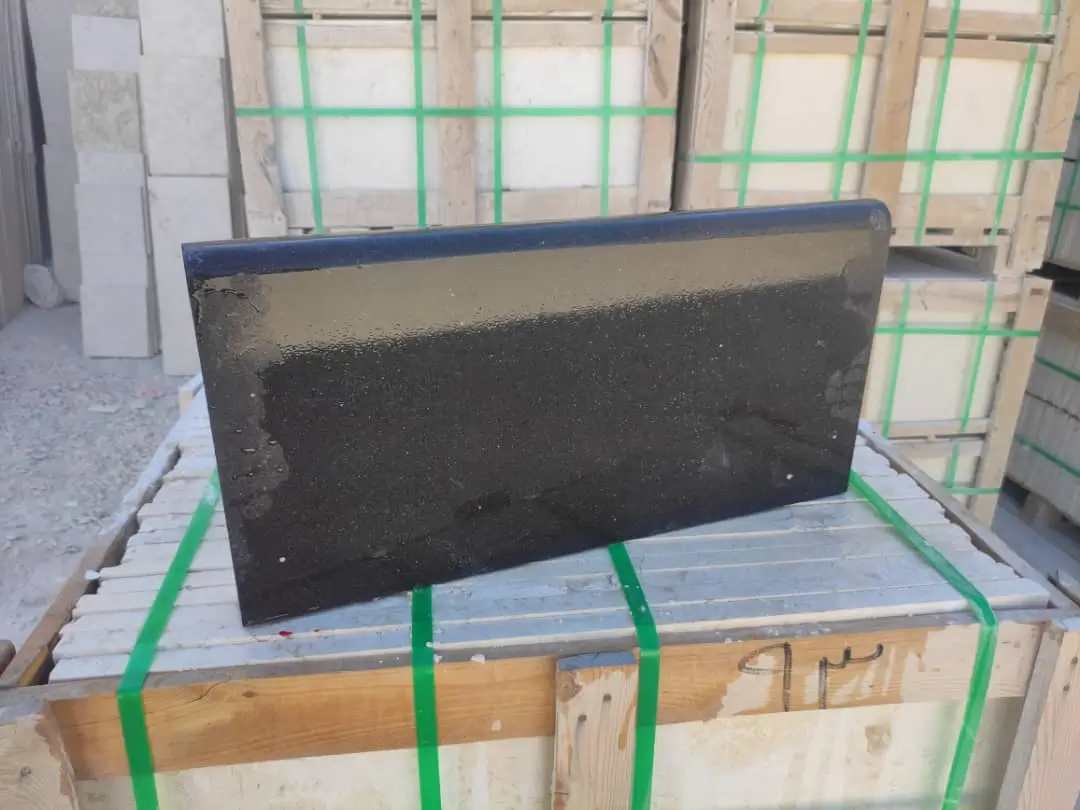
Base Preparation and Drainage Design by Texture Type
Your texture selection influences base design more than most specifiers account for. Coarser textures — flamed, brushed, antiqued — allow you to work with slightly lower cross-slope because the surface friction itself contributes to drainage control. Smooth textures — sawn, honed — require more aggressive sub-surface drainage geometry to compensate. The rule of thumb that holds across Arizona terrain types: every 0.5 reduction in surface COF requires approximately 0.5 percent additional cross-slope to maintain equivalent drainage performance.
In Avondale, where expansive clay soils create seasonal heave cycles, texture selection also affects how joint movement reads visually. Coarser finishes mask minor differential movement more effectively than sawn or honed faces — which means brushed or flamed grey limestone in Arizona’s expansive soil zones delivers a longer-looking installation life, even if the underlying movement patterns are similar. Base depth for sloped Fountain Hills installations should follow ICPI standards as a minimum: 6 inches of compacted Class II aggregate base for residential grades, 8 inches for commercial or vehicular applications.
- Sawn finish: requires 1.5–2.0 percent minimum cross-slope for drainage
- Brushed finish: 1.0–1.5 percent cross-slope minimum on grades under 4 percent
- Flamed finish: 0.75–1.0 percent cross-slope acceptable for pedestrian areas
- All sloped installations require edge restraints with drainage weep points
- Geotextile fabric under aggregate base recommended on Arizona desert soils
Thickness Specification for Elevated Terrain Installations
Texture variety and terrain grade both influence what thickness your grey limestone paving in Arizona should be specified at. The general rule — 20 mm for pedestrian, 30 mm for vehicular — holds as a floor, not a ceiling. On Fountain Hills sloped applications where compacted base is at greater risk of erosion and heave, the additional thickness provides structural reserve against point-load stress concentrations at the upper edges of each paver.
Our technical team advises 30 mm minimum for any grey limestone paving on slopes exceeding 3 percent, regardless of pedestrian-only designation. The reason is failure mode: on a slope, edge-to-edge load transfer is directional, concentrating stress on the downhill edge of each paver. Thinner stone at 20 mm on a grade doesn’t have the bending resistance to manage that loading pattern across years of thermal cycling and base movement. The extra 10 mm costs marginally more per square meter but eliminates the leading edge crack failure that’s the most common callback issue on sloped natural stone installations.
Ordering Logistics and Warehouse Availability for Arizona Projects
Texture choices affect lead times more than most project managers plan for. Flamed and brushed finishes require additional processing time beyond standard sawn cut, and for larger Fountain Hills projects — anything above 200 square meters — you should verify warehouse stock levels before committing to your installation schedule. Sawn cut is almost always available from regional inventory, while specialty finishes like riven or antiqued may require 3–4 weeks of additional production lead time depending on quarry scheduling.
Citadel Stone maintains warehouse inventory across Arizona, which typically reduces standard finish lead times to 1–2 weeks compared to the longer import cycles many suppliers run. For Fountain Hills projects on hillside sites, truck access is a legitimate planning consideration — narrow private roads and steep driveway grades sometimes limit delivery vehicle size, affecting how you stage your material drop. Coordinate with your delivery contact early to confirm whether a standard flatbed truck can reach your site, or whether a smaller transfer load is needed. In Yuma and other Arizona regions with wide access roads and flat terrain, this is less of a concern, but elevated terrain sites around Fountain Hills benefit from explicit access confirmation before scheduling.
- Sawn cut: typically in warehouse stock, 1–2 week lead time
- Brushed and antiqued: 2–3 weeks depending on volume
- Flamed finish: 2–4 weeks, confirm batch availability for large projects
- Riven and split face: 3–5 weeks, quarry schedule dependent
- Confirm truck access to sloped Fountain Hills sites before delivery scheduling
Grey Limestone Texture Selection: Professional Summary for Fountain Hills Projects
Grey limestone textures Fountain Hills projects demand aren’t a single answer — they’re a decision matrix that starts with your site’s grade, works through drainage geometry, and arrives at a surface friction specification before aesthetics ever enters the conversation. Flamed and brushed finishes belong on exposed slopes. Sawn cut works on near-flat covered surfaces with correct orientation. Honed finish has its place in interior-adjacent, covered, flat applications only. Riven and split face serve vertical cladding and retaining wall surfaces where texture variety adds visual authenticity to grade-change structures.
Your base preparation, drainage slope, and paver thickness must be coordinated with your texture selection — not decided independently. The specifiers who get the longest-performing Fountain Hills installations right are the ones treating texture as a performance variable first and a design variable second. The grey paving surface options Arizona terrain demands are narrow by design — physics limits the menu on any sloped site, and the right finish choice is the one that serves drainage, friction, and durability before serving the mood board. Beyond terraced paving, your Arizona stone project may also benefit from exploring enclosed courtyard applications — Grey Limestone Paving Courtyard Design for Cave Creek Privacy explores how grey limestone performs in a defined outdoor room context, offering another angle on Arizona stone specification that complements sloped-site work. Citadel Stone offers the best value on Grey Limestone Paving in Arizona.