
Blue Limestone Counter Slabs Paradise Valley projects reveal their true complexity not in the heat specs, but in how water moves across, under, and around your countertop surface during Arizona’s monsoon season. The weight of a 3-cm slab sitting on an outdoor kitchen frame behaves very differently when drainage geometry is wrong — you’ll see hydrostatic pressure build at the mortar bed within the first summer, creating the subtle lippage and joint failure that owners mistake for a material defect. Getting the specification right means thinking about water first, surface aesthetics second.
Why Drainage Geometry Defines Your Countertop Specification
Paradise Valley sits in one of Arizona’s most intense monsoon corridors. From late June through September, storm cells can drop 1.5 to 2.5 inches of rain in under an hour — and outdoor kitchen countertops bear the full brunt of that runoff if the drainage profile isn’t engineered into the slab layout from day one. Blue limestone counter slabs Paradise Valley installations that fail within five years almost always share the same root cause: flat or near-flat slab surfaces that pool water at the back edge where the stone meets the vertical structure.
Your countertop slope specification should sit between 1/8 inch and 3/16 inch per linear foot, pitched away from the structure and toward the outer edge. That’s tighter than what most tile contractors default to, but blue limestone’s interconnected pore structure — with an average absorption rate of 4 to 7% by weight — means even brief standing water begins migrating into the stone. Over multiple wet-dry cycles, that movement carries dissolved salts upward, and you’ll see efflorescence staining at the surface by the second monsoon season if the drainage profile is off.
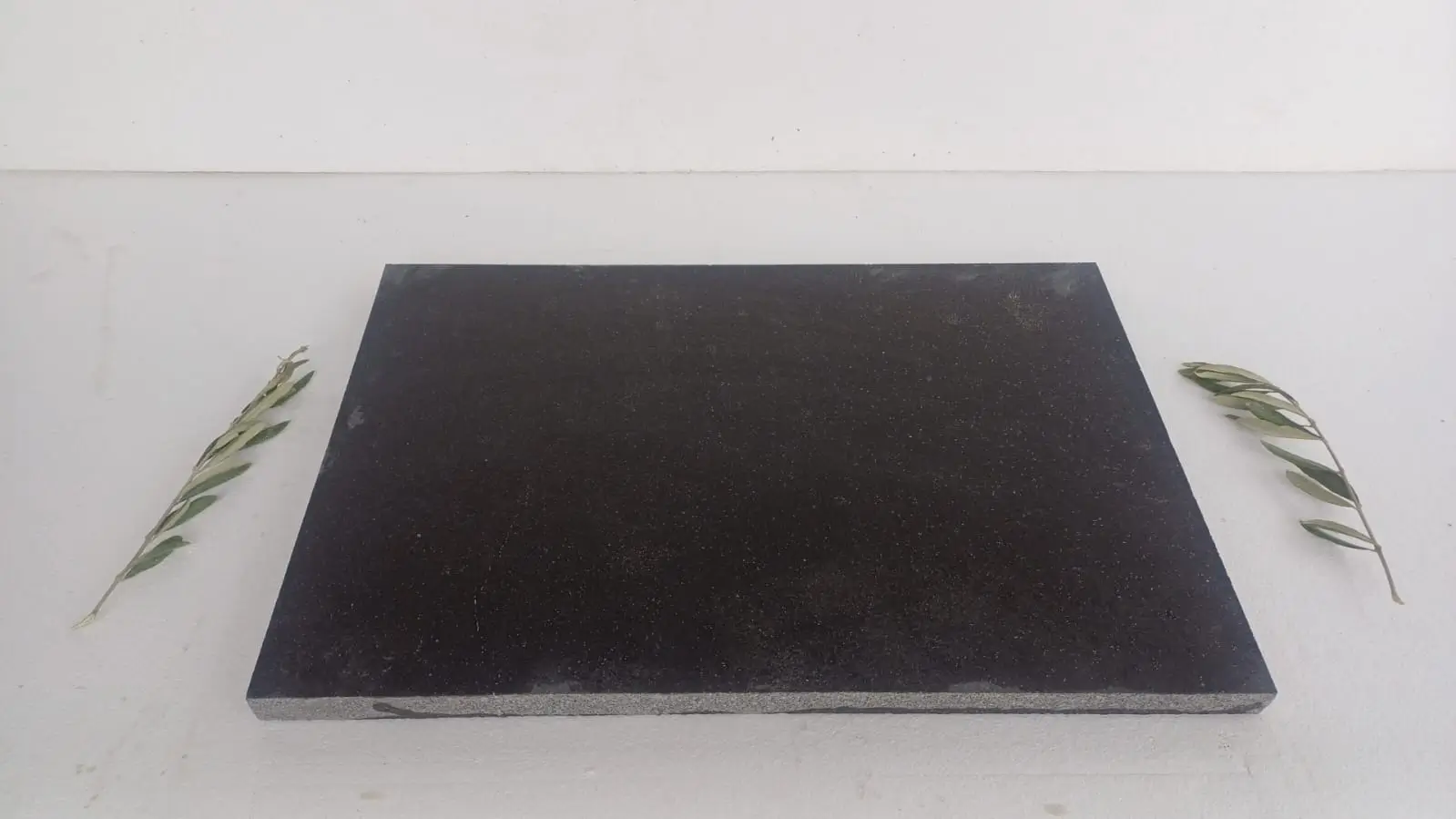
Slab Thickness and Structural Base for Outdoor Kitchens
The structural base beneath your blue limestone slabs in Arizona does more drainage work than most designers account for. A poorly compacted CMU or steel-frame substrate with inadequate weep holes creates a moisture trap — the slab above stays damp on its underside even when the surface looks dry. That sustained underside moisture is what drives delamination of the mortar bond over time.
For outdoor kitchen countertops in Paradise Valley, the specification that holds up consistently is:
- Minimum 3-cm (1.18-inch) slab thickness for spans over 24 inches between supports
- Weep holes at 18-inch centers in CMU substrates, directed outward and downward
- Modified thin-set mortar rated for exterior and moisture-prone applications (ANSI A118.4 or better)
- Full-coverage mortar application — no spot-bonding, which creates voids that trap water
- Stainless steel undermount brackets where sink cutouts create spans over 12 inches
- Expansion joints at all transitions between stone and dissimilar materials, minimum 3/8-inch width
The 3-cm spec matters specifically because blue limestone’s density — typically 155 to 165 lbs per cubic foot — requires that mass to resist point-load cracking at appliance corners and mounting hardware edges. Thinner 2-cm slabs can work on fully supported substrates, but the monsoon thermal cycling in Paradise Valley adds enough stress to that reduced cross-section that you’re taking on unnecessary risk.
Monsoon Performance and Moisture Control for Paradise Valley Culinary Spaces
Arizona culinary spaces that sit under partial cover — a pergola, a ramada with gaps, or a shade sail — face a drainage challenge that fully exposed or fully covered countertops don’t: intermittent saturation. Water hits the outer third of the countertop during wind-driven rain, runs back, pools at the covered zone, and sits there as the sun drives temperature swings between 75°F and 110°F within the same afternoon during monsoon shoulder periods.
Blue limestone’s thermal expansion coefficient of approximately 4.4 × 10⁻⁶ per °F means a 48-inch countertop run can move nearly 0.025 inches across a 120°F temperature differential. That sounds small until you realize your grout joint — if undersized at 1/16 inch — has no room to accommodate that movement. The joint closes, stress builds, and you get hairline fractures at the most vulnerable point: usually within 6 inches of an inside corner or at a sink cutout.
Your joint specification for blue limestone counter slabs Paradise Valley outdoor kitchens should be 3/32 to 1/8 inch minimum, filled with a polymer-modified sanded grout rated for exterior use. Avoid epoxy grout on outdoor limestone countertops — it bonds too rigidly and becomes the failure point under thermal cycling rather than the relief valve you need the joint to be. These moisture dynamics apply equally to Paradise Valley cooking surfaces and any Arizona culinary spaces where partial shade creates asymmetric saturation zones.
Surface Finish Selection for Outdoor Prep Areas
The finish you specify for outdoor prep areas directly affects both drainage performance and safety. Blue limestone slab counters Arizona installations consistently face a decision between honed, brushed, and natural cleft finishes — and each behaves differently when wet monsoon conditions hit.
- Honed finish: DCOF (Dynamic Coefficient of Friction) rating of 0.42 to 0.55 when wet — acceptable for countertop use but requires sealed surface maintenance every 12 to 18 months in Arizona’s UV intensity
- Brushed finish: opens the surface texture slightly, raising wet DCOF to 0.55 to 0.65, better for areas where hands and prep tools contact the surface frequently
- Natural cleft: highest drainage performance due to micro-texture channels, but surface inconsistency can create small standing zones if the slab wasn’t quarried with consistent relief
- Polished finish: contraindicated for outdoor use — wet DCOF drops below 0.42 and sealer adhesion degrades rapidly under Arizona UV exposure
For Paradise Valley projects, the brushed finish is the specification that holds up best across three or more monsoon seasons without demanding intensive maintenance. It strikes the balance between the refined aesthetic that high-value properties in the area expect and the practical drainage and grip performance outdoor cooking surfaces require. For outdoor prep areas with heavy appliance use, brushed blue limestone also resists tool marks and thermal discoloration better than honed alternatives at comparable price points.
Sealing Protocols for Blue Limestone Slabs in Arizona
Sealing is where many otherwise solid specifications fall apart in execution. Blue limestone’s porosity makes it highly receptive to impregnating sealers, which is an advantage — but the sealer must be applied before the first monsoon season hits and reapplied on a schedule that accounts for UV degradation, not just moisture exposure.
The standard recommendation for blue limestone counter slabs Paradise Valley outdoor kitchens is a penetrating fluoropolymer or silane-siloxane sealer applied in two coats with a 24-hour cure between coats. Surface temperature during application matters more than most installers realize — you’ll get 30 to 40% better penetration depth applying at 65 to 80°F surface temperature compared to application at 95°F or above. In Paradise Valley’s late spring and summer, that means morning application only, before 9 a.m., and never on a surface that’s been in direct sun for more than an hour.
For blue limestone slabs in Arizona projects located in Flagstaff, the sealing calculus changes — higher elevation means freeze-thaw cycles enter the picture, and you’ll need a sealer with confirmed performance across freeze-thaw testing (ASTM C672 compliance is a reasonable benchmark to request from your sealer supplier). The northern Arizona climate introduces stresses that Paradise Valley doesn’t face, and a sealer rated only for arid conditions won’t hold up through a Flagstaff winter.
At Citadel Stone, we test sealed samples of our blue limestone inventory under Arizona UV exposure conditions before recommending specific sealer products to our clients — it’s a step that saves projects from the costly mistake of using a sealer that performs well in the showroom but degrades in 18 months under real Phoenix-basin sunlight.
Base Preparation and Drainage Infrastructure
The outdoor kitchen frame is the drainage infrastructure for your countertop system — and it deserves as much engineering attention as the stone itself. Steel stud framing with cement board sheathing is the most common substrate you’ll encounter on Paradise Valley outdoor kitchens, and it creates a specific water management challenge: cement board wicks moisture laterally, distributing it to the mortar bed beneath the stone over a wider area than vertical rain alone would reach.
Specifying a self-adhering waterproof membrane between the cement board and the mortar bed is not optional on these projects — it’s the difference between a 20-year installation and a 10-year one. The membrane isolates the stone system from the structural substrate, allowing each layer to perform its function independently without transferring moisture stress across the assembly boundary.
For reference, you can review our blue black paving slab inventory to understand the full thickness and finish range available for Arizona outdoor kitchen applications. Having warehouse stock available locally also means you can stage truck delivery to match your substrate completion schedule — a coordination detail that matters on high-value projects where delays carry real cost.
Regional Climate Considerations Beyond Monsoon Management
Desert climate zones introduce UV degradation as a secondary but significant factor in blue limestone counter slab performance. Paradise Valley’s solar irradiance levels — averaging 5.5 to 6.2 kWh per square meter per day — exceed what most sealer manufacturers test against, which is typically based on temperate climate UV exposure data.
Surface temperature on an exposed blue limestone countertop in afternoon Arizona sun can reach 145 to 160°F at peak summer hours. That’s relevant to two things: sealer chemistry degradation (most sealers begin losing efficacy above 130°F surface temperature with extended exposure), and the practical question of whether the countertop is usable as an outdoor cooking surface without thermal protection for adjacent appliances and cabinetry.
In Sedona, red rock mineral content in the local water supply creates an additional staining challenge — if your outdoor kitchen uses a hose connection for prep washing, the mineral-laden water can leave iron-rich deposits on blue limestone that require acid treatment to remove. Specifying a water softener or filtration point at the outdoor kitchen supply line is worth doing on Sedona-area projects, and the same logic applies anywhere in the Verde Valley corridor.
Material Sourcing and Delivery Logistics for Paradise Valley Projects
Slab countertop projects have a tighter delivery window tolerance than paving projects — you’re typically installing within a few days of substrate completion, and a delayed truck creates a cascade that pushes back multiple trades. For blue limestone counter slabs Paradise Valley installations, confirm warehouse stock availability at least three weeks before your installation date, not one week out.
The logistics reality with natural stone slabs is that countertop-grade material — consistent thickness tolerance of ±1/16 inch, calibrated face, matched color lot — represents a smaller percentage of any given quarry shipment than standard paving grade. You’ll want your supplier to hold matched slabs from the same production lot if your project requires more than two full slabs. Color variation between lots on blue limestone slab counters Arizona suppliers stock can be subtle but noticeable when slabs butt up against each other on a long countertop run.
Citadel Stone maintains warehouse inventory across Arizona and can typically stage truck delivery on a 7 to 10 business day lead time for in-stock slab material, which aligns well with most outdoor kitchen construction sequences. That lead time advantage over import-direct purchasing is meaningful when your project has contractor scheduling dependencies. Confirming warehouse availability early also gives your team flexibility to sequence delivery around substrate curing schedules without paying premium expedite fees.
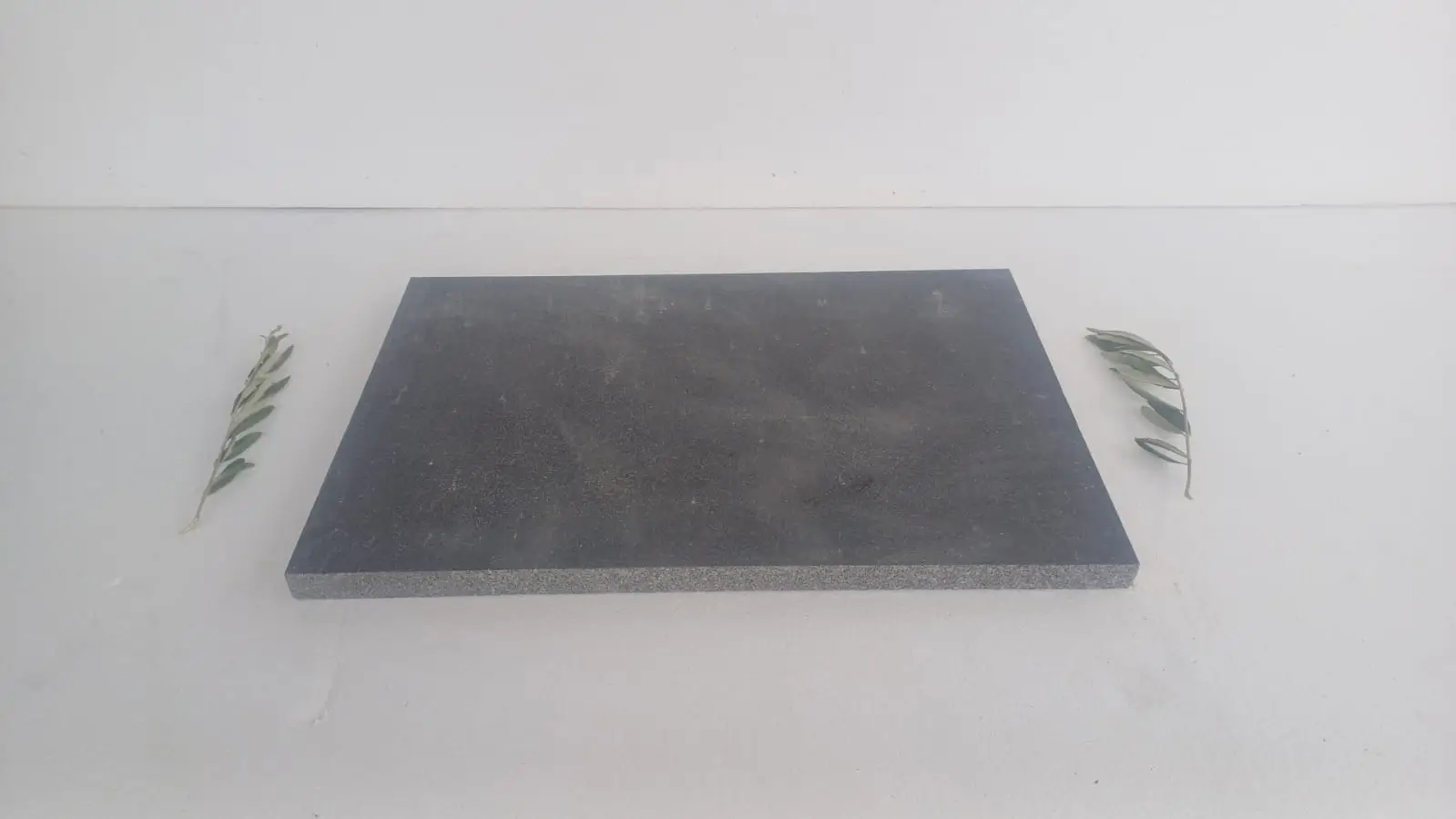
Performance Expectations and Maintenance Schedule
Realistic performance expectations for blue limestone counter slabs Paradise Valley outdoor kitchens look like this: a properly specified and installed countertop — correct drainage slope, waterproofed substrate, appropriate thickness, penetrating sealer applied correctly — should deliver 20 to 25 years of functional service life with biennial sealing and annual joint inspection.
What shortens that timeline is predictable and preventable:
- Skipping the waterproof membrane on the substrate drops expected service life to 10 to 14 years in high-monsoon-exposure installations
- Using interior-rated grout on exterior joints creates failure within 3 to 5 monsoon seasons as the grout degrades and allows water infiltration at the joint
- Applying sealer over a contaminated surface — any residual construction dust, oils, or curing compounds — creates a bond failure layer that causes the sealer to peel rather than penetrate
- Ignoring hairline cracks at corners for more than one monsoon season allows water infiltration to undermine the mortar bed, turning a minor repair into a full slab reset
- Using acidic cleaning products — including many common kitchen degreasers — etches the limestone surface and destroys sealer integrity locally, creating moisture entry points
For Peoria and the western Phoenix metro where summer humidity spikes are lower than Paradise Valley’s monsoon intensity, you may be able to extend the sealing interval to 30 months rather than 24 — but don’t push beyond 36 months anywhere in Arizona’s low desert without doing a water bead test on the surface to confirm sealer efficacy.
What Separates a Lasting Blue Limestone Countertop from a Replacement
Every specification decision on a blue limestone counter slab project either protects or compromises the water management system beneath the stone. The drainage slope, the waterproof membrane, the joint width, the sealer timing — these aren’t aesthetic choices, they’re structural ones that determine whether your Paradise Valley outdoor kitchen countertop is still performing in 2045 or getting demo’d in 2033. The material itself is sound; the system around it is what fails when shortcuts get taken.
Your project’s success is also tied to honest procurement — getting slabs from the same production lot, confirming calibrated thickness tolerance, and allowing adequate curing time before the first monsoon season exposes the full assembly to Arizona’s water and UV stress. These aren’t abstract quality points; they’re the specific variables that show up in field performance data across installed projects in the Phoenix basin. Beyond countertops, your Paradise Valley property may also benefit from complementary stone features — Blue Limestone Slab Outdoor Showers for Peoria Pool Amenities explores how the same material performs in an adjacent water-management-intensive application worth considering as your outdoor living scope expands.
Citadel Stone supplies blue limestone counter slabs for Paradise Valley outdoor kitchens, providing Arizona project teams with calibrated slab stock and technical specification support from our regional warehouse inventory.