
Timing your blue limestone shower slabs Peoria installation around Arizona’s seasonal calendar is the single biggest variable separating a 25-year installation from one that starts showing grout failure and surface spalling within five years. Most spec sheets will tell you the material performs well in heat — that’s true, but it’s an incomplete picture. What they don’t tell you is that adhesive open time shrinks to under 6 minutes on a 105°F slab surface, your leveling margin disappears faster than you can adjust, and a slab set slightly off-plane at 11 a.m. in July is effectively permanent by noon. Blue limestone shower slabs for Peoria pool amenities demand a scheduling strategy, not just a material spec.
Why Seasonal Timing Defines Success for Outdoor Shower Slabs
Arizona’s seasonal rhythm creates two installation windows that are genuinely excellent and two periods that punish shortcuts. Spring — roughly mid-February through late April — gives you ambient temperatures between 65°F and 85°F, low relative humidity, and slab surfaces that stay workable long enough to fine-tune bed depth and alignment. That window is where the most reliable outdoor shower installations get done, and it’s worth planning your project procurement around it rather than treating it as a lucky coincidence.
Fall from mid-October through late November offers a comparable window, though slab surfaces cool faster in the afternoon hours, which actually helps with longer open times. The distinction most installers miss is that fall installations benefit from a longer initial cure period before the material faces its first sustained heat stress — you’re essentially letting the mortar bed consolidate through mild winter months before the first summer thermal cycling event arrives.
- Spring window (mid-February to late April): optimal adhesive open time, consistent ambient conditions, ideal for large-format slabs
- Fall window (mid-October to late November): extended afternoon workability, lower cure-stress from first heat season
- Summer (May through September): viable with strict morning-only scheduling and modified adhesive formulas
- Deep winter (December to January): adhesive cure slows significantly in Peoria’s overnight lows; plan for extended set times
Morning vs. Afternoon Scheduling: The Detail That Changes Everything
Concrete pool decks in Peoria absorb and retain radiant heat at a level that surprises even experienced installers on their first Arizona project. By 10 a.m. in June, a west-facing concrete substrate can register 115°F to 125°F — well beyond the 100°F threshold where most standard polymer-modified thinset adhesives begin showing accelerated skinning. Your installation crew needs to be setting slabs before 8 a.m. and wrapping bedding work by 10:30 a.m. at the absolute latest during peak summer months.
Afternoon work during summer months should be limited to cutting, staging, and surface prep — activities that don’t involve adhesive. Projects in Yuma face even more extreme substrate temperatures due to lower elevation and higher solar intensity, where afternoon slab surfaces regularly exceed 140°F, making any adhesive application after 9:30 a.m. essentially futile without specialized high-temperature formulations. Scheduling isn’t a soft recommendation here — it’s a hard technical constraint that applies equally to blue limestone shower slabs Peoria installers and contractors working across the broader Phoenix metro.
- Pre-dawn substrate moistening reduces surface temperature by 15–25°F and buys additional open time
- Shade structures over the work zone during installation are worth the setup cost on summer projects
- Verify adhesive manufacturer’s stated open time is rated for substrate temps, not just ambient air temps
- Never apply adhesive to a surface that registers above 95°F — test with an infrared thermometer before starting each session
Blue Limestone Thermal Behavior in Pool Environments
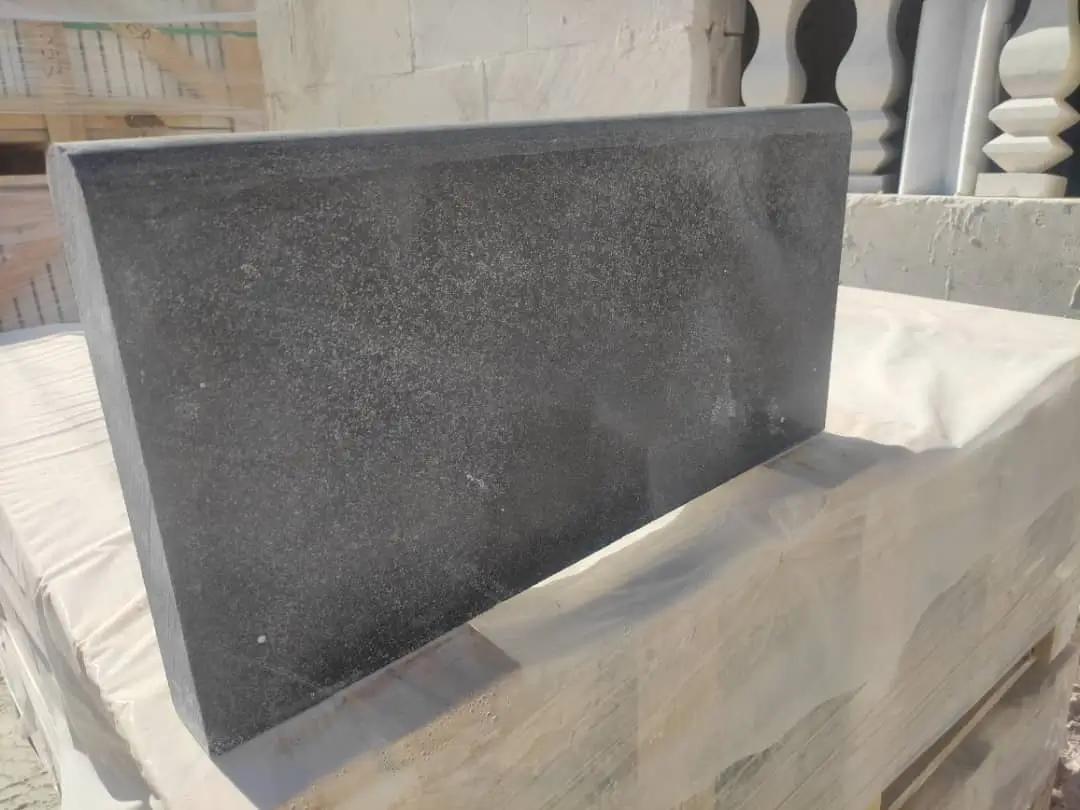
Blue limestone slab shower floors Arizona installations benefit from one of the material’s least-discussed physical properties: its relatively low thermal diffusivity compared to ceramic tile and concrete. Limestone transfers heat from its surface into its mass more slowly, which means the standing surface temperature under bare feet stays 12–18°F cooler than an equivalent concrete slab under identical sun exposure. For a pool amenity shower application, that’s a genuine functional advantage — not a marketing claim.
The material’s density — typically 160–165 lbs per cubic foot for quality blue limestone — also means it doesn’t flex appreciably under foot traffic, which matters at the mortar bond line. Thermal expansion for blue limestone runs approximately 4.5 × 10⁻⁶ per °F, so a 3-foot slab cycling through a 70°F temperature swing will expand roughly 0.01 inches. That’s manageable with properly spaced movement joints, but you need to account for it in your layout — the industry-standard 12-foot joint spacing applies here, not the 20-foot spacing sometimes spec’d on concrete surfaces.
Slab Thickness and Base Preparation for Peoria Rinse Areas
Peoria rinse areas adjacent to pool decks typically see concentrated foot traffic from wet bathers — a loading scenario that punishes undersized slabs more quickly than any other residential application. For blue limestone in shower and rinse configurations, specify a minimum 1.25-inch nominal thickness; 1.5 inches is the better choice for high-traffic commercial pool facilities. The additional quarter-inch adds meaningful bending resistance without meaningfully impacting weight or cost at the quantities these installations require.
Your base preparation deserves as much attention as the slab selection itself. In Peoria’s desert soil profile, you’re typically working over decomposed granite or sandy loam — both of which drain extremely well but can shift under repeated wetting and drying cycles if not properly compacted. A minimum 4-inch compacted Class II aggregate base is non-negotiable; 6 inches is preferred where the soil shows any evidence of expansive clay pockets. Verify compaction at 95% Proctor density before any mortar work begins.
- 1.25-inch minimum slab thickness for residential rinse area applications
- 1.5-inch nominal for commercial pool facilities or high-frequency use
- 4-inch compacted aggregate base minimum; 6-inch preferred over sandy or mixed soils
- Slope substrate at 1/8 to 1/4 inch per foot toward drain to prevent standing water under slab edges
- Install a full mortar bed (not spot bonding) under shower slabs — point bonding creates hollow spots that crack under thermal cycling
Adhesive Selection and Curing Conditions for Arizona Aquatic Features
Standard gray polymer-modified thinset performs acceptably in spring and fall installations when substrate temperatures stay below 90°F. For Arizona aquatic features installed during summer months, you need an extended open-time formulation — specifically products rated for substrate temperatures up to 120°F with open times of 20–30 minutes at those conditions. These are available from major adhesive manufacturers, but they need to be on the spec sheet from the beginning, not substituted in the field when a crew realizes their standard product is skinning in three minutes.
Curing conditions matter as much as adhesive selection. In Peoria’s low-humidity environment, evaporative moisture loss from the adhesive bed can outpace chemical cure — particularly in summer when relative humidity drops below 15%. Covering freshly set slabs with damp burlap or plastic sheeting for the first 24 hours after installation significantly improves bond development. At Citadel Stone, we recommend extending that covered cure period to 48 hours on any installation where ambient humidity drops below 20% during the first day after setting. Blue limestone slabs in Arizona absorb moisture from the adhesive faster than denser stone types, which amplifies this effect and makes moisture management a primary concern on all Arizona aquatic features projects.
Slip Resistance Specifications for Wet Zone Compliance
The Americans with Disabilities Act and most Arizona municipal pool facility standards reference a minimum Dynamic Coefficient of Friction (DCOF) of 0.42 for wet-area flooring — but that’s a floor, not a target. Quality blue limestone slabs with a honed or brushed finish typically deliver DCOF values in the 0.55–0.65 range when tested per ANSI A326.3, which gives you meaningful margin above the compliance threshold. The split-face or tumbled surface finishes push those values even higher, often above 0.70.
Avoid polished blue limestone in any outdoor shower or rinse area application. A polished finish on this material can drop wet DCOF to 0.35 or below — below compliance threshold and genuinely hazardous in a pool shower environment. Projects in Mesa serving municipal aquatic centers have learned this lesson the hard way; the finish specification on the purchase order needs to explicitly state “honed” or “brushed” finish, with polished finish explicitly excluded.
- Specify DCOF testing per ANSI A326.3 — not the older ASTM C1028 which significantly overstates wet slip resistance
- Honed finish: DCOF typically 0.55–0.65 wet — recommended for most shower slab applications
- Brushed or tumbled finish: DCOF typically 0.65–0.75 wet — preferred for commercial pool facilities
- Polished finish: DCOF below 0.40 wet — never specify for outdoor wet zones
- Re-test slip resistance after sealing — some penetrating sealers reduce DCOF by 0.05–0.10
Sealing Protocols for Pool Shower Applications
Blue limestone is moderately porous — typically 3–6% porosity by volume — which makes sealing essential in any pool shower environment where chlorinated water, sunscreen residue, and body oils will be present daily. A penetrating silane-siloxane sealer is the right chemistry for this application; it bonds within the stone’s pore structure rather than forming a surface film, so it doesn’t create a slip hazard, doesn’t alter the stone’s natural thermal behavior, and doesn’t peel under UV exposure.
Your sealing schedule needs to align with Arizona’s seasonal patterns as much as the installation itself. Apply the initial sealer during cool, dry conditions — the spring installation window is ideal — and allow 48–72 hours before the surface sees water. In Peoria’s climate, plan for resealing every 18–24 months on pool shower surfaces; the combination of UV exposure, repeated wetting, and the slight abrasive effect of bather foot traffic depletes sealer effectiveness faster than shaded interior applications. For reference on consistent material sourcing and technical guidance, Citadel Stone natural blue limestone paving in Tempe provides additional specification context for Arizona projects.
Supply Chain Scheduling and Project Timelines
Coordinating your material delivery around your optimal installation window requires lead time planning that many projects underestimate. Blue limestone shower slabs Peoria projects sourced from domestic warehouse inventory typically have 1–2 week lead times, which fits neatly into spring and fall scheduling. Import material sourced directly from overseas quarries carries 6–10 week lead times — meaning a project targeting a late-March installation window needs material on order by mid-January at the latest.
Truck delivery logistics for slab material also deserve advance planning on Peoria pool amenity projects. Large-format slabs — anything above 24 × 24 inches — typically arrive on flatbed trucks requiring a clear staging area adjacent to the pool deck. Confirm your site access and staging zone before ordering, and communicate slab dimensions to your delivery coordinator to ensure the right equipment arrives. Citadel Stone warehouse staff regularly consult on delivery logistics for Arizona pool facility projects, which helps avoid the common scenario of a truck arriving with material that can’t be offloaded efficiently at the site.
Projects in Gilbert with gated community access or narrow pool yard entries should request a site visit or detailed measurements before finalizing slab sizing — some entry constraints physically limit the format size that can be maneuvered into place, and discovering that limitation after material has been cut to size is an expensive lesson.
- Domestic warehouse stock: 1–2 week lead times typical for blue limestone slabs
- Import quarry sourcing: 6–10 week lead times — plan procurement 8–12 weeks before your target installation start
- Confirm truck access and staging zone before ordering large-format slabs
- Request material delivery 3–5 days before installation start to allow acclimation and visual inspection
- Inspect all slabs for color consistency and surface defects before installation begins — returns are difficult once material is set
Blue Limestone Shower Slabs Peoria: Getting the Full Specification Right
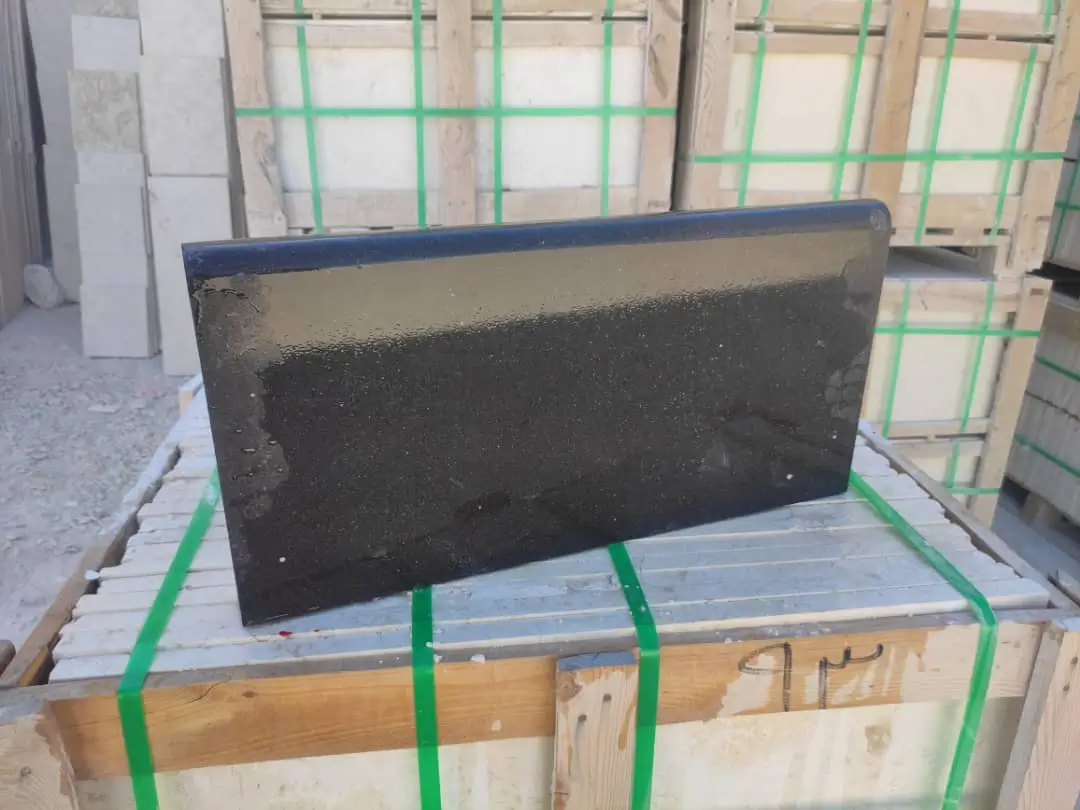
The complete picture for blue limestone shower slabs Peoria pool amenities comes down to a scheduling discipline that most projects treat as a secondary concern until something goes wrong. Your installation window, your adhesive specification, your cure protection protocol, and your material procurement timeline all need to be coordinated around Arizona’s seasonal patterns — not just acknowledged as background conditions. Get the spring or fall window, use the right extended open-time adhesive for any summer work, protect the cure, seal correctly, and you’re looking at a 25-year installation that stays structurally sound and visually consistent through the full lifecycle.
The material itself is genuinely well-suited to this application. Blue limestone slab shower floors Arizona installations deliver the thermal comfort, slip resistance, and chemical durability that pool shower environments demand — but only when the specification gets the supporting details right. If your next Peoria pool amenity project extends to interior wet areas or accent wall applications, Blue Limestone Slab Wall Cladding for Glendale Interior Accent explores how the same material family transitions from outdoor floor to interior vertical surfaces. Our blue black limestone paving slabs in Arizona are favored for their modern aesthetic.