
Why Drainage Comes Before Frost in Chandler Stone Specifications
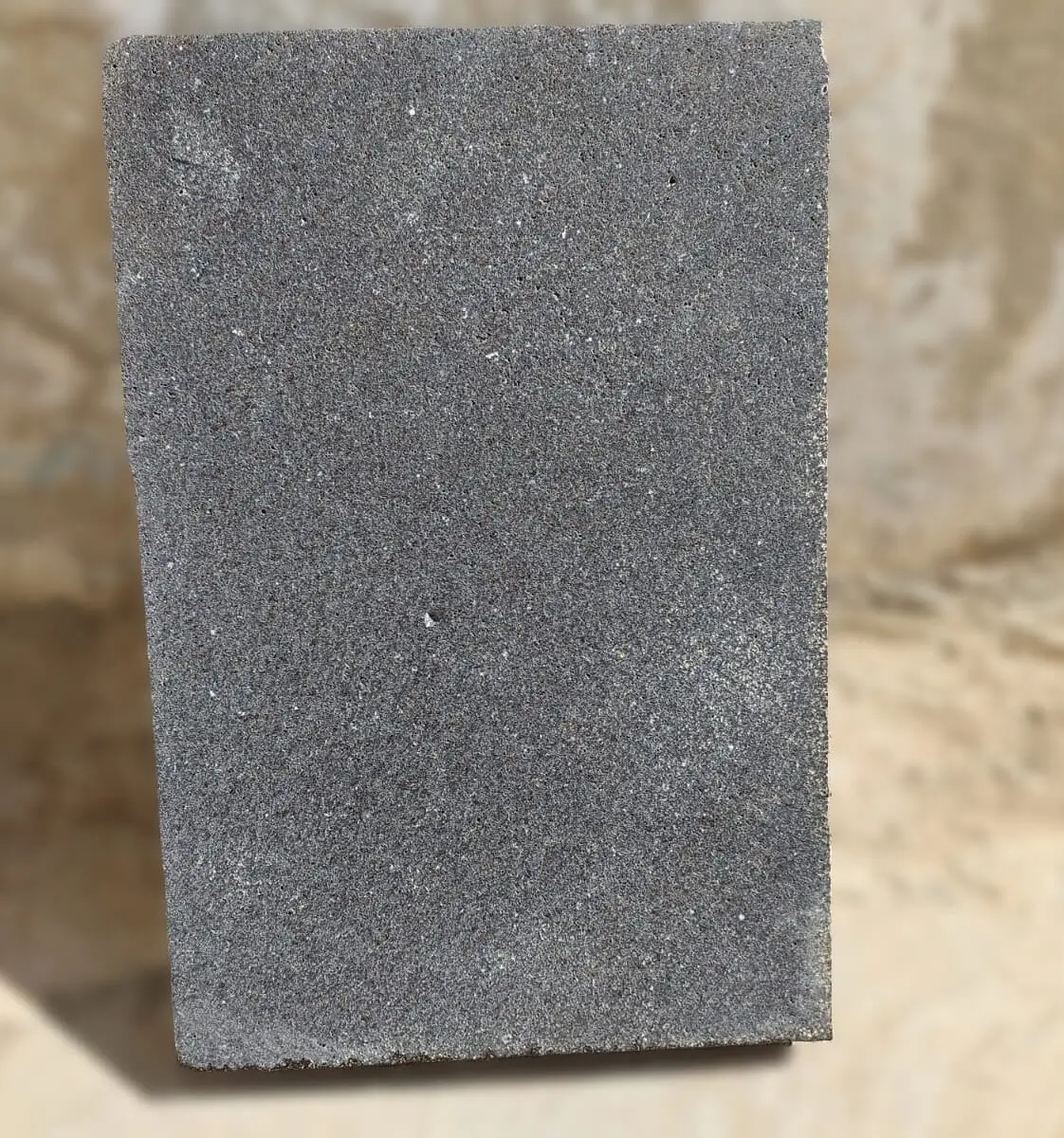
Blue Black Natural Limestone Frost Chandler performance debates almost always open with temperature — but the projects that fail in this region fail because of water, not cold. Chandler sits in the eastern Salt River Valley where Arizona’s monsoon season delivers 60–70% of the annual rainfall in concentrated bursts between July and September, and that hydraulic loading is what separates a 25-year installation from one that’s showing joint failure by year seven. Your specification decisions around drainage geometry, base permeability, and moisture routing matter far more than simply selecting a frost-resistant stone grade.
The interaction between Arizona’s wet-dry cycling and natural limestone is more nuanced than most project specs acknowledge. Dense, fine-grained blue black natural limestone carries an absorption rate in the 0.8–2.1% range depending on quarry source — low enough to resist moisture infiltration during short monsoon events, but the base below that stone is where real damage accumulates over years of seasonal saturation followed by dry-season contraction.
How Arizona Monsoon Moisture Affects Your Base and Stone
Chandler’s monsoon pattern creates a moisture stress cycle that most out-of-state specifiers don’t fully account for. You’re dealing with 1.5–2.5 inch rainfall events that arrive in under an hour, followed by weeks of intense UV and heat that drive rapid evaporation. That rapid saturation-desiccation cycle is particularly hard on poorly graded base aggregate — water infiltrates, saturates the compacted base, and then the expansion pressure during evaporation works against your bedding sand layer from below.
Blue black natural limestone paving in Arizona handles this cycle well at the stone level, but your drainage design has to route that water away from the base before it has time to build hydrostatic pressure. The standard recommendation of 1–1.5% cross slope is inadequate for high-volume paving areas in the Phoenix metro — spec at minimum 2% fall toward dedicated drainage channels, and consider a 3% slope for patios or pool decks where ponding risk is higher. Chandler cold weather conditions compound this risk when a water-laden base meets an overnight temperature drop, making slope specification a freeze-protection decision as much as a drainage one.
- Crushed granite base at 4-inch minimum depth for residential, 6-inch for commercial load areas — clean, well-graded material with less than 5% fines to maintain drainage capacity
- Bedding sand layer at 1-inch nominal, screeded to consistent thickness — do not use polymeric jointing sand as the bedding layer
- Perforated drain pipe at low points of large paved areas, daylighting to a suitable discharge point away from structures
- French drain perimeter systems for installations adjacent to foundations where monsoon saturation could affect structural elements
Essential Frost Performance Facts for Blue Black Limestone
The title of this article promises performance facts, so here they are without hedging. Blue black natural limestone sourced from quality quarries achieves ASTM C880 flexural strength values of 1,200–1,800 PSI and compressive strength well above 8,000 PSI — numbers that give you real structural confidence in paving applications. For freeze-thaw resistance specifically, the relevant standard is ASTM C99, and dense blue black limestone typically sustains 50+ freeze-thaw cycles at less than 1% weight loss when tested at the absorption rates mentioned earlier.
Chandler itself sits at roughly 1,200 feet elevation with temperatures that rarely break freezing — the National Weather Service records an average of 4–6 freeze events per year in the broader Phoenix metro, almost all in December and January. That’s a low frost exposure by national standards. The more relevant Chandler cold weather concern for your project isn’t the freeze itself — it’s the frost-action risk when water has already saturated a poorly draining base before temperatures drop overnight.
- Freeze-thaw resistance rating: tested per ASTM C99, dense blue black limestone performs at MR1 classification minimum
- Thermal expansion coefficient: approximately 4.6–5.2 × 10⁻⁶ per °F — spec expansion joints every 12–15 feet, not the 20-foot spacing common in generic guides
- Minimum recommended paver thickness for Arizona residential paving: 1.25 inches; for vehicular or heavy-load areas: 2.0 inches nominal
- Surface absorption protection: penetrating silane-siloxane sealer applied after installation reduces absorption below 0.5% and significantly extends freeze-thaw durability
Winter Durability and Cold Resistance Across Arizona Elevations
Arizona cold resistance requirements change dramatically depending on where your project sits. Flagstaff, at 6,900 feet elevation, experiences genuine hard freezes and can see 100+ freeze-thaw cycles per season — specifications for that market require careful attention to stone density, sealer type, and base drainage in ways that Chandler projects simply don’t demand. Understanding that gradient helps you calibrate your specification to match actual risk rather than over-engineering for conditions that won’t occur.
For Chandler cold weather specifically, your primary winter durability strategy should center on preventing the one scenario that creates real risk: water-saturated base material meeting a sharp overnight temperature drop. A well-drained base that never reaches saturation essentially eliminates frost-heave risk at Chandler’s elevation and temperature profile. The stone itself — properly selected blue black natural limestone in the 1.25–2.0 inch thickness range — handles Chandler’s frost exposure with capacity to spare. Blue black natural paving freeze protection Arizona-wide depends less on stone grade than on the drainage architecture beneath it.
Drainage Design Specifications That Protect Your Installation
Designing drainage for blue black natural limestone paving in Arizona goes beyond slope and base depth. The joint system plays a critical hydraulic role that often gets reduced to an aesthetic decision. Polymeric sand joints between 3–6mm width allow surface water to infiltrate the joint rather than sheet across the surface — that infiltration capacity needs a path to exit through the base, which means your aggregate base must maintain its drainage function over the life of the installation.
For projects in Sedona, the combination of red clay soils and higher elevation creates a compounding drainage challenge — the native soil below the base has very low permeability, which means your crushed aggregate base needs to be designed as a reservoir that empties laterally rather than vertically. This often means integrating perimeter drainage trenches as part of the base design rather than relying on downward infiltration.
- Install a geotextile fabric between native soil and aggregate base to prevent fines migration that gradually reduces base drainage capacity
- Specify open-graded base aggregate (ASTM No. 57 stone or similar) where high-infiltration drainage is the priority over load distribution
- Maintain minimum 6-inch clearance between top of base aggregate and any irrigation emitters — constant moisture near the base accelerates base settlement
- Detail all drainage outlets before installation begins — adding drainage to an existing installation is expensive and disruptive
Base Preparation for Chandler’s Soil and Climate Profile
Chandler’s soils trend toward expansive clay-caliche mixtures that behave very differently from the sandy loam many paving specifications assume as default. Caliche hardpan — calcium carbonate-cemented soil — can actually serve as an excellent sub-base when encountered at appropriate depth, but its near-impermeable surface means any water that reaches it pools and migrates laterally rather than draining down. Your base preparation needs to account for this by creating lateral drainage pathways rather than expecting vertical percolation.
The freeze-protection benefit of a properly prepared Chandler base is direct: a dry, well-compacted base that routes monsoon water laterally and prevents saturation carries essentially zero frost-heave risk. Compact your aggregate base in 2-inch lifts to 95% Proctor density, verify with a nuclear density gauge on larger installations, and document it — this is the specification decision that determines whether Blue Black Natural Limestone Frost Chandler performance meets its potential over decades of service.
At Citadel Stone, we conduct material quality checks on every limestone shipment that arrives at our warehouse, and density uniformity is one of the first things our team evaluates — because the variation between quarry batches can affect absorption rates by 15–20%, which has a direct bearing on freeze-thaw performance in marginal cold-exposure situations.
Citadel Stone natural blue black limestone in Gilbert
Sealing Protocols for Long-Term Moisture and Frost Protection
The sealing decision for blue black natural limestone paving in Arizona involves a real trade-off that most product literature glosses over. Topical sealers — acrylic or polyurethane-based — provide excellent surface moisture repellency but can trap moisture beneath the film if applied over stone that hasn’t fully dried after installation or after a monsoon event. That trapped moisture is exactly what creates freeze-thaw vulnerability, even in a low-freeze environment like Chandler. Effective blue black natural paving freeze protection Arizona-wide starts with sealer chemistry, not sealer brand.
Penetrating silane-siloxane sealers are the correct choice for Arizona conditions. They chemically bond with the limestone’s calcium carbonate matrix and reduce absorption without creating a surface film — water beads off the surface during monsoon events, the stone still breathes during dry cycles, and there’s no film to trap residual moisture. Apply the first coat 28–30 days after installation to allow full cure, and plan for reapplication on a 2–3 year cycle depending on UV exposure and foot traffic.
- Application temperature range: 50–90°F — avoid sealing during peak summer afternoon heat when stone surface temperatures can exceed 140°F
- Surface must be bone dry before sealer application — wait minimum 72 hours after any rainfall event
- Apply two coats wet-on-wet for blue black limestone’s slightly higher absorption zones — single-coat applications often leave micro-zones of untreated surface
- Test sealer compatibility on a small inconspicuous area before full application — blue black limestone’s iron mineral content can react with some solvent-based sealers, causing localized discoloration
Ordering, Delivery Logistics, and Project Timing in Arizona
Project timing for blue black natural limestone in Arizona deserves more planning attention than most contractors give it. The monsoon window — July through mid-September — is genuinely problematic for installation scheduling. Laying and jointing limestone during or immediately after heavy rainfall events creates bedding sand displacement risk and prevents proper sealer application for weeks. Your best installation windows are October through May, which aligns well with Chandler’s construction season and also helps maintain the winter durability of the finished installation by allowing full cure before any cold weather arrives.
For projects in Peoria and the northwest Phoenix metro, truck delivery logistics require attention to gate access width and turning radius — natural stone paver pallets on flatbed trucks need 14-foot clearance minimum and a 45-foot turning radius at the entry point. Verify this during the site walkthrough, not the delivery morning. Citadel Stone’s warehouse inventory across Arizona typically supports 1–2 week lead times for blue black limestone orders, which is a meaningful advantage over the 6–8 week import cycle that specialty stone sometimes requires when sourcing outside the region.
- Order 8–10% overage above calculated square footage to account for cuts, waste, and future repairs — color-matched replacement material from the same quarry batch is not guaranteed years later
- Verify warehouse stock availability before committing your installation schedule — confirm pallet counts and batch consistency, especially for large-format stone where color variation between batches is visible
- Coordinate truck delivery with base preparation completion — stone sitting on an unfinished base for more than a few days in summer heat can develop thermal stress micro-cracks at the pallet compression points
- Request material samples from the specific production lot before full order confirmation — blue black limestone’s color range can vary meaningfully across quarry seams
Expert Summary
Blue Black Natural Limestone Frost Chandler performance comes down to a specification sequence that most projects either nail completely or miss in the same predictable places. The stone itself — dense, low-absorption, high-compressive-strength blue black natural limestone — is well-suited to Arizona’s climate across both the desert floor and higher-elevation applications. The failures happen in the base, in the drainage geometry, and in the moisture management decisions made before the first paver is set.
Your drainage design should be engineered for Arizona’s monsoon hydraulic loads, not for a generic rainfall assumption. Your base preparation should address Chandler’s clay-caliche soil profile directly, incorporating lateral drainage pathways and geotextile separation. Your sealing protocol should use penetrating chemistry that protects against both monsoon infiltration and the limited but real freeze-thaw exposure Chandler sees each winter. Arizona cold resistance at the installation level is always a system outcome — stone, base, and sealer working together. Get those three elements right, and blue black natural limestone will outperform virtually any alternative paving material across a 25-year service horizon in this climate. For a different but equally important dimension of stone selection, Blue Black Natural Limestone Paving Color Depth for Mesa Visual Impact explores how this material’s visual character performs across Mesa’s residential and commercial hardscape context — useful reading as you finalize your overall project specification. We are the Blue Limestone Paving Arizona supplier that guarantees product availability.