
Drainage geometry determines whether natural blue black limestone fireplaces in Prescott perform for two decades or show early failure at the mortar joints — and most specifiers don’t catch this until water has already worked its way under the hearth slab. Prescott sits at roughly 5,400 feet in Yavapai County and receives a biphasic precipitation pattern: a dry spring followed by intense monsoon activity from July through September, then periodic winter snow events. That combination of freeze-thaw cycling and high-volume short-duration rainfall creates hydrostatic stress conditions that are fundamentally different from the low desert, and your fireplace surround specification needs to reflect that reality. Getting the drainage design right from the footing up is the single most consequential decision you’ll make for natural blue black limestone fireplaces in Prescott.
Why Drainage Defines Prescott Fireplace Performance
Prescott’s monsoon season delivers rainfall events that can drop 1.5 to 2 inches within a 90-minute window. For outdoor fireplace surrounds, that means any surface depression, low mortar bed, or inadequate slope sends water pooling directly against the stone face and into the joint system. Natural blue black limestone has an absorption rate typically in the 0.3–0.7% range depending on quarry origin and finishing method — tighter than many sandstones but not impervious. Without a 1/8-inch-per-foot minimum slope away from the firebox base on all horizontal surfaces, you’re essentially building a collection basin.
The issue compounds because Prescott soils include expansive clay fractions in many neighborhoods, particularly east of the central historic district. Clay expansion under saturation can lift a poorly anchored hearth slab by 3/8 inch or more, cracking the mortar bed and creating pathways for subsequent water infiltration. Your base preparation should include a compacted 3/4-inch crushed aggregate layer at minimum 6 inches deep — 8 inches if your soils test above 30% clay content — with a perforated drain sleeve at the lowest perimeter edge.
Monsoon and Freeze-Thaw Combined Loading
The challenge in Prescott isn’t monsoon season alone — it’s the sequence. Heavy August rains saturate the substrate, and by November you’re seeing overnight lows that regularly hit 25°F to 28°F. Water trapped in a joint or beneath a slab expands approximately 9% when it freezes. Over three or four freeze-thaw cycles in a single winter, that expansion force fractures poorly set mortar and can spall the limestone face along natural bedding planes.
Specifying a Type S mortar with a water-to-cement ratio not exceeding 0.45 gives you the compressive and bond strength to resist those forces. More importantly, you need to leave weep joints every 24 inches along the base course of any vertical stone panel — a 3/8-inch open joint covered by a bronze or stainless bug screen keeps insects out while letting moisture escape. In contrast to Flagstaff, which sits 2,000 feet higher and sees far more aggressive freeze-thaw cycling, Prescott gives you slightly more latitude on joint sizing, but the principle is identical: never trap water in a masonry assembly.
- Minimum 6-inch compacted aggregate base, 8 inches in clay-heavy soils
- Type S mortar at water-to-cement ratio ≤ 0.45
- 1/8-inch-per-foot slope on all horizontal limestone surfaces
- Weep joints every 24 inches at base course of vertical panels
- Perforated drain sleeve at lowest perimeter elevation
- Expansion joints at all corners and every 10 to 12 linear feet
Material Characteristics of Blue Black Limestone for Fire Features
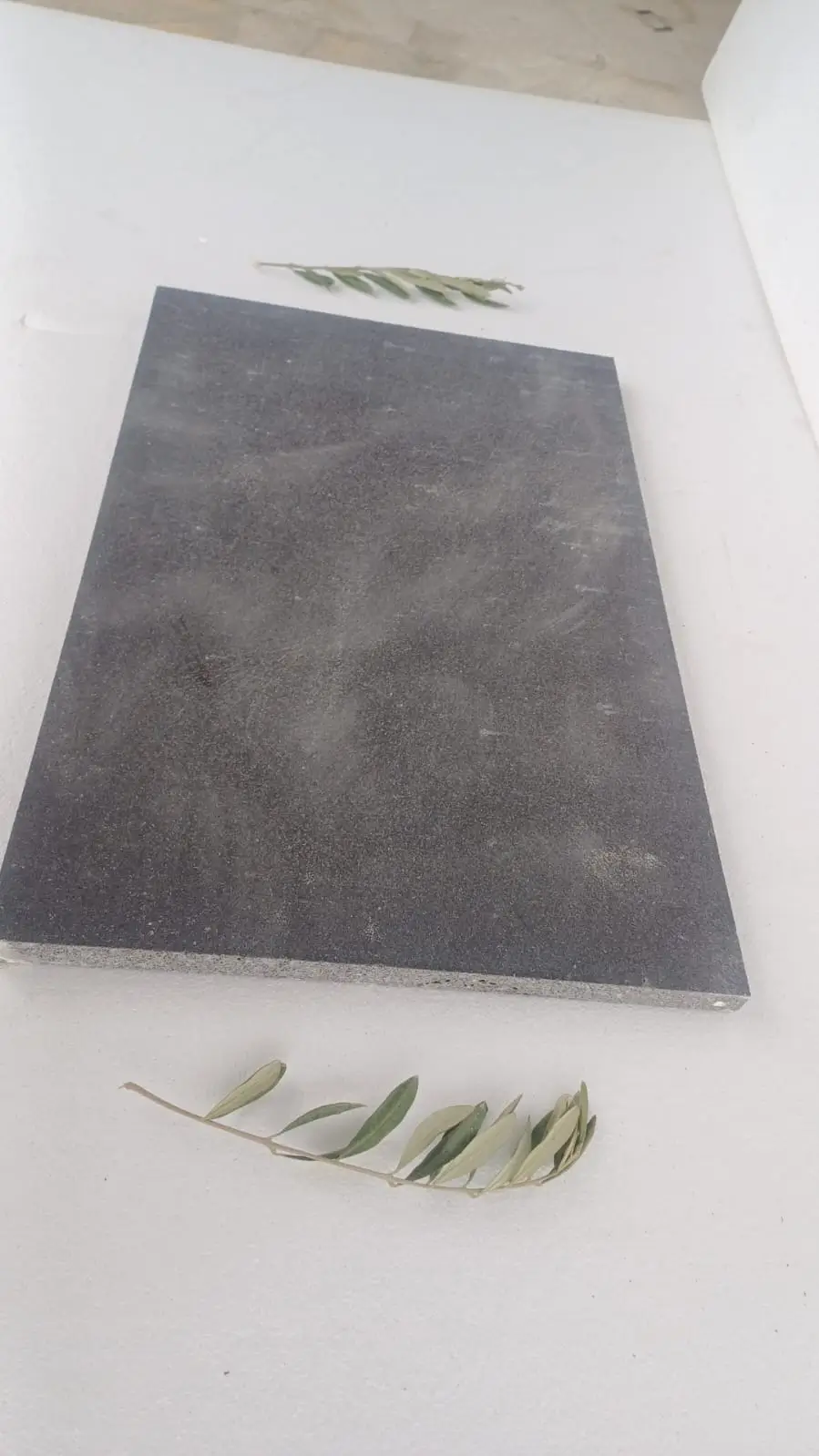
Natural blue black limestone is a dense, fine-grained sedimentary stone with compressive strength values commonly tested between 10,000 and 14,000 PSI — well above the structural threshold for fireplace surround and hearth applications. The coloration comes from organic carbon content distributed through the calcite matrix, which gives the stone its characteristic dark gray-to-slate appearance when dry and a richer near-black tone when wet. That color shift is worth noting for Prescott fire features: your fireplace surround will read darker during and after monsoon rain events, which is something clients either love or don’t anticipate.
The thermal conductivity of this limestone sits around 1.2 to 1.8 W/m·K, meaning it builds and releases heat steadily — a useful quality for a warmth feature that you want radiating after the fire dims. For the hearth pad specifically, you’ll want a minimum 1.25-inch thickness on the horizontal slab to handle thermal cycling from repeated fire events without developing surface crazing. Thinner slabs are fine for vertical surround panels that don’t receive direct ember contact, but don’t go below 3/4 inch even there if you’re working with cantilevered pieces.
For your Arizona outdoor fireplace project, gunmetal blue limestone slabs provide the dense, low-absorption surface profile that resists Prescott’s combined moisture and thermal stress without sacrificing the refined aesthetic most clients are after.
Surface Finish Selection for Wet Conditions
Your finish choice affects slip resistance, water shedding, and long-term sealer adhesion — three factors that interact directly with Prescott’s precipitation patterns. A honed finish on natural blue black limestone produces a surface roughness in the 25–50 micron range, which is adequate for vertical panels and decorative surrounds but borderline for horizontal hearth surfaces that people step onto when loading firewood.
- Brushed or flamed finish: provides the best wet-weather grip on horizontal surfaces (COF above 0.60 wet per ASTM C1028)
- Honed finish: appropriate for vertical surrounds and decorative panels — not recommended for hearth pads in exposed outdoor settings
- Sawn natural cleft: retains the stone’s inherent surface texture and performs well in monsoon conditions without additional mechanical roughening
- Polished finish: avoid on any horizontal outdoor surface in Prescott — wet-season slip risk is too high and UV accelerates surface oxidation over time
A brushed finish also opens the surface microscopically in a way that improves penetrating sealer adhesion by roughly 15–20% compared to a polished face. That matters because your resealing interval in Prescott should run every 18 to 24 months given the UV index at 5,400 feet elevation combined with the annual wet-dry cycling from monsoon season.
Fireplace Surround Detailing for Arizona Warmth Areas
The fireplace surround is where most specification errors concentrate — not because the material is difficult, but because the transition between vertical panel, horizontal hearth, and the firebox opening creates geometric complexity that traps water if the detailing isn’t thought through. For Prescott fire features in exposed outdoor settings, every horizontal shelf and ledge in the surround assembly needs a positive drip edge — a 1/4-inch saw-cut or routed kerf on the underside of any projecting stone, set 3/4 inch from the face. Without that kerf, water tracks back to the wall face and saturates the substrate behind the stone.
The surround’s side pilaster bases deserve particular attention. In Sedona, where red rock aesthetics drive design choices, designers sometimes bring stone pilasters directly to grade — but in Prescott, the combination of monsoon splash-back and clay soil expansion means your pilaster bases need a 4-inch minimum setback from adjacent grade with a chamfered limestone plinth course to shed water laterally. That detail alone prevents a common failure mode where the base course of the surround delaminates from the substrate within three to five monsoon seasons.
Mortar Joint Sizing and Configuration
For natural blue black limestone fireplace surrounds in Prescott, a 3/8-inch mortar joint is the practical standard — wide enough to accommodate the dimensional variation typical in natural stone without creating stress concentrations, but not so wide that the joint becomes a primary water collection point. Tooled concave joints shed water more effectively than struck or raked profiles; this is a small detail that meaningfully extends the service life of the joint system in a monsoon climate.
Sanded acrylic caulk at all inside corners — not mortar — gives you the movement accommodation you need at the junction of wall and hearth slab. Mortar is rigid; the differential movement between a vertical panel and a horizontal slab under repeated thermal cycling will crack a mortar-filled inside corner within two to three years in Prescott’s temperature range, which swings from single digits in winter to the mid-90s in early summer.
Sealing and Long-Term Moisture Protection
Penetrating silane-siloxane sealers are the right choice for natural blue black limestone fireplaces in Prescott. Film-forming sealers trap moisture vapor from below — a real problem when summer monsoon rains are followed immediately by high temperatures that drive vapor upward through the stone. A penetrating sealer chemically bonds with the calcite matrix at the surface layer without creating a vapor barrier, allowing the stone to breathe while blocking liquid water penetration from the surface.
Application should happen at least 28 days after installation to allow full mortar cure, and the stone surface should be confirmed dry to a depth of 1/2 inch using a moisture meter before sealing. Applying sealer over a damp substrate is the leading cause of premature sealer failure — it traps moisture under the treated zone and accelerates the very spalling you’re trying to prevent. In Prescott, late October through November is typically your best sealing window before winter freeze events arrive.
- Sealer type: penetrating silane-siloxane, not film-forming
- First application: minimum 28 days after installation
- Moisture check: stone surface dry to 0.5-inch depth before application
- Resealing interval: every 18 to 24 months in Prescott’s climate
- Best application window: late October to November
Sourcing and Logistics for Prescott Projects
Natural blue black limestone used for fireplace surrounds and hearths is typically imported from quarries in Southeast Asia, Portugal, and select Chinese provinces — and the dimensional consistency varies meaningfully by source. At Citadel Stone, we inspect material at the warehouse before it ships to job sites, checking for consistent thickness tolerance (typically ±1/16 inch for machine-cut slabs) and rejecting any lifts with excessive bedding-plane variation that would create thin-edge vulnerability in the hearth application.
Delivery logistics to Prescott deserve planning. Truck access to many residential sites in the Granite Dells area and in subdivisions north of Gurley Street involves steep grades and tight turning radii. You’ll want to confirm whether a standard flatbed truck can access your site directly, or whether you need to arrange a secondary transfer from a staging yard. Citadel Stone’s warehouse carries split-order flexibility, which means you can stage a partial delivery to a more accessible laydown area and truck the remaining material in smaller loads without triggering minimum-order penalties.
Projects in Peoria and the West Valley have different logistics profiles — flat access, high pallet volumes — but Prescott installs for natural blue black paving slab hearths in Arizona typically run 50 to 150 square feet for a fireplace surround and hearth combination, which fits comfortably on a partial pallet. Lead times from the warehouse to Prescott generally run 5 to 7 business days for in-stock material, which lets you sequence stone delivery to coincide with base completion rather than storing material on-site through a monsoon event.
Natural Blue Black Limestone Thickness and Load Sizing
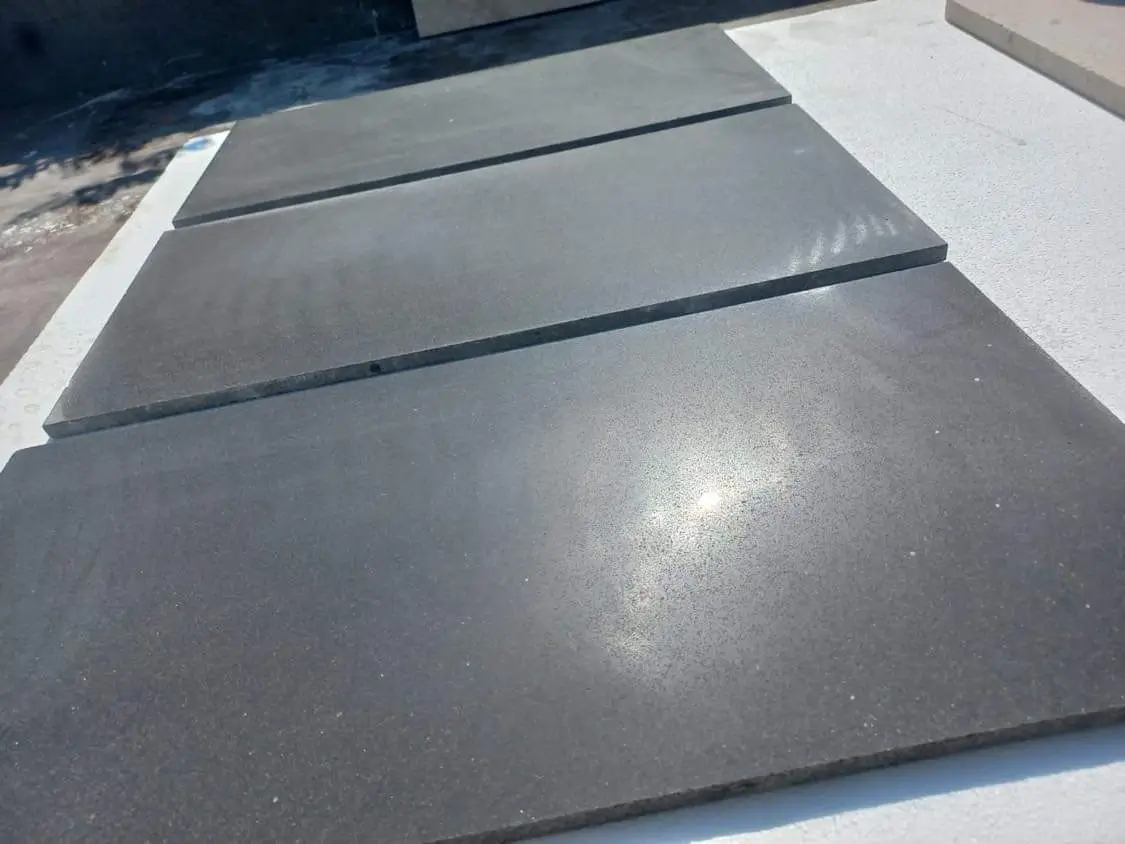
Hearth slab thickness is a structural question that often gets treated as an aesthetic one. For natural blue black paving slab used as a fireplace hearth in Prescott, you’re balancing thermal cycling stress, point load from andirons or fireplace tools, and the self-weight of the slab over an unsupported span. A 1.25-inch slab supports spans up to 18 inches without supplemental steel; beyond 18 inches of unsupported span, either increase to 1.5-inch minimum or add a concealed steel angle at the midpoint of the span.
Vertical surround panels can run 3/4 inch with confidence where they’re fully back-supported in a mortar bed. The risk scenario is a pilaster cap or a mantel shelf — any horizontally oriented piece with a free front edge that someone might lean against or place weight on. For those applications, 1.25 to 1.5 inch is your minimum, and you should anchor the back edge with a mechanical tie into the substrate rather than relying on mortar bond alone.
- Hearth slabs (spans up to 18 inches): 1.25-inch minimum thickness
- Hearth slabs (spans 18 to 30 inches): 1.5-inch minimum or add concealed support
- Vertical back-supported panels: 3/4-inch minimum
- Mantel shelves and pilaster caps: 1.25 to 1.5-inch minimum with mechanical anchor
- Decorative edge trim pieces: 3/4-inch minimum, mitered returns for visual weight
Moving Forward
Prescott’s combination of monsoon intensity, freeze-thaw cycling, and expansive soil conditions makes drainage design the non-negotiable foundation of any successful natural blue black limestone fireplace installation. Every specification decision — base depth, mortar type, joint configuration, finish selection, sealing schedule — traces back to how well you’ve managed water movement through and around the assembly. The material itself is exceptionally capable; the stone’s density, thermal performance, and visual character make it a genuine long-term asset for outdoor warmth areas in Arizona. What separates a 25-year installation from one that needs rework after the third monsoon season is the discipline applied to drainage geometry and moisture control at every layer.
As you finalize your Prescott project specification, the porosity characteristics of this stone in other Arizona microclimates are worth understanding as a comparative reference. Natural Blue Black Limestone Paving Slab Porosity for Marana Climate provides useful context on how absorption rates and sealer performance shift across different Arizona elevation and precipitation zones — directly relevant when specifying natural blue black paving slab hearths in Arizona across multiple project sites. We stock the natural limestone blue black paving slab in Arizona in massive quantities for developers.