
Thermal cycling is the silent saboteur of pool coping installations across Arizona — and knowing how to install granite pool coping in Arizona means understanding that issue before you mix a single batch of mortar. The desert doesn’t just get hot; it swings dramatically, sometimes 40°F to 50°F between a predawn low and a mid-afternoon peak in a single day. Granite’s thermal expansion coefficient runs roughly 4.7 × 10⁻⁶ per °F, which sounds negligible until you calculate cumulative movement across a 30-foot pool perimeter over hundreds of daily cycles. Get the joint spacing and adhesive selection right from the start, and you’re building an installation that handles those stresses gracefully for decades.
Why Thermal Cycling Governs Arizona Coping Installations
Most installers focus on Arizona’s heat, but the range is what does the damage. A Yuma pool deck can sit at 145°F surface temperature by 2 p.m. and drop to 65°F before sunrise — that’s an 80°F surface swing within 24 hours. Multiply that by 300+ sunny days per year and you’re accumulating thousands of micro-expansion and contraction events annually at every joint and bond line.
Granite handles thermal cycling better than most coping materials because its crystalline structure distributes stress relatively evenly. But “better” doesn’t mean immune. Your installation design needs to accommodate that movement mechanically, not fight it with rigid mortar and undersized joints.
- Daily temperature swings in Arizona’s low desert regularly exceed 40°F — a figure that exceeds the swing tolerance of standard type S mortar without expansion relief
- Granite pool coping on a south-facing pool edge receives direct radiation plus reflected radiation off the water surface, compounding thermal load
- Seasonal extremes add another layer: Arizona’s high country (above 4,000 feet) experiences genuine freeze-thaw cycles, which introduces hydraulic pressure in pores as ice expands approximately 9% by volume
- The bond line between granite and the pool bond beam is the most vulnerable interface — differential expansion between concrete and granite must be absorbed by the adhesive layer, not transferred as shear stress into the stone
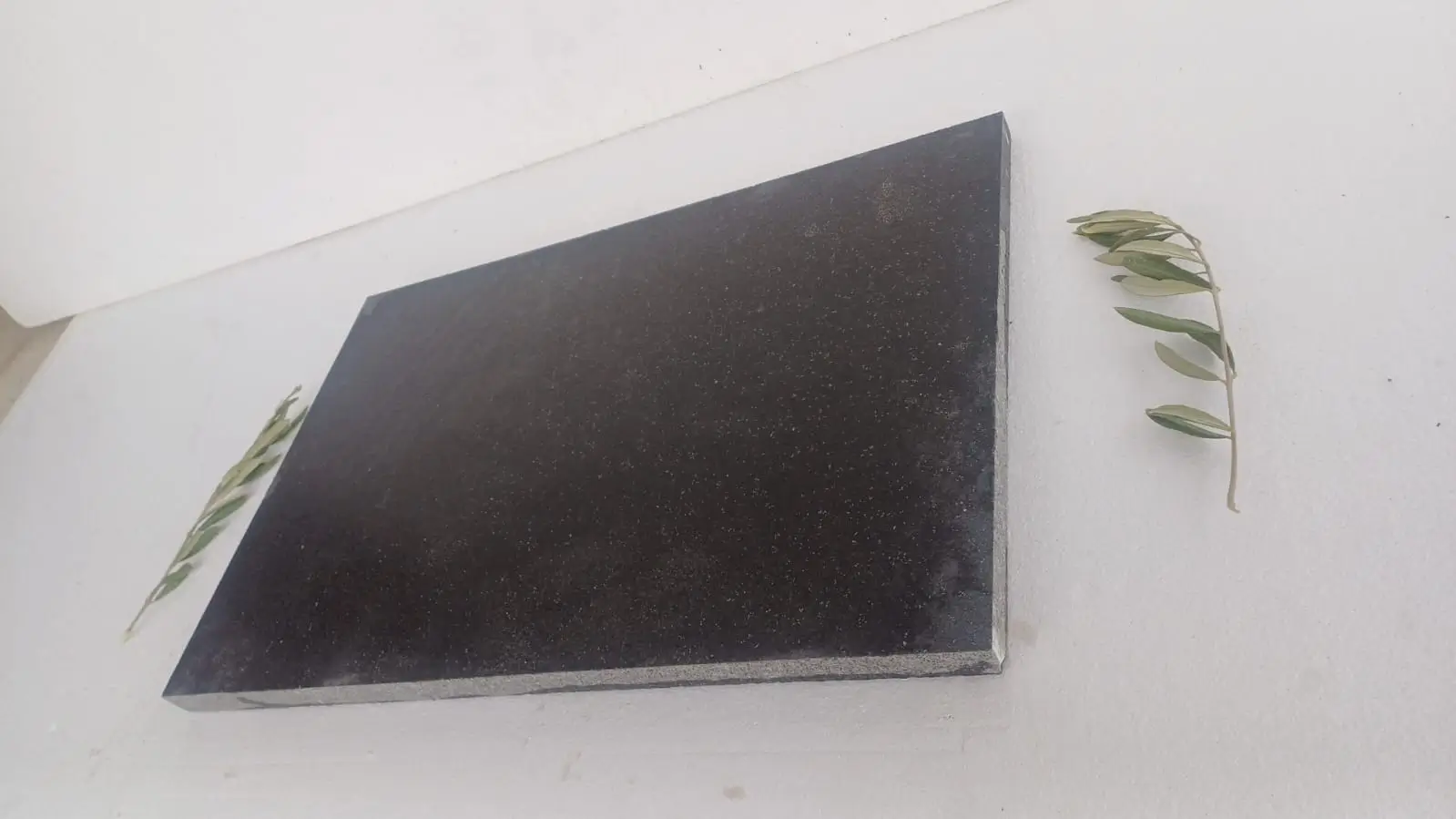
Material Selection: What to Look for in Granite Pool Coping for Arizona
Not all granite performs equally under aggressive thermal cycling. You’ll want a stone with low water absorption — aim for ASTM C615 compliance, which requires absorption below 0.40% for granite dimension stone. High absorption means water infiltrates during monsoon season, and when that moisture heats rapidly the next morning, it generates internal vapor pressure that contributes to spalling over time.
For Arizona pool coping, specify granite at a minimum 1.25-inch nominal thickness. The added mass buffers peak surface temperatures and reduces the rate of thermal change at the bond line, which is exactly what keeps adhesive layers from fatiguing prematurely. Thinner coping may look sleeker, but it heats and cools faster, increasing stress cycle frequency and amplitude.
- Honed or brushed finishes reduce surface temperatures 10–15°F compared to polished granite under identical sun exposure — a meaningful difference for barefoot comfort and thermal mass reduction
- Bullnose or cantilevered edge profiles should maintain a minimum 1-inch drip edge to direct water away from the bond beam, reducing moisture infiltration at the most thermally stressed joint
- Granite with visible large feldspar crystals can develop micro-fractures along crystal boundaries under repeated freeze-thaw in higher elevations — finer-grained granite is the better choice for projects above 4,500 feet
- Check that your stone supplier can verify consistent slab thickness across the batch — dimensional variation greater than ±1/16 inch complicates mortar bed leveling significantly
At Citadel Stone, we inspect each granite coping shipment for dimensional consistency before it leaves the warehouse, because field installers in Arizona don’t have time to sort through inconsistent stock on a job site. Consistent dimensional tolerances are what allow a tight, well-aligned mortar bed.
Substrate and Bond Beam Preparation
Your bond beam condition determines whether the rest of the installation holds up — full stop. Granite coping installation steps in Arizona consistently fail not because of the stone or the adhesive, but because the bond beam wasn’t properly profiled before setting began.
Start by removing all existing coping, waterproofing membrane remnants, and adhesive residue down to clean concrete. The bond beam surface should be mechanically scarified to a CSP-3 or CSP-4 surface profile (per ICRI 310.2R), giving the mortar or adhesive a mechanical key. In Mesa, where caliche sub-soils can cause differential settlement in older pool decks, check for horizontal cracks in the bond beam before proceeding — those cracks will telegraph through your coping if left unaddressed.
- Blow out all dust and debris with compressed air before applying any bonding agent — silica-laden Arizona dust creates a release layer between substrate and adhesive if left in place
- Apply a latex-modified bonding slurry to the bond beam immediately before setting the mortar bed — the slurry coat prevents the dry concrete from pulling moisture out of the mortar too quickly in Arizona’s low-humidity conditions
- Check bond beam level and plane across the full perimeter before setting stone — your acceptable tolerance is ±1/8 inch over 10 feet; anything outside that range requires grinding high spots or floating low spots with a polymer-modified mortar
- Allow any patching mortar to cure fully (minimum 72 hours in summer heat, 96 hours when nighttime temperatures fall below 55°F) before proceeding
Choosing the Right Pool Coping Adhesive for Arizona Heat and Cycling
Standard portland-based mortars crack under Arizona’s thermal cycling regime. The pool coping adhesive for Arizona heat needs to be flexible enough to absorb the daily movement at the granite-to-concrete interface without fracturing the bond. The specification answer here is a polymer-modified mortar meeting ANSI A118.4 or better — ideally one rated for exterior use with high-variation thermal environments.
For installations in the low desert where surface temperatures routinely exceed 130°F, two-component epoxy-modified mortars offer superior bond strength and thermal stability, but they require tighter application windows. In summer conditions, epoxy-modified materials can begin gelling in as little as 20 minutes at ambient temperatures above 95°F — you’ll need to work in smaller lifts and keep materials shaded until application.
- Avoid standard type S mortar as a sole bonding agent for granite coping in Arizona — it lacks the flexibility coefficient needed for repeated thermal cycling above 80°F daily swing
- For installations above 5,000 feet elevation where freeze-thaw cycles occur, specify ANSI A118.15 flexible mortar — the higher polymer content maintains adhesion integrity through ice formation cycles
- Back-butter each granite coping piece in addition to applying mortar to the bond beam — full coverage eliminates hollow spots that become thermal stress concentration points
- Mortar coverage should hit 95% of the coping underside in wet areas per TCNA installation guidelines — spot-bonding is a failure mechanism disguised as a time-saving shortcut
For a deeper look at material options and how cost factors into specification decisions, How to Choose Granite Pool Coping in Arizona walks through the selection criteria that separate a performance-driven specification from a purely budget-driven one.
Expansion Joint Layout and Spacing for Arizona Conditions
Here’s where most residential pool coping installations get into trouble: the expansion joint spacing specified in generic installation manuals was written for moderate climates. Arizona’s thermal cycling demands tighter spacing than the standard recommendation.
For granite coping installations in Arizona’s low desert zones, space expansion joints every 8 to 10 linear feet rather than the 12 to 15 feet you’ll see in generic guidelines. In Sedona, where red rock terrain creates significant day-night temperature differentials and monsoon moisture combines with summer heat, that tighter 8-foot spacing is especially important at corners and transitions between the coping and adjacent deck material.
- Expansion joints must run the full depth of the coping — a sawcut joint that penetrates only 1/3 of the stone thickness provides no meaningful stress relief
- Fill expansion joints with a sealant rated for continuous service at 300°F surface temperature — standard urethane caulk softens and loses elasticity above 250°F, which Arizona pool coping regularly exceeds
- At inside corners of the pool perimeter, expansion joints are mandatory — corner stress concentrations are the single most common initiation point for coping fractures in thermally cycled installations
- The joint between the granite coping and the adjacent pool deck (if tiled or papered) should be treated as a permanent movement joint, not grouted solid — differential movement between these materials under thermal cycling guarantees grout failure within 2–3 seasons if this joint is rigidly bonded
Step-by-Step: Setting Granite Stone Around Pools in Arizona
Sequence matters as much as materials in an Arizona outdoor pool edge installation. The setting process needs to account for how quickly mortar and adhesive lose workability in dry heat, and how surface temperature affects curing chemistry.
Plan your installation for early morning start times in summer months. Bond beam surface temperatures above 110°F will flash off moisture from your mortar bed within minutes, compromising bond strength before you can even set the stone. Early morning work also gives you a longer working window before solar gain makes surfaces too hot to handle comfortably — and granite coping sitting in direct sun can reach temperatures that cause adhesive skin-over in under 10 minutes.
- Dampen the bond beam surface with a light water mist before applying bonding slurry — the surface should be saturated surface dry (SSD), not wet and not dust-dry
- Apply polymer-modified mortar bed at 3/4-inch to 1-inch nominal depth, screeded level with a notched trowel oriented perpendicular to the pool edge to ensure consistent coverage
- Set each coping piece with firm downward pressure and a slight sliding motion to collapse notch ridges and achieve full coverage — a rubber mallet and beating block help achieve consistent embedment without damaging stone edges
- Check level across adjacent pieces immediately after setting — minor corrections are possible for approximately 15 minutes in summer; wait longer and you’re fighting the mortar
- Leave prescribed joint widths between pieces (typically 3/16 to 1/4 inch for thermal movement accommodation) and use tile spacers to maintain consistency
- Do not allow foot traffic on freshly set coping for minimum 24 hours; 48 hours is preferable in summer when heat acceleration of cure can create a brittle surface bond if disturbed early
When coordinating your truck delivery schedule, plan to have granite coping arrive no more than a day before setting begins — material sitting on a hot Arizona job site accumulates thermal stress before the work even starts. You can find the full range of granite pool coping specifications for Arizona climate zones at Citadel Stone pool coping for Arizona, including thickness and finish options that are stocked and ready to ship from our Arizona warehouse.
Grouting, Joint Sealing, and Long-Term Movement Accommodation
The grouting phase is where thermally correct installations diverge from standard ones. You’re not just filling joints — you’re creating a system that accommodates movement while keeping water out of the bond beam assembly.
For granite pool coping installation in Yuma — where summer high temperatures and extreme UV exposure are compounded by very low humidity — use a polymer-modified sanded grout for field joints and a dedicated sealant-grade product at all expansion joints. The difference matters because grout is dimensionally stable but rigid; sealant is flexible but requires correct hardness durometer for the thermal range you’re working in. Specify a silicone or polyurethane sealant rated for service between -20°F and 350°F to cover both freeze-thaw exposure at elevation and extreme radiant heat at low desert pool edges.
- Apply grout only after mortar has achieved sufficient cure — minimum 24 hours in summer, 48 hours when nighttime temperatures drop below 60°F
- Keep grout damp during cure in Arizona’s low humidity — dry air pulls moisture from grout too rapidly, producing a weak, friable surface that deteriorates within 1–2 seasons
- Apply a penetrating impregnator sealer to both the granite face and grout joints within 14 days of grout cure — this step is non-negotiable in pool environments where pH-adjusted water chemistry contacts the coping regularly
- Re-inspect all expansion joint sealant annually after the first year — thermal cycling accelerates initial sealant compression set, and topping off low spots prevents water infiltration into the bond assembly
Common Field Problems and How to Avoid Them
Years of watching Arizona pool coping installations develop problems trace back to a surprisingly short list of recurring mistakes. Knowing them in advance is the most efficient quality control you can apply to your project.
The most common failure is coping pieces that hollow-sound within 18 months of installation — that telltale tap that means the bond has separated. It almost always traces back to insufficient back-buttering combined with rapid moisture loss from the mortar bed during setting granite stone around pools in AZ’s extreme heat. The second most common failure is joint sealant disbonding at the pool tile-to-coping transition, which then allows water to undercut the coping assembly and accelerate thermal damage to the bond beam itself.
- Hollow bond failure: prevented by 95%+ mortar coverage through proper back-buttering, pre-wetting the substrate, and shading work areas during mortar application when ambient temperatures exceed 90°F
- Joint sealant failure at transitions: prevented by maintaining a true movement joint (not grouted) at all material transitions, using correct sealant backer rod to achieve the 2:1 width-to-depth ratio that allows sealant to flex properly
- Coping pieces cracking at mid-span: usually indicates hollow spots combined with point loading — full mortar coverage and consistent bearing support eliminate this failure mode
- Efflorescence blooming on granite face: caused by water migrating through the bond assembly and depositing calcium salts — seal both granite and grout joints thoroughly and verify that the bond beam waterproofing membrane is intact before setting stone
- Staining from pool chemicals: chlorine and pH-adjustment chemicals contact coping regularly; a quality penetrating impregnator sealer prevents chemical absorption into the stone matrix and dramatically reduces staining
Executing Your Arizona Pool Edge Installation Right
Getting a granite pool coping installation in Arizona right comes down to treating the project as a thermal engineering challenge first and a stone installation second. Every material choice, joint spacing decision, and pool coping adhesive for Arizona heat must be evaluated through the lens of daily and seasonal temperature cycling — not just peak heat tolerance.
Your specification checklist should lock in granite meeting ASTM C615 with absorption below 0.40%, minimum 1.25-inch thickness, polymer-modified mortar meeting ANSI A118.4 or A118.15 depending on elevation, expansion joints at 8 to 10-foot intervals with high-temperature sealant, and a penetrating impregnator sealer applied within 14 days of grout cure. Order from warehouse stock with delivery timed to your installation start — granite coping sitting on a hot Arizona job site for days before setting accumulates thermal stress before the work even begins, and coordinating availability in advance keeps your schedule tight. Beyond this installation specification, understanding what to look for when sourcing stone is equally important — How to Choose Granite Pool Coping in Arizona gives you the selection framework that complements everything covered in this Arizona outdoor pool edge installation guide. Contractors in Flagstaff, Gilbert, and Peoria specify Citadel Stone granite pool coping because each piece is cut to consistent dimensional tolerances that simplify mortar-bed alignment in desert conditions.