
Budget miscalculations kill more Arizona granite garden paving projects than bad material choices ever will — and the gap between a well-budgeted installation and an overrun one usually comes down to freight distance and sourcing decisions made before the first shovel hits the ground. Installing granite garden paving in Arizona demands a realistic picture of what the material actually costs by the time it reaches your site, factored against local labor rates that vary considerably between metro Phoenix and rural stretches of the state. Getting those numbers right at the planning stage is what separates a smooth project from a frustrating one.
Understanding Project Costs Before You Spec the Material
Granite is quarried in multiple domestic and imported sources, and where your stone originates has a direct impact on your landed cost per square foot. Domestic granite from Georgia or Minnesota moves by truck across the Southwest at predictable freight rates, while imported Indian or Brazilian stone adds port-to-warehouse legs that can push per-pallet costs up by 18–30% depending on current shipping conditions. For Arizona projects — whether you’re working in metro Phoenix or farther south — understanding that landed cost differential before you commit to a specification is essential.
The material-to-labor cost ratio in Arizona runs roughly 55–65% material to 35–45% labor for a standard granite garden paving installation, compared to markets like California or Texas where labor often commands a larger share. That ratio shifts your value engineering levers toward material sourcing decisions rather than labor negotiation — meaning the smartest place to control your budget is at the point of purchase, not on the installation day.
Regional market availability adds another planning variable. Not every granite variety ships quickly into Arizona. Some specialty colors carry 6–8 week import lead times, while stocked domestic options held in local warehouse inventory can land on-site within 1–2 weeks. That lead time difference has real cost implications: delayed material delivery pushes labor mobilization, which often triggers minimum-day billing on crew contracts.
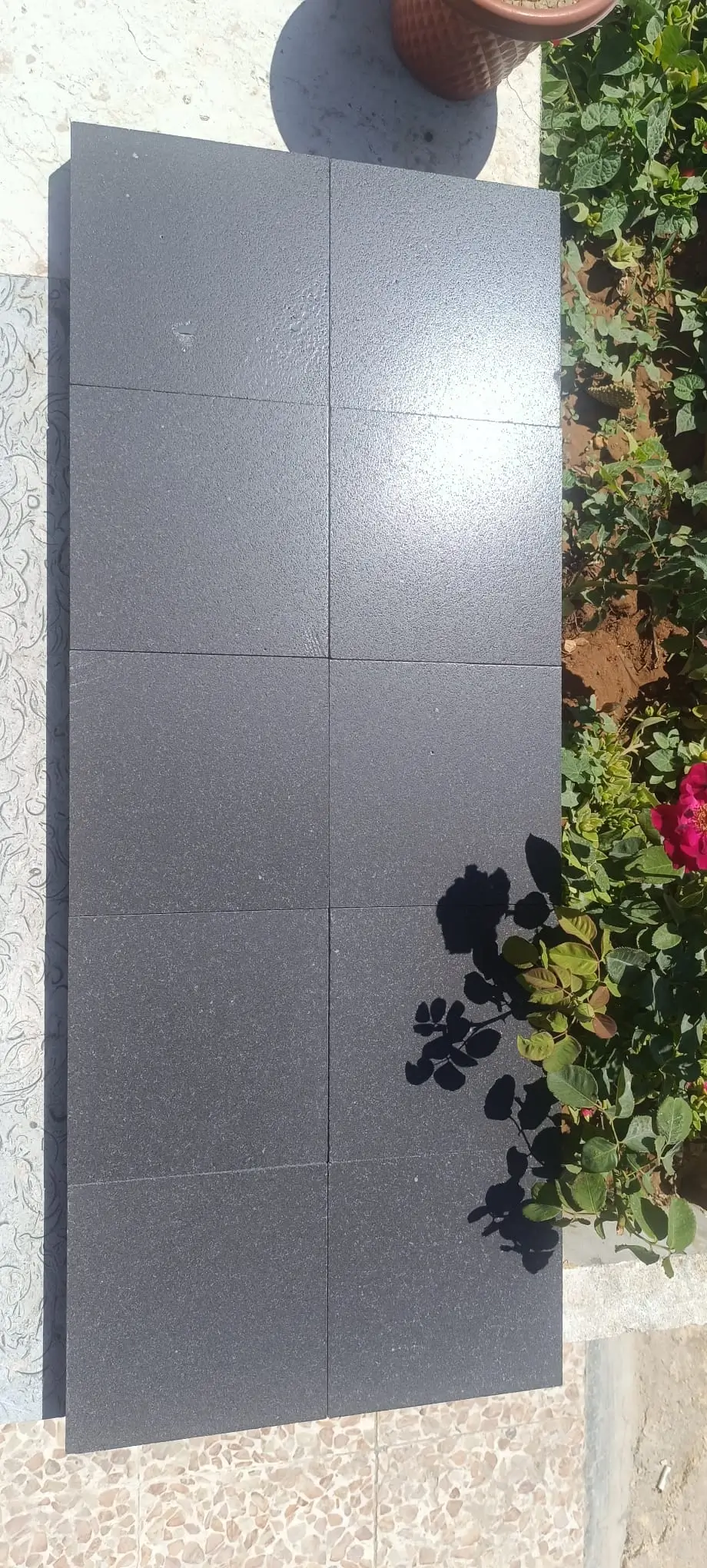
Granite Garden Paving Installation Steps in Arizona: A Field-Level Walk-Through
Desert-rated stone paving for AZ gardens requires a methodical approach that accounts for soil behavior, heat cycling, and drainage geometry simultaneously. The installation sequence matters as much as the material specification — and here’s where most residential projects go sideways.
Site Assessment and Base Engineering
Your first decision point is sub-base depth, and in Arizona that means understanding what’s under your topsoil. Caliche hardpan — a calcium carbonate layer that can sit anywhere from 6 to 36 inches below grade — is widespread across the Phoenix basin and central Arizona. In Tempe, many residential lots hit caliche at 12–18 inches, which actually provides exceptional load-bearing support when properly scarified. The challenge is that caliche also impedes drainage unless you break through it or route drainage laterally.
Standard sub-base specification for granite paving in Arizona runs 4–6 inches of compacted Class II aggregate base for pedestrian garden paths, stepping up to 6–8 inches for areas receiving vehicle incursion or heavy garden equipment. Compact to at least 95% Proctor density — verified, not assumed. Hand-tamped compaction rarely achieves that threshold, and the cost of renting a plate compactor is trivial compared to remediation when pavers shift under load six months later.
Sand Bedding and Slope Geometry
Your bedding sand layer should be 1 inch nominal, screeded to a consistent 2% cross-slope for drainage — 1% minimum, 3% maximum. Below 1% you get ponding, which in Arizona’s monsoon season translates to accelerated erosion at paver joints. Above 3% the surface reads as visibly tilted, which affects the usability and aesthetics of garden spaces. Coarse concrete sand (ASTM C33) is the right specification here — never use fine mason’s sand, which migrates under thermal cycling and undermines the bedding layer over time.
- Screed rails set at correct height save time and eliminate bedding inconsistencies that cause lippage between pavers
- Bedding sand should be dry or slightly damp — never wet — at time of installation to prevent differential settlement as it dries
- After screeding, avoid walking on the prepared bed; use kneeling boards to distribute weight during paver placement
- Re-screed any disturbed sections rather than attempting to smooth hand-dug areas — they’ll settle unevenly
Granite Paving Ground Preparation Across Arizona: What the Soil Tells You
Granite paving ground preparation across Arizona isn’t uniform — it responds to local soil profiles that shift significantly between the Valley floor and the higher terrain around Tucson and Flagstaff. Expansive clay soils in parts of Tucson require additional sub-base depth and geotextile separation fabric to prevent clay migration into the aggregate base. Without the fabric layer, fine clay particles wick upward through the gravel over multiple wet-dry cycles, gradually destabilizing the base.
The practical answer in clay-prone zones is a 4-oz non-woven geotextile placed on native soil before aggregate placement. This costs roughly $0.08–$0.12 per square foot and prevents a failure mode that costs 3–5x more to remediate than to prevent. It’s one of those details that experienced installers include automatically and inexperienced crews skip to reduce material cost.
- Rocky desert soils with minimal clay content need only standard compaction without geotextile separation
- Sandy desert soils compact readily but may need a stabilizing admixture in high-traffic zones to maintain density under repeated load
- Fill soil sites — common in newer suburban developments — require at least 12 months of settlement before installing permanent hardscape, or an engineered base that bridges the compressible fill
- Slope sites above 5% grade require step-down or terraced installation details; continuous sloped runs of granite paving exceed practical installation limits at higher grades
Selecting Granite Thickness for Arizona Garden Applications
Thickness selection for granite garden paving in Arizona follows use-case logic more than preference. Standard 1.25-inch (30mm) pavers handle pedestrian garden paths and seating areas without issue — granite’s compressive strength above 19,000 PSI means the paver itself is almost never the failure point. What fails is the base, and thickness selection affects how load distributes into that base.
For areas with occasional riding lawn mower or golf cart access, step up to 1.5–2 inch nominal thickness and verify that your sub-base specification matches the load. Granite garden paving in the 2-inch range provides meaningful point-load distribution advantage over thinner formats in these transitional use zones. You can explore our Arizona granite garden paving range to confirm available thickness options before finalizing your specification.
- 1.25-inch pavers: pedestrian garden areas, low-frequency foot traffic, decorative paths
- 1.5-inch pavers: primary garden walkways, around pool perimeters, moderate use zones
- 2-inch pavers: service access paths, driveway-adjacent areas, high-traffic residential circulation
- Thicker formats also provide better thermal mass behavior — relevant in Arizona’s extreme diurnal temperature swings
Freight, Sourcing, and Regional Pricing Dynamics in Arizona
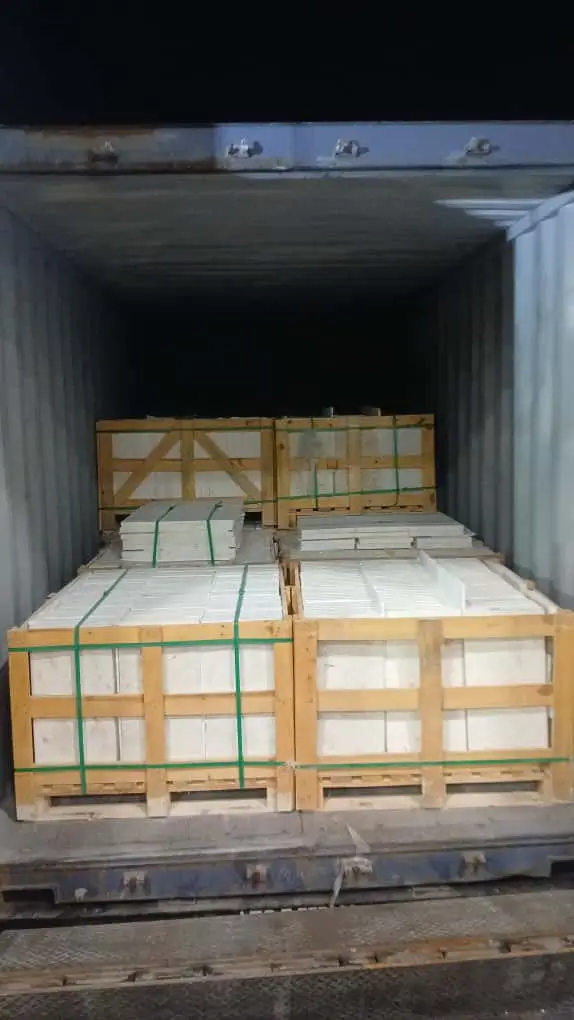
Arizona’s inland position in the Southwest means that material freight adds cost that coastal markets don’t carry to the same degree. A pallet of granite garden paving shipped from a southeastern domestic quarry to Phoenix runs approximately 1,800–2,100 miles by truck, and at current regional LTL rates, that translates to $180–$280 per pallet in freight depending on load consolidation. Multiply that across a mid-size garden project requiring 8–12 pallets and freight alone represents $1,500–$3,400 in landed cost before any installation labor is considered.
The value engineering move that works consistently in this market is specifying granite varieties that are stocked in regional warehouse inventory rather than custom-ordering specialty colors. At Citadel Stone, we maintain Arizona warehouse stock of core granite paving formats specifically to cut that freight timeline down from 6–8 weeks to 1–2 weeks and reduce per-unit freight cost through consolidated truck loads.
Local labor market conditions in Arizona also affect your total project cost in ways that aren’t always obvious from contractor quotes. The Phoenix metro has deep installer availability, which keeps labor rates competitive. Projects requiring truck delivery to rural sites outside the metro — far east Valley or rural Pinal County — often carry mobilization premiums of $200–$600 per crew day that don’t appear in the base rate quote.
- Request itemized freight costs separately from material cost — bundled quotes make it impossible to comparison-shop sourcing options
- Verify whether your supplier’s freight quote is door-to-door or curb delivery — stone deliveries to sites without forklift access often require re-handling fees
- Schedule material delivery for early morning in summer months; afternoon truck deliveries in Phoenix summer heat create worker safety concerns that affect crew productivity
- Consider staging delivery in two truck loads for large projects to maintain cash flow alignment with installation progress
Joint Filling, Thermal Expansion, and Long-Term Performance
Granite’s thermal expansion coefficient runs approximately 4.4–8.0 × 10⁻⁶ per °C depending on mineral composition — lower than concrete but still meaningful in Arizona’s temperature swing of 40°F at night to 110°F+ in summer daytime. For desert-rated stone paving for AZ gardens, joint spacing matters more than most residential specifications acknowledge. Standard 3–4mm joints work adequately for temperate climates but Arizona conditions benefit from 5–6mm joints in large-format installations, giving the paving field room to expand without generating edge pressure that lifts individual stones.
Polymeric sand is the correct joint fill material for granite garden paving in most Arizona applications. It resists the aggressive ant and weed activity that plagues standard sand joints in desert environments and maintains joint integrity through monsoon wash cycles that destabilize unbound sand quickly. Apply polymeric sand when temperatures are between 50°F and 90°F — outside that window, the activation chemistry underperforms and you’ll see joint failure within the first monsoon season.
- Compact pavers with a plate compactor and rubber pad before applying joint fill — compaction seats the paving and reveals any high-spots requiring correction
- Apply polymeric sand in two passes: first pass fills the majority of the joint, light compaction, second pass brings it to within 3mm of the paver surface
- Activate with a fine mist — never a heavy spray that displaces the sand from joints before it sets
- Allow 24 hours curing before foot traffic and 48 hours before any vehicle access in warm-season installations
Do You Need to Seal Granite Garden Paving in Arizona?
Granite’s low absorption rate — typically 0.1–0.4% by weight — makes it inherently more stain-resistant than limestone or travertine. The honest answer on sealing is that it’s optional for granite garden paving in dry desert locations but worth doing in zones near outdoor kitchens, pool surrounds, or areas with regular organic matter accumulation (mulched garden beds adjacent to pavers). The sealer doesn’t protect the stone so much as it protects the joint sand and simplifies surface cleaning.
A penetrating silane-siloxane sealer is the right product category for Arizona granite — it allows vapor transmission while repelling water and oil-based contaminants. Topical sealers that form a film on the surface trap moisture in a climate where daytime evaporation is extreme, and they show UV degradation within 12–18 months under Arizona sun exposure. Apply a penetrating sealer every 3–5 years as a maintenance interval; more frequent application doesn’t improve performance and can build up residue in low-porosity granite.
Arizona Outdoor Granite Paving Setup: Avoiding the Mistakes That Cost You Later
The most expensive mistakes in the Arizona outdoor granite paving setup process aren’t dramatic — they’re the quiet ones that show up 18–24 months after installation. Insufficient base compaction is the most common: the desert soil looks firm, the crew assumes it’s adequate, and by the second monsoon season differential settlement has created lippage across the paving field. You can spec the finest granite on the market and lose the installation to a skipped compaction step that costs $150 to do correctly.
Edge restraints are the second area where projects underperform. Plastic edge restraints with 10-inch spikes are adequate for residential garden areas; spiked metal restraints are worth the additional cost in high-traffic zones or where vehicle incursion is possible. Without proper edge restraint, the outer courses of a granite paving installation migrate laterally under repeated load and thermal cycling — and once migration begins, joint widths become inconsistent throughout the field.
- Never install granite garden paving directly over compacted native desert soil without a crushed aggregate base layer — caliche’s rigidity creates bridging scenarios where pavers crack rather than deflect
- Ensure drainage outlets are positioned before paving installation — retrofitting drainage through a completed granite field is disruptive and expensive
- Match granite color batches across all pallets before installation begins — quarry color variation between production runs is real and visible when adjacent pavers come from different lots
- Verify truck access to the site before scheduling delivery — narrow gates, overhead obstructions, or steep entries can prevent standard flatbed delivery and require more expensive crane-off or smaller vehicle redelivery
Planning Your Arizona Granite Garden Paving Project Right
Installing granite garden paving in Arizona rewards methodical planning far more than it rewards speed. The projects that hold up for 20–25 years in this climate aren’t necessarily the ones with the most expensive stone — they’re the ones where the sub-base was engineered to the soil, the freight and sourcing decisions were made with full cost visibility, and the installation sequence followed field-tested protocols rather than guesswork. Every shortcut in base preparation or joint filling will surface eventually, and in Arizona’s thermal environment, that reckoning tends to come faster than it would in a milder climate.
Your budget planning should account for freight as a real line item from the first estimate, not an afterthought. Verify warehouse stock before confirming lead times with your client or contractor, and factor in delivery logistics — site access, time-of-day constraints, and re-handling costs — as part of your landed cost calculation. Those details separate realistic project budgets from ones that collapse under the pressure of the actual market. If you’re also evaluating other stone product options for your Arizona property, Granite Bricks vs Concrete Blocks: Which Is Better for Arizona Homeowners? offers a useful comparison for adjacent hardscape decisions. Homeowners in Tucson, Mesa, and Chandler rely on Citadel Stone for granite garden paving selected specifically for ground stability and thermal performance in Arizona’s desert soil conditions.