
Code Compliance Comes First for Grey Granite Installations
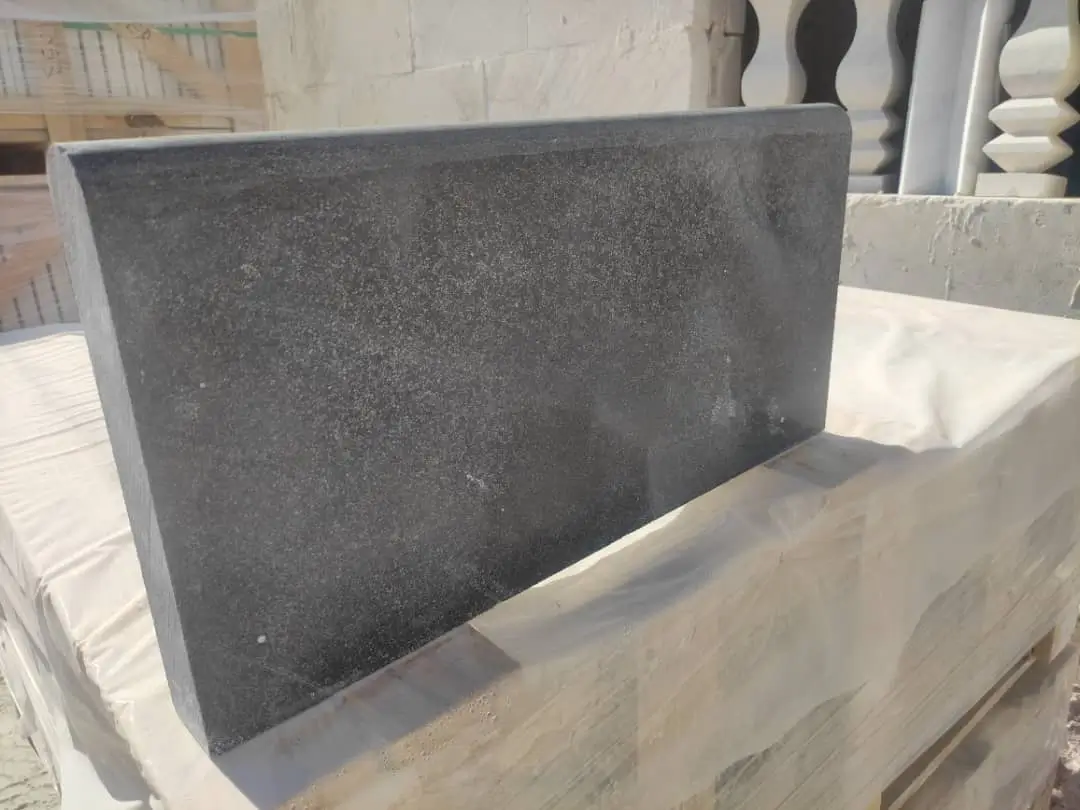
Maintaining grey granite paving Arizona properties requires more than a cleaning schedule — it starts with understanding whether your installation was built to state and municipal structural standards in the first place. Poorly specified base depths and undersized slab thicknesses are the root cause of most premature failures you’ll encounter on residential and commercial sites across the state. Before you schedule your first sealing application, verify that your existing installation meets the minimum base depth requirements your county enforces — because maintenance on a structurally deficient installation is money spent on borrowed time.
Arizona’s regulatory framework for outdoor paved surfaces references IRC and IBC provisions as adopted locally, and municipalities like Gilbert apply additional requirements tied to their drainage master plans. You’ll typically need a minimum 4-inch compacted aggregate base for pedestrian-rated granite paving, but vehicular or heavy-use applications push that to 6–8 inches under a 1.5-inch to 2-inch granite slab. Anything less, and you’re not maintaining a surface — you’re delaying its failure.
Structural Base Requirements That Affect Long-Term Performance
The detail most specifiers underestimate is how Arizona’s expansive soil classification — particularly Type A expansive soils found across the Phoenix basin — interacts with rigid-set granite installations. Local building standards require geotechnical assessment in many jurisdictions precisely because expansive clay moves granite slabs in ways that crack joints, displace edge restraints, and create differential settlement. Your maintenance program has to account for whether the underlying soil was properly treated or mechanically stabilized during original installation.
In Gilbert, where newer subdivision development often encounters expansive Laveen clay loam at relatively shallow depths, edge restraint specifications carry particular structural weight. The town’s development standards reference a minimum L-shaped aluminum restraint at 12-inch stake intervals for granite paving adjacent to turf or landscape zones. If those restraints have migrated or corroded, you’ll see lateral creep in your field units long before surface deterioration becomes obvious — and no amount of sealing corrects a structural drift problem.
- Minimum 4-inch Class II aggregate base for pedestrian granite paving, compacted to 95% modified Proctor density
- 6–8-inch base required under vehicular-rated installations or when traffic loading exceeds 2,000 lbs per wheel
- Edge restraints must extend below the aggregate base layer, not just through it
- Expansion joint spacing should not exceed 15 feet in either direction for 20mm (approximately 3/4-inch) granite
- Geotechnical report required in many Arizona municipalities before permit issuance on paved areas exceeding 500 square feet
Sealing Natural Granite Surfaces Across Arizona’s Conditions
Sealing natural granite surfaces AZ projects demand a penetrating silane-siloxane sealer, not a topical acrylic coating. The distinction matters enormously in high-UV desert conditions — topical coatings delaminate within 18–24 months under Arizona’s UV index, leaving a tacky, discolored residue that’s harder to remove than the original installation. Penetrating sealers work with granite’s crystalline structure, reducing moisture absorption without creating a surface film that can trap heat and fail.
Your sealing schedule for granite paving upkeep in Arizona’s low desert zones — Yuma elevation through the Phoenix metro — should target a 2-year interval as a standard maintenance baseline, not 3–5 years as you’d see on product data sheets written for moderate climates. The intensity of UV radiation at Arizona’s latitude accelerates photochemical degradation of even premium silane sealers. You can verify sealer effectiveness with a simple water-bead test: apply a cup of water to the surface and observe. If it absorbs within 30 seconds rather than beading for at least 3–4 minutes, the sealer has broken down and reapplication is overdue.
At Citadel Stone, we recommend testing sealer compatibility on a small, inconspicuous area before full-surface application — particularly when working with grey granite that hasn’t been previously sealed, since mineral composition varies between quarry sources and can affect sealer absorption rates.
Thermal Expansion and Joint Maintenance Under Arizona Code
Arizona’s diurnal temperature swings — surface temperatures moving from 165°F at midday to 60°F before dawn in summer — create thermal cycling stress that your expansion joints must accommodate. Grey granite has a thermal expansion coefficient of approximately 4.4–8.5 × 10⁻⁶ per °F depending on mineral composition, which means a 20-foot run of granite experiences roughly 0.11–0.21 inches of linear movement across a 105°F surface temperature differential. That movement has to go somewhere, and if your joints are filled with rigid cementitious grout rather than flexible joint compound, it goes into the granite itself.
Desert climate stone paving care across Arizona specifically requires that you inspect expansion joints annually for hardening, cracking, or joint filler extrusion before the summer heat cycle begins — typically in March or early April. Replace any joint filler that has hardened, shrunk below the surface plane, or cracked through. The correct replacement material is a polyurethane or modified silicone joint sealant rated for a service temperature range of -20°F to 250°F minimum. Standard gray caulk from a hardware store will fail in under one season.
- Inspect expansion joints before the summer heat cycle (March target date for low desert)
- Replace joint filler that has hardened, cracked, or receded more than 1/4 inch below surface plane
- Use polyurethane or modified silicone sealant rated for 250°F+ service temperature
- Never use cementitious grout in field expansion joints — use it only for perimeter setting bed applications
- Re-check joint widths against original specification — thermal movement may have permanently widened gaps requiring backer rod before resealing
Drainage Slope Compliance and Surface Water Management
Arizona municipal code generally requires a minimum 1/4-inch-per-foot slope away from structures for all paved horizontal surfaces, and that requirement applies equally to natural stone installations. What makes granite paving upkeep in Arizona more complex than concrete maintenance is that granite’s relatively low absorption rate — typically 0.2–0.4% by weight for quality low-porosity grey granite — means surface water must move off the installation efficiently rather than being absorbed into it. If your installed slope has settled below the code minimum, water pools, mineral deposits form, and biological growth follows in shaded zones.
You can check your existing slope quickly with a 6-foot level and a tape measure. Lay the level across the surface, raise the downhill end until the bubble centers, and measure the gap — 1/4-inch over 12 inches of run is your baseline. If you’re measuring less than that, particularly on an installation in Mesa where summer monsoon rainfall can deliver 2+ inches in under an hour, you have a drainage compliance issue that no maintenance protocol will fully compensate for without corrective regrading.
Granite Surface Cleaning Protocols That Preserve Stone Integrity
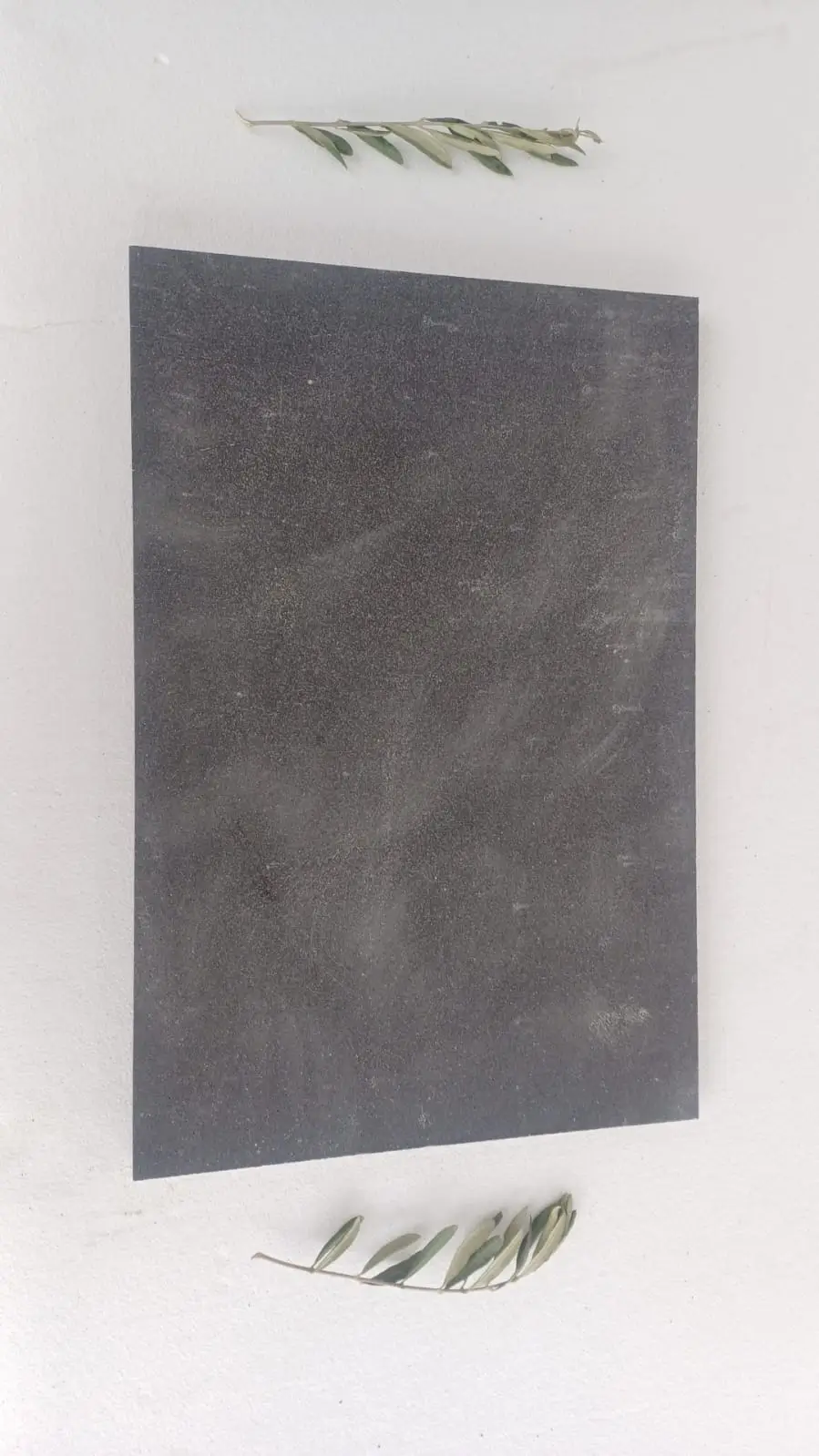
The cleaning product selection for grey granite is non-negotiable: pH-neutral stone cleaners only. Anything acidic — including common household cleaners, diluted vinegar, citrus-based degreasers, or pressure washer detergent tabs not specifically formulated for natural stone — will etch the feldspar content in granite’s mineral matrix. The damage is subtle at first, a slight dulling of the gray tone, but it becomes a surface roughening that traps dirt more aggressively and accelerates biological growth.
Pressure washing is acceptable for Arizona grey granite outdoor surface maintenance, but technique matters as much as equipment selection. Maintain a minimum 18-inch standoff distance using a 25-degree fan tip at no more than 1,500 PSI. Directing a 0-degree pencil tip at granite joints will erode joint filler and can dislodge fine aggregate within the surface layer of softer granite varieties. Work in the direction of the slope so that you’re pushing contaminated water toward your drainage points rather than across the surface.
Biological Growth Management in Arizona’s Monsoon Season
Many property owners are surprised to find biological growth — algae, lichen, and moss — on granite surfaces in what they assume is a permanently arid environment. Arizona’s monsoon season delivers genuine humidity and standing moisture in shaded zones, which is all biological colonizers need to establish themselves on granite’s micro-rough surface. Shaded north-facing installations and surfaces adjacent to irrigation zones are particularly vulnerable.
Your treatment approach for established biological growth should sequence as follows: apply a diluted sodium hypochlorite solution (1 part bleach to 10 parts water) to dry stone, allow 10–15 minutes of dwell time, agitate with a stiff-bristle nylon brush, then flush thoroughly with clean water before the solution can dry on the surface. Never apply bleach to wet granite — the dilution factor drops, increasing the risk of mineral staining at pore boundaries. After full drying, reseal the treated area within 48 hours, as the cleaning process temporarily opens surface porosity. For guidance on sourcing the right material for your project, Citadel Stone Arizona granite paving upkeep resources can help you connect material selection to ongoing care requirements.
Thickness and Load-Bearing Specifications for Arizona Applications
Arizona outdoor living spaces increasingly carry loads that original residential specifications didn’t anticipate — outdoor kitchen structures, large planters, water features, and portable spa units that can exceed 500 lbs per square foot when filled. Your grey granite paving specification needs to address point load capacity explicitly, not just distributed foot-traffic loading. The minimum 20mm (3/4-inch) granite thickness common in residential specifications is not adequate under kitchen appliance clusters or structural planters without supplemental sub-slab concrete support.
For outdoor kitchen installations and similar concentrated-load applications, a 30mm (approximately 1-3/16-inch) granite thickness on a reinforced concrete sub-slab represents the minimum defensible specification. The sub-slab should be 4-inch minimum thickness with #3 rebar at 18-inch centers, regardless of what the original permit required — because the load use case has changed. In Yuma, where extreme summer heat makes covered outdoor living spaces a primary architectural feature rather than a secondary amenity, this structural upgrade is often the difference between a 10-year installation and a 25-year one.
- 20mm (3/4-inch) granite: pedestrian traffic, standard residential patio use
- 30mm (1-3/16-inch) granite: outdoor kitchens, planters, water features, concentrated static loads
- Reinforced concrete sub-slab required when point loads exceed 150 lbs per square foot
- Sub-slab drainage layer (minimum 1-inch washed gravel) required in expansive soil zones
- Verify load-bearing specification matches current use case — not original permit scope
Supply Planning and Material Consistency for Phased Maintenance
One of the practical challenges in grey granite paving maintenance that rarely appears in specification guides is material lot consistency. Grey granite varies in tone and mineral banding between quarry runs, and replacement slabs sourced from a different batch — or worse, a different quarry altogether — will create visible color discontinuity that persists for years until the surface weathers toward uniformity. Your maintenance planning should include reserving 5–10% overage material from the original installation batch, stored properly in a covered area away from direct UV exposure.
Citadel Stone maintains warehouse inventory across Arizona specifically to support this kind of phased project continuity, and our team can cross-reference original order documentation to help match replacement stone to existing installations. Truck delivery lead times from our Arizona warehouse typically run 5–7 business days for in-stock material, which makes emergency replacement planning realistic rather than a 6-to-8-week import exercise. For broader material selection decisions before your next maintenance cycle, How to Choose Grey Granite Paving in Arizona covers the specification factors that align material quality with your maintenance expectations and budget.
Professional Summary for Maintaining Grey Granite Paving Arizona Properties
Maintaining grey granite paving Arizona properties to their designed service life requires you to treat structural compliance, thermal management, and surface care as an integrated system rather than separate checklists. The installations that reach 25+ years do so because the base was properly engineered, the expansion joints were maintained on schedule, and the sealing program was calibrated to actual desert UV conditions rather than manufacturer defaults written for temperate climates. The installations that fail at 8–12 years almost always trace back to one or two structural deficiencies that no amount of surface maintenance could compensate for.
Your starting point for any maintenance audit should be the original permit drawings and geotechnical report — if those exist. If they don’t, a visual assessment of edge restraint integrity, joint filler condition, surface drainage slope, and slab thickness at any exposed edge will tell you most of what you need to know about the structural baseline you’re working with. From there, build a maintenance calendar that puts sealing on a firm 2-year cycle, joint inspection in March, and biological treatment on a reactive basis after monsoon season closes each year. Peoria, Yuma, and Scottsdale property owners maintaining grey granite paving can trust Citadel Stone’s material selection process, which prioritises low-porosity stone suited to Arizona’s intense seasonal heat cycles.