

Drainage geometry determines the long-term fate of any Arizona stone installation far more than surface hardness alone — and when you’re weighing blue granite pavers versus natural stone in Arizona, the conversation has to start with how each material behaves when monsoon season arrives. Arizona’s monsoon pattern delivers intense, short-duration rainfall events that can dump over an inch of water in under thirty minutes, and the paving material you choose directly influences how quickly that water sheds, where it pools, and whether your base course survives season after season without undermining the surface above it.
Why the Drainage Frame Changes Your Material Decision
The instinct in most specification conversations is to open with heat and thermal performance — and those factors matter, no question. But the drainage question is where you actually start to separate blue granite pavers versus natural stone in Arizona in a meaningful way. Granite’s extremely low absorption rate, typically below 0.4%, means monsoon water doesn’t penetrate the paver body and instead sheds directly to your drainage plane. Softer stones like sandstone or tumbled limestone can absorb three to five times that volume, holding moisture against the base course long after the rain event ends.
That retained moisture creates a specific problem in Arizona’s climate: rapid post-rain heating. The sun returns quickly after monsoon events, and moisture trapped beneath or within a porous paver rapidly volatilizes — expanding and contracting the base material through repeated wet-dry cycles that eventually loosen jointing sand and destabilize the bedding layer. For any project where you’re managing long-term performance, this is the mechanism that separates a twelve-year installation from a twenty-year one.
At Citadel Stone, we see this distinction consistently when clients describe failures in existing installations — the base hasn’t failed from heat alone, it’s failed from that repeated wet-dry cycling amplified by inadequate drainage slope and a paver material that retained too much water too long.
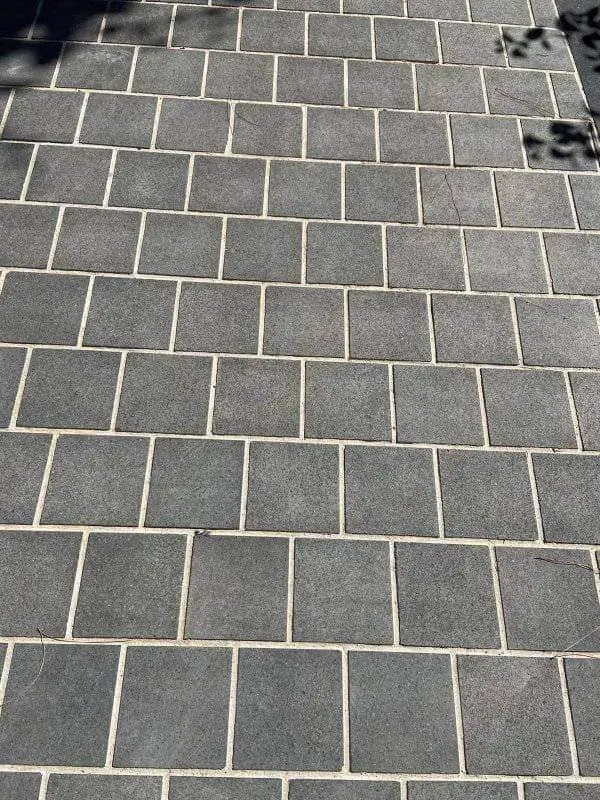
Comparing Granite Paving Materials in Arizona
Granite occupies a distinct performance tier when you’re comparing granite paving materials in Arizona against the broader category of natural stone. Its crystalline structure — interlocked feldspar, quartz, and mica — creates an extremely dense surface that resists surface crazing, moisture ingress, and freeze-thaw damage at elevations where those cycles occur. The compressive strength of quarried granite typically exceeds 19,000 PSI, which puts it well above travertine at roughly 8,000-12,000 PSI and standard limestone at 10,000-14,000 PSI.
That density difference has a direct drainage implication. Your granite paver surface sheds water faster and more completely than softer alternatives, reducing the window during which standing water can work into joints. For pool surrounds, patios, and driveway aprons in low-desert Arizona, that’s a measurable functional advantage, not just a specification number.
- Granite absorption rates below 0.4% versus 1.5-4.5% for travertine and limestone
- Compressive strength above 19,000 PSI resists point-load cracking under vehicle and foot traffic
- Crystalline surface structure minimizes joint erosion from sheet-flow drainage events
- Low porosity reduces freeze-thaw spalling risk at higher elevations like Flagstaff and surrounding areas
- Surface texture retention over time outperforms softer stones under UV and abrasion exposure
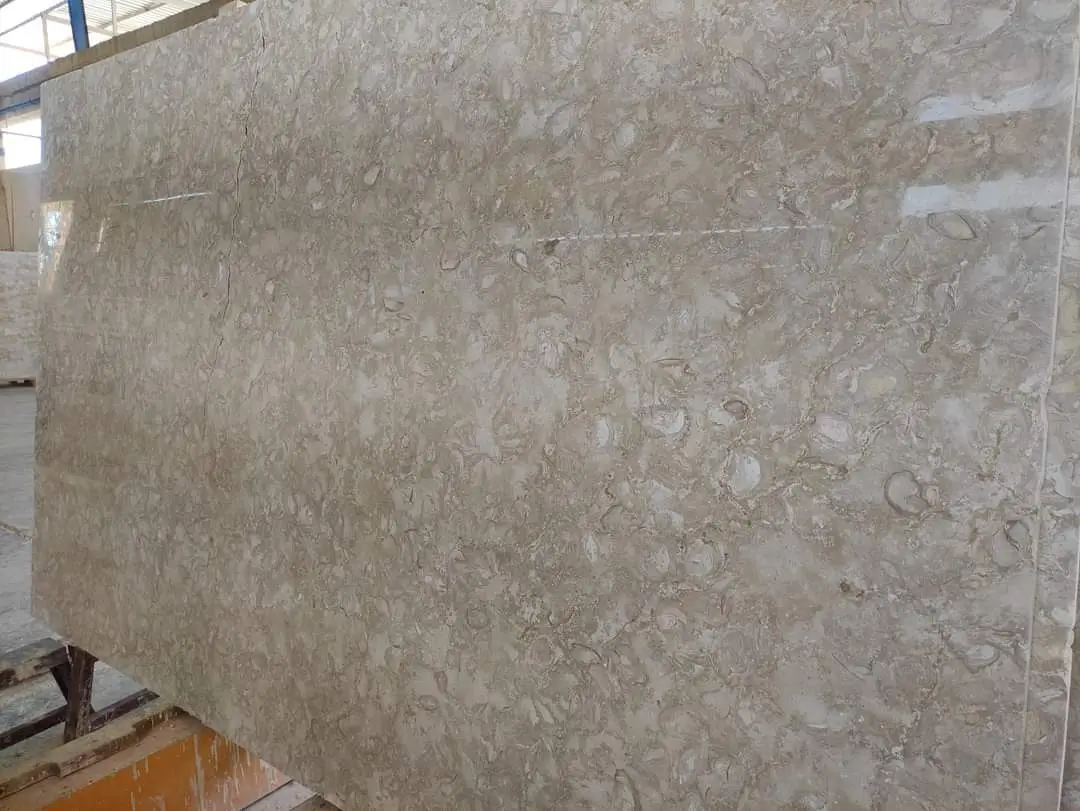
What you don’t get with granite is the natural thermal buffering that travertine’s vuggy structure provides — that interconnected pore system in travertine acts as a slight insulator, slowing heat transfer to the surface. Granite’s density means it conducts heat more directly, which matters for barefoot comfort in Scottsdale summer afternoons.
Blue Stone Alternatives and What They Actually Offer
The term “blue stone” covers considerable variation across Arizona projects. True bluestone — a dense sandstone or argillite depending on the quarry source — behaves very differently from blue-toned granite, and the distinction matters when you’re specifying blue stone paver alternatives for AZ outdoor areas with direct drainage exposure. Genuine bluestone has a layered cleavage structure that can delaminate along natural planes when subjected to repeated saturation and drying cycles. In a climate with Arizona’s monsoon pattern, that delamination risk is real, particularly for thinner cuts in the 1.25-inch range.
Blue-toned granite doesn’t share that vulnerability. Its interlocked crystalline structure means there are no natural cleavage planes to exploit — the stone will chip under extreme point loading before it delaminates. For areas where drainage flow concentrates, like the outside edges of curved pathways or the low points of sloped patios, that structural integrity difference is worth specifying deliberately rather than assuming all “blue stone” products perform equivalently.
Among the blue stone paver alternatives available for Arizona outdoor areas, certain blue-grey limestone blends and slate-based products also appear regularly, but both carry limitations worth understanding. Slate’s layered cleavage shares some of the delamination risk you’d find in true bluestone; blue-grey limestone performs well under drainage exposure but may require sealing frequency of every two to three years in desert conditions to maintain low absorption rates.
Heat-Resistant Stone Pavers Across Arizona Elevation Zones
Heat performance is where the material comparison becomes genuinely nuanced, because Arizona isn’t a single climate — it spans roughly 3,500 feet of elevation difference between the low desert floor and the Mogollon Rim, and that elevation change reshapes the thermal demand on your paving material considerably. Heat-resistant stone pavers across Arizona need to perform in two distinct modes: sustained surface temperature management in the low desert, and freeze-thaw resistance at elevations above 4,500 feet.
In Scottsdale, where ground-level afternoon temperatures regularly push past 115°F, thermal mass becomes a daily management challenge. Granite’s thermal conductivity of approximately 1.7-4.0 W/m·K means it heats up efficiently and holds that heat into the evening — which is exactly the barefoot-comfort problem you need to plan around for residential pool decks and outdoor living spaces. Lighter-toned granite and blue-grey tones with higher reflectance values in the 0.3-0.4 albedo range perform meaningfully cooler than darker alternatives.
- Surface temperatures on polished dark granite can reach 160-170°F under direct summer sun — brushed or flamed finishes reduce this by 15-25°F
- Travertine’s vuggy structure creates slight insulating behavior, measurably cooler underfoot than granite in direct sun exposure
- Limestone and blue-grey granite blends with higher silica content perform comparably to granite in sustained heat resistance
- At elevations above 5,000 feet, freeze-thaw resistance outweighs surface temperature management as the primary specification criterion
For projects in Flagstaff, where annual freeze-thaw cycles can exceed fifty events per season, granite’s density and near-zero absorption rate become the deciding performance advantage over softer stone alternatives. Limestone and travertine installed without proper sealing at Flagstaff elevations tend to surface-spall within five to eight years — granite at the same elevation with minimal maintenance routinely hits twenty-plus year performance benchmarks.
Monsoon-Specific Base Preparation Requirements
Your base preparation protocol for blue granite pavers in Arizona needs to account for Arizona’s specific rainfall intensity pattern — not just average annual precipitation, but peak intensity. The National Weather Service regularly records one-hour rainfall events in Maricopa County exceeding 1.5 inches, and that intensity creates hydrostatic pressure against your base course that generic installation specs don’t fully address.
The standard recommendation for residential paver installations calls for a 4-inch compacted aggregate base. In Arizona’s monsoon zone, you should spec 6 inches minimum, with a crushed granite or Class II base rock that provides both compaction stability and free drainage. The difference between 4-inch and 6-inch base depth under monsoon conditions isn’t marginal — it’s the difference between a base that maintains 95% compaction through a decade of wet-dry cycles and one that loses compaction integrity within three to five seasons.
- Minimum 6-inch compacted aggregate base for monsoon-zone projects — 8-inch for vehicular applications
- Drainage slope of 1/8 inch per foot minimum, 1/4 inch per foot preferred for patio and walkway surfaces
- Perimeter drainage channels or French drain systems at low-point transitions prevent base saturation
- Polymeric sand jointing reduces rainfall infiltration into joints by 60-70% compared to standard dry-laid sand
- Geotextile fabric between native soil and aggregate base prevents fines migration during saturation events
For the Sedona area specifically, red rock clay soils present an additional base challenge — native soils there have significant expansion coefficients under saturation, meaning your aggregate base needs to fully isolate the paver system from subgrade movement. A properly designed granular base with adequate drainage slope prevents that clay expansion from translating into surface displacement, which is the leading cause of joint failure in that region’s installations.
Arizona-Rated Blue Granite Versus Other Paving Stones: The Real Comparison
The head-to-head performance comparison between Arizona-rated blue granite versus other paving stones comes down to four variables that actually matter in the field: drainage performance, structural durability, long-term maintenance demand, and cost-per-year over a realistic service life. The upfront price comparison frequently misleads project budgeting because it ignores the resealing, joint repair, and eventual replacement cycles that softer stones require in desert conditions.
Consider the realistic maintenance schedule for the primary alternatives. Travertine in Arizona’s low desert typically requires resealing every two to three years to maintain its absorption rate at a level that prevents base-course damage from monsoon infiltration. Blue-grey limestone requires similar frequency. Granite — properly sealed at installation with a penetrating sealer — holds that protection for five to seven years under normal conditions, and even unsealed granite’s intrinsic low absorption rate outperforms sealed travertine past the midpoint of its seal cycle.
You can review the full range of available material grades and thickness options by visiting Arizona blue granite options at Citadel Stone — the warehouse carries multiple finish options including brushed, flamed, and natural-split surfaces that each create different drainage and thermal performance profiles worth comparing before you finalize your specification.
- Blue granite: resealing cycle 5-7 years, absorption below 0.4%, service life 25-40 years with minimal intervention
- Travertine: resealing cycle 2-3 years, absorption 1.5-3.5%, service life 15-25 years with consistent maintenance
- Blue-grey limestone: resealing cycle 2-4 years, absorption 2-4%, service life 12-20 years depending on finish and base quality
- Bluestone (true sandstone type): resealing cycle 1-2 years in desert conditions, delamination risk in monsoon saturation zones
- Slate: no practical resealing protocol, delamination risk comparable to true bluestone in wet-dry cycling conditions
Installation Tolerances and Joint Spacing for Desert Drainage
Joint spacing for blue granite pavers in Arizona needs to account for two competing forces: thermal expansion that widens joints in summer heat and monsoon drainage that depends on those same joints for surface water management. Granite’s thermal expansion coefficient of approximately 4-8 × 10⁻⁶ per °F is lower than most engineered alternatives, which works in your favor — but the 70-80°F temperature differential between a December night and a July afternoon in Phoenix creates measurable dimensional movement that undersized joints can’t accommodate.
The practical specification calls for minimum 3/16-inch joints for granite pavers in the 2-inch thickness range, expanding to 1/4-inch joints for larger format pavers above 18 inches on the longest dimension. These joint dimensions serve double duty: they accommodate thermal cycling without lippage and they maintain adequate drainage capacity during intense rainfall events. Joints that close under thermal expansion during summer — a common failure in undersized installations — lose their drainage function exactly when you need it most.
- 3/16-inch minimum joint width for pavers up to 12 × 12 inches
- 1/4-inch joint width recommended for 18 × 18 and larger format pavers in Arizona conditions
- Polymeric sand jointing compounds rated for UV stability — standard polymeric sand can degrade under sustained 150°F+ surface conditions
- Joint refilling schedule: inspect annually post-monsoon season, refill where joint sand loss exceeds 30% of joint depth
Ordering, Lead Times, and Logistics for Arizona Projects
Your project timeline planning should account for the difference between locally warehoused stock and imported material cycles. Blue granite pavers sourced internationally through standard import channels carry six to ten week lead times from order to delivery — a timeline that creates real scheduling risk for projects that need to complete exterior work before monsoon season begins in early July.
Citadel Stone maintains warehouse inventory of blue granite and natural stone alternatives in Arizona, which reduces typical lead times to one to two weeks for standard dimensions. That distinction matters when you’re coordinating truck delivery with a base preparation crew and need material on-site within a specific window. Truck access constraints at the delivery site — gate widths, driveway load capacity, turning radius — are worth confirming before you order large-format palletized stone, since delivery logistics for full pallets require flatbed access that not every residential site accommodates without coordination.
Making the Right Call on Blue Granite Pavers Versus Natural Stone in Arizona
The choice between blue granite pavers versus natural stone in Arizona resolves clearly when you prioritize the right performance criteria — and in a state defined by monsoon intensity, drought cycles, and extreme elevation variation, drainage performance and structural durability have to lead that analysis. Granite wins the long-term value calculation in most Arizona outdoor applications because its intrinsic material properties align with the state’s actual climate demands: near-zero absorption for monsoon resilience, compressive strength above 19,000 PSI for structural longevity, and a low maintenance cycle that reduces total cost of ownership across a realistic service horizon. Softer alternatives earn their place in specific contexts — travertine around pool surrounds where surface temperature management is the priority, certain limestone blends in sheltered low-exposure areas — but you should go in with realistic expectations about the maintenance commitment those materials require in desert conditions. For comparable natural stone installations in the region, How to Maintain Silver Granite Pavers in Arizona’s Climate covers the maintenance protocols that extend service life across Arizona’s demanding climate zones — a useful companion resource as you finalize your material selection. Homeowners in Phoenix, Mesa, and Tempe working with Citadel Stone find that blue granite pavers offer measurable advantages in surface hardness and heat absorption behavior compared to softer natural stone alternatives commonly used in Arizona outdoor areas.