
Granite cobblestone paver cost in Arizona isn’t a single number — it’s a range that shifts based on material grade, origin quarry, thickness tolerance, and regional supply logistics, and most buyers don’t realize how wide that range actually is until they’re already mid-project. You can find granite cobblestones priced anywhere from $4.50 to $18.00 per square foot depending on whether you’re sourcing tumbled fan-pattern sets or premium hand-cut cubes with tight dimensional tolerances. Understanding where your project falls within that range — before you commit to a contractor or a delivery schedule — is the difference between a budget that holds and one that unravels at the warehouse stage.
What Drives Granite Cobblestone Pricing in Arizona
The quarry origin of your granite cobblestone is the single biggest pricing lever most buyers overlook. Brazilian and Indian granites dominate the lower price tiers — not because they’re inferior, but because extraction volumes are high and the manufacturing infrastructure for tumbled cobblestone sets is deeply established in those regions. European granite, particularly Portuguese or Spanish-origin material, commands a 25–40% premium that’s largely justified by tighter dimensional tolerances and more consistent coloration across pallets.
Your material thickness spec matters more than most budget guides acknowledge. Standard cobblestones are typically offered in 2-inch, 2.5-inch, and 3-inch nominal thicknesses, and the price differential between 2-inch and 3-inch material from the same quarry source can run 30–45% per square foot. For driveway applications in Arizona’s caliche-heavy soils, the 3-inch spec is almost always worth the premium — the point-load resistance at vehicle entry points is materially different, and you’ll spend less on base repair over a 15-year period than you’ll save upfront by under-specifying thickness.
- Brazilian tumbled granite sets: $4.50–$7.00 per square foot (material only)
- Indian multicolor granite cobblestone: $5.00–$8.50 per square foot
- Chinese gray granite, machine-cut: $5.50–$9.00 per square foot
- Portuguese or Spanish granite, hand-set quality: $9.00–$14.00 per square foot
- Premium domestic or European dimensional granite cobble: $13.00–$18.00 per square foot
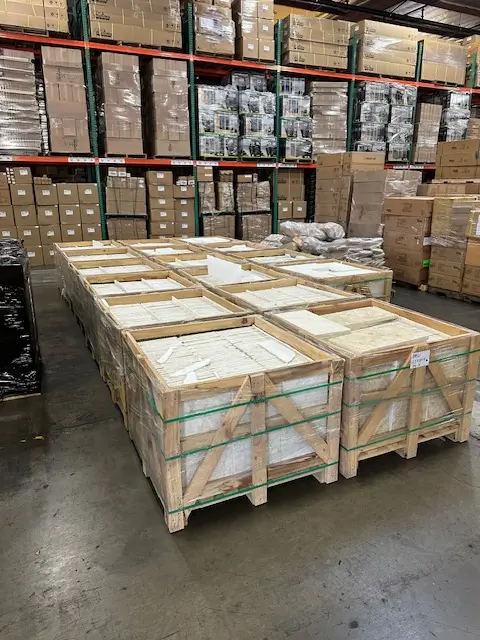
Delivery logistics from the warehouse to your jobsite add another $1.50–$4.00 per square foot depending on truck access, order volume, and whether your site requires offloading by hand versus forklift. Projects on narrow residential streets in older Arizona neighborhoods often face the upper end of that range because standard flatbed truck delivery requires multiple smaller loads.
Granite Cobblestone Pricing Per Square Foot: Breaking Down the Full Investment
Separating material cost from total installed cost is where most Arizona homeowners get surprised. Your granite cobblestone pricing per square foot in Arizona needs to account for base preparation, setting bed, jointing material, and sealing — and in many cases, those components together equal or exceed the material cost itself. A realistic total installed budget runs $18–$38 per square foot for most residential projects, depending on site conditions and pattern complexity.
Base preparation is the cost variable that fluctuates most by location. Projects in Mesa regularly encounter caliche hardpan between 14 and 22 inches below grade, which actually benefits long-term performance once properly scarified and compacted — but it adds $2.50–$5.00 per square foot in excavation and prep labor compared to sites with looser desert fill. Factor that into your budget conversation with contractors before accepting any bid based on square footage alone.
- Excavation and base prep: $3.00–$8.00 per square foot (varies by soil condition)
- Compacted aggregate base (4–6 inch depth): $1.50–$3.00 per square foot
- Setting bed (sand or dry-pack mortar): $0.75–$2.00 per square foot
- Labor for installation and pattern setting: $6.00–$12.00 per square foot
- Polymeric sand jointing: $0.50–$1.25 per square foot
- Sealing (penetrating impregnator): $0.75–$2.00 per square foot
Those ranges aren’t conservative padding — they reflect actual variation across Arizona’s diverse soil profiles and climate zones. A straightforward fan-pattern installation on stable sandy soil in the East Valley will come in at the lower end. A complex herringbone or radial pattern on a sloped site with expansive clay sub-base in the West Valley will approach the upper end, and that’s before you account for any drainage engineering.
Pattern Complexity and Its Real Cost Impact
The pattern you choose directly affects your labor cost, your material waste factor, and — less obviously — your long-term maintenance costs. Straight-set or running-bond patterns are the most labor-efficient, typically adding $1.50–$2.50 per square foot in labor above a basic square-set approach. Fan patterns, pinwheel designs, and radial layouts can add $4.00–$7.00 per square foot in labor because the cutting ratio and layout complexity increase significantly.
Material waste varies sharply by pattern as well. A straight-set installation typically runs 5–8% waste for cuts at borders and obstructions. A fan or radial pattern can push waste to 15–22%, which means your material order needs to account for that overage — and verifying warehouse availability before finalizing your design is essential, because running short mid-installation with a specialty granite product can mean a 6–8 week reorder delay.
- Running bond / straight set: 5–8% waste factor, minimal cut labor
- Herringbone at 45°: 10–14% waste factor, moderate cut complexity
- Fan pattern (sett cobblestone): 12–18% waste factor, high skilled labor requirement
- Radial or circular inlay: 15–22% waste factor, highest labor intensity
For most Arizona homeowners working with a defined budget, the herringbone pattern represents the best value balance — it delivers strong visual interest without the labor penalty of fan work, and the diagonal orientation actually improves drainage performance on slight grades, which matters in monsoon season when surface runoff needs a clear path to edges.
Material Grade vs. Marketing Category: What the Labels Actually Mean
The stone industry isn’t consistent in how it grades granite cobblestone, and understanding that inconsistency saves you from overpaying for mid-grade material that’s been labeled “premium” by a distributor. True premium-grade cobblestone is characterized by dimensional tolerance within ±1/8 inch across length, width, and thickness — meaning your pallets will set consistently without shimming or grinding. Commercial grade allows ±1/4 inch tolerance, which is perfectly acceptable for driveways and secondary walkways but creates visible joint inconsistencies in formal entry applications.
Surface finish type also drives price independent of grade. Natural split-face cobblestone has a rougher, more rustic texture that provides excellent slip resistance — useful in pool surrounds or sloped entries in Arizona’s wet monsoon months. Machine-tumbled finish rounds the edges uniformly, creating a more consistent appearance but slightly reducing the natural variation that gives cobblestone its visual character. Thermal or flamed finishes are available on certain granite types and provide enhanced slip resistance through micro-roughening of the surface, typically adding $1.50–$3.00 per square foot to base material cost.
At Citadel Stone, we inspect incoming shipments for dimensional consistency before they reach our warehouse inventory, because pallet-to-pallet variation from the same quarry can be significant enough to affect installation quality. That quality check step is something most buyers never see but absolutely feel when the installation goes in smoothly versus requiring constant field adjustments.
Arizona Climate Factors That Affect Long-Term Value
Granite’s thermal expansion coefficient runs approximately 4.7–8.0 × 10⁻⁶ per °F depending on mineral composition, which in Arizona’s temperature swing environment — summer surface temperatures exceeding 150°F on dark materials, with overnight lows dropping 40–50°F — creates meaningful cumulative movement stress. Your joint width specification needs to accommodate that movement. Standard 3/8-inch joints with polymeric sand handle the typical range, but for large continuous fields over 400 square feet, expansion joint placement every 15–18 feet prevents cracking at setting bed interfaces.
The natural cobblestone material costs across Arizona also vary by climate zone because transportation and storage costs factor into regional pricing. High-desert installations at elevation face different weathering stresses than low-desert Phoenix metro projects. Projects in Gilbert deal almost exclusively with UV degradation and thermal cycling without freeze-thaw concern, which means a penetrating silane-siloxane sealer applied biennially is sufficient maintenance protocol. Higher elevation sites introduce freeze-thaw cycles that demand a more vapor-permeable sealer to prevent spalling from trapped moisture.
- Low desert (Phoenix metro, below 2,000 ft): UV and thermal cycling are primary stressors
- Transitional zone (Prescott Valley, 4,500–5,500 ft): freeze-thaw adds 20–30 cycles annually
- High desert (Flagstaff and Rim Country, above 6,500 ft): 80–100 freeze-thaw cycles annually
- Coastal influence (Yuma): minimal freeze-thaw, high UV, alkaline soil pH requires compatible sealer chemistry
Granite’s porosity is low enough — typically 0.2–0.5% absorption by weight — that sealer selection is less critical than with travertine or sandstone. That said, Arizona’s alkaline soils and mineral-heavy irrigation water do cause efflorescence buildup at joints over time. A penetrating impregnator rated for alkaline environments prevents the white calcium deposits that make unsealed installations look aged within two to three years of installation.
Arizona Granite Paver Project Investment Comparison
Comparing granite cobblestone against alternative hardscape materials helps clarify whether the investment is proportionate to your project goals. Concrete pavers in Arizona run $12–$22 per square foot installed, making them cost-competitive with entry-level granite cobblestone but without the same long-term durability profile. Concrete pavers are susceptible to UV bleaching and surface scaling under Arizona’s sustained heat load; granite cobblestone maintains color and surface integrity for 30–50 years with minimal intervention.
A stone paver budget guide that Arizona homeowners trust will always frame the comparison as total lifecycle cost rather than upfront material price. A $24-per-square-foot granite cobblestone installation that performs for 40 years without replacement costs less annually than a $16-per-square-foot concrete paver installation that requires resurfacing or replacement at 15–18 years. That math becomes even more compelling on high-visibility applications like motor court entries or front walkways where visual degradation has direct property value impact.
For a deeper understanding of how the upfront cost connects to long-term maintenance and sourcing decisions, the Citadel Stone Arizona cobblestone cost guide walks through pricing tiers with material-specific detail that helps you match grade to budget more precisely.
Ordering Logistics, Lead Times, and Project Sequencing
Your project timeline depends heavily on whether your chosen material is available in local warehouse stock or requires import ordering. Domestic warehouse inventory of standard granite cobblestone — tumbled gray or multi-color sets in 2-inch thickness — typically ships within 1–2 weeks from Arizona distribution points. Specialty materials, custom dimensions, or lower-volume grades may require 6–10 weeks from quarry to delivery, which means your project sequencing needs to account for that lead time before base preparation begins.
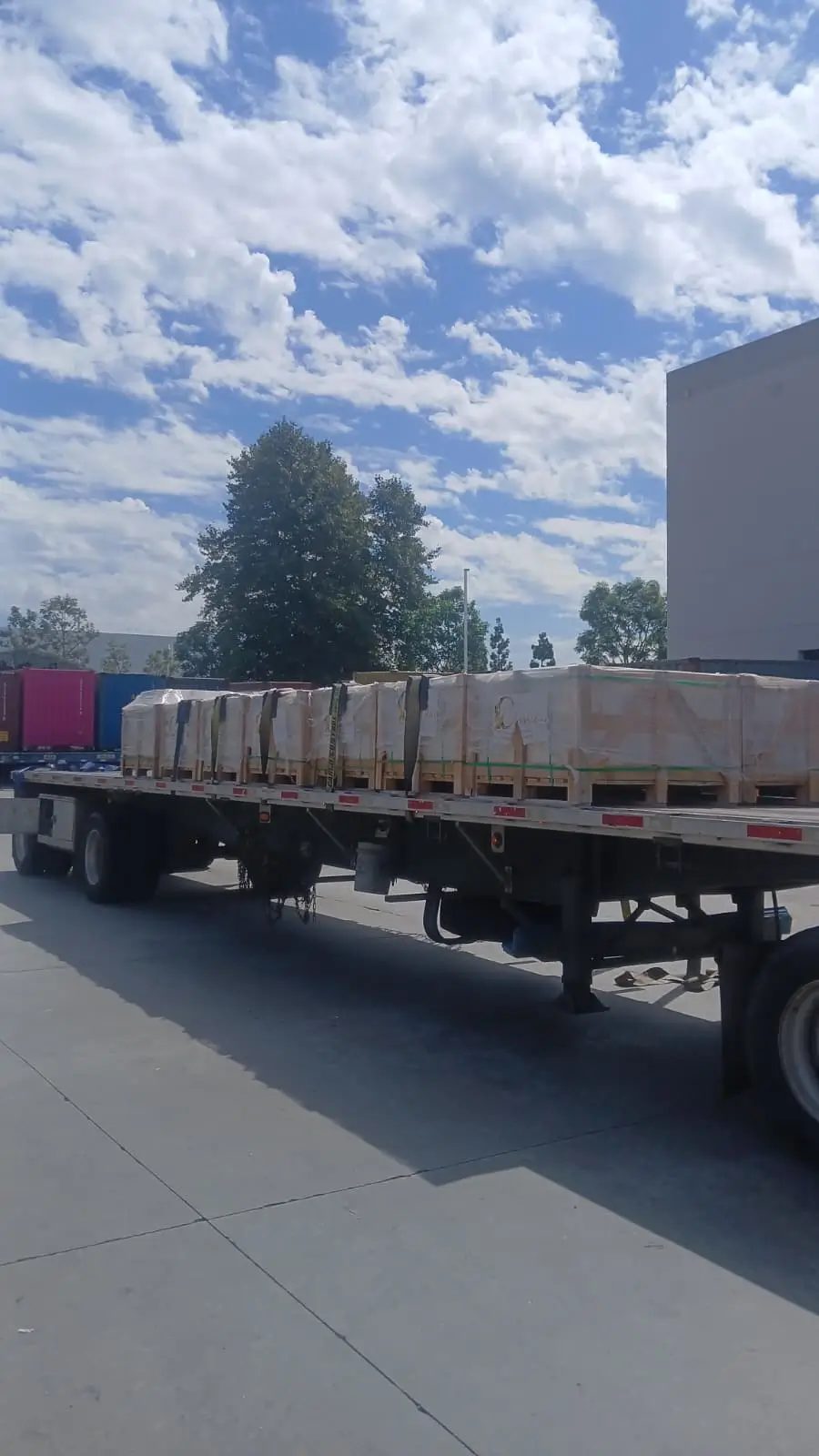
Truck delivery for cobblestone requires more planning than most homeowners anticipate. A 500-square-foot driveway project will typically arrive on a single flatbed truck carrying 8–12 pallets, each weighing 2,000–2,500 pounds. Your site needs to accommodate a full-length flatbed and have accessible offloading space — tight residential entries in Chandler sometimes require split deliveries or smaller truck arrangements, which can add $200–$600 in logistics cost. Clarify truck access requirements with your supplier before confirming your delivery date.
- Confirm warehouse stock availability before scheduling installation labor
- Order 8–15% overage depending on pattern complexity and waste factor
- Verify truck access dimensions for your delivery site before finalizing order
- Request pallet photos before delivery to confirm coloration and finish consistency
- Schedule delivery 2–3 days before installation to allow material acclimation and inspection
Pallet inspection on delivery day is a non-negotiable step that experienced installers always perform. Check corner cobblestones from multiple pallets for coloration consistency — quarry batches can vary, and running mixed batches through a high-visibility installation creates visible banding that no amount of sealing will correct. Reject any pallet with visible batch mismatch before the truck leaves your site, not after.
Contractor Selection and Bid Evaluation for Cobblestone Projects
The variance in contractor bids for granite cobblestone installations in Arizona can be startling — it’s not unusual to see a 40–60% spread between the lowest and highest bids on the same scope. That spread almost always traces to differences in base preparation specification, not labor efficiency. Contractors who bid low on base prep are assuming ideal soil conditions; contractors who build in soil testing and adaptive base depth are pricing the real work. Ask every bidder to specify exactly how many inches of aggregate base they’re pricing and whether that’s adjustable based on sub-base conditions found during excavation.
Verify that your contractor has worked specifically with natural cobblestone pavers — not just concrete paver systems — because the setting bed approach and jointing technique differ meaningfully. Granite cobblestone requires a dry-pack mortar or compacted bedding sand approach calibrated to the specific thickness tolerance of the material; the automated screeding techniques used for uniform concrete pavers don’t translate directly. Ask for photographic documentation of at least two completed cobblestone projects, not just general paver work.
- Request itemized bid showing material, base prep, labor, and sealing as separate line items
- Confirm contractor’s experience specifically with natural stone cobblestone (not just concrete pavers)
- Ask how they handle thickness variation between cobblestones — this reveals technical competency
- Verify that their polymeric sand spec is compatible with the joint widths your material requires
- Confirm warranty terms separately for material defects versus installation workmanship
The warranty question deserves specific attention. Most reputable Arizona contractors offer a 1–2 year workmanship warranty on cobblestone installations, covering settling, cracking at joints, and edge failure. Material warranties come separately from the supplier — granite cobblestone from established quarry programs typically carries a 10-year structural defect warranty, though surface weathering and color shift are generally excluded. Understanding which party is responsible for which failure mode prevents disputes if remediation becomes necessary.
Decision Points
The granite cobblestone paver cost picture in Arizona becomes navigable once you separate the variables you can control from the ones you can’t. You control material grade selection, pattern complexity, contractor vetting, and project sequencing — and those four decisions account for the majority of your total cost variance. Site conditions and delivery logistics involve some fixed costs, but even those can be mitigated with early planning and accurate site assessment before bids go out.
Your material grade decision should be driven by application type first, aesthetics second. Driveway applications in Arizona deserve 3-inch material at commercial-grade dimensional tolerance at minimum — the point-load demands from vehicle traffic don’t forgive under-specification the way a pedestrian walkway might. Entry courts and front walkways where visual quality is paramount justify the premium-grade dimensional tolerance investment, because that’s where joint consistency and coloration uniformity are most visible to anyone approaching the property.
For buyers ready to move from planning into execution, How to Install Granite Cobblestone Pavers in Arizona covers the installation process in detail — including base preparation protocols, setting bed options, and jointing sequences that align with Arizona’s specific soil and climate conditions. Our team provides technical consultation on material selection and project sequencing as part of the ordering process, not as an add-on service, because the decisions made before purchase have more impact on project outcome than anything that happens during installation. Citadel Stone sources granite cobblestone from select natural stone quarries worldwide, giving buyers in Phoenix, Flagstaff, and Yuma access to a tiered pricing structure that reflects actual material grade rather than marketing categories.