
Natural blue black limestone authentic Fountain Hills projects demand a level of specification precision that goes well beyond choosing a color. The dimensional stability of true blue black limestone — typically exhibiting a linear thermal expansion coefficient in the range of 4.5 to 5.8 × 10⁻⁶ per °F — means your joint spacing calculations must account for Arizona’s 70°F daily temperature swings, not the moderate-climate defaults printed in most installation manuals. Get that number wrong and you’re looking at edge lifting and joint failure within three to four seasons, regardless of how good the stone itself is.
What Makes Blue Black Limestone Authentic in Arizona
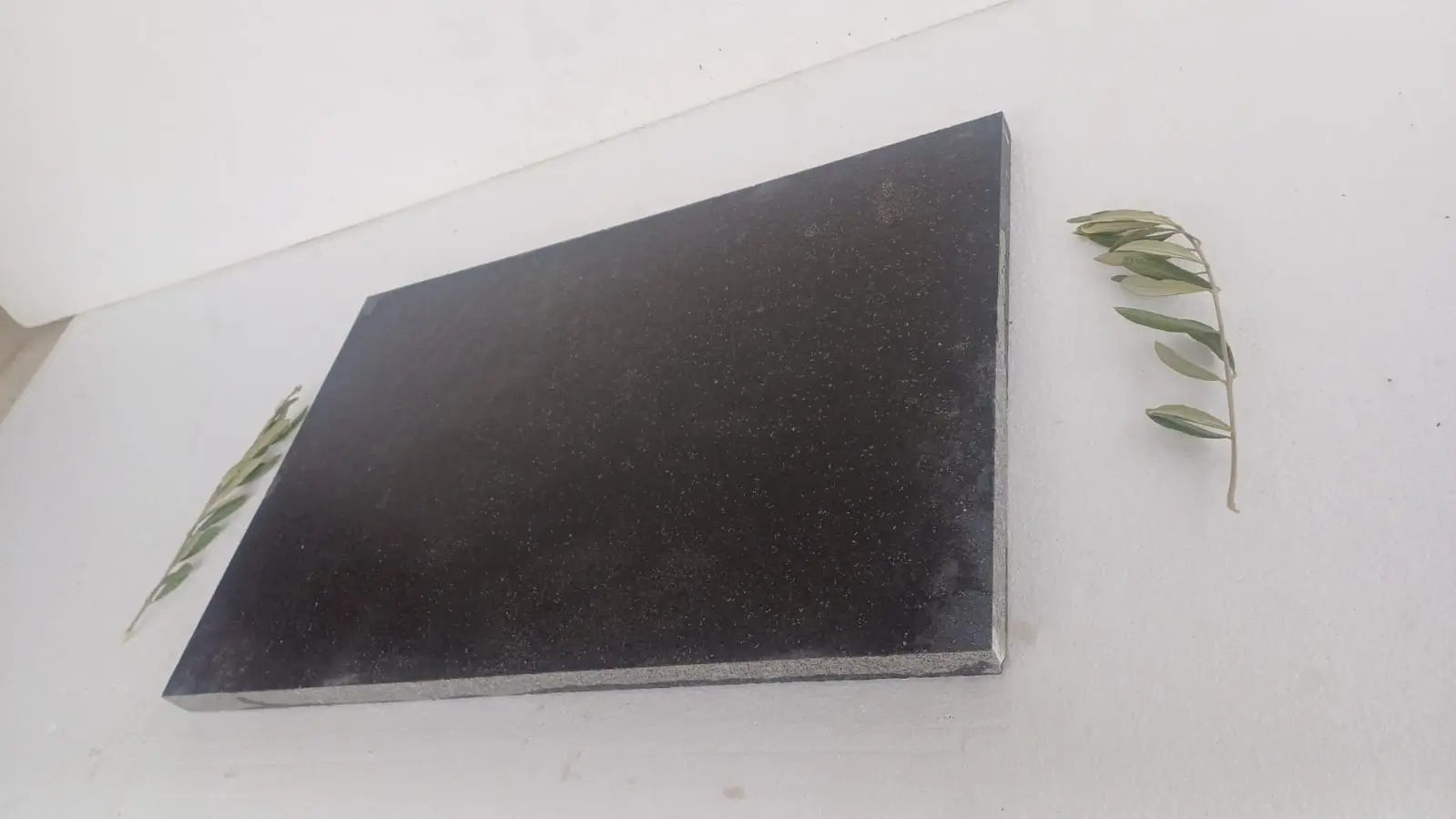
The term “authentic” gets overused in the stone trade, but it carries real technical meaning here. Genuine blue black limestone forms its characteristic coloration from fine-grained iron-sulfide minerals and organic carbon compounds locked into a dense calcite matrix during diagenesis. You can tell the difference between authentic material and dyed or chemically treated substitutes by checking the cross-section — a fresh saw cut on real stone shows consistent coloration through the full thickness, not a surface wash that fades to gray at 3mm depth.
The density range for authentic material typically runs between 165 and 172 pounds per cubic foot. That density is what gives natural blue black limestone its compressive strength figures above 12,000 PSI, its resistance to surface abrasion, and its ability to hold a sawn or honed finish without micro-fracturing under foot traffic loads. Lower-density imitations simply don’t perform the same way once the Arizona heat cycles start working on them.
- Cross-section color consistency — authentic material shows uniform tone through full slab thickness
- Density verification — request ASTM C97 absorption and density test certificates from your supplier
- Finish durability — a honed surface on real stone holds its sheen under UV exposure; treated substitutes oxidize and dull within 18 months
- Joint pattern behavior — genuine dense limestone distributes load evenly, preventing the differential settlement you see with softer or inconsistent material
Thermal Performance in the Fountain Hills Climate Zone
Fountain Hills sits at roughly 1,520 feet elevation, which gives it a slightly more forgiving thermal profile than the valley floor — but don’t let that lull you into under-specifying. Summer surface temperatures on dark-finish stone in direct exposure still reach 140 to 155°F during peak afternoon hours, and the combination of intense UV and daily thermal cycling is what separates materials that last from materials that don’t.
Natural blue black limestone in Arizona handles this heat cycle better than most people expect, primarily because of its low porosity. Quality material typically posts water absorption values below 0.5% per ASTM C97, which means thermal expansion is driven almost entirely by the mineral matrix rather than moisture-vapor pressure changes inside the stone. That predictability is what allows you to engineer reliable expansion joint intervals — typically 12 to 14 feet in outdoor applications at this elevation, tighter than the 15 to 20 foot spacing that works in cooler climates.
For projects in San Tan Valley, where the valley floor elevation drops and daily temperature extremes intensify, those joint intervals should compress further — plan for 10 to 12 feet maximum and use a polyurethane sealant rated for Class 50 movement in the joints themselves.
Authentic Appearance: Specification Detail That Holds Up
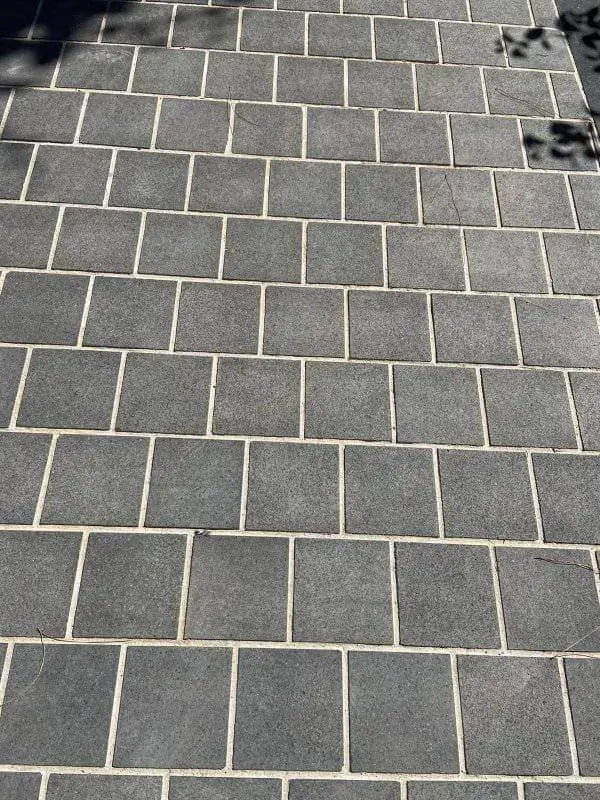
The authentic appearance quality of blue black limestone depends significantly on how you specify the finish and how consistently your supplier maintains it. A calibrated honed finish — ground to 600 grit — is the standard for most Fountain Hills residential and commercial applications. It gives you the characteristic blue-gray depth without the slip liability of a high-polish surface and without the dirt-trapping texture of a rough split face.
Surface tolerance is worth calling out explicitly in your specification. Allowable warpage on calibrated slabs should be held to 1.5mm over a 24-inch span — anything looser than that creates lippage that’s both a trip hazard and an aesthetic problem once grout lines are pointed. Your supplier should be able to provide batch-specific flatness certification; if they can’t, that’s a red flag about their quality control process.
- Specify finish at 600-grit honed minimum for outdoor pedestrian surfaces
- Require calibration tolerance of ±1mm in thickness across the full slab
- Call out maximum warpage of 1.5mm over 24 inches in your spec language
- Confirm that the authentic appearance color range is documented with representative samples held on file before ordering
- Verify that natural variation within a batch stays within a two-tone range — wider variation reads as inconsistency rather than natural character
Real Stone Paving Base Preparation for Arizona Conditions
Your base preparation strategy for natural blue black paving Arizona projects starts with the soil profile, not the stone. Fountain Hills genuine stone installations and the surrounding east Valley sit on a combination of granitic decomposed granite soils and localized caliche deposits. The decomposed granite drains well and compacts predictably, but any caliche layer you encounter — typically between 18 and 36 inches down — must be evaluated before you commit to your base thickness.
For a standard pedestrian patio or walkway application, a 4-inch compacted Class II aggregate base over native soil is the minimum. For vehicular-rated or heavier-use areas, step that up to 6 inches. The critical detail most installers miss is the compaction density target: you need 95% of Modified Proctor density per ASTM D1557, not the 90% that passes general contractor QA. That 5% difference translates directly to whether your stone surface develops waviness over the first two or three monsoon seasons.
Citadel Stone maintains warehouse stock of blue black limestone specifically calibrated for Arizona’s outdoor application requirements, which means the material you receive has been staged in a temperature-controlled environment and is dimensionally stable before it ever reaches your truck delivery window. That matters more than most buyers realize — Arizona real stone that ships directly from a humid coastal port and lands on a dry jobsite in July can exhibit surface micro-cracking from rapid moisture loss within the first 48 hours if not properly acclimated.
Thickness Selection and Load Rating
Natural blue black limestone in Arizona outdoor applications typically comes in two practical thickness ranges: 3/4-inch to 1-inch calibrated tile for set-in-mortar applications, and 1.25-inch to 2-inch slab format for sand-set or pedestal-mounted systems. The choice between them isn’t just about aesthetics — it’s about the bending moment capacity of the material under the point loads your application will generate.
A 12×24-inch slab at 1-inch thickness in blue black limestone has a calculated modulus of rupture in the range of 1,800 to 2,200 PSI per ASTM C99. That’s adequate for residential pedestrian use with proper bed support but undersized for anything involving wheeled equipment — bikes, golf carts, service vehicles. For those applications, you need 1.5-inch minimum thickness, full mortar bed (not spot-bonded), and a base profile that eliminates any void potential beneath the stone.
- Pedestrian residential: 3/4-inch to 1-inch calibrated, mortar-set on 4-inch aggregate base
- Commercial pedestrian: 1.25-inch minimum, continuous mortar bed at 1/2-inch to 3/4-inch thickness
- Light vehicular: 1.5-inch minimum, full mortar bed, 6-inch compacted aggregate base
- Pool deck perimeter: 1-inch calibrated acceptable where cantilevered coping eliminates direct vehicle risk
Sealing Protocols for Desert Exposure
The dense crystalline structure of authentic blue black limestone makes it less porous than most natural stones, but that doesn’t mean sealing is optional in Arizona’s outdoor environment. The issue isn’t water penetration — it’s the combination of UV degradation of surface minerals and the deposition of calcareous dust from the surrounding desert environment. Without a penetrating impregnator sealer, that dust bonds chemically with the stone surface over one to two seasons and creates a haze that’s very difficult to remove without aggressive cleaning that risks dulling the finish.
Specify a fluorochemical or silane-siloxane penetrating impregnator with a tested water repellency rating per ASTM C1201. Apply it to clean, dry stone — surface moisture above 4% by weight will prevent proper penetration. In the Fountain Hills microclimate, plan for a reapplication cycle of every 24 to 30 months for horizontal surfaces in direct sun exposure. Covered or shaded surfaces can typically extend to 36 to 48 months between treatments without meaningful degradation.
For projects in Yuma, where UV intensity is among the highest in the continental United States and dust deposition rates are substantially higher, shorten that reapplication interval to 18 to 24 months regardless of exposure orientation. The UV load alone accelerates sealer breakdown faster than temperature cycling does.
Pewter Blue Limestone and Regional Availability
Selecting between the blue black and pewter variants for Arizona limestone projects often comes down to understanding how each material reads in your specific light conditions. Fountain Hills’ eastern exposure and the quality of afternoon light in the Sonoran Desert environment tend to warm cool stone tones, which means the blue black reads with more neutral depth while pewter variants can appear almost silver-gray in direct midday sun. Your color approval process should include on-site mockups evaluated at three different times of day, not just the showroom review under artificial light.
For broader regional context on how these tones perform across Arizona hardscape specifications, pewter blue limestone slabs covers the comparative performance data in detail and is worth reviewing before finalizing your palette decision.
Lead times for both variants depend heavily on current warehouse inventory levels. At Citadel Stone, we track stock rotation carefully to ensure that the material arriving at your jobsite matches the approved sample batch — color drift between production runs is one of the most common complaints in large-format limestone projects, and it’s entirely preventable with proper batch management.
Installation Timing and Arizona Seasonal Variables
Arizona’s construction calendar creates real constraints for natural stone installation that specifiers from other climates don’t always anticipate. Mortar and thin-set adhesives have working time windows that compress dramatically when ambient air temperature exceeds 95°F — a condition that applies to roughly 90 days of the Fountain Hills year. Modified thinsets rated for high-temperature installation (look for ANSI A118.15 or higher designation) are non-negotiable for any mortar-set application between May and September.
The practical implication is that your installation window in peak summer shifts to early morning work — setting stone between 5:30 and 10:00 AM before the slab surface temperature climbs above the critical threshold. Your foreman needs to have a contact thermometer on site and should be measuring slab surface temp, not just air temp. An ambient air temperature of 90°F with full sun exposure on a dark aggregate base can produce a slab surface temperature of 130°F or higher, which will flash-cure your setting material before the stone makes proper contact.
Grouting and Joint Finishing for Blue Black Limestone
Joint color selection for natural blue black limestone authentic Fountain Hills applications is one of those details that separates experienced specifiers from first-timers. The instinct is to match the stone — a dark gray or charcoal grout — but in practice, a slightly lighter mid-gray joint reads better visually once the installation has weathered through one full dust season. The joint darkens slightly with desert dust accumulation, and if you start with a charcoal, you end up with a monolithic dark surface that loses the dimensional character of the stone pattern.
Specify a polymer-modified unsanded grout for joints under 1/8 inch, and sanded for joints from 1/8 to 1/2 inch. Epoxy grouts are increasingly popular for their stain resistance, but they require a more experienced installer — the working time in Arizona summer conditions is extremely short, and rework after set is essentially impossible without mechanical grinding. For most residential Fountain Hills projects, a high-quality Portland-based sanded grout with a fluorochemical additive performs reliably and is far more forgiving in the field.
Projects in Avondale and other west Valley communities have been specifying wider 3/8-inch joints on large-format blue black limestone to accommodate the more aggressive thermal cycling at lower elevation — a practical adaptation that translates well to any Arizona project where daily temperature swings consistently exceed 40°F.
Ordering, Logistics, and Project Planning
Your material quantity calculation for natural blue black paving Arizona projects should include a 10 to 12% overage above net square footage — not the 8% that’s commonly cited for uniform manufactured tile. Natural stone has a higher rate of cut waste at perimeter and feature conditions, and dye-lot matching for replacement material ordered after project completion is genuinely difficult with natural stone. Order your full quantity plus overage from a single production batch, and confirm with your supplier that the batch number is documented on the delivery paperwork.
Truck delivery logistics for large-format slabs in Fountain Hills require advance coordination — the community’s hillside street grades and turning radii limit what size vehicle can reach certain residential addresses. Confirm with your delivery provider that the truck is rated for the grade and that the driver has completed the route before scheduling. A standard flatbed works for most locations, but splits into multiple partial loads are sometimes necessary for addresses above the 1,800-foot elevation contour.
For Arizona real stone projects that extend beyond standard blue black limestone into custom-profiled or uniquely shaped elements, Blue Black Limestone Paving Slab Custom Cuts for Cave Creek Unique Shapes details the custom fabrication options available through Citadel Stone for non-standard project geometries across the region.
Before You Specify Natural Blue Black Limestone Authentic Fountain Hills Installations
The performance ceiling for natural blue black limestone authentic Fountain Hills installations is genuinely high — 25 to 30 year service life is achievable with correct base preparation, proper sealing maintenance, and joint spacing that accounts for real Arizona temperature ranges rather than generic guidelines. The projects that fall short of that ceiling almost always trace back to one of three decisions: undersized base depth, incorrect joint interval, or material sourced without density and absorption certification.
Your specification package should include ASTM C97 test results for density and absorption, a confirmed batch number for color consistency, finish and tolerance requirements in writing, and a sealing schedule with product specification for the first application and reapplication cycle. That documentation protects you, your client, and the installation’s long-term performance record. Confirm warehouse availability and truck delivery scheduling at least three weeks before your installation start date to avoid the supply gaps that routinely push Arizona projects past their monsoon season windows.
We offer affordable blue paving slabs in Arizona without compromising on the grade of the stone.