
Blue black limestone kitchens Glendale homeowners are specifying right now share one common installation variable that determines long-term performance — surface porosity management under sustained heat exposure. You’re not just selecting a color palette when you choose this material; you’re committing to a thermal mass equation that behaves differently at 115°F ambient than anything the standard quarry data sheets anticipate. The slip resistance profile, joint spacing tolerances, and sealing schedule all shift when you move from laboratory test conditions to a functioning Glendale outdoor cooking environment.
Why Blue Black Limestone Performs Differently in Arizona Kitchens
The dense crystalline structure of blue black limestone — typically in the 2.65 g/cm³ specific gravity range — gives it a compressive strength that consistently tests above 8,000 PSI, which makes it genuinely overbuilt for most residential outdoor kitchen countertop and paving applications. That overbuilding is actually what you want. In Arizona’s heat cycle, materials with lower compressive strength begin micro-fracturing at joint edges within three to five seasons. Blue black limestone doesn’t. The dark mineral content absorbs more radiant heat than beige or white-toned stones, so surface temperatures can run 15–25°F higher than adjacent concrete under peak afternoon sun — a detail worth factoring into your barefoot traffic zones.
The material also exhibits a naturally low absorption rate, typically between 0.2% and 0.8% depending on the quarry formation. That tight range matters enormously for outdoor kitchens where grease splatter, cooking oils, and marinade drips are routine. You’ll see some limestone categories rated at 3–4% absorption, and those materials require much more aggressive sealing protocols to achieve comparable stain resistance. With blue black limestone, the sealing burden is lower — but it still exists, and ignoring it is the single most common specification oversight in Arizona BBQ areas.
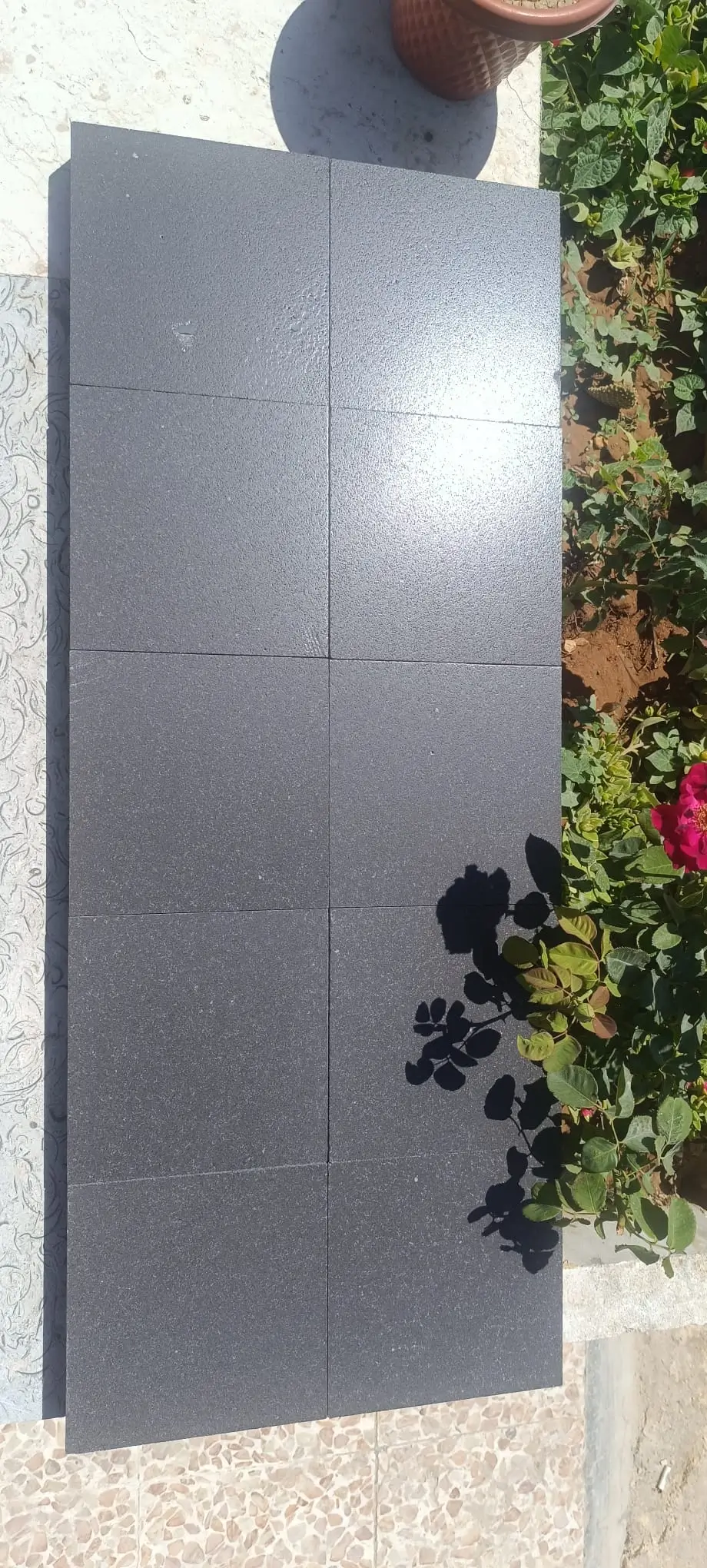
Selecting Thickness and Format for Outdoor Kitchen Slabs
Your format selection for a Glendale outdoor cooking space depends on how the material is being used — countertop, paving field, or both. For paving applications, 2-inch nominal thickness handles the point loads from outdoor kitchen equipment carts and appliance feet without deflection risk. Countertop applications typically spec at 1.25 to 1.5 inches with a reinforced substrate beneath. Going thinner than 1.25 inches on a countertop introduces flex stress at unsupported spans, especially when you factor in the thermal cycling between morning temps and peak cooking heat.
- Paving field slabs: 2-inch nominal minimum for areas with wheeled equipment or high foot traffic
- Countertop slabs: 1.25–1.5 inch thickness with continuous substrate support at 16-inch intervals
- Edge profiles: Eased or pencil-rounded edges hold up better than sharp arris edges in high-contact cooking zones
- Format sizes: 24×24 and 18×24 are the most workable for blue black paving slab kitchen Arizona installations, reducing cut waste on standard rectangular kitchen layouts
- Larger format slabs (24×48) reduce grout joint frequency but require a flatter substrate tolerance — within 3/16 inch over 10 feet
For Glendale projects specifically, the alkaline soil composition in many residential areas can affect mortar bond if you’re setting directly over a concrete slab with existing ground contact. Check your sub-slab drainage before committing to a large-format installation — trapped moisture cycling through an alkaline substrate attacks the setting bed faster than most installers account for in their warranty estimates.
Thermal Expansion and Joint Spacing in Arizona Heat
Here’s what most specifiers miss when they bring blue black limestone into a Glendale outdoor cooking environment — the thermal expansion coefficient for dense limestone runs approximately 4.4–5.8 × 10⁻⁶ per °F, which sounds negligible until you map it across a 20-foot kitchen run experiencing a 130°F temperature differential between a January morning and a July afternoon at peak cooking load. That differential generates roughly 0.14 inches of cumulative expansion across the run. Standard 3/16-inch joints don’t accommodate that without stress cracking at the most constrained corner intersections.
The professional spec calls for 1/4-inch joints minimum in paving fields, with 3/8-inch expansion joints at perimeter edges and at any fixed structure — outdoor kitchen cabinetry, pizza oven bases, built-in BBQ frames. You should also spec a compressible backer rod beneath any caulked expansion joint rather than relying on grout alone. Grout cracks. Backer rod plus elastomeric sealant moves with the material. That’s the difference between a 25-year installation and a 10-year repair cycle.
Sealing Protocols for Cooking Zone Durability
Blue black limestone in culinary spaces demands a sealing approach calibrated to two distinct threat categories: UV degradation of the surface finish and organic contamination from cooking activity. A penetrating impregnating sealer — not a topical coating — is the correct starting specification for both threats. Topical sealers trap heat beneath the film layer and begin degrading within one Arizona summer. Penetrating sealers bond with the crystalline matrix and allow the stone to breathe without holding surface moisture.
- Initial sealing: Apply two coats of penetrating impregnating sealer before first use, allowing full cure between coats (minimum 4 hours at Arizona ambient temps)
- Resealing cycle: Every 18–24 months for cooking zone surfaces; every 24–36 months for surrounding paving field areas with lower contamination exposure
- Grease contamination test: Apply a few drops of mineral oil to the surface — if absorption begins within 30 seconds, the sealer has degraded and resealing is overdue
- Heat zone caution: The area within 18 inches of a direct-flame grill grate should receive a sealer rated for sustained heat exposure above 250°F
- After resealing, avoid cooking use for 24 hours minimum to allow full penetrant cure
At Citadel Stone, we recommend confirming your sealer selection against the specific porosity rating of the blue black limestone batch you’re receiving — not all quarry runs produce identical absorption characteristics, and warehouse quality checks at our facility include lot-by-lot porosity verification so you’re not specifying a sealing protocol blind.
Base Preparation and Drainage for Glendale Outdoor Kitchens
The base system beneath blue black limestone paving slabs in Arizona outdoor kitchens does more performance work than the stone itself. Compacted decomposed granite as a base material is a common Arizona substitution for crushed aggregate — it’s locally abundant and cost-effective, but its fines content can migrate upward under vibration from foot traffic and appliance use, which eventually destabilizes your setting bed. Specify Class II road base compacted to 95% relative density instead. It’s not dramatically more expensive, and it eliminates the fines migration problem entirely.
Drainage geometry matters specifically for cooking zones. Your paving field should slope a minimum of 1/8 inch per foot away from any fixed structure — including the outdoor kitchen base itself — but cooking areas benefit from 3/16 inch per foot to handle the higher liquid load from washing surfaces and wet cooking activity. In Scottsdale, where outdoor kitchen projects often abut pool decks, coordinating the drainage plane between the two surfaces prevents the ponding that accelerates joint sand loss in Arizona BBQ areas.
For projects referencing blue black limestone paving slabs in Arizona from warehouse stock, lead times typically run 1–2 weeks when inventory is confirmed in advance — a significant advantage over the 6–8 week import cycle that custom quarry orders require. Confirming warehouse stock availability before finalizing your project schedule saves the most common delivery headache on outdoor kitchen builds.
Color Consistency and What to Expect from the Material
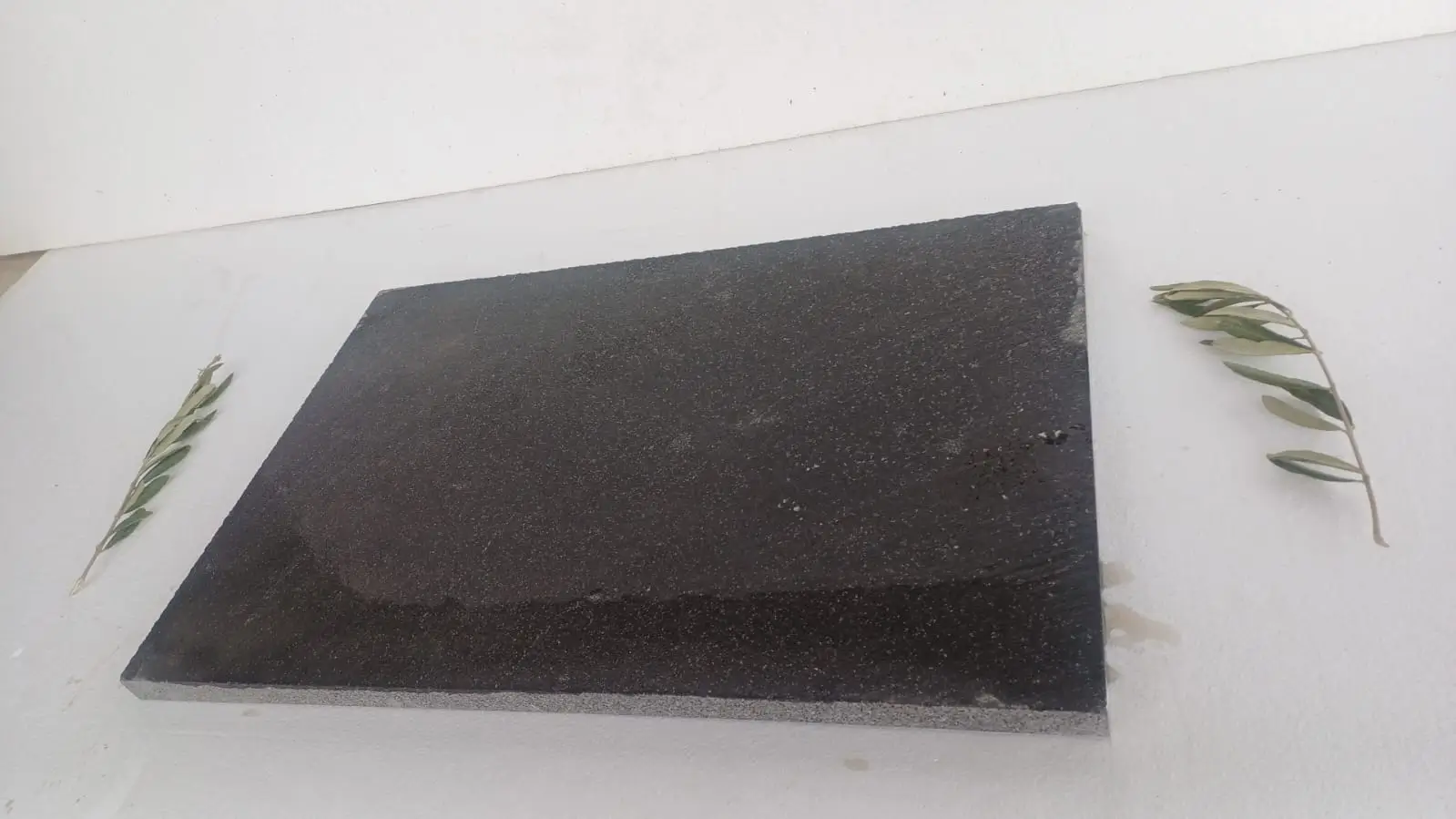
The “blue black” designation in this limestone category covers a meaningful tonal range — from deep charcoal with blue-grey undertones to near-black with silver mineral veining. Request full slab samples rather than tile chips when specifying for a kitchen context, because the tonal variation reads very differently at countertop scale versus a 4-inch chip. The azure-tinted limestone paving materials available through Citadel Stone exhibit particularly consistent tonal characteristics across production runs, which simplifies specification for large kitchen installations where visual coherence across 200+ square feet matters.
Natural variation in the material — fossil inclusions, mineral banding, subtle tonal shifts across individual slabs — is a feature that distinguishes blue black limestone from manufactured alternatives, not a quality defect. That said, if your project requires tight color uniformity across a large countertop run, request matched selection from a single quarry lot. Mixing quarry lots across the same countertop surface introduces the kind of color break that clients notice immediately and that no amount of sealing resolves.
Comparing Blue Black Limestone to Competing Materials for Arizona Culinary Spaces
Granite is the typical competitive reference for outdoor kitchen countertops, and it’s worth being direct about the trade-offs. Granite’s hardness (Mohs 6–7) exceeds limestone’s (Mohs 3–4), which means it resists mechanical abrasion from cutting boards and cooking utensils more effectively. But granite’s higher thermal expansion coefficient — roughly 7.9 × 10⁻⁶ per °F — makes it more susceptible to thermal shock cracking near direct heat sources. Blue black limestone handles the heat transition better in cooking zones, which is the critical performance variable in a Glendale outdoor cooking context, not surface hardness.
- Vs. granite: Limestone is less hard but manages thermal cycling better near heat sources; granite edges hold sharper profiles longer under mechanical use
- Vs. travertine: Travertine’s voids require filling for cooking zones; blue black limestone’s dense matrix is more hygienic for food preparation surfaces without additional treatment
- Vs. porcelain: Porcelain carries zero porosity but limited repairability — a chip or crack is permanent; limestone can be honed and refinished in the field
- Vs. concrete: Concrete offers design flexibility but carries higher maintenance burden and is prone to oil staining without aggressive sealing schedules
For blue black paving slab kitchen Arizona projects where both a countertop and a surrounding paving field are being specified, using the same material across both surfaces creates visual continuity that competing material combinations rarely achieve. The field-to-counter transition becomes seamless — an aesthetic outcome that photographs well and holds its appeal across design cycles.
Installation Sequencing for Outdoor Kitchen Projects
The sequencing of a blue black limestone kitchen installation determines whether the material performs as specified or develops the joint cracking and surface staining that shows up in year two. Complete all built-in appliance and cabinetry rough-in before any stone work begins — modifying structural elements after the limestone is set creates impact stress that telegraphs into micro-cracks at the most vulnerable joint intersections. Sequence the stone work after framing, rough plumbing, and gas line rough-in are all inspected and complete.
In Phoenix and surrounding communities, summer installations require adjusted adhesive and grout cure protocols. Standard setting mortars specify 72-hour cure before traffic loading at 70°F — at 105°F ambient, the surface cures faster but subsurface moisture escapes too rapidly, creating bond layer weakness. You’ll need either a modified mortar formulated for high-ambient-temperature installation or a staging schedule that uses shade structures and cooling protocols to manage the cure environment. This isn’t optional in Arizona summer conditions; it’s the difference between a properly bonded installation and one that debonds within three seasons.
- Pre-installation sequence: structural rough-in complete, substrate inspected, drainage plane verified
- Adhesive selection: modified thin-set rated for exterior high-heat applications (ANSI A118.4 minimum)
- Cure management: shade installation areas during cure period in summer months; avoid direct water application during first 24 hours
- Grouting: delay grout application minimum 24 hours after adhesive set in summer conditions; 48 hours is preferable for large-format slab installations
- First sealing: apply only after grout has fully cured — premature sealing traps efflorescence beneath the sealer film
Getting Blue Black Limestone Kitchen Specifications Right
Blue black limestone kitchens Glendale projects are getting right when they treat the specification as a system — not just a material choice. The stone selection, base preparation, joint spacing, sealing protocol, and installation sequencing all interact with each other and with Arizona’s specific thermal conditions. Shortcut any one of those variables and you’ll see the consequences within a few seasons. Get all of them right and you’re looking at a 25-year outdoor kitchen surface that improves in character as the material weathers naturally.
As you plan the full scope of your Arizona stone project, related hardscape applications can inform your material decisions — Filled vs Unfilled Travertine Pool Pavers: Arizona covers how Citadel Stone materials perform in a different but contextually relevant outdoor application that many Glendale properties combine with their outdoor kitchen designs. Citadel Stone brings you natural limestone blue black in Arizona that is rich in fossils and character.