
Compressive strength tells you half the story when evaluating bluestone cobbles Arizona outdoor comparison projects — the other half lives in how each material behaves across Arizona’s dramatic temperature swings, UV intensity, and the wildly different soil conditions you’ll encounter from one zip code to the next. Bluestone’s dense, non-foliated structure gives it a baseline absorption rate below 0.4%, which matters enormously in a climate where standing water and solar cycling can destroy a softer stone within five seasons. That number alone doesn’t tell you whether bluestone is the right call for your specific project when granite cobbles, basalt, travertine, and quartzite are all legitimate competitors in this market.
Understanding Arizona Outdoor Stone Demands
Arizona’s climate doesn’t punish stone the way freeze-thaw cycles do in northern states, but it creates its own set of failure conditions that catch specifiers off guard. Surface temperatures on exposed paving regularly reach 160–175°F in low desert zones during July and August, and the thermal differential between shaded and sun-exposed faces of the same cobble can exceed 40°F within a single afternoon. You need a material with a low coefficient of thermal expansion — for bluestone, that’s approximately 3.2 × 10⁻⁶ per °F — and tight joint design to accommodate the movement that does occur.
UV degradation is a separate concern from heat. Some stone species that perform beautifully in heat will fade, chalk, or develop surface microfractures under sustained UV bombardment. Bluestone holds its color integrity reliably under UV exposure because its silica-rich composition doesn’t react to photodegradation the way calcium-based stones can. That said, your sealing schedule in Arizona deserves more attention than most installation guides suggest — plan for resealing every 18 to 24 months rather than the 36-month standard you’d see in milder climates.
- Surface temps on exposed Arizona cobble paving regularly exceed 160°F in mid-summer
- Thermal differentials between shaded and exposed faces can hit 40°F in a single afternoon
- UV intensity in southern Arizona ranks among the highest in the continental United States
- Soil expansion from caliche and expansive clay zones creates uplift risk at shallow installations
- Low-desert humidity cycles stress sealers faster than the manufacturer’s rated intervals suggest
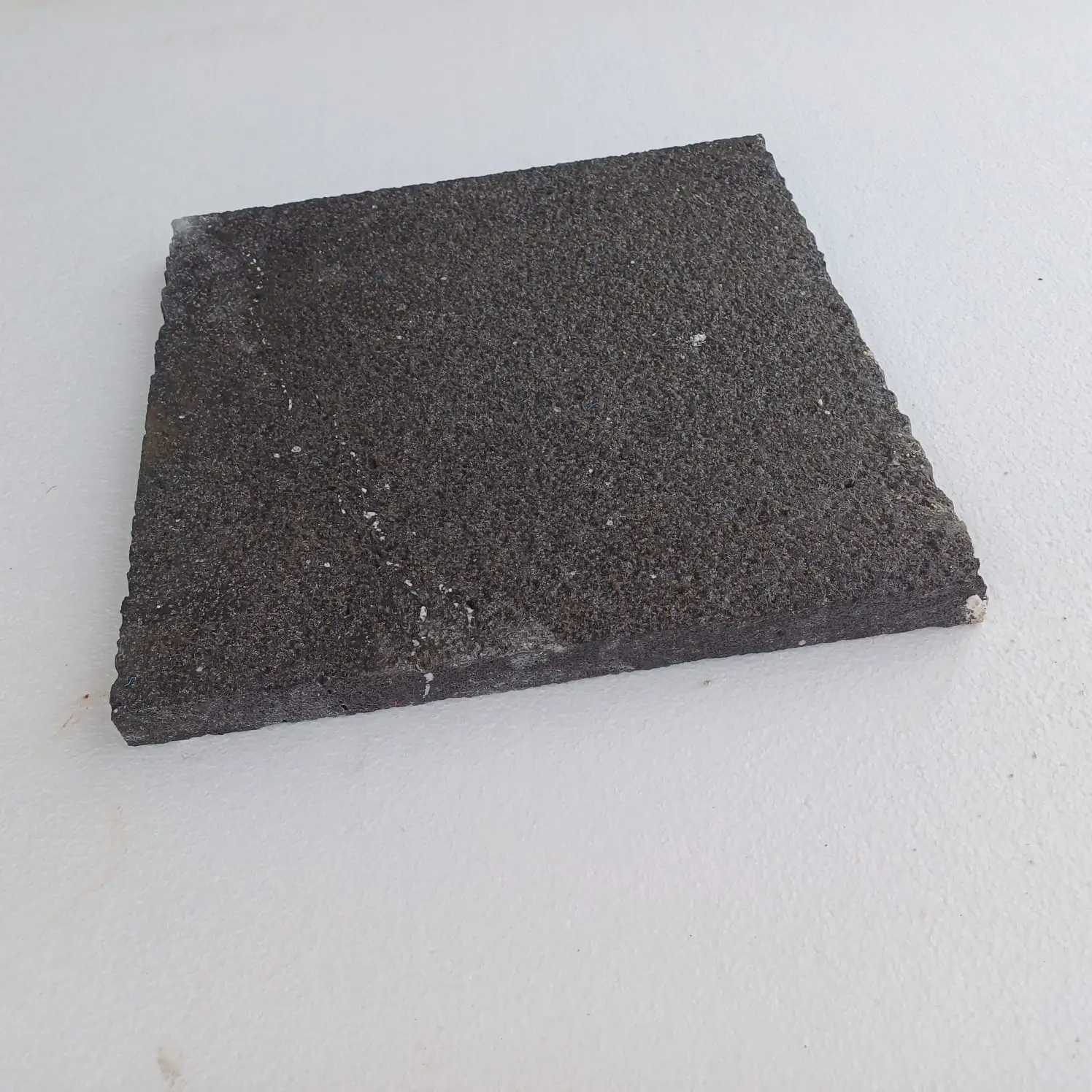
Bluestone Cobbles: Performance Profile for Arizona Projects
Bluestone cobbles in Arizona carry a well-earned reputation for dimensional stability that other natural stone cobble options in Arizona often can’t match at the same price point. The material’s dense, fine-grained matrix — typically a sandstone or basaltic sandstone depending on the quarry origin — delivers compressive strength in the 12,000–18,000 PSI range, which exceeds what most residential and light commercial applications will ever stress. You’re not buying strength headroom you’ll never use; you’re buying the density that keeps absorption low and surface integrity high through years of UV and thermal cycling.
One thing that often gets missed during specification is cleft finish versus sawn finish behavior under Arizona conditions. Cleft-face bluestone develops minor surface oxidation that actually improves slip resistance over time as the surface micro-texture stabilizes. Sawn faces look cleaner on day one but require more aggressive slip-resistance treatment, especially around pool surrounds and shaded areas where moisture lingers longer than expected. Your finish selection isn’t cosmetic — it directly impacts long-term maintenance load and safety compliance.
For natural stone cobble options in Arizona, bluestone’s dimensional consistency from batch to batch is genuinely superior to many alternatives sourced from smaller quarries. At Citadel Stone, we perform warehouse thickness-tolerance checks on every pallet received — cobbles outside a ±1/8-inch tolerance from nominal specification get flagged before they reach your project site, because inconsistent thickness in cobble installations translates directly to lippage and trip hazards that no amount of base work can fully correct after the fact.
Granite Cobbles: The Durability Benchmark
Granite is the material specifiers reach for when they need zero compromises on hardness — and in an Arizona outdoor comparison context, it earns that reputation honestly. Granite cobbles typically exceed 20,000 PSI compressive strength and carry an absorption rate under 0.2%, making them the most impervious natural stone option you’ll commonly find on the market. The trade-off you’re accepting is thermal conductivity: granite absorbs and retains heat aggressively, making barefoot comfort on summer afternoons essentially nonexistent in full-sun installations.
Surface temperature differentials between granite and bluestone cobbles in comparable Arizona exposures typically run 8–12°F higher for granite under peak solar loading. That matters for pool decks, courtyard areas, and any space where occupant comfort drives the design. Granite’s hardness also makes it significantly more difficult to cut on-site if field adjustments are needed — you’ll want your layout finalized before your truck delivery arrives, because field cuts require diamond blade equipment and add meaningful labor cost.
- Granite compressive strength: 20,000–25,000 PSI (highest of common cobble options)
- Absorption rate below 0.2% — essentially waterproof at the surface level
- Surface heat retention runs 8–12°F higher than bluestone under equivalent Arizona sun exposure
- Harder to field-cut — requires diamond blade equipment and adds labor cost
- Color consistency varies more than bluestone across batches from the same quarry
- Excellent freeze-thaw performance at Flagstaff‘s higher elevation, where winter freezing cycles are a real design factor
Basalt Cobbles: Dense, Dark, and Climate-Specific
Basalt cobbles occupy an interesting position in the Arizona outdoor stone material comparison guide — they offer near-granite density and an absorption rate that competes directly with the best-performing natural stones, but the dark coloration creates a heat absorption profile that demands careful placement decisions. In a Sedona project where the deep charcoal tones of basalt complement the red rock landscape, the aesthetic payoff can absolutely justify the thermal trade-off. In a Scottsdale pool surround where barefoot comfort is a priority, basalt’s heat retention becomes a liability that’s difficult to work around without shade structures.
Basalt’s crystalline structure gives it outstanding slip resistance even in a polished or honed finish, which distinguishes it from some of the lighter-colored stones that need additional surface treatment to meet safety standards. The material’s compressive strength typically falls in the 15,000–22,000 PSI range, and its interlocking crystal matrix resists surface spalling better than sedimentary options under heavy point loads. Basalt cobbles hold up well under vehicle traffic applications that would eventually surface-degrade softer stones.
Travertine and Limestone Cobbles: The Comfort Leaders
The barefoot temperature advantage of travertine is real and measurable — surface readings on travertine cobbles run 20–30°F cooler than granite or basalt under identical Arizona noon-sun exposure, owing to travertine’s high albedo and lower thermal conductivity. That single performance characteristic drives a significant portion of pool deck and outdoor living specifications toward travertine when client comfort is the primary driver. The compromise you’re accepting is porosity: travertine’s characteristic voids and interconnected pore structure mean absorption rates of 3–6%, which is an order of magnitude higher than bluestone.
Among desert-rated stone cobbles across Arizona, travertine’s porosity translates to a more demanding sealing requirement and a vulnerability to surface staining from organic matter, iron-rich soil contact, and pool chemistry. You’ll need to commit to annual sealing rather than biennial cycles, and your installation drainage design needs to keep standing water off travertine surfaces within 30 minutes of any precipitation event. Done right, travertine delivers 15–20 year performance in Arizona with proper maintenance. Done casually, you’re looking at surface pitting and staining within three to five seasons.
- Surface temperature advantage over granite: 20–30°F cooler under peak Arizona sun
- Absorption rate of 3–6% demands annual sealing versus bluestone’s 18–24 month schedule
- Vulnerable to iron staining from contact with Arizona’s iron-rich soil profiles
- Pool chemistry compatibility requires pH-neutral cleaning products — acidic cleaners etch the surface
- Limestone cobbles share similar thermal comfort benefits with slightly higher density than standard travertine
- Honed and filled travertine finishes reduce maintenance burden but sacrifice some natural texture character
Quartzite Cobbles: The Underspecified Performer
Quartzite doesn’t get the attention it deserves in Arizona outdoor stone specification, and that’s partly a supply-chain story and partly a familiarity issue. The material’s metamorphic origin gives it a crystalline silica content that produces hardness ratings comparable to granite — typically 7 on the Mohs scale — combined with an absorption rate in the 0.5–1.5% range that positions it between bluestone and travertine in porosity performance. For a bluestone versus other paving stones AZ comparison, quartzite often lands as a strong alternative when clients want a warmer color palette than bluestone’s characteristic blue-gray tones.
The challenge with quartzite in Arizona projects is batch consistency. The material’s geological variability means color, surface texture, and even density can shift meaningfully between quarry pulls. You need to physically inspect warehouse samples from the specific batch allocated to your project rather than relying on catalog imagery. Our technical team at Citadel Stone recommends ordering full-size sample panels for any quartzite cobble project exceeding 500 square feet — the investment in sample review pays back in avoided field surprises during installation. For a thorough bluestone versus other paving stones AZ evaluation, quartzite deserves a spot on your shortlist whenever the project’s color palette calls for warmer earth tones.
Base Preparation Across Arizona Cobble Installations
The Arizona outdoor stone material comparison guide you apply doesn’t matter much if your base system fails — and base failure is the primary cause of premature cobble installation deterioration across all material types in this climate. Arizona’s expansive clay soils, found extensively across the Phoenix metro and parts of the Tucson basin, generate uplift forces that can displace a poorly bedded cobble installation within two to three monsoon seasons. Your compacted aggregate base needs a minimum of 6 inches for pedestrian applications and 8–10 inches for vehicular traffic, but the critical variable is the in-place compaction density: you’re targeting 95% Modified Proctor, not the 90% that basic earthwork specs allow.
Projects in Yuma encounter some of the most challenging base conditions in the state — the combination of extreme heat, low organic content sandy soils, and significant wind erosion means your aggregate base needs an edge restraint system that prevents lateral migration over time. Bluestone cobbles in Arizona installations benefit specifically from tight joint configurations that distribute load across multiple units rather than concentrating stress at any single stone. A 3/8-inch joint filled with polymeric sand significantly outperforms dry-swept fine sand in Yuma’s wind conditions, where unbound joint fill can migrate out of place within a single dust season.
For sourcing your installation, Arizona bluestone cobbles from Citadel Stone arrive with pre-verified thickness tolerances and regional warehouse stock that reduces the lead time pressure pushing some contractors toward inferior substitutes when a truck delivery window closes unexpectedly.
Material Selection Decision Framework for Arizona Outdoor Projects
Matching material to application in an Arizona context requires you to rank your performance priorities honestly before reviewing samples. Aesthetic preference should come third or fourth on that list, behind thermal comfort requirements, long-term maintenance commitment, and structural loading profile. A material that photographs beautifully in a showroom but demands quarterly maintenance in Arizona’s UV environment will create client dissatisfaction that reflects on the specification decision regardless of how it was presented at project inception.
The bluestone cobbles Arizona outdoor comparison framework that works in practice looks at five criteria in sequence: absorption rate relative to site drainage quality, thermal surface temperature relative to occupant barefoot exposure, compressive strength relative to vehicle or point load requirements, sealing schedule relative to owner maintenance commitment, and color stability relative to UV exposure duration. Rank these for your specific project and the material choice often becomes clear without needing to evaluate every option simultaneously. Reviewing natural stone cobble options in Arizona through this lens consistently narrows the field quickly.
- Absorption rate below 1%: bluestone, granite, basalt — all suitable for minimal-drainage sites
- Barefoot comfort priority: travertine and limestone lead; bluestone mid-range; granite and basalt least comfortable
- Vehicle traffic suitability: granite, basalt, and bluestone all qualify; travertine requires upgraded thickness (minimum 2.5 inches)
- Low-maintenance owner profile: granite and bluestone require least intervention over a 10-year period
- Color palette flexibility: quartzite and travertine offer warmest tones; bluestone delivers consistent cool gray-blue range
- Budget efficiency at scale: bluestone typically delivers the best cost-per-square-foot durability ratio for mixed-use outdoor spaces
Expert Summary
The Arizona outdoor stone market offers genuinely strong options across the full material spectrum — but each one asks something specific from you in return. Granite asks for heat management planning. Travertine asks for maintenance commitment. Basalt asks for considered placement relative to occupant comfort. Quartzite asks for hands-on sample verification. Bluestone, when properly specified and installed on a compliant base system, asks the least of you over a 20-year performance horizon, which is why it consistently lands as the default recommendation for mixed-use Arizona outdoor projects where the client wants durable beauty without a demanding upkeep schedule.
Your specification decision should flow from site conditions first, then performance requirements, then aesthetics — and for most Arizona outdoor projects, that sequence leads you back to bluestone as the balanced solution. As you finalize your material selection, it’s also worth considering how cobblestone integrates with your broader hardscape system. Bluestone vs Concrete Driveway Pavers: Which Is Better for Arizona? examines a closely related decision point that often comes up in the same project scope, and the performance comparison there reinforces many of the durability principles covered in this bluestone cobbles Arizona outdoor comparison. Homeowners in Mesa, Chandler, and Flagstaff rely on Citadel Stone for bluestone cobbles known for their dense composition and suitability for Arizona’s high-UV outdoor environments.