

Compressive strength tells only part of the story when weighing basalt floor tile versus granite Arizona installations — the real differentiator is how each material behaves across the full thermal cycle of a desert day. Basalt regularly tests above 25,000 PSI in compression, but granite in comparable grades isn’t far behind. The separation shows up in coefficient of thermal expansion, where basalt’s tighter crystalline structure expands roughly 30% less per degree than many granite varieties, a meaningful advantage when your floor sees 115°F ambient heat and then air-conditioned interiors within steps. Understanding that distinction is where a well-specified Arizona floor project actually begins.
Material Science Behind the Comparison
Basalt is an extrusive igneous rock formed when lava cools rapidly at or near the earth’s surface. That fast cooling creates a fine-grained, dense matrix with very low open porosity — typically 0.5% to 2% absorption rate by weight depending on grade and quarry source. Granite forms more slowly at depth under enormous pressure, producing larger interlocking crystals and a slightly more porous structure, often in the 0.2% to 1.5% absorption range for quality architectural grades. Both are genuinely low-porosity stones by any measure, but the difference in pore geometry matters in Arizona’s thermal cycling environment.
Basalt’s interconnected pore structure is finer and more uniform, which means moisture intrusion events — whether from monsoon humidity or cleaning — distribute and evacuate more evenly. Granite’s crystal boundaries can create micro-stress points when thermal gradients hit rapidly, particularly in lighter-colored granites with higher quartz content. Quartz expands at a different rate than feldspar within the same stone, and in extreme heat exposure, that internal differential contributes to the micro-fracturing you’ll sometimes see at polished granite surfaces over 10 to 15 years of desert service. Basalt floor durability against other stone types is rooted in this more uniform crystalline matrix, which resists stress fracture under repeated thermal cycling far better than coarser-grained alternatives.
Thermal Performance in Arizona’s Climate
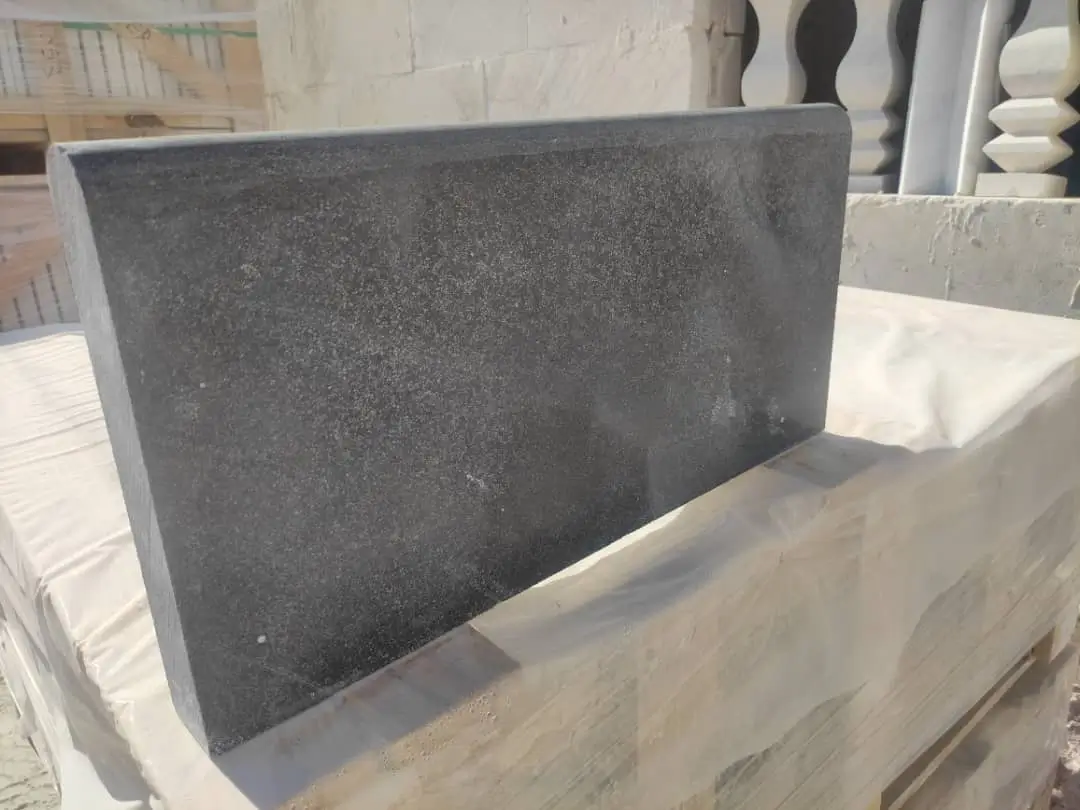
Surface temperature is the metric that matters most for any Arizona floor tile specification — and it’s where basalt’s dark volcanic density creates a real trade-off you need to understand before committing. Basalt absorbs heat efficiently, which means it reaches thermal equilibrium faster than lighter-toned granite. In shaded interior applications in Mesa, that thermal mass can actually moderate floor temperature, keeping surfaces cooler than the air by several degrees during peak afternoon heat because the mass dampens rapid temperature spikes.
The same thermal mass that works in your favor indoors becomes a consideration for south-facing covered patios or entryways with direct western exposure. Basalt in direct afternoon sun can reach surface temperatures 10 to 15°F higher than similarly exposed mid-tone granite simply because of color absorptivity. Your specification should account for where shading occurs seasonally — what’s shaded in June may receive full exposure in December as sun angles shift. This isn’t a reason to eliminate basalt from outdoor applications; it’s a reason to specify lighter-finish basalt or position it where shade is consistent.
- Basalt’s thermal expansion coefficient typically runs 3.4 to 4.7 × 10⁻⁶ per °F, depending on iron content and density grade
- Granite thermal expansion ranges from 4.0 to 5.3 × 10⁻⁶ per °F, with higher values in quartz-rich varieties
- Both materials require expansion joints every 12 to 15 feet in Arizona installations — tighter than temperate-climate guidelines
- Interior applications with HVAC cycling from 72°F to outdoor temperatures above 110°F create rapid delta-T stress at thresholds and transitions
- Basalt retains less residual heat after sunset than granite in the same thickness, which can be relevant for evening outdoor use
Durability: Scratch and Stain Resistance Compared
Granite has long held a reputation as the benchmark for kitchen floor durability, and on the Mohs hardness scale, most commercial granites rate between 6 and 7. Basalt floor durability against other stone types positions it slightly lower in most field tests, typically 5.5 to 6.5 Mohs, though high-density basalts from specific quarry formations can match or exceed average granite hardness. The practical implication for your Arizona kitchen is narrower than the raw numbers suggest — both materials handle standard residential traffic, appliance movement, and dropped cookware well. Neither will scratch under normal use conditions.
Stain resistance is where basalt quietly wins for most kitchen applications. Its lower open porosity means fewer pathways for oils, acids, and liquids to penetrate before you can wipe them up. Granite with visible crystalline grain boundaries — particularly those with larger feldspar crystals — can trap fine particulates in micro-fissures even when sealed. That doesn’t mean granite stains easily; it means basalt is slightly more forgiving if your sealing schedule slips a year. For households with high cooking activity or young children, that margin matters.
Aesthetic Comparison for Arizona Interiors
Here’s an honest assessment of why Arizona kitchens choose basalt tile over marble and granite in contemporary builds: basalt’s uniform dark tone and fine grain work naturally with the desert modern and Southwestern minimalist aesthetics that dominate new construction in the East Valley. Granite, by contrast, offers dramatic veining and color variation that photograph beautifully but require more deliberate design integration. Neither approach is inherently superior — it comes down to what your overall palette demands. The question of why Arizona kitchens choose basalt tile over marble comes down as much to maintenance simplicity as it does to visual cohesion with regional design trends.
Basalt finishes give you genuine versatility that many specifiers underestimate. Honed basalt produces a matte surface with a tactile quality that pairs well with warm wood tones and matte-finish cabinetry. Brushed or leathered basalt introduces subtle texture that reads as intentionally artisanal rather than industrial. Polished basalt is less common in residential floors because it shows water marks and foot traffic in dusty desert environments, though it works well in low-traffic formal spaces. Granite’s finish options are similar but tend to read as more traditionally formal, which creates tension in casual contemporary interiors.
- Basalt’s color palette concentrates in charcoals, blue-blacks, and warm dark grays — limited range but highly consistent within a batch
- Granite offers a far wider color spectrum, from near-white to deep black, with significant variation slab to slab
- Basalt batch consistency makes large-format floor installations more predictable — matching tile runs in the 90th percentile for color uniformity
- Granite’s natural variation can be a design asset in statement applications but creates challenges when matching supplemental pieces later
- Both materials accept rectified cutting for tight joint installations, though basalt’s uniform density makes precision cutting more predictable
Cost and Value Comparison for Arizona Homes
The cost and aesthetic comparison of basalt floors in Arizona homes versus granite puts basalt in a competitive range that surprises most homeowners accustomed to pricing granite as the baseline. Imported granite from premium Brazilian or Indian quarries can run $12 to $22 per square foot at material cost before installation, while quality basalt sourced from established volcanic formations typically prices between $8 and $16 per square foot depending on format and finish. Domestic and regionally sourced basalt can come in at the lower end of that range, particularly when warehouse inventory allows direct fulfillment without extended lead times.
Installation costs for both materials are comparable because they share similar substrate requirements, adhesive specifications, and cutting difficulty. Where the cost picture diverges is in long-term maintenance. Granite’s wider pore distribution — even in sealed applications — tends to require more frequent resealing in Arizona’s dry-heat conditions, typically annually versus basalt’s 18-to-24-month cycle. Over a 20-year floor life, that schedule difference translates to real cost savings in both product and labor. For a 500-square-foot kitchen floor, you’re looking at several hundred dollars in cumulative sealing cost differential over the installation life. When evaluating the full cost and aesthetic comparison of basalt floors in Arizona homes, that maintenance gap is a figure worth building into your budget projections from the start.
Slip Resistance and Safety Specifications
For Arizona floor applications, DCOF (Dynamic Coefficient of Friction) ratings under ANSI A326.3 are the standard you should be specifying to — not the older SCOF measurements that still appear in some supplier literature. Wet DCOF above 0.42 is the ANSI A326.3 minimum for level interior floors; for ramp applications or areas with direct water exposure, confirm the wet DCOF test report for the finish you specify. Honed basalt should be confirmed against a wet DCOF test report rather than the 0.55 to 0.70 range, which performs well without additional anti-slip treatment in most residential contexts. Polished basalt drops to 0.40 to 0.50 wet, which puts it at or just below the threshold for wet-area use.
Polished granite performs similarly in wet DCOF, and both materials benefit from textured or brushed finishes in any area that sees water. Projects in Gilbert, where new construction often incorporates open-plan layouts with kitchen and dining floors continuing into covered outdoor areas, need particular attention to DCOF transitions at the threshold. A polished interior zone meeting an outdoor honed zone creates a surface inconsistency that affects both safety and visual coherence — specifying consistent finish profiles across transition zones is worth the conversation with your design team early.
Installation Considerations for Arizona Projects
Installation success with basalt floor tile in Arizona depends heavily on substrate preparation and adhesive selection — and those two factors interact in ways that punish shortcuts. Arizona’s expansive clay soils, common in many East Valley submarkets, create substrate movement that standard thinset adhesive can’t accommodate. You’ll want a medium-bed or large-format tile mortar rated for high-bond adhesion with some flexibility — specifically ANSI A118.4 or A118.15 specification mortars. Rigid thinset in a large-format basalt application over a slab with clay sub-base movement is how you end up with cracked tiles at 36 months.
For projects in Chandler, where new residential construction sits on heavily engineered slabs designed to manage expansive soil movement, you can work with slightly less flexible adhesives — but you should still verify the slab’s deflection rating and confirm it meets L/360 minimum before specifying large-format tiles over 24 inches. Basalt’s density — typically 180 to 190 pounds per cubic foot — makes it heavier than comparable granite formats, which adds load to the substrate system. That’s not a problem in properly engineered slabs, but it’s a specification note worth flagging when reviewing the structural drawings.
- Use back-buttering on all basalt tiles 18 inches or larger to achieve full mortar coverage — minimum 85% contact for wet areas, 80% for dry interior floors
- Allow basalt to acclimate to installation-space temperature for 24 hours before setting — thermal shock from cold warehouse storage to a sun-heated slab can affect bond quality
- Grout joint sizing: 1/16 to 1/8 inch for rectified basalt; wider joints require unsanded or modified grout matched to basalt’s alkalinity sensitivity
- Expansion joints at perimeter walls, columns, and changes in plane — do not rely solely on grout joints to absorb thermal movement
- Avoid installation during monsoon season if substrate moisture hasn’t been tested — basalt’s density traps moisture at the adhesive interface, which can cause bond failure
At Citadel Stone, we inspect basalt inventory at the warehouse level for face cracks and edge quality before shipment — a step that matters specifically for basalt because its dense matrix can obscure hairline fractures that only appear during cutting or after installation stress. Confirming that your truck delivery includes field-inspected material saves you the frustration of discovering damage post-installation when replacement matching becomes a logistics challenge.
For a deeper look at how these two materials stack up across specific performance metrics, our Arizona basalt versus granite comparison provides additional technical context that complements what you’re reading here.
Sealing and Maintenance Differences
Sealing basalt floor tile in Arizona homes follows a different protocol than granite, and conflating the two is a common field error. Basalt’s fine pore structure means penetrating sealers absorb more slowly and require longer dwell time to achieve full penetration — typically 15 to 20 minutes versus 10 to 12 for most granites. Rushing the dwell time leaves a surface film that hazes in weeks and requires stripping to correct. Apply sealer at ambient temperatures between 60°F and 90°F; Arizona’s extreme summer heat causes rapid evaporation that defeats proper penetration, so early morning application is strongly preferred.
Granite’s slightly more open crystal boundaries mean it accepts sealer faster but also loses that sealer protection faster in Arizona’s low-humidity environment, which accelerates sealer degradation. The practical maintenance schedule difference: plan basalt resealing every 18 to 24 months for interior floors, annually for outdoor exposed applications. Granite interior floors typically need annual resealing in Arizona’s climate. Both materials should be tested with a water droplet test — if water absorbs within 4 to 5 minutes rather than beading, your sealer has degraded and resealing is due regardless of schedule.
How Basalt Interior Flooring Compares to Other Natural Stone Options
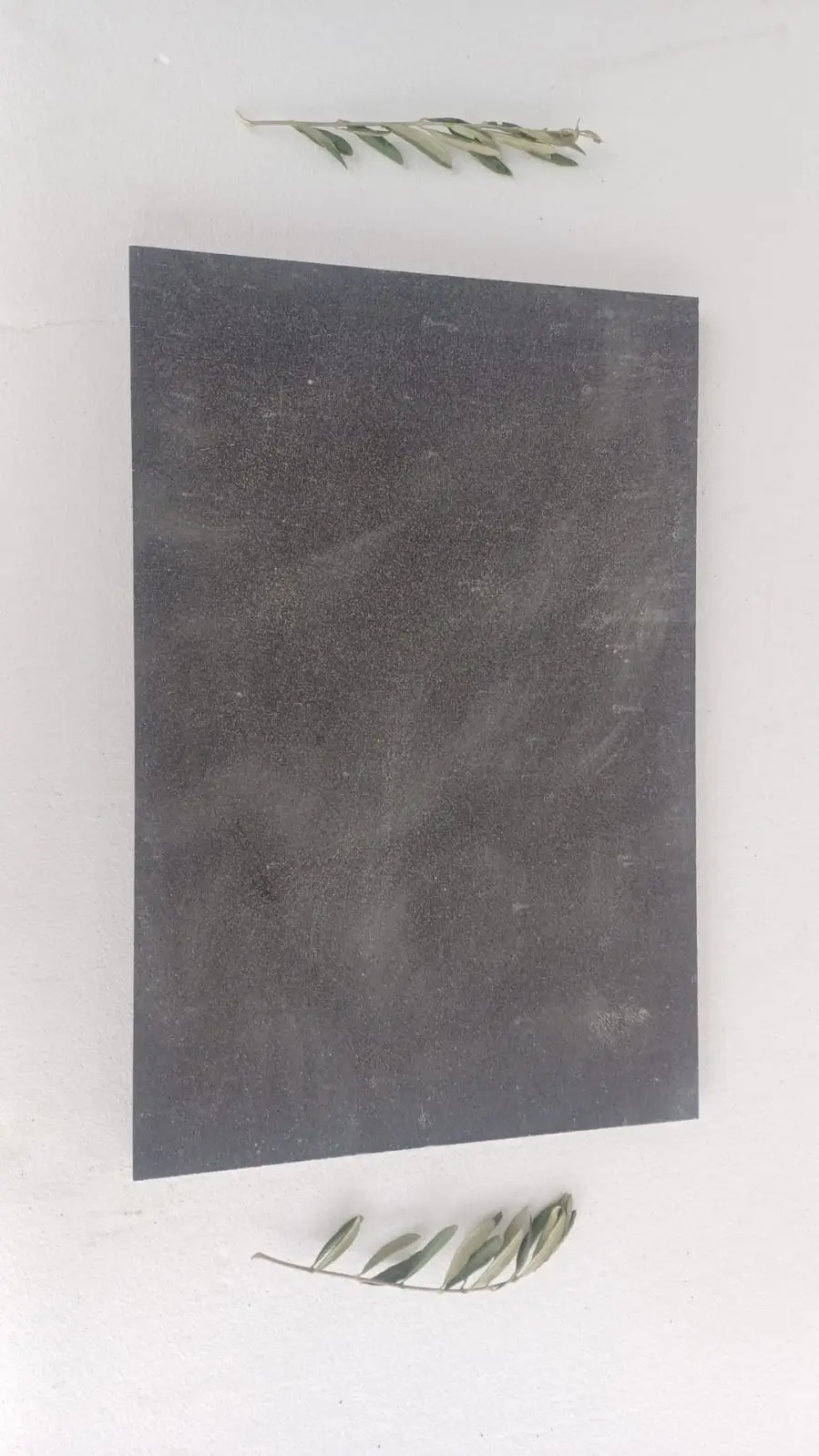
Basalt interior flooring compared to natural stone options beyond granite reveals a more complete picture of where basalt sits in the specification hierarchy. Against travertine — a popular Arizona choice — basalt wins on durability and maintenance simplicity by a significant margin. Travertine’s open voids require grout fill or heavy sealer treatment that basalt simply doesn’t need. Against marble, basalt’s acid resistance is far superior; marble etches on contact with citrus, vinegar, and most household cleaners, while basalt handles those exposures without surface damage. This is a primary reason why Arizona kitchens choose basalt tile over marble in high-use cooking environments.
Slate is basalt’s closest natural competitor in the dark-tone, high-durability category, but slate’s layered cleavage structure makes it more susceptible to delamination under point loads — chair legs, appliance feet — than basalt’s monolithic crystalline matrix. Limestone sits below both granite and basalt in hardness, generally rating 3 to 4 Mohs, and requires significantly more maintenance in high-traffic interior applications. For Arizona homeowners prioritizing a dark-toned floor that holds up with minimal intervention, basalt interior flooring compared to natural stone options across the full spectrum lands at the top of the performance ranking for combined durability, low maintenance, and thermal stability.
Making the Right Specification: Basalt Floor Tile Versus Granite in Arizona
The basalt floor tile versus granite Arizona decision ultimately resolves around three practical questions: what finish aesthetic your interior demands, how much thermal expansion variability your installation conditions will generate, and how disciplined your long-term maintenance schedule is likely to be. Basalt gives you superior uniformity, slightly better low-porosity performance, and a contemporary aesthetic that aligns with current Arizona design directions. Granite gives you more color variation, a longer track record in traditional interiors, and comparable structural performance in quality grades. Neither choice is wrong — but basalt is the stronger specification for modern desert interiors where thermal performance and reduced maintenance are priorities.
The performance data supports basalt more decisively the more extreme your installation conditions are — south-facing covered entries, kitchen floors with high cleaning frequency, or open-plan spaces that bridge interior and exterior temperature zones. For applications where aesthetics drive the decision above all other factors, granite’s color breadth may tip the balance. As you finalize your material selection, the durability testing behind both choices is worth reviewing in detail — Basalt Stone Tile in Arizona: What the Data Shows examines how basalt performs across real-world Arizona exposure conditions and gives you the field-tested numbers to back your specification. Citadel Stone’s basalt floor tile selection gives Arizona homeowners in Gilbert, Yuma, and Tempe a durable, heat-resistant alternative to marble and granite at competitive material costs.