
Choosing limestone paver sizes in Arizona isn’t just an aesthetic decision — it’s a structural and thermal engineering call that directly determines how your installation performs when the mercury climbs past 115°F. The slab dimensions you choose affect joint spacing, subgrade load distribution, and the rate at which thermal expansion stress accumulates across the field. Get the sizing wrong and you’ll see corner uplift, joint blowout, or surface cracking within three to five years, regardless of how well the rest of the installation was executed.
The interaction between slab mass and subgrade flexibility is the variable most specifiers underestimate. A 24×24-inch, 2-inch-thick limestone paver carries roughly three times the dead load of a 12×12-inch piece, and that difference changes everything about how your base aggregate needs to be compacted and graded. Larger formats also trap heat differently at the joint margins, which accelerates polymeric sand degradation in full-sun exposures. Understanding these mechanical relationships is what separates a specification that lasts from one that looks good on paper and fails in the field.
Why Paver Size Matters More in Arizona Than Almost Anywhere Else
Arizona’s thermal environment is genuinely extreme by any material science standard. Surface temperatures on south-facing stone installations regularly reach 160–170°F in peak summer, and the daily delta — the swing from pre-dawn cool to peak afternoon heat — can exceed 80°F in inland desert zones. That repeated expansion-contraction cycle is what choosing limestone paver sizes in Arizona requires designing around, not just the maximum temperature alone.
Limestone’s coefficient of thermal expansion runs approximately 4.4 × 10⁻⁶ per °F for most sedimentary grades. Across a 24-inch slab, an 80°F daily swing produces roughly 0.008 inches of linear movement per piece. That sounds minor until you multiply it across a 500-square-foot patio with 20 pavers per row — the cumulative stress at the perimeter can be significant enough to fracture a rigid edge restraint if you haven’t built in adequate expansion accommodation. Larger slabs amplify this effect proportionally, which is why your joint spacing and edge detail strategy must scale with your paver format.
- Small formats (12×12 inches) distribute thermal stress across more joints, reducing per-joint movement but increasing grout or sand maintenance frequency
- Medium formats (16×16 to 18×18 inches) balance thermal management with visual scale — the sweet spot for most residential patios under 800 square feet
- Large formats (24×24 inches and above) require engineered base systems and perimeter expansion joints every 10–12 linear feet to prevent edge failure
- Rectangular formats (12×24 or 16×24 inches) introduce directional stress that must be oriented perpendicular to the dominant sun exposure on south and west-facing installations
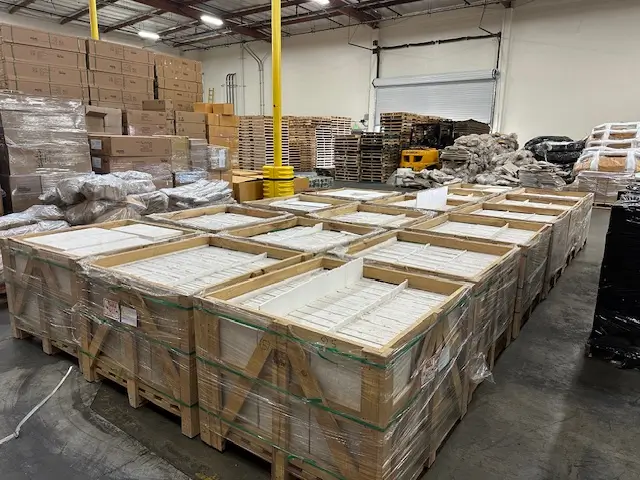
Thickness Requirements for Thick Limestone Slabs in Desert Climates
Thickness is the specification variable that gets undervalued most consistently in residential projects, partly because it’s invisible once the installation is complete and partly because thicker material costs more per square foot. But in Arizona’s desert environment, thickness isn’t just about structural load capacity — it’s about thermal mass management and the durability profile of thick limestone slabs in desert climates under sustained UV and heat exposure.
For pedestrian-only applications like patios and pool surrounds, 1.25-inch nominal thickness is the practical minimum in Arizona. At this dimension, you get adequate flexural strength to handle point loads from furniture legs and foot traffic without requiring the base to be perfect. Move up to 1.5-inch material and you gain meaningful resistance to edge chipping during installation and throughout the service life — a real-world difference that shows up clearly when you’re handling material on-site.
- 1.25-inch thickness: suitable for pedestrian patios with well-compacted granular base, not recommended for pool deck cantilevered edges
- 1.5-inch thickness: the preferred residential standard for Arizona conditions — handles thermal cycling, furniture loads, and occasional vehicle overhang without distress
- 2-inch thickness: required for driveways, motor courts, and any surface subject to occasional vehicle traffic; also recommended for large-format pavers (24×24 inches and above) regardless of application
- 2.5-inch or greater: commercial applications, heavy-load zones, and anywhere limestone paver durability under intense sun must be backed by structural redundancy
The heat-sink behavior of thicker material is worth understanding specifically. A 2-inch slab stores significantly more thermal energy than a 1.25-inch piece, which means it stays warmer longer into the evening. For pool deck applications in Yuma, where barefoot comfort after sunset matters as much as midday performance, this thermal mass characteristic can influence your thickness selection as much as any structural calculation.
Matching Limestone Paver Format to Application Type
Your application context should drive format selection before aesthetics enter the conversation. A driveway apron, a pool deck, a covered patio, and an open terrace all impose different structural and environmental demands — and the right limestone format for each application differs meaningfully.
For open patio applications in full Arizona sun, medium-format pavers in the 16×16 to 18×18-inch range offer the most balanced performance profile. They’re large enough to read as substantial and refined at ground level, but small enough that your thermal expansion management doesn’t require engineered expansion joints at every fifth course. The joint frequency also provides natural drainage pathways that help manage Arizona’s monsoon rain events, which deliver intense short-duration precipitation that can overwhelm impermeable surfaces.
Pool surrounds present a unique sizing challenge. You want continuous surface runs with minimal joint interruption for visual cleanliness and ease of cleaning, but you also need adequate joint density to prevent large-format slabs from cantilever-loading over the pool bond beam. A 16×24-inch rectangular format oriented with the long dimension running parallel to the pool edge gives you clean visual lines while keeping each individual slab’s unsupported span within safe limits. Make sure your warehouse order accounts for the directional nature of rectangular formats — field cuts at the pool edge need to maintain the orientation, which increases your cut waste factor to roughly 12–15% versus the 8% typical of square formats.
- Open patio: 16×16 or 18×18-inch square format, 1.5-inch thickness, natural or brushed finish
- Pool surround: 12×24 or 16×24-inch rectangular format, 1.5-inch thickness, tumbled or brushed finish for slip resistance
- Driveway and motor court: 24×24-inch square format, 2-inch thickness minimum, calibrated gauge for consistent bearing surface
- Pathway and garden walk: 12×12 or 12×18-inch format, 1.25-inch thickness acceptable, irregular or stepping-stone patterns feasible
- Covered loggia and outdoor dining: 24×24 or 18×36-inch large format, 1.5-inch thickness, honed finish workable due to reduced UV exposure
Natural Stone Finish Options for Arizona Homeowners
The finish profile of your limestone paver affects heat absorption, slip resistance, and long-term maintenance frequency in ways that interact directly with your size selection. Natural stone finish options for Arizona homeowners vary considerably, and the choice isn’t purely cosmetic — different finishes perform differently under sustained UV exposure, foot traffic, and the abrasive dust that characterizes desert environments.
Honed finishes deliver a smooth, matte surface with a refined aesthetic. The trade-off in Arizona is twofold: honed limestone absorbs more fine dust and biological material into its open pore structure, requiring more frequent sealing (typically annual rather than biennial), and the smooth surface becomes marginally more slippery when wet from irrigation overspray or monsoon rain. If you’re specifying honed material for a pool deck, make sure your slip resistance meets ASTM C1028 minimums — you’re looking for a static coefficient of friction above 0.60 on wet surfaces.
Brushed and bush-hammered finishes open the surface texture intentionally, which improves grip and reduces the visual impact of dust and surface staining. The textured profile does trap fine debris in the surface relief, so power washing becomes part of your annual maintenance routine rather than optional. For large-format pavers in Arizona conditions, a brushed finish also helps disguise the minor surface variation that develops as UV exposure bleaches the top few microns of the stone over time.
- Honed: refined aesthetic, requires annual sealing, acceptable for covered and shaded areas
- Brushed: textured grip, good dust resistance, recommended for pool surrounds and outdoor stairs
- Tumbled: irregular edges and surface, traditional look, highest forgiveness for uneven base conditions
- Bush-hammered: aggressive texture, maximum slip resistance, best for high-traffic and wet-zone applications
- Sandblasted: uniform medium texture, good UV performance, lower maintenance than honed in full-sun exposures
For projects in Sedona, where the surrounding red rock landscape influences design aesthetics strongly, a tumbled or lightly brushed finish on warm-toned limestone tends to read most naturally within the environment. The irregular edges of tumbled material also integrate more gracefully with the organic planting schemes common in high-desert residential design.
Base Preparation Requirements That Change With Paver Size
Here’s what most specifiers miss when they upsize their paver format mid-project: the base system needs to scale with the slab, not just the area coverage. A 24×24-inch slab bridges voids differently than a 12×12-inch piece, and that geometric reality changes your compaction standard, aggregate gradation, and bedding sand depth requirements substantially.
For small and medium formats (up to 18×18 inches), a standard 4-inch compacted Class II base with 1-inch bedding sand works reliably in Arizona’s well-drained desert soils, assuming you’ve addressed any expansive clay pockets in the subgrade. The joint frequency in these formats provides enough flexible accommodation that minor base settlement gets distributed without concentrating stress at individual slab corners.
Large-format pavers — anything 24 inches or greater in either dimension — need a minimum 6-inch compacted base and a bedding layer of coarse sharp sand at a consistent 1-inch depth, screeded to within 1/8-inch tolerance across the setting field. Any deviation beyond 3/16 inch per 10-foot straightedge will telegraph through the large-format slab as a visible tilt or corner rock that no amount of polymeric sand will correct after the fact. The bedding tolerance requirement for large-format work is genuinely tighter than most residential crews operate to by default — budget for the extra time and laser leveling equipment accordingly.
- Subgrade compaction: 95% modified Proctor density minimum for all paver sizes in Arizona soils
- Base aggregate depth: 4 inches for formats up to 18×18 inches; 6 inches for formats 24×24 inches and larger
- Bedding sand depth: 1 inch consistent for all formats; tolerance tightens from ±3/16 inch (small format) to ±1/8 inch (large format)
- Edge restraint: aluminum or PVC spike restraint for small formats; cast-in-place concrete curb recommended for large formats in vehicle-adjacent areas
- Expansion joints: every 15 feet for small and medium formats; every 10–12 feet for large formats, filled with backer rod and polyurethane sealant
You can explore size-specific installation guidance and product options through our Arizona limestone paver selection resource, which covers how different dimensions interact with Arizona’s specific soil and climate conditions.
Limestone Paver Durability Under Intense Sun: What the Numbers Tell You
Limestone paver durability under intense sun is a function of mineral composition, surface density, and sealing protocol working together — not any single variable in isolation. Dense, low-porosity limestone grades with absorptions below 7% (ASTM C97) consistently outperform higher-porosity material in Arizona’s UV environment, particularly over a 15–20 year service horizon where the cumulative effect of thermal cycling becomes measurable.
Compressive strength is your primary structural durability indicator. For Arizona applications, specify material meeting ASTM C568 Grade II minimums (8,000 PSI compressive strength) at absolute minimum — Grade III material at 12,000 PSI or above is a better long-term investment for anything other than a sheltered interior courtyard. The higher-strength grades show meaningfully less edge chipping over 10 years of use, which matters both aesthetically and practically since chipped edges collect debris and accelerate joint erosion.
UV bleaching is a real phenomenon in desert limestone installations. The top 2–3 microns of stone surface will lighten noticeably over the first three years of full-sun exposure as UV radiation breaks down iron oxide mineral inclusions in the stone matrix. This process is essentially complete within five years, after which the surface color stabilizes. Your clients should understand this upfront — the stone won’t look exactly like the warehouse sample after three Arizona summers, and that’s normal material behavior, not product failure.
- Specify ASTM C97 water absorption below 7% for full-sun Arizona applications
- Compressive strength minimums: 8,000 PSI (Grade II) for residential patios; 12,000 PSI (Grade III) for driveways and high-traffic areas
- Modulus of rupture above 1,000 PSI to resist flexural failure at unsupported slab edges
- UV bleaching is a surface phenomenon, not structural deterioration — inform clients during pre-construction consultation
- Resealing every 18–24 months in full-sun Arizona exposures maintains surface density and slows UV-driven color change
Sizing and Specifying Large Limestone Pavers in Arizona
Large limestone pavers in Arizona occupy a specific performance niche that rewards careful specification. The visual impact of a large-format stone installation is genuinely impressive — expansive, continuous surface planes read as premium at both residential and commercial scales — but achieving that result requires tighter tolerances than most smaller-format projects demand.
Calibration is the first variable to verify when sourcing large-format material. Limestone is a natural stone, and thickness variation within a single quarry lot can run from 1/4 inch to 3/8 inch if the material hasn’t been machine-calibrated after cutting. At 12×12-inch scale, that variation is manageable in the bedding layer. At 24×24-inch scale, the same variation creates a lippage problem at joints that’s visible and tactilely noticeable underfoot. Always specify calibrated material for large-format applications, and verify calibration tolerance at the warehouse before the truck is loaded for delivery.
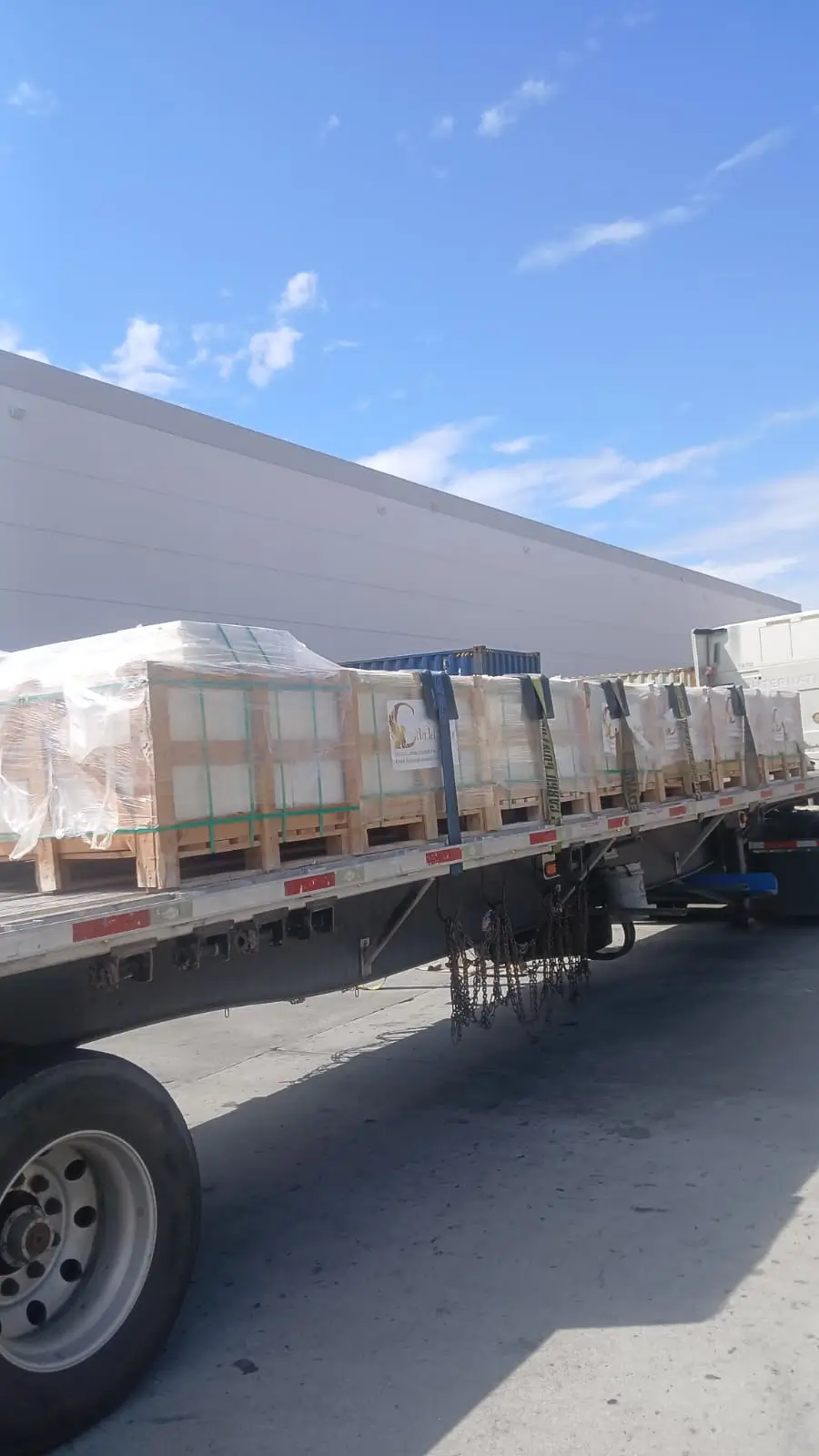
At Citadel Stone, we inspect large-format limestone lots for calibration consistency before they leave our facility, because a single uncalibrated pallet in a large-format installation can create lippage problems across an entire field that require re-pulling and re-bedding affected pieces. The truck delivery sequence matters too — large-format material should be staged and unloaded closest to the installation zone to minimize on-site handling damage to corners and edges.
- Specify calibration tolerance of ±1/16 inch thickness for formats 20 inches or larger
- Request lot-matched material from a single quarry batch to minimize color and density variation across the field
- Plan for 12–15% waste factor on large-format installations versus 8% for small and medium formats
- Large-format material is more vulnerable to corner damage during handling — require protective corner packaging and staged unloading
- Truck delivery should be scheduled to minimize on-site storage time; large-format slabs stacked on uneven ground develop hairline stress fractures within days
Sealing and Maintenance Protocols That Vary by Paver Size
The sealing protocol for your limestone installation needs to account for format size in two practical ways: penetration depth requirements and joint maintenance frequency both scale with paver dimensions. Smaller formats have more linear joint footage per square foot, which means joint sand maintenance is a more significant ongoing task. Larger formats have fewer joints but each joint handles more cumulative thermal movement, making the joint filler specification more critical.
For penetrating sealers, the application rate and required cure time before foot traffic don’t change dramatically with paver size — but the critical consideration is sealing the cut edges of field-trimmed pieces. Cut limestone edges expose raw stone matrix that has higher absorption than the sawn face surface, and in Arizona’s dust environment, unsealed cut edges can wick moisture and organic material during monsoon events and then dry-cycle it into a stain that’s essentially permanent without grinding. Seal cut edges with two applications before installation, not after.
In the Mesa area, caliche hardpan commonly present in the subgrade actually provides excellent long-term bearing support for large-format pavers, but the reduced subgrade moisture movement means the base aggregate sees more direct thermal cycling stress. Projects there benefit from a slightly more flexible polymeric joint sand — one formulated with a higher polymer content — to accommodate the thermal movement that the rigid subgrade concentrates at the surface layer.
- Apply penetrating silane-siloxane sealer within 48 hours of installation completion, before any foot traffic
- Reseal every 18 months in full sun; 24–30 months for covered or shaded installations
- Seal cut edges with two coats before setting — not after grouting
- Use polymeric joint sand rated for joint widths up to 4 inches for large-format applications where joint spacing exceeds standard dimensions
- Inspect joint sand depth annually — Arizona wind erosion can remove 1/4 inch of joint sand per year in exposed installations
Ordering, Warehouse Lead Times, and Project Planning
Your material ordering timeline needs to account for Arizona’s project seasonality and warehouse inventory cycles. The fall installation season — September through November — is when demand for limestone pavers peaks sharply, and popular sizes in calibrated formats can move from warehouse stock to back-ordered status within days during this window. Planning your material procurement four to six weeks ahead of your installation date is the practical minimum for maintaining project schedule control.
Citadel Stone maintains regional warehouse inventory in Arizona specifically to reduce the lead time gap that plagues imported stone projects, where a 6–8 week ocean freight cycle can derail an installation schedule if your first material delivery reveals a color or calibration issue that requires a reorder. Having local warehouse stock means quality issues identified at delivery can typically be resolved within one to two weeks rather than two months.
The outdoor stone selection process for Arizona projects should also factor in your truck access constraints at the delivery site. Large-format limestone — particularly 24×24-inch and 18×36-inch formats in 2-inch thickness — generates significant pallet weight, often 2,500–3,500 pounds per pallet. A standard delivery truck needs a level approach with at least 14 feet of clearance height and a hardened surface capable of supporting pallet jack or forklift operation. Residential sites with narrow driveways, steep grades, or soft-surface approaches may require a shorter truck or a staged off-site delivery with secondary transport, which adds a day to your project schedule and a line item to your logistics budget.
- Order material 4–6 weeks ahead of installation start for standard formats; 8 weeks for special-order large formats or custom thicknesses
- Confirm warehouse calibration consistency on large-format orders before scheduling truck delivery
- Verify site truck access — weight, clearance height, and surface capacity — during pre-installation site review
- Order 10% overage minimum for all formats; increase to 15% for large-format rectangular pieces requiring directional field cuts
- Request material from a single quarry batch to maintain color consistency across the entire installation
What Every Arizona Specifier Should Know About Limestone Paver Sizing
Choosing limestone paver sizes in Arizona comes down to aligning your format and thickness decisions with the specific thermal, structural, and maintenance realities of desert installation environments. The specifications that produce 20-year-plus installations are consistent and repeatable: medium formats for most residential applications, large formats only with engineered base systems and proper expansion accommodation, thickness scaled to application load, and finishes chosen for UV and slip performance rather than aesthetics alone.
The outdoor stone selection guide framework for Arizona projects should always start with climate performance requirements and work backward to aesthetic preferences — not the other way around. Your finish, your format, and your thickness choices all interact, and changing one variable mid-specification creates downstream consequences in base design and maintenance scheduling that need to be re-evaluated explicitly. Get the sizing right from the beginning and the rest of the specification follows logically.
Beyond limestone, your Arizona property’s hardscape may benefit from exploring complementary stone installations. How to Install White Travertine Tiles in Arizona covers another dimension of natural stone performance in the desert climate — useful context as you think through the full range of material options for your project. Citadel Stone’s Arizona limestone inventory is specifically graded for desert sun exposure, offering finish options trusted by residential installers across Tucson, Mesa, and Chandler for durable patio surfaces.