
Specifying blue black limestone rooftop Chandler projects demands a level of structural and thermal precision that standard paving specs simply don’t address — rooftop substrates behave differently from grade-level installations in ways that catch even experienced specifiers off guard. The combined load of stone, aggregate base, waterproofing membrane, and drainage assembly creates cumulative dead loads that your structural engineer needs before you finalize stone thickness. Get that number wrong and you’re either over-engineering a costly deck or, worse, under-specifying a safety-critical assembly. This overview walks through every specification decision that actually determines long-term performance on an elevated Chandler terrace.
Thermal Performance in a Rooftop Context
Blue black limestone’s dense crystalline matrix gives it a thermal mass advantage that most light-colored alternatives can’t match at rooftop elevations — but that same density creates a surface temperature dynamic you need to plan around. In Chandler’s summer conditions, dark-toned stone can absorb significant radiant heat through peak afternoon hours, then re-radiate that energy slowly into the evening. For a rooftop garden or Arizona sky garden terrace, that radiant release actually extends usable outdoor time after sunset, which is exactly the performance characteristic urban rooftop projects in Arizona are trying to capture.
The material’s thermal expansion coefficient sits in the range of 4.5–5.8 × 10⁻⁶ per °F, which is lower than concrete but still significant across large rooftop expanses. Your joint spacing spec should reflect a 15% wider gap than you’d use at grade — on rooftop assemblies, the membrane below moves independently of the stone above, and that differential movement compounds with thermal expansion in ways that tighter joints can’t accommodate.
For projects in Peoria, where rooftop conditions mirror Chandler’s heat load profile, surface temperature differentials between blue black limestone and unshaded concrete pavement can run 18–24°F cooler on the stone side during peak exposure hours, primarily because the dense stone surface doesn’t trap a boundary layer of hot air the way porous concrete does.
Structural Load Specifications for Rooftop Assembly
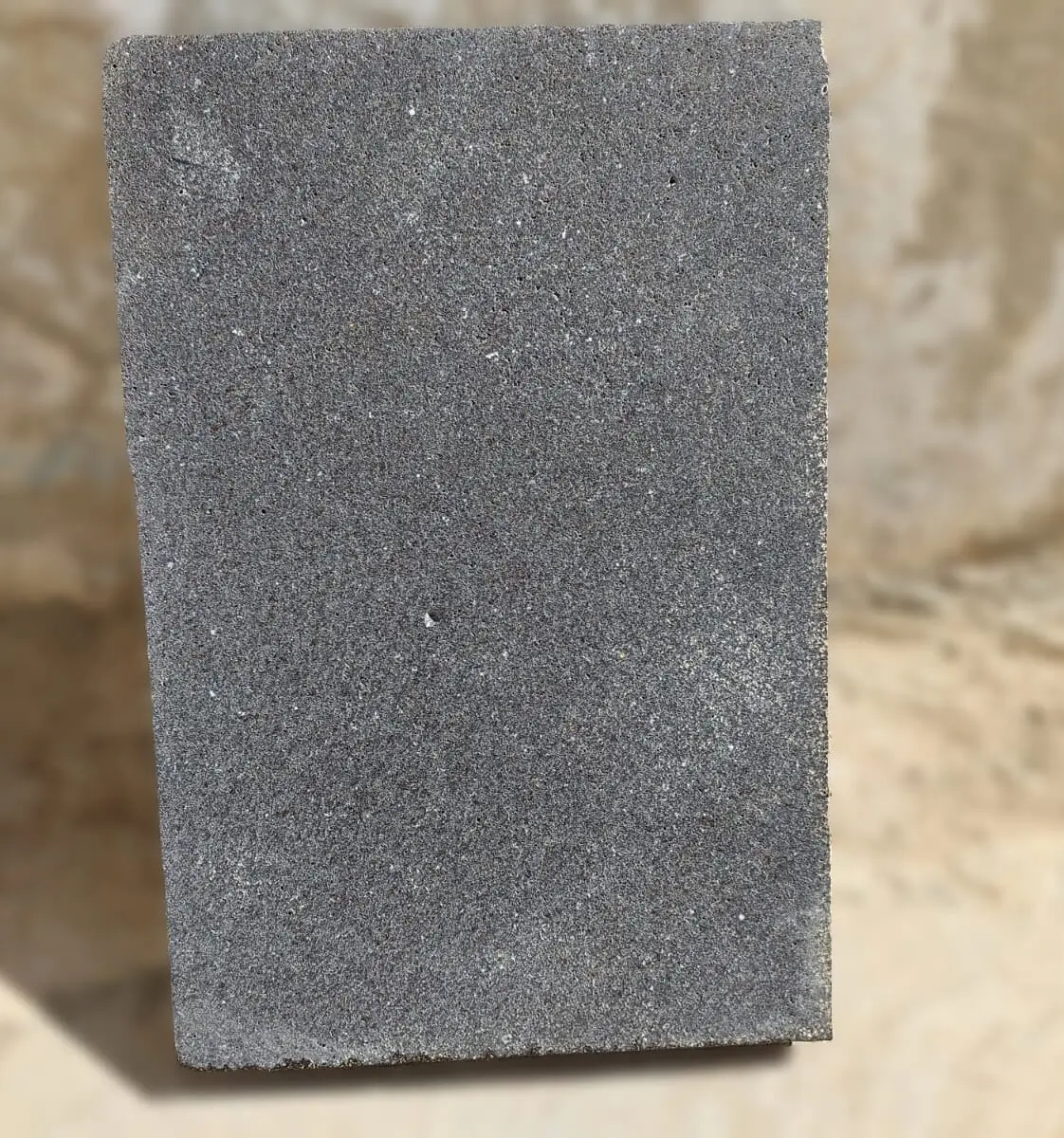
Rooftop paving assemblies differ fundamentally from grade-level installations because every pound of material is a dead load your building structure carries permanently. Blue black limestone in a 1.25-inch nominal thickness runs approximately 14–16 lbs per square foot, and when you add the drainage layer, pedestal system or mortar bed, and any planters integrated into your Chandler elevated gardens design, total assembly dead loads routinely reach 45–65 lbs per square foot before accounting for occupancy live loads.
Your specification package needs to include:
- Stone thickness confirmation from structural review — 1.25″ for pedestrian-only rooftops, 1.5″ minimum where concentrated furniture or planter loads are expected
- Pedestal system load-rating documentation matched to stone format size
- Membrane compatibility confirmation — some adhesives in mortar-set assemblies chemically interact with EPDM and TPO membranes
- Drainage flow rate calculations to prevent ponding load accumulation during monsoon rain events
- Point load analysis at column and parapet interface zones where load paths change
The pedestal-set approach offers a genuine advantage for Chandler elevated gardens projects because it keeps the membrane accessible for inspection and repair without stone removal. Mortar-set assemblies perform structurally, but the maintenance trade-off becomes significant over a 20-year building lifecycle.
Drainage and Waterproofing Integration
The interface between your blue black limestone blue black paving terrace design and the waterproofing membrane below it is where most rooftop paving failures actually originate — not from stone degradation but from inadequate drainage causing hydrostatic pressure against the membrane. In Arizona’s monsoon season, Chandler rooftops can receive 1–2 inches of rain in under an hour, and a pedestal-set stone assembly needs overflow drainage capacity calibrated to that peak flow rate.
Blue black limestone in Arizona’s rooftop context benefits from a minimum 2% slope to primary drains maintained beneath the stone assembly — the stone surface itself can appear level visually while the structural deck beneath carries the drainage gradient. This separation of visual grade from structural drainage grade is a detail that experienced rooftop specifiers understand, but it frequently gets missed when landscape architects adapt grade-level paving details for elevated applications.
Verify that your waterproofing membrane manufacturer’s warranty remains valid with the planned pedestal system. Several major membrane manufacturers void their warranty when certain pedestal foot geometries create concentrated point loads above their specified threshold — usually 250–300 lbs per square foot at the foot contact area. Distribute that load across a larger pad where needed.
Stone Format and Size Selection for Elevated Terraces
Choosing stone format sizes for a blue black limestone rooftop Chandler installation involves a trade-off that doesn’t apply at grade: larger formats reduce joint frequency and create a cleaner visual field, but they increase individual piece weight and complicate installation logistics on an elevated deck where crane or hoist access may be limited.
Practical format ranges that work well in rooftop contexts:
- 400mm × 400mm (approximately 16″ × 16″) — manageable two-person lift, ideal for complex terrace layouts with planters and furniture zones
- 600mm × 300mm (approximately 24″ × 12″) — running bond pattern creates strong directional flow, good for linear rooftop spaces
- 600mm × 600mm (approximately 24″ × 24″) — premium large-format appearance, requires mechanical assistance on upper floors
- Mixed formats in a modular pattern — adds design sophistication but demands precise pedestal placement planning
At Citadel Stone, we recommend confirming format selection against your building’s service elevator or hoist dimensions before finalizing the spec — a pallet of 600mm × 600mm stone that can’t fit in the service lift creates a costly logistical problem mid-project. Our warehouse team regularly advises on packaging configurations that work within typical Phoenix-area building access constraints.
Slip Resistance and Finish Selection
Rooftop spaces experience moisture conditions that grade-level patios rarely do — morning dew combined with elevated wind exposure creates consistently damp surfaces during Arizona’s shoulder seasons, even when rain hasn’t fallen. Your finish specification needs to account for this, and for blue black limestone in rooftop applications, the finish hierarchy runs differently than it does for pool decks or interior floors.
Consider this finish performance comparison for rooftop contexts:
- Honed finish — DCOF (Dynamic Coefficient of Friction) typically 0.55–0.65 dry, 0.42–0.50 wet; acceptable for most rooftop pedestrian areas
- Sandblasted or flamed finish — DCOF wet readings of 0.55–0.70; recommended for primary circulation paths and stair treads
- Polished finish — DCOF wet values below 0.42; not appropriate for exterior rooftop use regardless of stone type
- Brushed finish — intermediate performance, 0.48–0.58 wet; useful for balancing aesthetics with safety in feature zones
The ANSI A326.3 standard sets 0.42 DCOF as the minimum for wet pedestrian surfaces — your spec should call for testing documentation from the stone supplier confirming compliance, not just a finish description. Request actual test results for the specific finish and stone combination you’re specifying.
Color Stability Under Arizona UV Exposure
Blue black limestone’s distinctive coloration comes from carbon-rich mineral inclusions and iron oxide compounds distributed through the stone matrix — and understanding what UV exposure does to that chemistry over time helps you set accurate client expectations. Dense, low-porosity specimens from quality quarries show excellent UV stability over 15–20 year periods, with color shift measured as gradual lightening rather than uneven fading or spotting.
Rooftop spaces receive more direct UV exposure than grade-level patios due to reduced shading from adjacent structures, and Chandler’s latitude delivers intense solar radiation year-round. A penetrating silane-siloxane sealer applied at 18-month intervals significantly slows surface bleaching by reducing moisture cycling that gradually mobilizes the iron compounds responsible for the stone’s blue-black tones.
Projects in Flagstaff face a different color stability challenge — freeze-thaw cycling at higher elevation stresses surface micro-crystals in a way that can accelerate surface weathering if the stone’s absorption rate exceeds 0.5%. Specify absorption testing per ASTM C97 and confirm values below 0.4% for any rooftop application where freeze-thaw exposure is possible.
For specification depth on regional limestone applications with similar mineral profiles, antiqued blue limestone slabs in Prescott covers finish performance and weathering characteristics across Arizona’s varied elevation zones.
Installation Logistics for Upper-Floor Rooftop Projects
The logistics of delivering and installing blue black paving terrace design elements on an elevated rooftop deserve more attention than most specification documents give them. Material delivery to a rooftop level requires pre-planned crane picks or hoist staging, and your project schedule should build in a dedicated materials hoisting window — typically a half-day operation for an average rooftop garden of 1,500–3,000 square feet.
Truck access to urban Chandler sites can be constrained by street width, overhead utilities, and loading dock limitations. Confirm your delivery truck dimensions against site access conditions before finalizing order quantities and packaging. A full pallet of blue black limestone in 600mm format weighs approximately 2,200–2,400 lbs — not every urban building loading dock can accommodate standard pallet delivery, and split-delivery scheduling from warehouse stock may be necessary.
Citadel Stone’s warehouse carries rooftop-spec blue black limestone in Arizona, and our team can coordinate phased deliveries that align with your hoist schedule rather than delivering full project quantity in a single drop that creates staging problems on tight urban sites. That kind of logistical coordination is genuinely harder to get from import-direct suppliers who don’t maintain local stock.
Sealing Protocols and Long-Term Maintenance
Rooftop environments accelerate the maintenance cycle for natural stone sealers because UV exposure degrades silane-siloxane chemistry faster than shaded grade-level applications. Your maintenance specification for blue black limestone rooftop Chandler projects should plan for an initial seal at installation, a second application at 12 months after the stone has fully equilibrated to its thermal environment, and then an 18-month interval thereafter.
The 12-month re-application is something many maintenance specs omit — new stone installed on a rooftop typically shows micro-shrinkage in its pedestal gaps during the first summer thermal cycle, and re-sealing after that settlement locks in optimal protection before the second monsoon season.
Key maintenance checkpoints your rooftop stone spec should address:
- Annual joint sand replenishment for pedestal-set assemblies — wind exposure at rooftop elevation depletes joint sand faster than grade-level installations
- Drain screen inspection quarterly during monsoon season to prevent debris blockage
- Pedestal height check after first summer thermal cycle — occasional re-leveling needed as stone settles
- Sealer bead test annually — water droplets should bead visibly; re-apply when absorption begins
- Stain treatment protocol documentation provided to building management before handover
Design Integration for Arizona Sky Gardens
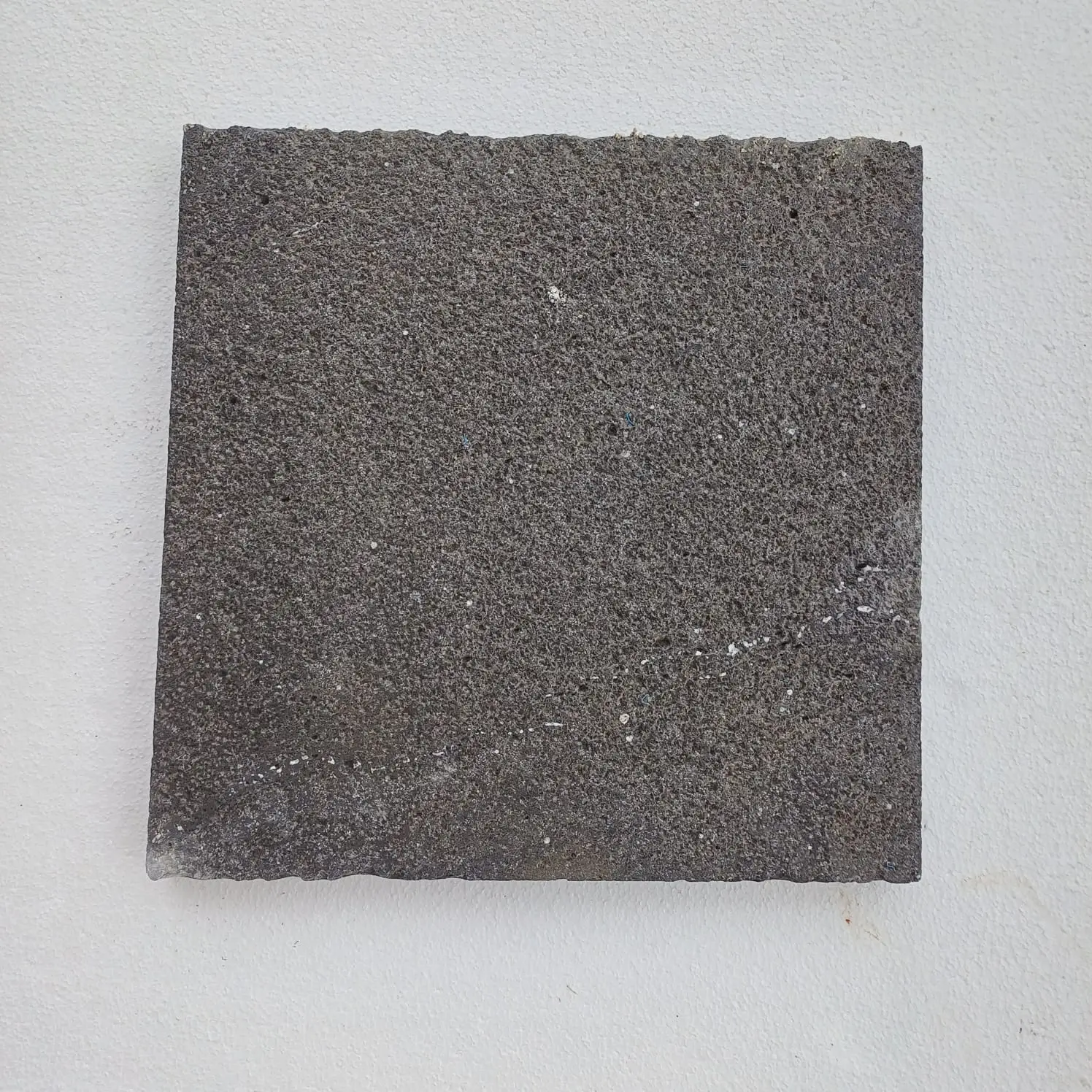
Chandler rooftop spaces present a design opportunity that blue black limestone handles particularly well — the material’s deep, cool tones create visual contrast against Arizona’s bright sky and terracotta-dominated roofline context, giving Arizona sky gardens a distinctly urban character that lighter stone can’t achieve. The blue-black surface reads differently at grade than it does at elevation, where reflected sky light softens the tone and the stone’s crystalline surface picks up ambient color from surrounding sky conditions.
Integrating planters, water features, and furniture zones within a blue black paving terrace design in Arizona requires zoning your surface by function and then spec-ing the finish accordingly. High-traffic circulation paths warrant the sandblasted or flamed finish, while feature zones around planters or seating areas can use honed finish for a more refined aesthetic without compromising safety in those lower-traffic areas.
In Sedona, rooftop terrace designs frequently contrast the blue-black limestone tones against warm red sandstone feature walls — a regional design language that resonates strongly with Arizona’s geological character. That kind of material pairing works in Chandler’s urban context too, particularly where building facades use warm brick or terracotta cladding that benefits from a cooler-toned ground plane.
Your planting zone transitions deserve specific technical attention — where planters meet stone paving, waterproofing continuity is critical, and the interface detail needs to prevent soil moisture migration under the stone assembly. A 100mm raised curb at all planter interfaces with an independent waterproofing upstand resolves this cleanly.
Rooftop Specification Decisions That Determine Long-Term Performance
Every specification decision for blue black limestone rooftop Chandler projects comes back to the same principle: elevated assemblies amplify both the performance benefits and the failure modes of any material, and blue black limestone rewards precise spec work with decades of reliable performance. Your structural load confirmation, drainage design, finish selection, and sealing protocol are the four decisions that determine whether this installation hits the 25-year mark or needs significant remediation at year 12. None of those decisions are complicated once you understand what drives them — they just require deliberate attention rather than defaulting to grade-level paving conventions.
The material itself is genuinely excellent for Arizona rooftop applications — dense, stable, UV-tolerant, and visually distinctive in ways that hold up as surrounding design trends evolve. As you finalize your specification package, the same stone performs equally well in high-visibility Arizona public environments where finish quality and long-term color stability are equally critical — Blue Black Limestone Paving Outdoor Art Galleries for Mesa Exhibitions explores exactly that context in detail. Citadel Stone offers limestone blue black paving in Arizona that is resistant to salt attack near pools.