
Blue black limestone water Scottsdale installations demand a level of material precision that separates elegant, long-lasting water features from installations that look tired within five years. The density profile of quality blue black limestone — typically ranging from 155 to 165 lbs/ft³ — creates a thermal mass advantage around water elements that most specifiers don’t fully leverage. Your design decisions around stone thickness, surface texture, and edge detailing will determine how the feature performs through Scottsdale’s brutal summer heat cycle and the cooler, wetter winters that catch many clients off guard.
Why Blue Black Limestone Works So Well Around Water
The color science here is worth understanding before you finalize any specification. Blue black limestone’s dark, cool-toned surface absorbs and redistributes heat differently than lighter materials — it creates a microclimate effect around water features that genuinely lowers the perceived ambient temperature. Surface readings in Scottsdale consistently show that water element surrounds in this material run 12–18°F cooler than adjacent light-colored concrete under the same afternoon sun exposure, precisely because the stone’s thermal mass stores heat gradually and releases it after the sun angle drops.
The porosity of blue black limestone also plays a role that goes beyond aesthetics. Its interconnected pore structure — typically in the 2–4% range for dense quarry-cut material — allows controlled moisture interaction without the surface spalling that affects more porous stones near constant water exposure. You’re looking at a material that handles splash zones, fountain surrounds, and submerged coping edges without the micro-fracturing that plagues softer sedimentary options in wet-dry cycling environments.
- Compressive strength typically ranges 8,000–12,000 PSI for premium grades, exceeding pool deck structural requirements
- Low porosity variants (under 3%) resist calcium carbonate buildup from fountain water chemistry
- Natural cleft or honed textures both perform in splash zones when correctly sealed
- Dark tone remains visually consistent even with mineral deposits — maintenance cycles are longer than with lighter stones
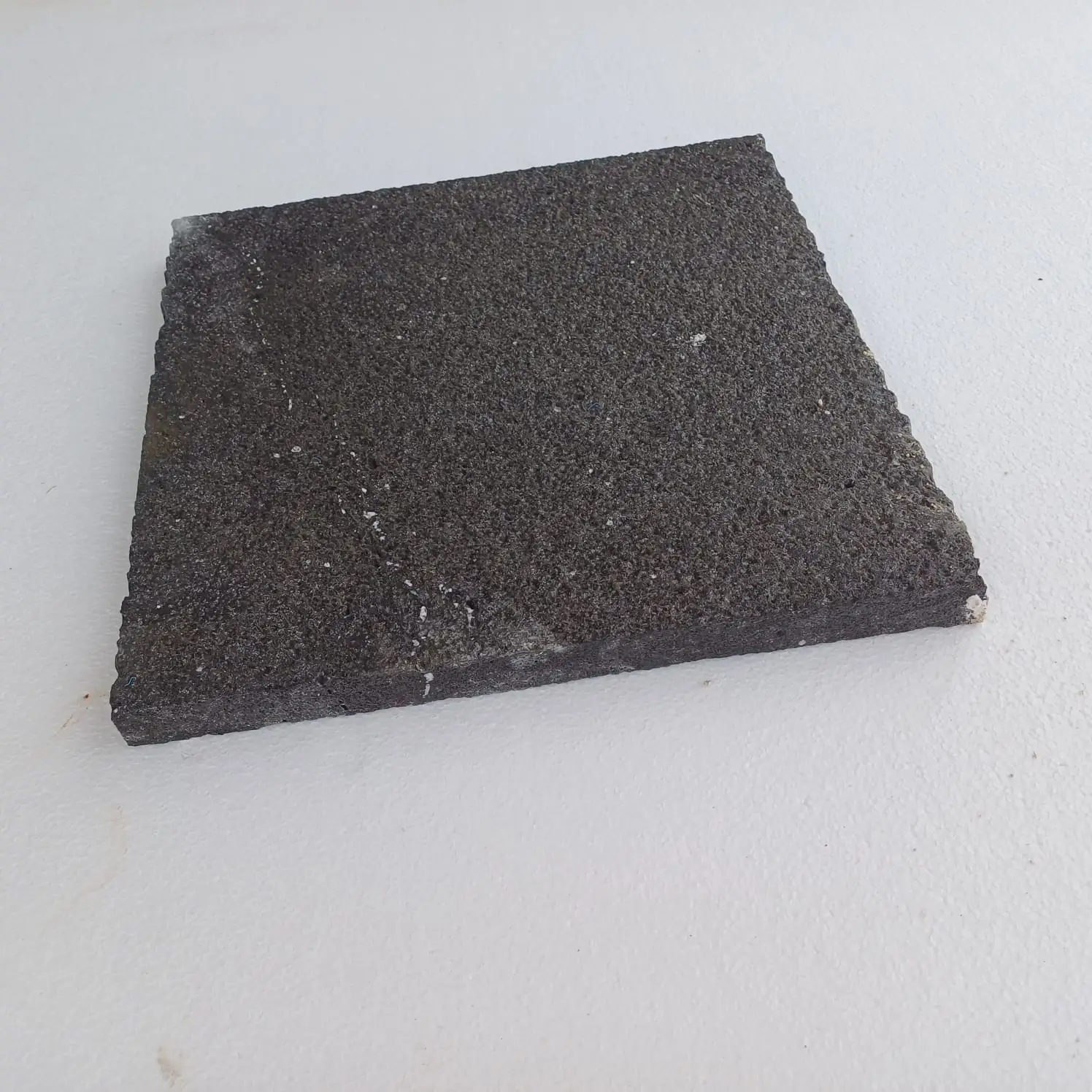
Scottsdale Fountain Surrounds: Getting the Specification Right
Scottsdale fountain surrounds represent one of the more technically demanding applications for any natural stone, and the specification decisions compound quickly. Your first call is thickness — 1.25 inches is the minimum for horizontal surround surfaces that will see foot traffic, but stepping up to 1.5 inches gives you the edge stability that matters when clients lean on fountain walls or use the surround as informal seating. Thinner material tends to develop hairline fractures at the outer edge over a 3–5 year period in high-use settings, especially where the substrate below experiences any differential movement.
Overhang detailing on fountain coping edges deserves more attention than it typically gets in project specifications. A 1-inch overhang with an eased or bullnose profile lets water drip cleanly away from the fountain basin wall rather than tracking back along the stone face. That single detail dramatically reduces the mineral staining band you’d otherwise see at the waterline on the vertical face — and in Scottsdale’s calcium-heavy municipal water supply, that staining accelerates faster than most clients anticipate.
- Specify a minimum 1.25-inch thickness for horizontal fountain surround pavers under foot traffic
- Request factory-cut coping pieces with consistent overhang dimension — field-cut overhangs vary and create drainage inconsistency
- Include a drip groove on the underside of coping units when the vertical face is exposed to fountain mist
- Verify dimensional tolerance: pieces should be within ±1/16 inch for tight joint patterns around curved basins
Water Element Design and Arizona Climate Considerations
Designing a blue black paving aquatic Arizona installation means accounting for two climate realities that pull in opposite directions. Summer conditions — sustained 110°F+ air temperatures, intense UV, and evaporative cooling effects from the water itself — create thermal gradients across the stone surface that generate real expansion stress at joint interfaces. Your expansion joint spacing should not exceed 12 feet in any direction for horizontal paving adjacent to water features, and that number drops to 8 feet when you’re working with pieces larger than 24 inches in their longest dimension.
The cooler months introduce a separate challenge. Phoenix and its surrounding communities see overnight lows that occasionally dip into the high 20s and low 30s — not deep freeze territory, but enough to create ice formation in saturated grout joints adjacent to water features that run through winter. Using a polyurethane joint compound rated for ±25% movement rather than standard cement grout at these interfaces isn’t an upsell; it’s the specification that prevents joint failure in the second or third winter after installation. This water element design discipline applies equally whether you’re working a small residential courtyard fountain or a large-scale commercial feature.
Surface Texture Selection and Slip Resistance Near Water
The texture decision for blue black limestone water Scottsdale applications isn’t purely aesthetic — it directly affects ASTM C1028 dynamic coefficient of friction performance, which is the standard most liability-conscious designers and pool/fountain contractors reference. You need a minimum 0.60 wet DCOF for any horizontal surface within the splash zone of a water feature, and a natural cleft or bush-hammered finish reliably delivers 0.65–0.75 in that range. Honed finishes, while visually striking with blue black limestone’s depth of color, typically test at 0.45–0.55 wet — acceptable for dry-side walkways but not for fountain surround areas.
For a detailed look at how different surface treatments perform across Arizona project types, textured blue black limestone paving in Flagstaff covers the texture performance data relevant to high-altitude and desert applications. The thermal cycling variables in that elevation context translate directly to the wet-dry stress conditions you’ll encounter around year-round water features in the Scottsdale desert floor.
- Natural cleft: 0.65–0.75 wet DCOF — best choice for primary splash zones and fountain surround paving
- Bush-hammered: 0.70–0.80 wet DCOF — excellent for approach paths and elevated feature surrounds
- Honed: 0.45–0.55 wet DCOF — reserve for dry decorative walls and raised planters adjacent to features
- Sawn + tumbled edge: suits informal zen garden stepping paths away from direct water contact
Base Preparation and Drainage for Water Feature Surrounds
The installation variable that determines long-term performance more than any other is what happens below the stone. Arizona’s expansive soils — particularly the clay-heavy profiles common in certain Scottsdale and Tucson corridors — can generate 1–3 inches of vertical movement over a 10-year period in untreated conditions. Your base design needs to address this directly, not assume that a standard 4-inch compacted aggregate base is sufficient for a water feature application where the surround area stays partially saturated.
A 6-inch compacted Class II aggregate base at 95% Modified Proctor density, with positive drainage slope away from the feature at a minimum 1/4 inch per foot, gives you the foundation that supports 20+ year performance. Beyond the aggregate depth, consider perforated drain lines at 6-foot intervals below the surround paving in locations where the water element design creates a natural collection zone — this is the detail that prevents the slow, invisible saturation of the sub-base that eventually manifests as cracked and settled paving after two or three monsoon seasons.
- Minimum 6-inch compacted aggregate base for all water feature surround applications
- Confirm soil bearing capacity — expansive clay soils may require lime stabilization before base placement
- Maintain 1/4 inch per foot positive drainage slope away from all water feature structures
- Install perforated drain lines at 6-foot spacing in splash zones with high saturation potential
- Use a geotextile fabric separation layer between native soil and aggregate to prevent clay migration over time
Sealing and Maintenance Protocols for Aquatic Zones
Sealing protocols for blue black limestone in Arizona water element design differ meaningfully from general exterior stone maintenance. The constant moisture presence near a water feature means your sealer chemistry needs to handle hydrostatic vapor transmission rather than just surface water repellency. A penetrating impregnator sealer — specifically a fluoropolymer or silane-siloxane blend rated for submerged or near-submerged conditions — outperforms topical acrylic sealers every time in these applications. Topical sealers in wet environments tend to delaminate at the 18–24 month mark, which looks worse than unsealed stone and requires aggressive stripping before reapplication.
Application timing matters more than most installers acknowledge. Applying sealer to limestone that has absorbed any moisture — even from morning condensation on a cool Arizona winter day — traps that vapor below the sealer film and creates the same delamination problem you were trying to avoid. Your stone surface needs 48 hours of dry conditions at temperatures between 50°F and 90°F for reliable penetrating sealer absorption. For year-round water features in Scottsdale, a biennial resealing schedule on horizontal surfaces and triennial for vertical elements keeps the protection envelope intact without over-applying product that can actually clog the pores and reduce the natural thermal performance of the stone.
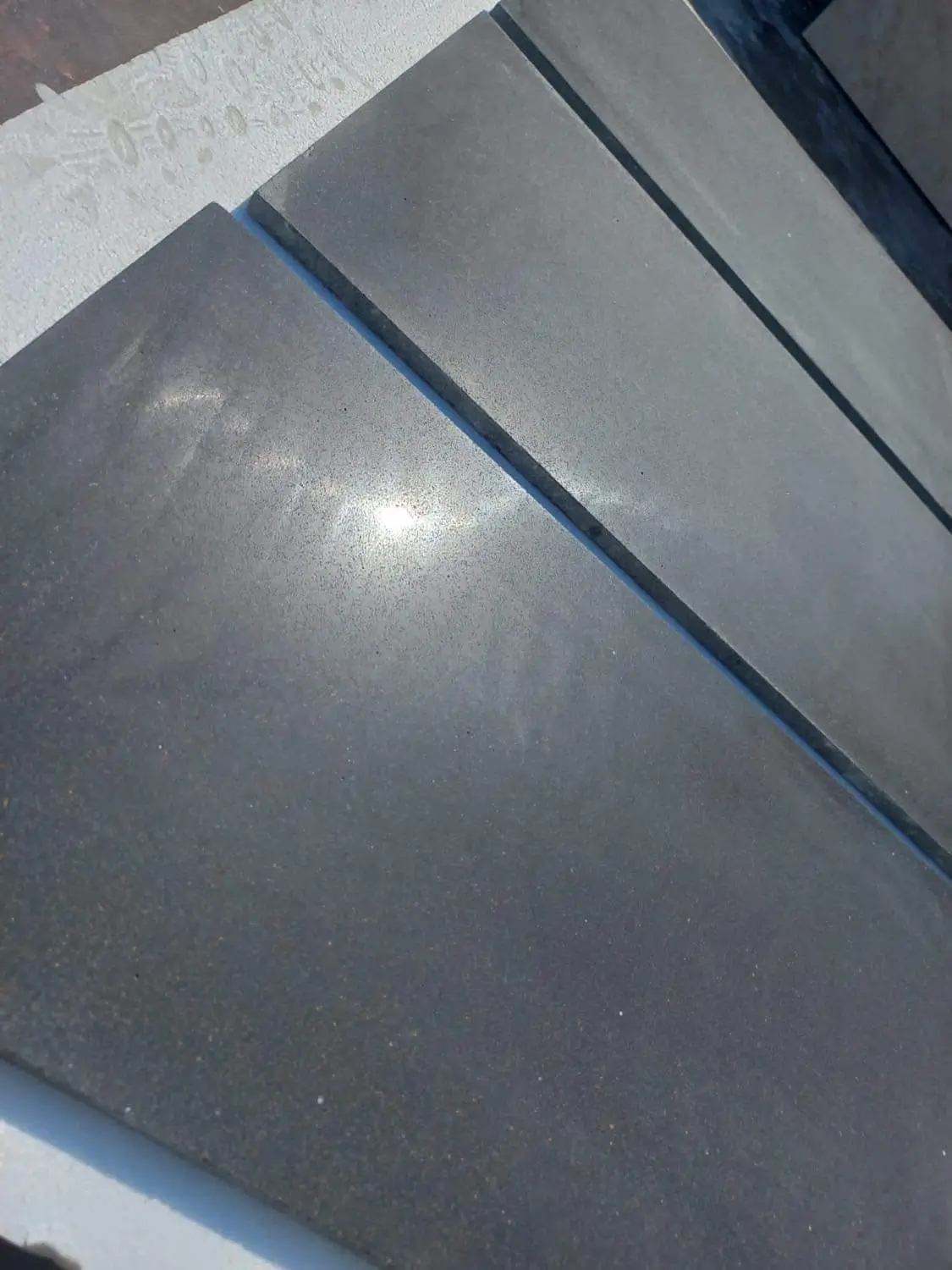
Creating Arizona Peaceful Features with Blue Black Limestone
The design philosophy behind Arizona peaceful features — the Scottsdale zen garden aesthetic in particular — depends heavily on tonal restraint and material consistency. Blue black limestone’s inherent color variation within the same quarry batch (ranging from near-charcoal to blue-gray with mineral veining) gives you the visual depth that single-color manufactured materials simply cannot replicate. Your specification should request material from a single quarry run where possible, or at minimum from the same production batch, so the color range stays within a coherent tonal family across the entire feature area.
At Citadel Stone, we source blue black limestone from quarries with consistent bed thickness and predictable color banding, which means the material you see in the warehouse sample reflects what arrives on the truck for your project. That sourcing consistency becomes especially important in zen garden applications where random color jumps between pieces break the meditative calm the design is trying to achieve. Verifying warehouse stock before finalizing your project schedule also ensures you can pull matching material for future phase additions without color drift.
- Request a quarry batch number on your purchase order to enable future material matching
- Allow for 10–15% overage in your order to account for pattern cuts and future repair needs
- Dry-lay a representative sample area before setting to evaluate tonal distribution across the full installation
- Combine larger format paving (24×24 or 24×36) with smaller accent pieces to create rhythm without pattern repetition
Ordering, Logistics, and Project Scheduling
Coordinating material delivery for water feature surround projects requires more lead time planning than standard paving installations. Blue black limestone paving in Arizona sourced from domestic warehouse inventory typically arrives within 7–10 business days of confirmed order — a significant advantage over the 8–12 week import cycle that affects pricing and scheduling when sourcing direct from overseas quarries. Your project timeline should account for a 3–5 day acclimation period after delivery, particularly for slab-format pieces that may have surface moisture from warehouse storage or transit conditions.
Truck access to the installation site is a practical consideration worth flagging early in the project planning phase. Full-size flatbed delivery trucks need a minimum 14-foot clearance height and a turning radius that many residential zen garden locations in older Scottsdale neighborhoods can’t accommodate without some creative staging. Confirming truck access constraints before the order ships prevents the costly re-delivery scenarios that push project timelines back by a week or more — and in a contractor’s schedule, that week usually hits during the critical base preparation window when material needs to be on-site and ready.
Blue Black Limestone Water Scottsdale: What the Specification Comes Down To
Blue black limestone water Scottsdale specifications come down to getting four things right: material density selection that matches your structural loading, surface texture that clears the wet DCOF threshold for your specific splash zone geometry, a base system that accounts for Arizona’s expansive soil behavior and sustained moisture from the water feature, and a sealing protocol that treats aquatic-adjacent stone differently from standard exterior paving. Miss any one of those variables and you’re looking at a remediation project within the first five years instead of a 20-year installation that actually gains character as it ages.
The design reward for getting these specifications right is genuinely worth the precision investment. Blue black limestone’s tonal depth and thermal mass properties create water feature environments in Scottsdale’s desert landscape that function as genuine restorative spaces — the material and the water work together acoustically and thermally in ways that lighter, less dense stones can’t match. Citadel Stone’s full treatment of finish options across the broader Phoenix market — including how those choices intersect with Arizona peaceful features and blue black paving aquatic Arizona applications — is covered in Blue Black Limestone Paving Texture Varieties for Phoenix Design Options, which extends this specification framework into adjacent texture and finish decisions worth reviewing before you finalize your material order. We define excellence in Blue Limestone Paving Arizona with our commitment to customer service.