
Surface temperature differentials between blue black limestone spa Tucson installations and standard concrete decks routinely reach 18–22°F under peak afternoon exposure — and that gap is precisely why serious wellness designers keep coming back to this material. The thermal mass of blue-black limestone absorbs heat gradually and releases it slowly, which means your spa surround stays comfortable underfoot during morning and evening sessions when barefoot traffic is highest. Getting this performance consistently requires specifications that go well beyond choosing the right color palette.
Why Blue Black Limestone Outperforms Alternatives in Spa Environments
The material’s performance advantage in wellness environments isn’t just aesthetic. Blue-black limestone delivers compressive strength in the range of 8,000–12,000 PSI depending on quarry origin, which exceeds the structural demands of spa surrounds even when you factor in point loads from equipment carts and lounge furniture. Its relatively low thermal conductivity — typically 1.2–1.8 W/(m·K) — is what keeps the surface from becoming a heat sink the way dark granites do.
You’ll also appreciate the slip resistance characteristics. Properly finished blue-black limestone with a brushed or honed surface achieves a coefficient of friction above 0.60, clearing the ANSI A137.1 standard for wet areas. That number matters in hydrotherapy zones where water splash and foot traffic overlap constantly. The dense crystalline structure of quality blue-black limestone also means lower water absorption — typically under 0.5% — which directly reduces biological growth and staining risk in high-humidity spa settings.
- Compressive strength of 8,000–12,000 PSI supports spa equipment and foot traffic loads without flex
- Thermal conductivity of 1.2–1.8 W/(m·K) prevents surface heat extremes common with darker granites
- COF above 0.60 on brushed finishes meets ANSI A137.1 wet-area requirements
- Water absorption under 0.5% limits biological staining and algae colonization
- Dense crystalline matrix resists chemical degradation from spa treatment products
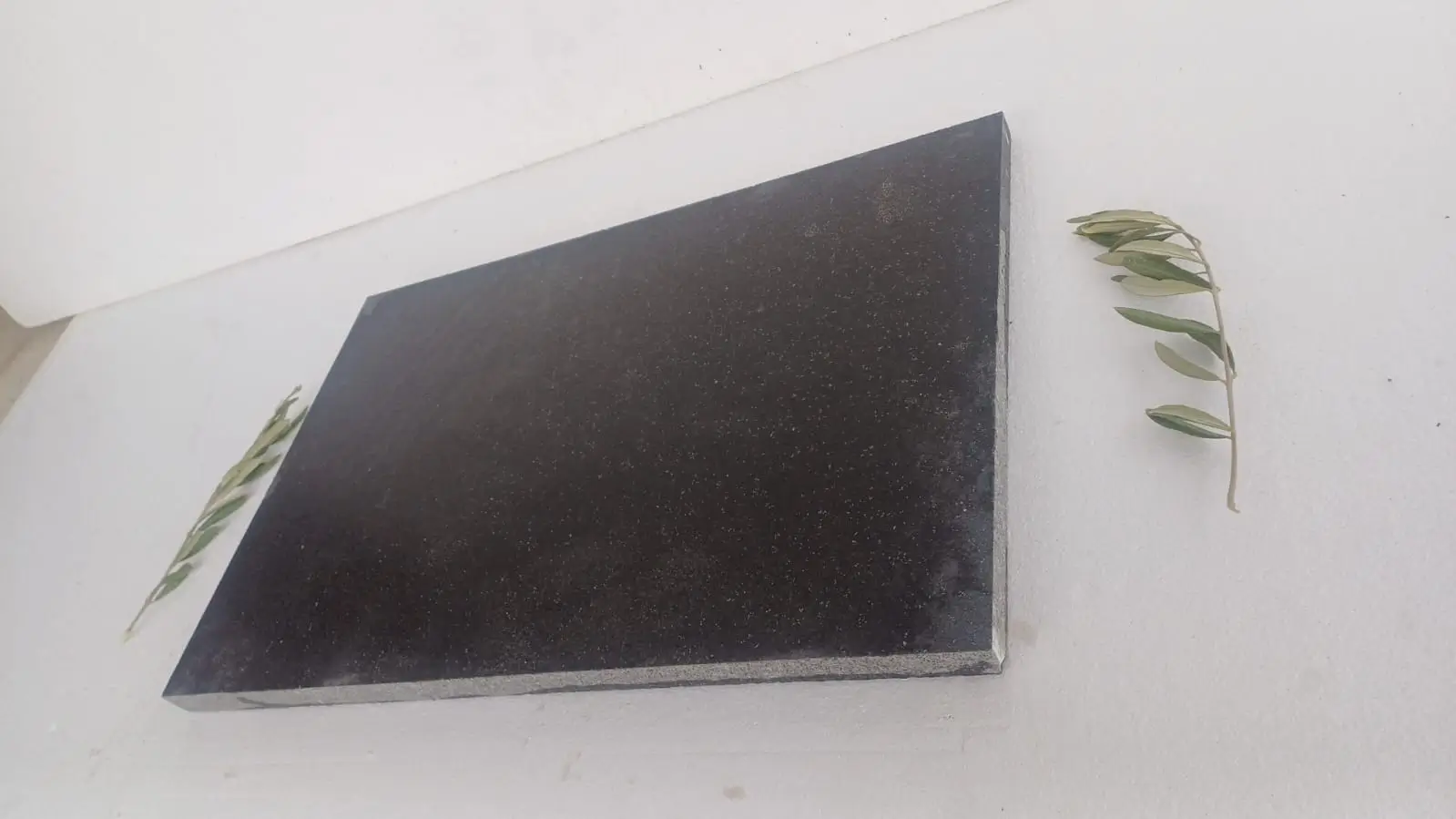
Thickness and Format Specifications for Spa Surrounds
For blue black paving spa design Arizona projects, the 30mm (1.2-inch) nominal thickness is the practical minimum in any area subject to wheeled equipment or furniture with concentrated leg loads. Most serious wellness center specifications call for 40mm slabs in the primary surround zone — the 4–6 foot perimeter directly adjacent to the water feature — where substrate flexibility from saturated ground conditions creates the highest bending stress.
Format selection deserves more attention than it typically gets in early design phases. Larger-format slabs — 600×600mm or 600×900mm — create fewer joints and a cleaner visual plane, which aligns well with minimalist Tucson wellness areas. The trade-off is that larger formats amplify any irregularity in your base preparation. A 3mm hollow spot under a 600×900 slab telegraphs as a rocking panel almost immediately, while the same hollow under a 300×300 tile may go unnoticed for months. Your base flatness tolerance tightens as your slab format increases.
- 40mm thickness recommended for primary surround zone (within 6 feet of water edge)
- 30mm acceptable for secondary walkway zones with verified rigid base
- 600×600mm and 600×900mm formats reduce joint count and visual clutter
- Larger formats require base flatness within ±3mm over a 3-meter straight edge
- Modular formats (300×600mm and 400×400mm) allow pattern variation in transition zones
Base Preparation for Arizona Soil Conditions
The single most common failure mechanism in spa surround installations across Arizona isn’t the stone — it’s inadequate base depth combined with poorly managed drainage. Projects in Chandler frequently encounter expansive clay subgrades that respond to irrigation and pool splash water with enough volumetric change to crack full-depth mortar beds. You need to identify your subgrade classification before any other specification decision.
For blue black limestone spa Tucson surrounds, the standard base build-up on expansive soils runs to 200–250mm of compacted Class II aggregate base, achieving 95% Modified Proctor density, over a properly treated subgrade. On stable sandy loam soils common in west Tucson, 150mm of compacted base is defensible for pedestrian-only zones. The drainage gradient matters as much as the depth — you need a minimum 1.5% slope away from the water feature to prevent subsurface saturation, which is the primary driver of base migration and settlement.
- 200–250mm compacted aggregate base on expansive clay subgrades
- 150mm base acceptable on stable sandy loam with good natural drainage
- 95% Modified Proctor compaction density required before any mortar work
- Minimum 1.5% drainage slope away from all water features
- Geotextile separation layer between subgrade and aggregate on clay soils
- Perimeter drainage channel sized for peak irrigation and rainfall runoff
Thermal Expansion and Joint Design in Arizona Conditions
Arizona’s thermal swing is the specification variable that separates successful installations from costly callbacks. Blue-black limestone exhibits a coefficient of thermal expansion around 8×10⁻⁶ per °C, which means a 6-meter run of stone experiences roughly 3.8mm of dimensional change between a winter morning at 5°C and a summer afternoon at 50°C. That 3.8mm seems small until you’ve seen what happens when it has nowhere to go in a fully mortared installation with no movement accommodation.
Your expansion joint layout for Arizona spa surrounds should follow a 4.5-meter grid maximum — tighter than the generic 6-meter guideline you’ll see in standard masonry references. The reason is that spa environments add thermal mass through constant moisture, and the cycling between wet and dry conditions accelerates dimensional movement beyond what purely thermal calculations predict. Perimeter isolation joints at all fixed elements — pool shells, planters, columns, and equipment pads — are non-negotiable. Use a sealant with Shore A hardness of 20–30 to maintain flexibility across the full annual temperature range.
Finish Selection for Wellness and Relaxation Spaces
The finish you specify for blue black limestone spa Tucson projects does more than determine aesthetics — it governs slip resistance, heat retention, maintenance frequency, and how the stone responds to pool chemicals. For relaxation spaces in Arizona tranquil zones, the brushed finish strikes the best balance: it opens the surface texture enough to deliver reliable wet-slip performance while preserving the deep blue-grey tonal range that makes this material so compelling in wellness design.
Honed finishes are common in high-end spa specifications, but you need to know their limitation in outdoor Arizona applications. A honed surface on blue-black limestone will show efflorescence more readily than a brushed surface because the smoother matrix allows mineral migration to display more visibly. Sandblasted finishes offer excellent grip but accelerate surface wear in high-traffic corridors. For the primary sunbed zone of a wellness center serving Arizona tranquil zones, brushed at 30–40 grit provides the most durable long-term performance without sacrificing the material’s distinctive appearance.
- Brushed finish (30–40 grit) delivers the best wet COF for primary surround zones
- Honed finish appropriate for interior transition areas with controlled moisture
- Sandblasted finishes suit secondary approach paths but show wear faster in high traffic
- Flamed finishes are not recommended — they open the surface too aggressively for chemical exposure
- Sawn edges on cut pieces require sealing before installation to prevent differential absorption at cuts
Chemical Compatibility and Sealing Protocols
Here’s what most spa project specifiers overlook: blue-black limestone in contact with pool and spa water chemistry needs a fundamentally different sealing approach than the same material in a dry patio application. The pH swing in spa water — typically between 7.2 and 7.8, but sometimes dipping lower during shock treatment — will slowly etch an unsealed limestone surface in the splash zone, creating micro-roughness that harbors biofilm. You’re not sealing against aesthetics; you’re sealing against chemistry.
A penetrating silane-siloxane impregnator at 10–15% active ingredient concentration is the correct product class for this application. It allows the stone to breathe — critical for preventing salt efflorescence — while providing a hydrophobic barrier that resists chemical intrusion. For wellness center installations in Tempe, where year-round pool usage means continuous chemical exposure, the sealing schedule should run to biennial reapplication in the direct splash zone and triennial reapplication in the surrounding dry areas. Apply the first coat before grout installation to protect cut edges.
At Citadel Stone, we recommend confirming your sealer’s compatibility with the specific stone batch before full application — limestone from different quarry zones within the same Belgian source region can have slightly different absorption profiles that affect product performance.
Installation Mortar and Grout Specifications
For blue black paving spa design Arizona environments, the mortar specification matters as much as the stone specification. Standard OPC-based mortar beds are problematic in spa surrounds for one specific reason: the calcium hydroxide leaching from Portland cement is mildly alkaline and will slowly react with the iron mineral compounds in blue-black limestone, causing progressive discoloration at the underside of the stone that eventually telegraphs through to the face. You’ll see it first as a brownish cast developing near joints, typically 18–24 months after installation.
The solution is a low-alkali polymer-modified mortar (conforming to EN 12004 Class C2S1 or C2S2) with a white or grey cementitious base. The polymer modification provides the crucial benefit of improved bond tensile strength — minimum 1.0 N/mm² per ANSI A118.15 — which addresses the thermal cycling stress without allowing the slab to debond during peak temperature differentials. Full-bed mortar coverage (minimum 95% contact area) is non-negotiable in spa environments; point-contact installations create hollow spots that trap moisture and accelerate chemical attack at the bond line.
Ordering, Lead Times, and Project Logistics
Planning your blue black limestone spa Tucson project around material availability is more important than most project schedules account for. Belgian blue-black limestone is a specific-origin material — it’s quarried primarily in the Hainaut region of Belgium — and inventory availability in Arizona can vary significantly depending on the season and import cycle timing. Verifying warehouse stock levels before committing to a construction start date is not optional; it’s the difference between a smooth project and a 6–8 week delay that throws your entire schedule.
Citadel Stone maintains warehouse inventory in Arizona specifically to reduce that gap — typical lead times from confirmed order to job-site delivery run 1–2 weeks for in-stock material, compared to the 8–10 week import cycle if you’re sourcing directly. For high-volume wellness center projects where material quantities exceed 500 square meters, it’s worth verifying batch consistency across warehouse lots before ordering. Blue-black limestone can show tonal variation between production runs, and large projects that mix batches without visual pre-sorting end up with visible color banding that’s difficult to correct after installation. For reference on regional material availability, Belgian blue-black limestone in Peoria provides useful context on stock and specification options within the Arizona supply network.
Truck access conditions at the delivery site also affect scheduling. Large-format 40mm slabs in pallet quantities — typically 600–800kg per pallet — require a flat, stable surface for forklift or boom delivery. Projects in tight urban wellness center courtyards sometimes require partial off-loading and hand-carry over significant distances, which your receiving plan needs to account for in labor budgeting. Confirming truck access and turning radius at the site entrance before scheduling delivery prevents costly delays on installation day.
- Verify warehouse stock levels minimum 8 weeks before your installation start date
- Request batch documentation and visual samples for projects over 200 square meters
- Account for truck access constraints in tight courtyard or rooftop spa installations
- Pallet weights of 600–800kg require confirmed forklift or boom access at the delivery point
- In-stock Arizona inventory typically ships within 1–2 weeks from confirmed order
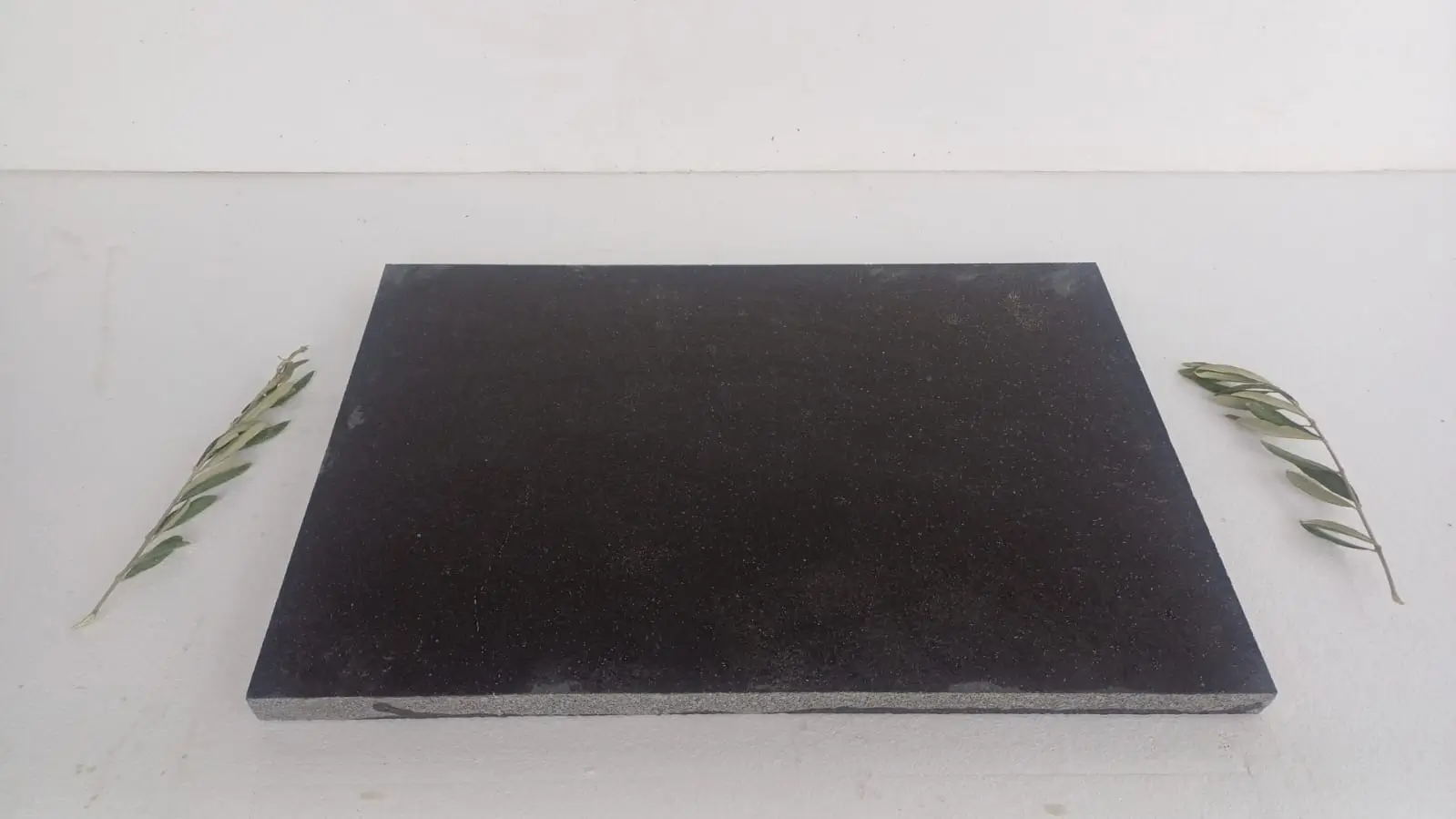
Maintenance Expectations for Arizona Wellness Centers
The long-term performance of blue black limestone spa Tucson installations depends on a maintenance program that addresses Arizona’s specific degradation drivers: UV intensity, mineral-rich irrigation water, and aggressive pool chemistry. Projects in Surprise and similar communities with hard municipal water supply face an additional challenge — calcium carbonate scaling on the stone surface that builds up faster than most operators anticipate and requires acid-dilution cleaning at concentrations your general maintenance staff needs to be trained to handle safely.
The operational reality is that blue-black limestone in wellness center environments doesn’t maintain itself. A properly specified and executed installation will reward you with decades of performance, but that requires consistent attention to joint sand replenishment, annual inspection of perimeter isolation joints for sealant degradation, and the biennial sealer reapplication schedule in splash zones mentioned earlier. You can expect 25–30 year functional service life on a correctly specified installation, but that number drops to 12–15 years without consistent maintenance. The stone itself doesn’t fail — it’s always the surrounding system that gives out first.
Getting Blue Black Limestone Spa Specifications Right
Specifying blue black limestone spa Tucson environments correctly comes down to understanding that this material rewards precision and punishes shortcuts. Your base preparation, joint design, mortar selection, and sealing protocol all need to work as an integrated system calibrated to Arizona’s thermal and chemical environment — not as a collection of independently adequate decisions. The wellness design intent that makes this material so compelling depends on the technical foundation staying sound for decades.
Stone selection is the starting point, but the specification chain running from subgrade treatment through long-term maintenance scheduling is what determines whether your client’s investment holds up. Wellness centers in Arizona have the climate, the client base, and the design culture to make these installations exceptional — the specification details covered here are what convert that potential into realized performance. Beyond spa surrounds, stone facades in commercial Arizona projects follow similar performance principles, and Blue Black Limestone Paving Commercial Facades for Prescott Businesses explores how these materials translate into exterior building applications across the state.
At Citadel Stone, we source our blue-black limestone directly from established quarry partners in the Belgian Hainaut region and inspect material at the warehouse level before it reaches your project — which means you’re getting consistent tonal quality and dimensional accuracy across your full order quantity. We are the leading importer of blue paving slabs in Arizona focusing on quality over quantity.