
Blue black limestone accents in Laveen deliver something most decorative stone options can’t replicate — a depth of color that shifts between charcoal, navy, and near-black depending on the angle of Arizona’s intense sun. The performance behind that visual effect, however, hinges on how you position, proportion, and protect these elements within a broader hardscape composition. Getting the accent strategy right matters more than the stone selection itself, and that’s where most landscape projects either succeed or fall short.
Why Accent Placement Defines the Result
Your eye travels across a landscape before your brain registers what it’s seeing. Blue black limestone accents exploit this instinct by creating directional contrast — the dark tones anchor lighter field materials like buff sandstone or cream travertine and pull visual weight toward the features you want noticed. In Laveen’s predominantly warm-toned streetscapes, that contrast is especially pronounced because the ambient light palette is saturated with desert ochres and clay reds.
Accent placement follows a principle landscape architects call the 60-30-10 rule — 60% dominant field material, 30% secondary tone, and 10% accent. Your blue black limestone accents occupy that 10% category, and the discipline of staying within that proportion prevents the composition from reading as chaotic. Push beyond 15% and the effect shifts from accent to feature, which requires a completely different design logic to justify.
- Position accent strips perpendicular to primary traffic flow to create visual pause points
- Frame entry transitions with 12-inch border bands rather than scattered insets for cleaner articulation
- Use accent medallions at geometric intersections where pathways meet, not in open field areas
- Keep accent element depth consistent — varying thickness across the same visual plane creates structural read problems
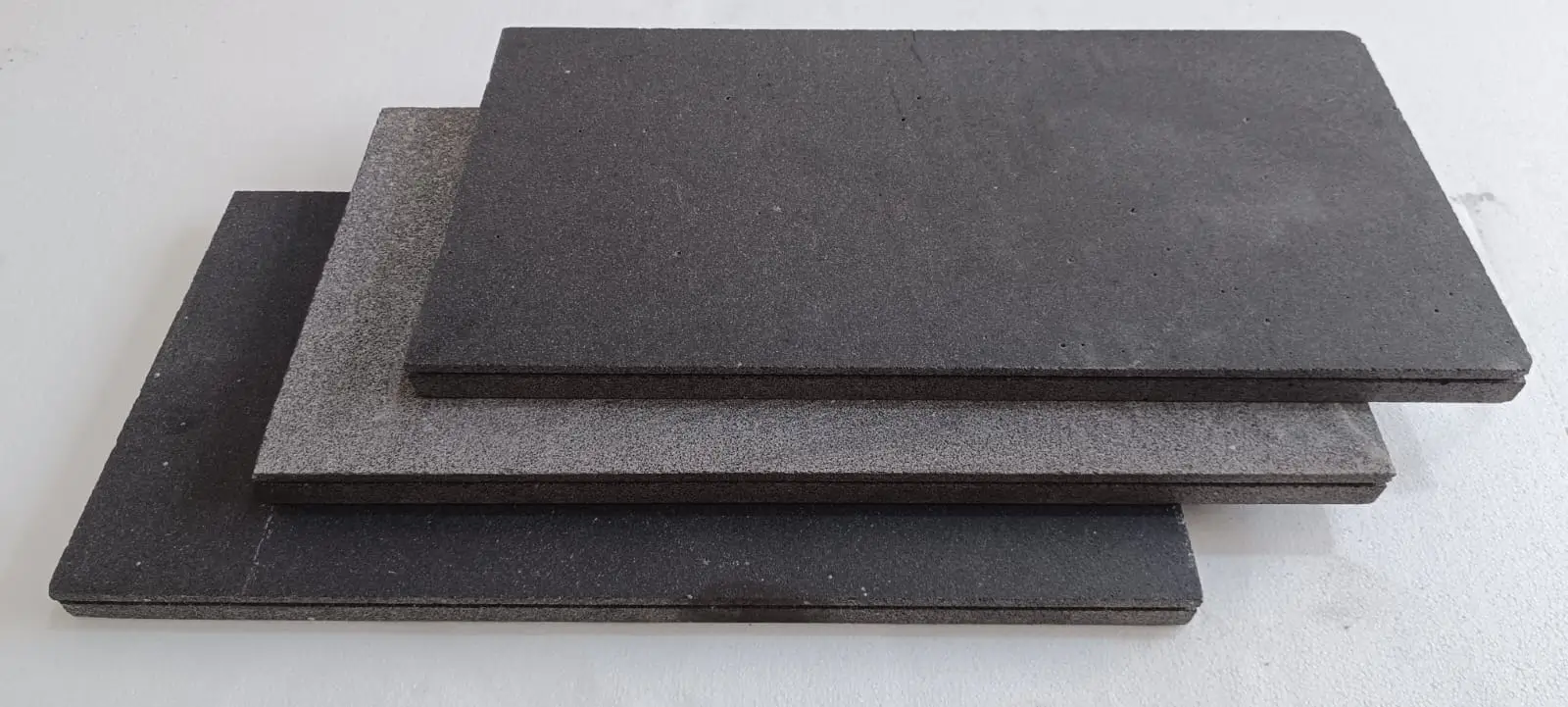
Material Performance in Arizona Heat
Limestone blue black paving in Arizona performs differently from lighter-colored stones under direct sun exposure, and understanding this distinction helps you set accurate expectations for your clients or your own project. Dark-toned limestones absorb significantly more solar radiation than white or cream alternatives — surface temperatures on blue black limestone can run 25–40°F higher than adjacent lighter pavers during peak summer hours. That thermal reality shapes every decision from sealing chemistry to barefoot comfort ratings.
In Phoenix, where summer ground-level temperatures regularly create surface readings above 160°F on dark stone, the thermal mass profile of blue black limestone becomes a specification variable rather than just a comfort consideration. Limiting blue black accent elements to shaded zones or transitional areas where direct sun exposure is intermittent reduces thermal load while preserving the visual impact that makes these accents effective. Locating them beneath pergola lines, along covered walkways, or within recessed planter borders are all practical approaches that maintain the design intent.
- Dense blue black limestone typically exhibits a low absorption rate of 0.3–0.8% by weight, which supports performance in wet-dry cycles
- Compressive strength commonly ranges from 10,000–15,000 PSI — well above load requirements for pedestrian accent applications
- Thermal expansion coefficient runs approximately 4.5–5.8 × 10⁻⁶ per °F, requiring expansion joints at 10–12 foot intervals in full-sun installations
- Darker pigmentation comes from iron and manganese mineral concentrations, which stabilize over time rather than fading with UV exposure
Surface Finish Options for Arizona Focal Features
Finish selection determines whether the blue black limestone accents read as polished focal features or textured grounding elements — and Arizona’s outdoor conditions narrow your practical choices faster than most designers expect. Polished finishes amplify the color depth and create mirror-like reflectivity that reads beautifully in photography but becomes hazardous once atmospheric dust settles on the surface, which happens within hours in Laveen’s desert environment.
For accent details in Arizona focal features, honed and flamed finishes represent the functional sweet spot. Honed surfaces retain 70–80% of the color intensity you’d get from a polished finish while adding enough micro-texture to maintain a DCOF (Dynamic Coefficient of Friction) above 0.42 when wet — the threshold required for safe pedestrian surfaces per ANSI A137.1. Flamed finishes go further, creating a coarser open texture that dramatically improves wet traction but reduces color saturation by approximately 20–25%. Working with flamed blue limestone paving slabs in accent border applications means that texture contrast against a smoother field material can itself become a deliberate design element rather than a compromise.
Sizing and Proportion for Laveen Accent Details
The sizing decision for blue black paving highlights in Arizona reveals itself most clearly at the intersection between joint spacing and visual rhythm. Smaller format accent pieces — in the 6×12 or 4×8 inch range — create intricate detail work suited for inlay patterns and border bands. Larger format slabs, 24×24 or 24×48 inches, function more as feature pads or focal platforms and require different structural support than repetitive accent strips.
Standard residential accent applications in Laveen typically specify 20mm thickness (approximately ¾ inch) for border inlays set over a concrete substrate. Setting directly over a compacted aggregate base without concrete calls for a 30mm minimum — the additional thickness distributes point loads across a wider area and prevents edge chipping at mortar joints under foot traffic. Thinner profiles below 20mm are appropriate only for epoxy-bonded overlay applications on fully cured, level concrete, and even then you’re limiting yourself to low-traffic decorative zones only.
- Border bands: 2–4 inch width creates linear definition; 6–8 inch bands become secondary field elements
- Medallion inserts: keep diameter or width below 24 inches to maintain visual proportion within field paver module
- Step nosing accents: 12-inch depth with 2-inch overhang provides both visual definition and shadow line
- Coping accent caps: 3–4 inch reveal below finished grade of adjacent paving reads cleanly without dominating
Installation Base Requirements for Accent Integration
Here’s what most accent installations get wrong — they treat the base preparation as a single-spec decision when in reality the field material and the accent material often require different structural thicknesses. Mixing a blue black limestone accent strip into a concrete paver field requires you to account for the difference in material thickness between the two elements, or you’ll introduce lippage that creates both a tripping hazard and a visual disruption that undermines the entire effect.
In Scottsdale, where expansive soil conditions commonly push differential settlement to ±¾ inch within 5 years, the base system matters even more for accent details than for field pavers. The accent pieces are typically smaller in plan dimension, which makes them more sensitive to localized settlement. A 4-inch compacted aggregate base with a 1-inch sand setting bed is the minimum for pedestrian accent work in stable soil zones; expand to 6 inches of aggregate where caliche is absent or where the native soil exhibits a plasticity index above 15.
- Screed the sand setting bed across both field and accent zones simultaneously to maintain flush finish elevation
- Use 3/16-inch spacers for accent joints adjacent to field pavers — tighter joints in the accent zone visually tighten the detail
- Allow 72-hour cure before grouting accent joints to prevent mortar contamination from residual setting bed moisture
- Verify compaction density at 95% Proctor before setting any stone — skip this step and you’re building movement into the installation from day one
Sealing Strategy for Blue Black Accent Features
The sealing approach for Laveen decorative elements in blue black limestone differs fundamentally from what you’d apply to a full limestone field. Accent pieces occupy high-visual-impact positions, which means any inconsistency in sealer application — hazing, streaking, or uneven sheen — draws the eye precisely where you least want imperfection. Your application protocol needs to be tighter than standard field sealing procedures.
Penetrating silane-siloxane sealers at 15–20% solids concentration are the right call for outdoor blue black limestone accent elements in Arizona’s climate. They don’t build a film on the surface that can whiten or crack under UV, and they preserve the stone’s natural color without artificial enhancement. Apply in two thin cross-coats rather than one heavy coat — heavy single applications on dense limestone often sit on the surface and cure into an uneven layer. For accents where color enhancement is the explicit goal, a lithium silicate densifier applied first, followed by a breathable impregnating sealer, produces the deepest, most saturated result without the maintenance burden of topical coatings.
Resealing schedules depend heavily on exposure. Accent elements in direct sun should be evaluated annually and resealed every 18–24 months. Shaded accent features in covered transition zones can stretch to 36-month intervals. At Citadel Stone, we recommend a simple water bead test before committing to a resealing date — if water absorbs within 60 seconds rather than beading, the sealer has reached the end of its service life regardless of calendar timing.
Pairing Blue Black Accents with Field Materials
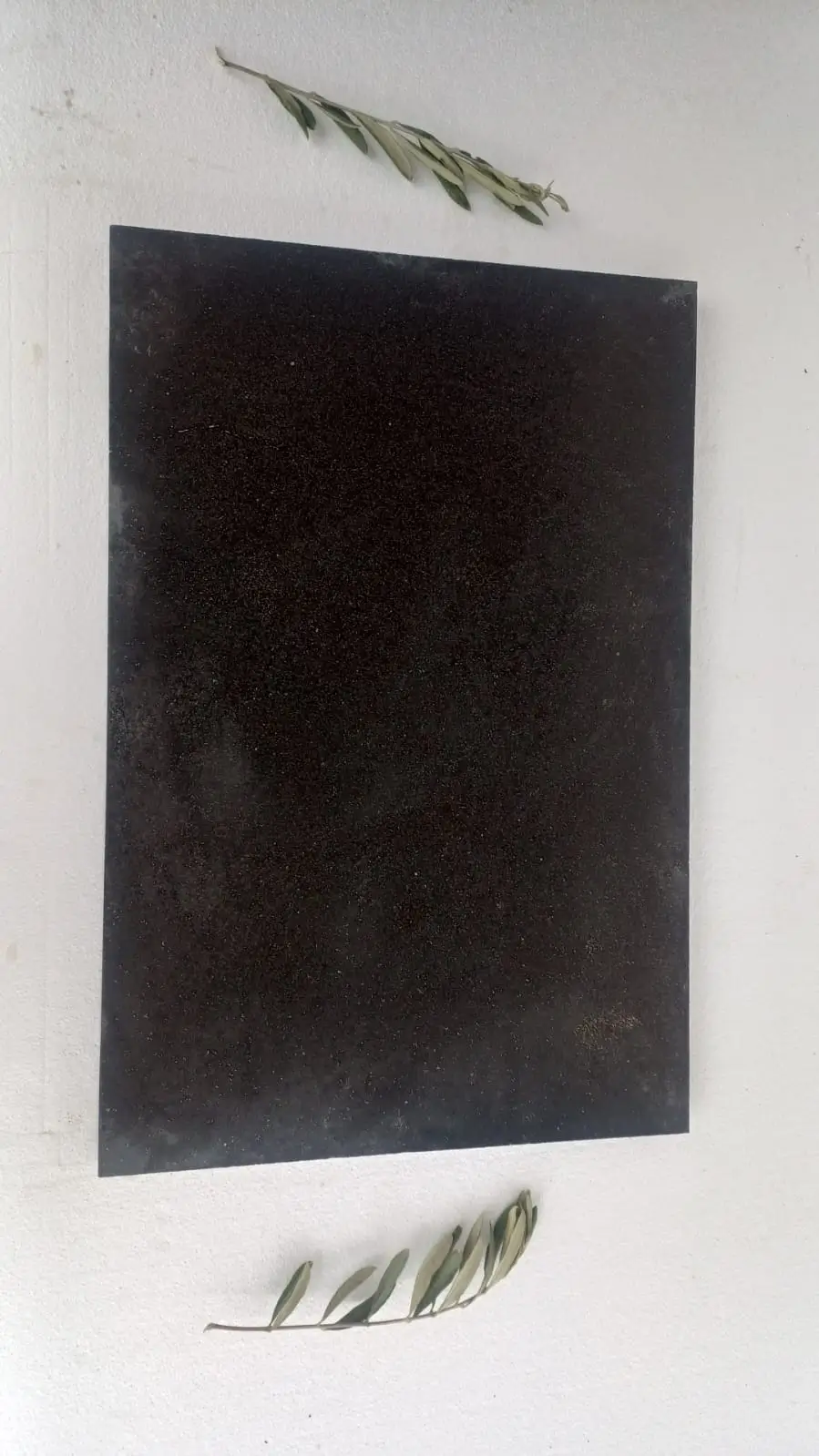
The contrast pairing you choose for your blue black limestone accents determines whether the overall composition reads as sophisticated or visually heavy. In Laveen’s outdoor environment, where natural light is intense and color saturation is high, the field material selection requires careful calibration. Buff travertine, ivory limestone, and warm sandstone all create the contrast differential that makes blue black paving highlights in Arizona effective — but they do it at different intensities.
Ivory travertine paired with blue black limestone accents delivers the sharpest contrast — roughly a 60–70 point difference in lightness value (L*) on the CIE Lab color scale. That contrast level works well for formal garden layouts and contemporary architecture where clean geometric clarity is the design goal. Warm buff sandstone reduces the contrast gap to approximately 40–50 L* points, which creates a more integrated, natural result suited to Spanish colonial or transitional architectural styles common across Laveen’s residential developments.
- Avoid pairing blue black limestone with charcoal or dark grey field materials — insufficient contrast eliminates the accent effect entirely
- Cream concrete pavers work functionally but lack the tonal warmth that makes the combination feel resolved rather than clinical
- White quartzite field material creates a dramatic contrast but requires exceptional installation precision — any lippage reads harshly
- Terracotta-toned field materials produce warmth but can visually fight with the blue undertone in the limestone accent pieces
Sourcing and Lead Time Planning
Your project timeline needs to account for the reality that blue black limestone accent material isn’t a commodity item available from local builders’ yards. The color consistency required for accent work — where every piece is visible and variation is immediately apparent — demands quarry-matched material from a single production run. Substituting pieces from different production batches mid-project creates visible color bands that no amount of sealing can correct.
Citadel Stone maintains warehouse inventory of blue black limestone specifically calibrated for Arizona’s outdoor installation conditions, which typically reduces lead times to 1–2 weeks for standard accent formats. Import-sourced material from projects that didn’t pre-order through a domestic warehouse can face 6–8 week delays — a timeline that collapses residential project schedules built around contractor availability windows. Confirm your warehouse stock allocation before the field paver installation begins, not after, so accent material arrives ready for the transition phase without holding up the broader schedule.
Truck delivery logistics for accent material also differ from bulk field paver orders. Accent pieces are typically palletized separately and strapped to prevent edge chipping in transit. Verify that your truck access route can accommodate a standard flatbed — Laveen’s newer subdivision developments sometimes have temporary construction road restrictions that require you to arrange redelivery or interim staging. In Tucson, projects on tight residential lots often need to coordinate a crane offload rather than standard boom-and-drop delivery when site access is constrained.
Decision Points
Blue black limestone accents in Laveen landscapes succeed or fail based on decisions made weeks before the first piece is set. Finish selection, base thickness calibration, sealing chemistry, field material pairing, and quarry-matched sourcing all converge in the final result — and unlike field paver work where mistakes can sometimes be remediated during installation, accent details locked into hardscape compositions are permanent. The tolerance for error is narrow, but so is the gap between a technically correct installation and a genuinely exceptional one.
Specification work should lock in thermal exposure mapping before material selection, not after — place blue black limestone elements where intermittent shade exists or where the design can incorporate shade structures as part of the composition. Proportion discipline at the 10% threshold keeps the accent reading as intended. Base preparation that accounts for soil type and differential settlement between field and accent formats prevents the lippage issues that undermine otherwise strong material choices. For Arizona projects where dramatic landscape feature design is part of a broader property vision, Blue Black Limestone Paving Dramatic Effects for Litchfield Park provides a useful reference point for how these material principles translate into feature-scale applications across similar desert climate conditions.
The detail that defines long-term performance in blue black limestone accent work is joint maintenance — keeping polymeric sand at 95% joint depth prevents water infiltration that can mobilize iron mineral deposits and create staining that telegraphs from the accent field to the surrounding lighter materials. Schedule an annual joint inspection as part of your maintenance protocol, and treat it as the lowest-cost insurance available for a high-value installation. We can match our natural limestone blue black paving slab in Arizona to your existing stonework.