

Base failure is the most common reason 3cm travertine paver installations in Arizona underperform — not material quality, not sealing schedules, but what sits underneath. Learning how to install 3cm travertine pavers in Arizona means understanding that the desert environment creates compaction and expansion dynamics that standard installation manuals written for temperate climates simply don’t address. Your 30mm slab is doing its job; the base needs to do its job first. Get that sequence wrong and you’ll be releveling pavers within three seasons regardless of how good the stone is.
Why 3cm Thickness Is the Right Call for Arizona Outdoor Projects
The 30mm nominal thickness isn’t arbitrary — it’s the minimum cross-section that gives travertine enough structural mass to resist point-load cracking under patio furniture, heavy foot traffic, and the thermal cycling Arizona imposes daily. Thinner slabs at 2cm flex under concentrated load, and in extreme heat that flexion compounds over time, producing hairline fractures along the vein structure. The 3cm format distributes load laterally, which is exactly what you need on a substrate that expands and contracts with 50°F daily temperature swings in summer.
Travertine’s thermal expansion coefficient runs roughly 4.4 to 5.0 × 10⁻⁶ per °F, which sounds modest until you calculate cumulative movement across a 400 sq ft patio. You’re looking at meaningful dimensional shift at the perimeter, and 3cm pavers have the edge mass to accommodate that movement without spalling. Thinner stone doesn’t give you the same edge integrity at expansion joints.
- 30mm travertine pavers in Arizona handle point loads from outdoor furniture legs without flexural cracking
- Greater thickness provides edge stability at cut lines near pool coping and borders
- The increased thermal mass moderates surface temperature spikes by 8–12°F compared to thinner alternatives
- 3cm format is compatible with standard pedestal systems for elevated deck applications
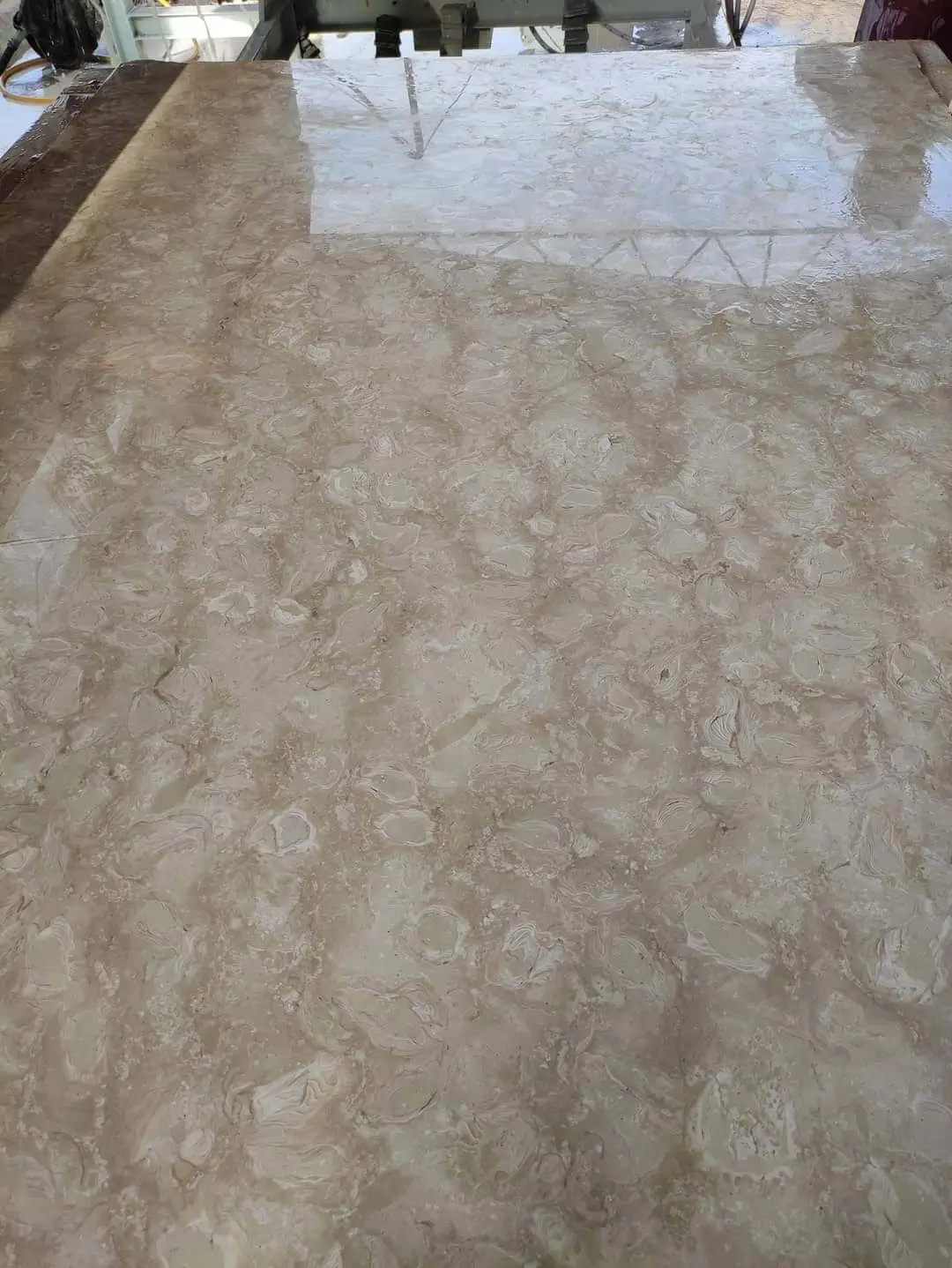
Base Preparation: The Step That Defines Your Installation’s Lifespan
The outdoor travertine paver base preparation guide for Arizona starts with understanding your native soil. The Sonoran Desert’s native soils range from loose sandy loam to dense caliche hardpan depending on your location, and each presents a different challenge. Sandy soils drain fast but shift; caliche resists excavation but provides a surprisingly stable subgrade when properly treated. Neither soil type responds well to underprepared compaction.
Excavation depth should target a minimum of 8 inches below finished paver surface — 4 inches of Class II road base compacted in two lifts, 1.5 inches of coarse bedding sand, and your 3cm paver. In areas with documented expansive clay content, you’ll want to extend that to 10–12 inches and include a geotextile separation fabric between native soil and aggregate. Skipping the fabric in clay-zone soils is a call that looks fine at installation and costs you significantly in year two.
- Compact native subgrade to 95% Proctor density before importing any aggregate
- Use angular, crushed Class II base rock — rounded aggregate migrates under load
- Compact base in two 2-inch lifts, not a single 4-inch pour, for consistent density throughout
- Check compaction with a nuclear density gauge, not just a plate compactor pass count
- Allow 24 hours between compaction lifts in summer heat to avoid thermal rebound in the aggregate layer
Projects in Mesa frequently encounter caliche hardpan at 18–24 inches, which actually provides an excellent sub-base when properly scarified and compacted to a flat plane — you just need to break the sealed surface so moisture can move through rather than pool beneath your base layer.
Laying Thick Travertine Stone Pavers on Arizona Patios
The bedding sand layer is where most DIY installations go wrong, and it’s a simple fix when you understand what’s happening. Coarse concrete sand — not masonry sand, not play sand — screeded to 1.5 inches compacted depth provides the setting bed for your 3cm pavers. The larger particle size in concrete sand resists migration under the weight of 30mm travertine, which runs approximately 19–22 lbs per sq ft depending on density grade.
Screed rails set at your target finish elevation give you a consistent bedding plane. Pull the screed board in one direction only, then remove the rails and fill the channels before placing any pavers. Your pavers go down on the undisturbed sand surface — no foot traffic on the screeded bed. Laying thick travertine stone pavers on Arizona patios requires this sequence above almost any other detail because disturbed bedding sand creates low spots that trap water and promote efflorescence.
- Set pavers with a rubber mallet, seating each one with 3–4 firm strikes across the face
- Use a 4-foot level across every third course to catch differential settlement early
- Maintain 1/8-inch to 3/16-inch joint spacing for polymeric sand compatibility
- Never back-butter 3cm travertine — full-bed contact is the only acceptable method
- Work in sections of 20–30 sq ft, completing and leveling each before moving on
Joint Spacing and Expansion Control in Desert Heat
Standard joint spacing recommendations in most installation literature target 1/8-inch, which is adequate in moderate climates. For Arizona installations, you’ll want to bump that to 3/16-inch in field joints and plan perimeter expansion joints every 12–15 linear feet rather than the 20-foot standard. The cumulative thermal movement in a Phoenix-area summer exceeds what 1/8-inch joints can absorb without transferring stress into the paver face.
Perimeter expansion joints should be filled with an ASTM C920 grade polyurethane sealant, not polymeric sand. That sealant joint needs to be 3/8-inch wide and full depth — a common field error is filling the bottom half with backer rod and shorting the sealant depth, which creates a rigid point that telegraphs movement back into the stone. The sealant needs purchase depth to function as a true expansion buffer.
For detailed guidance on how we approach the Arizona desert-rated travertine paver installation process for 30mm stone in demanding climates, visit our 3cm travertine paving process for Arizona — it covers material sourcing and specification considerations that inform your joint design decisions before installation begins.
Sand Setting vs. Mortar Bed: Which Method Works for Your Project
The sand-set method described above is appropriate for residential patios, walkways, and pool decks where the substrate is stable and properly prepared. Mortar-bed installation on a concrete slab introduces a different set of variables and is the right call for elevated applications, areas with zero tolerance for differential settlement, and commercial-grade projects with high point-load exposure.
Mortar-set 3cm travertine on an existing slab requires a bond coat of thinset conforming to ANSI A118.4 or better — not standard floor tile thinset, which lacks the flexibility needed for exterior thermal cycling. The slab substrate must be clean, sound, and achieve a minimum surface tensile strength of 150 psi. Test for slab moisture vapor emission before committing to mortar set; readings above 8 lbs per 1,000 sq ft per 24 hours require a moisture mitigation membrane.
- Mortar bed thickness for 3cm pavers: 3/4-inch to 1-inch compressed, never thinner
- Back-butter is required on mortar-set applications — full coverage, no voids behind the paver
- Control joints in the concrete slab must be honored through the mortar bed and paver layer
- Allow 72-hour cure before grouting in summer conditions — accelerated evaporation shortens working time
Selecting the Right Travertine Grade for Desert Applications
Travertine comes in four fill classifications — filled, unfilled, brushed, and tumbled — and for Arizona exterior applications, filled or filled-and-honed is the specification that holds up. Unfilled travertine looks stunning in catalog photos, but the natural voids collect grit, organic debris, and moisture, which in Arizona’s alkaline environment produces calcium carbonate migration and staining that’s difficult to reverse.
Porosity is the other variable most specifications overlook. Premium-grade travertine used for laying thick travertine stone pavers on Arizona patios should test at or below 3.5% water absorption per ASTM C97. Stone above that absorption threshold requires more aggressive sealing schedules — two-coat initial application plus annual resealing rather than the biennial schedule that lower-porosity material allows. At Citadel Stone, we test warehouse stock for absorption rates before it ships, because that single variable affects every downstream decision from sealer selection to long-term maintenance cost.
- Specify Classic or Premium grade travertine, not Standard, for Arizona exterior applications
- Request absorption test data (ASTM C97) from your supplier before finalizing the order
- Filled travertine offers better long-term surface stability in high-grit desert environments
- Honed finish provides better slip resistance than polished at pool-adjacent applications
Sealing Schedule and Product Selection for Arizona Conditions
Sealing is not optional for outdoor travertine in Arizona — it’s a maintenance requirement built into the specification. The UV intensity at Arizona’s latitude, combined with repeated wetting and drying from monsoon-season storms, depletes sealant films faster than any other domestic climate. A penetrating silane-siloxane sealer at 40% concentration is the correct product for exterior travertine, not a topical acrylic coating. Topical coatings trap moisture during monsoon season and peel under the thermal cycling.
The first sealing application should happen before grouting — apply a sacrificial coat to the paver face to prevent grout haze from bonding to the stone surface. Then seal again 28–30 days after grouting, once the installation has cured and any efflorescence has been treated. After that, a biennial resealing schedule maintains protection in low-desert climates. Projects at higher elevation or in areas with harder freeze potential — which affects parts of metro Phoenix at elevation — may need annual applications.
Homeowners in Gilbert deal with hard water from the municipal supply that leaves calcium deposits on travertine faster than in softer-water markets; a lithium-silicate densifier applied before the penetrating sealer builds surface hardness that resists that mineral buildup significantly better.
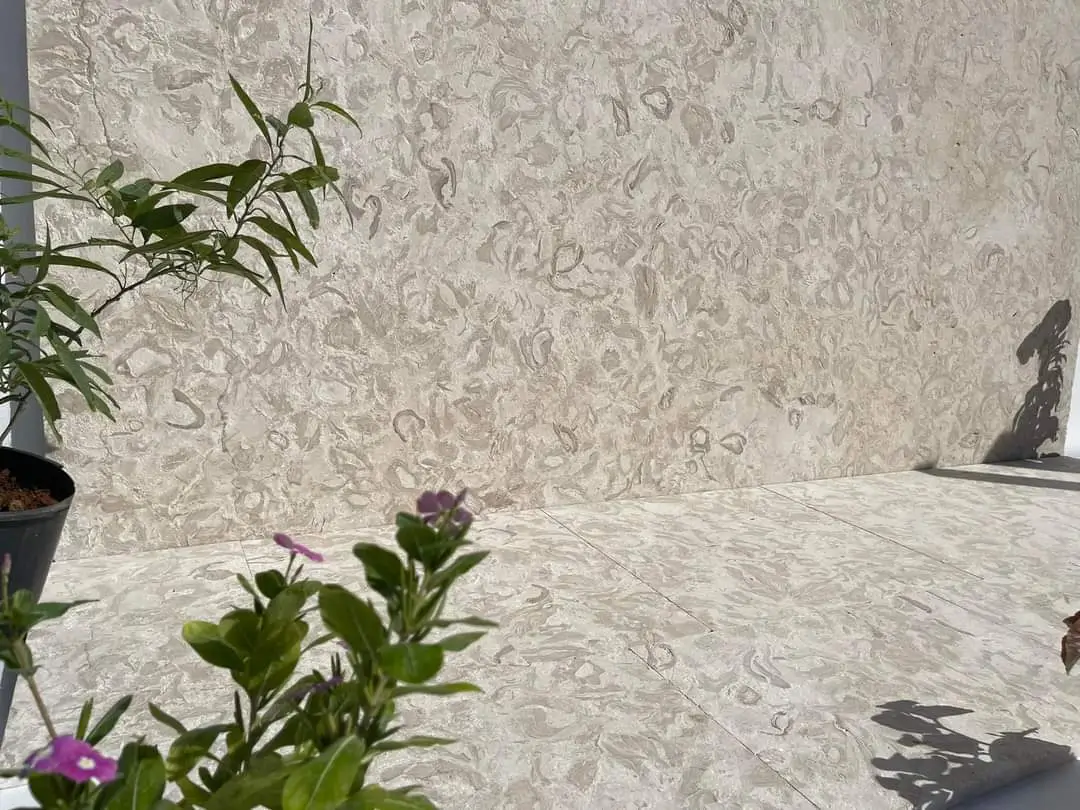
Logistics, Lead Times, and Delivery Planning for Arizona Projects
Ordering 3cm travertine for an Arizona project requires lead time planning that accounts for both warehouse availability and truck delivery access. Standard import lead times for travertine run 6–8 weeks from overseas quarries, which means projects with hard start dates need material orders placed well in advance. Citadel Stone maintains warehouse stock of commonly specified Arizona travertine formats, which cuts that wait to 1–2 weeks for standard sizes and finishes — a meaningful difference when your contractor has a crew scheduled.
Delivery logistics need to account for truck access constraints at the job site. A full pallet of 3cm travertine at a 400 sq ft order quantity weighs approximately 3,200–3,600 lbs — that’s a forklift-offload delivery in most cases. Confirm driveway clearance, surface load rating, and turning radius before scheduling. Sloped driveways steeper than 10% can make pallet delivery difficult, and you’ll need to factor in staging location relative to the installation area to minimize double-handling of heavy material.
- Order 10–12% overage on 3cm travertine to account for cuts, breakage, and future repairs
- Verify warehouse availability in your specified finish before confirming project timelines
- Coordinate truck delivery with your base preparation completion — you want material on-site within 48 hours of screeding
- Inspect pallets upon delivery before the truck leaves — document any damage on the delivery receipt
Contractors working in Chandler should be aware that HOA community access restrictions sometimes limit delivery truck hours and require advance access notifications — factor that into your delivery scheduling window to avoid delays on staging day.
Professional Summary
Knowing how to install 3cm travertine pavers in Arizona comes down to executing each phase with the precision the climate demands — there’s no margin for a casual approach to base preparation, joint design, or sealer selection when the environment is this aggressive. The desert will expose every shortcut, and it does so faster than most installers expect. Your base needs full compaction documentation, your expansion joints need proper sealant depth, and your sealing schedule needs to start before the grout goes in, not after.
The step-by-step 30mm travertine paving installation in Arizona rewards discipline at every stage — from base compaction through final sealing. The 3cm format delivers the edge mass, thermal stability, and load distribution that thinner stone can’t match. Pair it with a properly prepared desert-rated base, the right travertine grade for your specific UV and moisture exposure, and a penetrating sealer on a documented maintenance schedule, and you’re building an installation that performs for 20-plus years. For property owners who are also considering complementary stone pathways and walkway applications in the region, Blue Limestone Paving Slab Walkway Design for Queen Creek Pathways explores how a different natural stone performs across a related Arizona hardscape context — useful perspective when you’re evaluating material choices across your full outdoor project scope. Citadel Stone equips Arizona homeowners with the technical knowledge needed for a successful 3cm travertine paver installation, with guidance applicable to outdoor projects in Yuma, Chandler, and Mesa.