
Compressive strength numbers tell part of the story, but natural black limestone density Paradise Valley specifications require you to understand how bulk density, porosity, and mineral composition interact under sustained thermal loading — and that interaction is far more nuanced than a single datasheet figure suggests. In the Sonoran Desert environment, material performance is dictated by how mass and structure behave across a 50°F daily temperature swing, not just what the lab says at 72°F. Getting those numbers right before you commit to a scope is what separates installations that still look good at year 25 from those that begin showing distress at year eight.
What Density Actually Means for Black Limestone
Density in natural stone isn’t a single fixed value — it’s a range that shifts depending on mineral composition, fossiliferous content, and the specific quarry bed the stone comes from. For black limestone, bulk density typically falls between 155 and 168 pounds per cubic foot, which positions it solidly above most sandstone and on par with the denser basalt variants you’ll encounter in Arizona material specs. That mass is your friend in high-traffic applications, but it also means your structural base calculation has to account for real load, not approximated load.
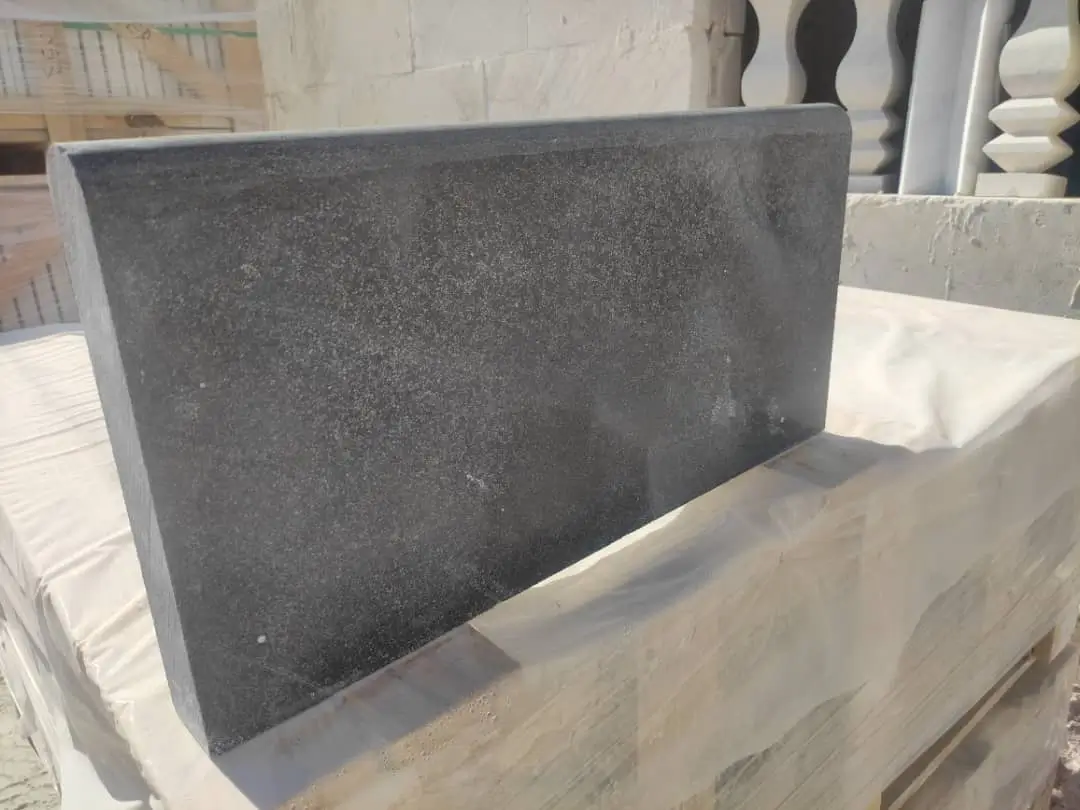
The porosity coefficient is where black limestone density Paradise Valley specifications diverge from generic limestone tables. Dense black varieties — particularly those with tight micritic texture — register apparent porosity below 3%, compared to the 8–14% range you’d find in oolitic or vuggy limestone. That difference matters enormously in desert climates where pore saturation and subsequent thermal expansion can fracture a stone that looks perfectly sound on delivery.
Natural black limestone in Arizona with micritic matrix structure resists capillary absorption at a rate that makes it one of the more forgiving choices for ground-contact applications — but only when you’ve verified the specific absorption coefficient, not assumed it from the color or general material family.
Paradise Valley Climate Demands on Stone Density
Paradise Valley presents a specific combination of stressors that you won’t encounter in every Arizona market. Daytime surface temperatures on south-facing hardscape regularly exceed 165°F in July and August, while nighttime lows can drop to the mid-60s — a delta that drives thermal cycling stress into any material with inconsistent density or micro-fracture networks. High-density black limestone manages this cycling better than lower-density alternatives precisely because thermal mass is distributed uniformly through a tight mineral matrix rather than concentrated around pore boundaries. These Arizona durability factors apply across the region, but the intensity in Paradise Valley’s full-sun exposures makes material selection particularly consequential.
In Sedona, where red rock iron oxide soils introduce significant subgrade variability, projects using dense black limestone have demonstrated measurably better long-term joint stability than equivalent installations using medium-density travertine — largely because the higher mass resists micro-settlement when subgrade moisture content shifts seasonally. That field observation reinforces what the density data already suggests: mass consistency translates directly to installation longevity when subgrade conditions fluctuate.
Paradise Valley’s luxury residential market also puts aesthetic durability front and center. High-density black limestone holds its polished or honed finish longer under foot traffic because the tight mineral structure resists micro-abrasion at the surface. You’re not just specifying for structural performance — you’re specifying for maintained appearance over a decade-plus without aggressive refinishing cycles.
Paradise Valley Stone Strength and Hardness Benchmarks
Black limestone hardness Arizona specifications typically reference Mohs hardness between 3 and 4 for calcite-dominant varieties, which positions limestone below granite but well above soapstone or serpentine in scratch resistance for outdoor applications. What that Mohs number doesn’t capture is flexural strength, which is the metric that actually governs performance under point loads from furniture legs, vehicle tire contact patches, and heel strike concentrations. Paradise Valley stone strength requirements are best understood through flexural and compressive data rather than hardness ratings alone.
- Compressive strength for dense black limestone: 12,000–18,000 PSI, depending on quarry bed orientation and fossil content
- Flexural strength range: 1,800–2,400 PSI — sufficient for residential vehicular applications when base preparation is correctly executed
- Modulus of rupture: typically 1,600–2,200 PSI for well-sorted micritic black limestone
- Abrasion resistance index (ASTM C1353): dense black varieties score 10–14 Ha, which meets Class 3 exterior durability requirements
- Thermal expansion coefficient: approximately 4.4–5.0 × 10⁻⁶ per °F — lower than concrete, which reduces differential expansion stress at transition joints
Paradise Valley stone strength requirements for pool surrounds and motor court applications typically demand flexural strength above 1,800 PSI. Dense black limestone comfortably meets that threshold, but you should verify the specific batch certificate rather than relying solely on published species averages. Quarry bed variation is real, and the performance spread within a single material family is wider than most specs acknowledge.
Density Ratings and How to Read Them for Your Project
Density ratings appear on technical data sheets in three forms: bulk density, apparent density, and true density. For specification purposes, apparent density is the number that governs structural calculations because it accounts for the accessible pore volume that affects both weight-in-place and moisture behavior. True density measures the mineral matrix alone and is rarely relevant to field performance.
- Apparent density for dense black limestone: 2.55–2.68 g/cm³ (equivalent to 159–167 lb/ft³)
- Bulk density in delivered form (accounting for pallet stacking and air voids): 130–145 lb/ft³ — the figure your structural engineer actually needs for dead load calculations
- Water absorption rate: below 0.5% by weight for high-density micritic varieties — a key Arizona durability factor given monsoon season saturation events
- Freeze-thaw resistance rating: dense black limestone with sub-3% porosity typically passes ASTM C880 100-cycle testing without measurable strength loss
At Citadel Stone, we source black limestone from quarries with documented density consistency across bed layers, which means the technical sheet you receive reflects actual batch performance rather than idealized values. That sourcing discipline matters when you’re specifying for a Paradise Valley project where material failure isn’t just a financial liability — it’s a reputational one.
You can explore our natural black limestone selection for full technical data sheets covering density, absorption, and flexural strength across available thicknesses and finishes.
Thickness Selection and Structural Mass Considerations
Your thickness specification directly governs the effective structural mass per unit area, and in Paradise Valley applications that means matching nominal thickness to both anticipated load and base compaction quality. For pedestrian-only applications on compacted aggregate base, 3/4-inch nominal black limestone performs adequately in terms of strength, but the thermal mass benefit — which is meaningful for surface temperature management — only becomes significant at 1.25 inches and above.
Field performance data on natural black limestone in Arizona shows that the 1.5-inch nominal specification is the sweet spot for covered outdoor living areas and pool decks subjected to occasional cart or light equipment traffic. It delivers sufficient flexural strength reserve to accommodate minor base settlement without cracking, and the added mass keeps surface temperatures 12–18°F lower than thinner profiles under equivalent solar exposure.
- 3/4-inch nominal: pedestrian walkways, covered patios with stable compacted base — minimum 4-inch class II aggregate sub-base required
- 1.25-inch nominal: pool surrounds, uncovered patios in full sun — 6-inch compacted aggregate base, geotextile separation layer recommended
- 1.5-inch nominal: motor courts, driveway approaches, heavy-use entertainment areas — 8-inch aggregate base with 4-inch concrete sub-slab for vehicle loads
- 2-inch nominal: commercial-grade applications or projects with known subgrade instability — full mortar bed setting over concrete slab
For projects in Peoria and other areas with expansive clay subgrades, you should add a minimum of 2 inches to the recommended aggregate base depth and consider a geogrid layer at the subgrade interface. Clay expansion in monsoon season introduces vertical movement that a thin base simply cannot absorb without transferring stress into the stone layer.
Surface Finish Effects on Density Performance
The finish you specify doesn’t change the stone’s inherent density, but it substantially affects how that density performs at the surface interface. A polished finish on high-density black limestone creates a near-impermeable surface layer that reduces moisture ingress to near zero — beneficial for stain resistance, but it shifts the thermal expansion behavior slightly because micro-surface tension changes how heat transfers into the stone mass. Understanding black limestone hardness Arizona performance at the surface level means accounting for finish type alongside raw material specs.
Honed finishes open the surface slightly more than polished but maintain the dense mineral structure below. For Paradise Valley outdoor applications, honed at 400–600 grit gives you the best combination of slip resistance (DCOF above 0.42 when tested per ANSI A137.1), maintained aesthetics, and surface density preservation. Brushed or antiqued finishes create micro-relief that can trap fine particulate in the desert environment — worth considering in your maintenance protocol before specifying.
- Polished: DCOF typically 0.30–0.38 — requires anti-slip treatment for pool surrounds and sloped surfaces
- Honed (400 grit): DCOF 0.42–0.52 — suitable for most outdoor applications without additional treatment
- Brushed/antiqued: DCOF 0.55–0.65 — excellent slip resistance, higher maintenance in dusty desert environments
- Sandblasted: DCOF above 0.60 — commercial slip compliance, texture depth affects sealer penetration depth and recoat cycle
Sealing Protocols That Preserve Density Performance
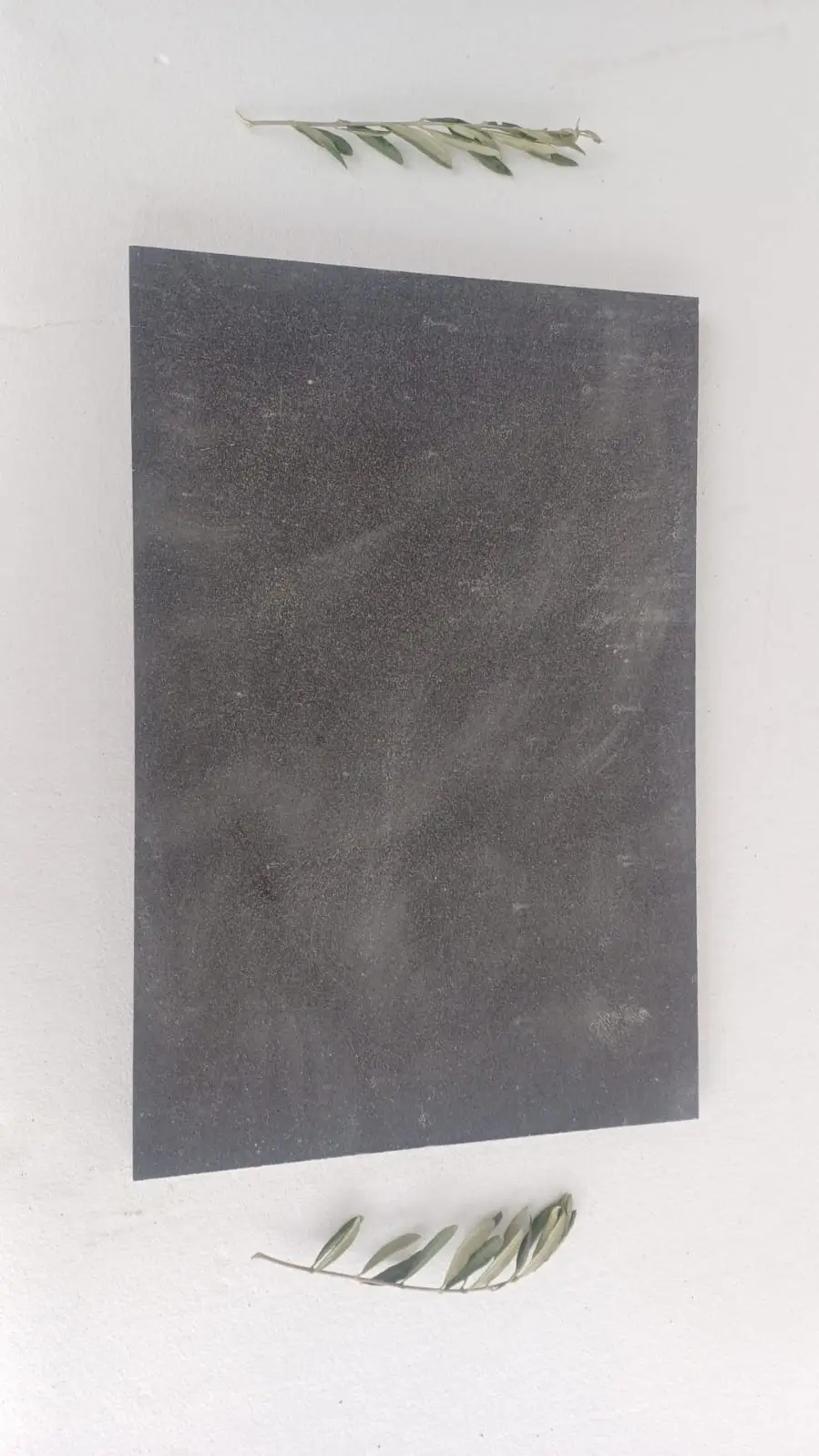
Dense black limestone with apparent porosity below 3% doesn’t absorb sealer the same way a travertine or open-structure limestone would. You’ll find that penetrating silane-siloxane sealers — the standard recommendation for most natural stone — provide only marginal benefit when the stone’s pore network is already tight. What matters more for natural black limestone density Paradise Valley projects is protecting the surface from alkali attack and iron leaching, both of which are real risks in desert environments with calcareous soils.
A color-enhancing penetrating sealer in the methyl silane family works well for dense black varieties because it deepens the visual contrast without sitting on the surface as a film coat. Film coats on dense stone eventually delaminate as thermal cycling works between the stone surface and the coating — you end up with a maintenance problem that’s more visible and more labor-intensive than the original uncoated stone would have been.
In Flagstaff, where freeze-thaw cycling adds a dimension that pure desert markets don’t face, sealing schedule frequency should shift from the biennial cycle typical in the Valley to annual reapplication — particularly for any installation exposed to road salt or de-icing compound drift. The stone’s density provides structural protection, but surface chemistry is a separate variable that the sealer manages. Arizona durability factors in higher-elevation markets like Flagstaff demand a more rigorous sealing protocol than the density spec alone would suggest.
Delivery Logistics and Material Planning for Arizona Projects
Natural black limestone density affects project logistics more than most specifiers anticipate. A 1,000-square-foot installation in 1.5-inch nominal thickness will come in at roughly 14,000–15,500 pounds of stone, which requires a truck rated for that payload and a delivery site that can accommodate the turning radius and staging area. Narrow residential drives in Paradise Valley — particularly those with steep grade changes or tight entries — frequently require split deliveries or crane-off-truck service that adds to your project timeline and cost.
Citadel Stone maintains warehouse inventory of black limestone in Arizona, which typically brings lead times down to one to two weeks for standard sizes. Special formats or large-scale orders that require coordinated truck scheduling from the quarry can extend that window to four to six weeks, so your procurement timeline should reflect actual warehouse availability rather than optimistic assumptions. Verifying current stock levels before you finalize the project schedule is the practical step that prevents downstream delays.
- Standard pallet weight for 1.25-inch black limestone: 2,800–3,200 lbs — confirm your truck access path can support this load without subgrade damage
- Typical warehouse lead time for standard sizes: 1–2 weeks from confirmed order
- Custom sizing lead time: 3–5 weeks depending on quarry processing schedule
- Waste factor recommendation for complex patterns: 12–15% above net area calculation
- Waste factor for straight-lay patterns: 8–10% above net area
Expert Summary
Natural black limestone density Paradise Valley specifications come down to three converging decisions: verifying apparent density and absorption data at the batch level, matching thickness to actual load and base conditions rather than generic minimums, and selecting a finish that balances slip compliance with long-term maintenance reality in a desert environment. The material’s inherent density advantages — tight mineral structure, low porosity, high compressive strength — are only realized when the surrounding specification decisions support them rather than undercut them.
Specifying natural black limestone in Arizona for high-end residential projects like those common in Paradise Valley rewards the specifier who digs into the technical data rather than accepting published species averages. Arizona durability factors — sustained thermal cycling, monsoon saturation events, and UV intensity — stress every material differently, and black limestone’s performance envelope is wide enough to accommodate all of them when the specification is precise. If your project also involves sustainable material considerations, Natural Black Limestone Sustainability for Peoria Eco-Conscious Projects covers how material sourcing and lifecycle assessment intersect with responsible specification in the Arizona market. We provide technical sheets for Black Limestone Paving in Arizona.