

Black limestone’s geological story is more nuanced than most buyers realize — and understanding those natural black limestone origins Glendale shoppers encounter when sourcing material directly shapes how you evaluate quality, consistency, and long-term performance. The color isn’t a surface treatment or dye. It comes from organic carbon compounds and fine mineral inclusions locked into the sedimentary matrix during formation, which means two slabs from different quarry zones can behave quite differently under Arizona’s thermal stress cycles. That’s the kind of detail that separates a confident purchasing decision from a costly specification mistake.
How Black Limestone Actually Forms
Limestone begins as calcium carbonate sediment — shells, coral fragments, and marine organism debris — accumulating in shallow marine environments over millions of years. The black coloration develops when organic-rich sediments, particularly those high in bitumen or carbon-bearing compounds, get incorporated into the carbonate matrix before full lithification. Pressure, heat, and time compress those layers into the dense, dark stone you’re selecting for your project today.
The geological origins matter practically because the organic carbon content directly influences porosity ranges. Higher carbon concentrations during formation tend to produce denser, lower-porosity stone — which is exactly what you want for exterior applications in climates like Phoenix, where thermal cycling and occasional monsoon saturation test material limits every year. Porosity values for quality black limestone typically run between 0.5% and 3%, but you’ll find wider variance in material from formations with inconsistent organic distribution.
Primary Quarry Regions Supplying Black Limestone
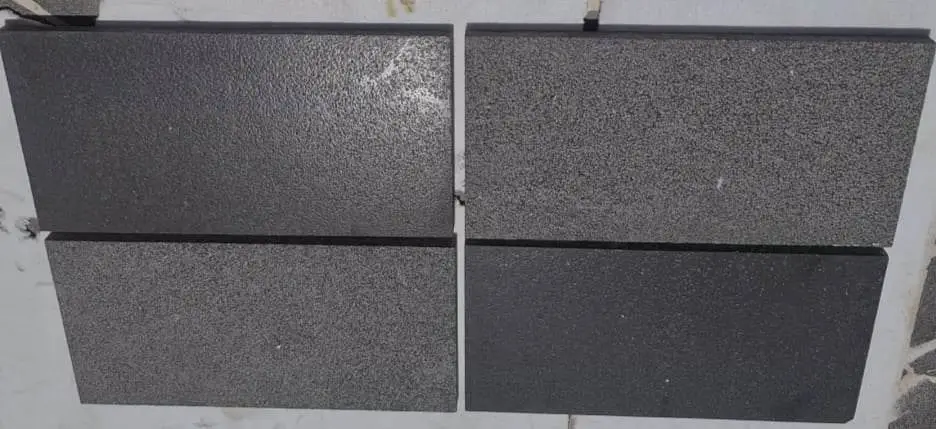
The majority of black limestone in the North American market originates from a handful of well-documented geological formations. Understanding where your material comes from is one of the most useful Glendale stone sources questions you can ask a supplier.
- Indian subcontinent formations — particularly from Rajasthan and Kurnool — produce some of the most consistent black limestone available, with tight grain structures and compressive strengths often exceeding 15,000 PSI
- Turkish quarries in the Afyon and Bilecik regions yield material with slightly warmer undertones due to mineral variation, which can shift the color perception under direct Arizona sunlight
- Belgian black limestone, quarried from Carboniferous-age deposits, tends toward finer crystalline structure but carries premium pricing that doesn’t always align with project budgets
- Chinese black limestone from Hebei and Shandong provinces varies considerably — some quarry zones produce export-grade material, while others show inconsistent fossil inclusion patterns that affect surface uniformity
- Brazilian slate-limestone hybrids sometimes get marketed as black limestone, but their mineral composition and cleavage behavior differ enough to create specification mismatches
For Glendale stone sources, the practical question is whether your supplier can trace material back to a specific quarry zone rather than just a country of origin. At Citadel Stone, we verify quarry documentation on every shipment we bring in, because formation-level data is what tells you how the stone will actually behave in service.
Geological Age and What It Means for Performance
The age of the formation influences density and surface hardness more than most buyers expect. Carboniferous-period limestone (roughly 300–360 million years old) typically shows higher recrystallization, which produces a finer grain matrix and improved resistance to surface abrasion. Jurassic and Cretaceous formations (65–200 million years old) are more common in commercial supply chains and tend to show more visible fossil content — ammonite fragments, crinoid stems, and shell impressions that add character but can create micro-porosity variations around the fossil boundaries.
For black limestone quarry information Arizona buyers should track, the key metric tied to geological age is the Mohs hardness range. Well-lithified Carboniferous black limestone typically reads 3.5–4.0 on the Mohs scale, while younger formations can drop to 3.0–3.5. That difference matters when you’re specifying for high-traffic applications or pool surrounds where surface wear accumulates faster.
- Older, more lithified formations: finer grain, higher hardness, better polish retention
- Younger formations: more visible fossil content, slightly higher porosity at fossil contact points, warmer undertones possible
- Metamorphic influence (where limestone approaches marble): tighter crystalline structure but potentially higher thermal expansion coefficient
- Sedimentary layering orientation at the quarry face: determines whether slabs are cut cross-grain or with-grain, affecting cleft surface texture and water absorption directionality
Mineral Composition and Color Consistency
Here’s what most buyers don’t ask but absolutely should — what percentage of the stone’s mass is calcium carbonate versus accessory minerals? Pure calcite limestone runs above 95% CaCO₃. Black limestone from organic-rich formations may carry 3–8% silica, iron compounds, and carbonaceous material in addition to calcite. That mineral mix determines how the color behaves over time under UV exposure and whether the surface develops patina or bleaching.
Arizona formation history offers an interesting local context here. The Valley’s ancient seabed geology — remnants of Cretaceous and earlier marine environments — produced limestone deposits that share formation characteristics with some imported black limestone sources. That geological parallel helps explain why certain black limestone varieties look remarkably natural against Arizona’s soil and rock palette. The iron oxide content in regional geology often complements the organic carbon matrix in imported black limestone, creating visual coherence that synthetic materials can’t replicate.
Color consistency across a lot also comes down to how uniformly the organic carbon was distributed across the formation at the time of deposition. In tightly layered deposits with stable marine chemistry, carbon distribution is even — you get slabs with predictable, deep black coloration. In formations with more dynamic deposition environments, you’ll see grey veining, lighter patches, or fossil-zone color breaks. Neither is inherently better, but your project design needs to account for which type you’re ordering. Tracking geological origins as part of your sourcing process is what lets you set accurate expectations before material arrives on site.
What Quarry Extraction Methods Reveal About Material Quality
The extraction method used at the quarry tells you a lot about the stone’s structural integrity before it ever reaches your project site. Diamond wire cutting — now standard at most quality-grade quarries — produces clean, stress-free faces without the micro-fracturing that older blast extraction caused. You should specifically ask whether your supplier’s source quarry uses wire cutting or gang saw methods, because gang saw cutting on dense black limestone can induce thermal stress lines that only become visible after weathering exposure.
Quarry block size also signals formation consistency. Quarries producing blocks in the 15–20 cubic meter range are typically working coherent, well-lithified formations. Smaller block sizes — under 8 cubic meters — often indicate formations with natural jointing planes that limit extraction size, which can translate to natural fissure planes within slabs. For natural black limestone in Arizona, where thermal cycling runs through 60–70°F diurnal ranges in winter months, those natural fissure planes become stress concentration points.
- Diamond wire cutting: preferred method, minimal micro-fracturing, cleaner grain exposure at cut faces
- Gang saw cutting: acceptable for lower-grade applications, watch for linear thermal stress marks
- Hydro-jet finishing: reveals natural surface texture without mechanical abrasion damage
- Block size documentation: request this from suppliers as a proxy for formation coherence
- Quarry face orientation: vertical face cuts expose different grain patterns than horizontal bench cuts
Reading a Slab Before You Purchase
The ability to evaluate a slab in person — or from high-resolution quarry photographs — is a skill that protects your project investment. Several factors demand simultaneous attention when assessing natural black limestone origins Glendale purchases for outdoor use.
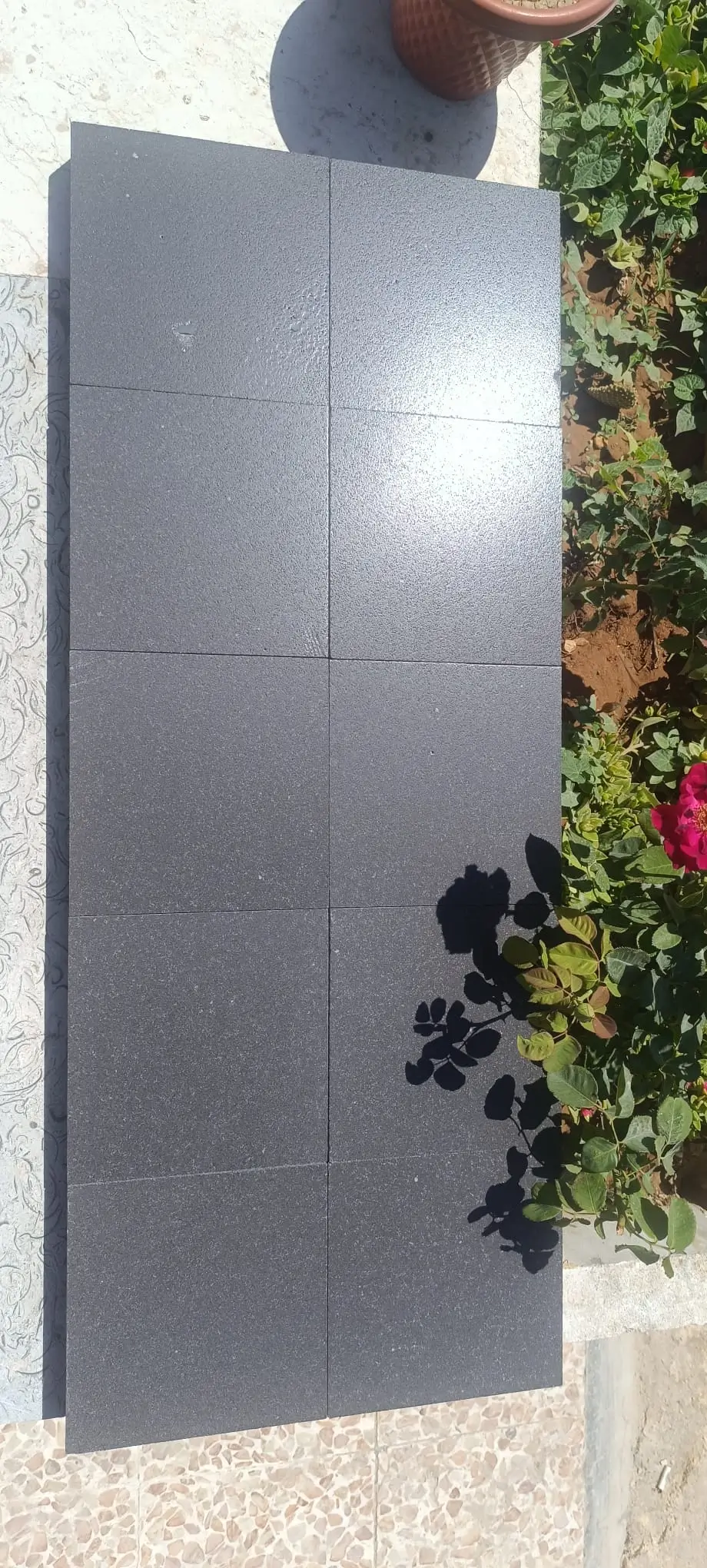
Surface sheen consistency matters first. Hold the slab at a raking angle to light and look for dull patches within an otherwise uniform surface. Those dull zones often indicate calcite recrystallization differences or localized porosity spikes where organic material left voids during formation. They’ll absorb sealer unevenly and can become maintenance focal points within a few years of installation.
Projects in Scottsdale frequently use honed or thermal-finished black limestone on pool decks and covered patios where consistent light behavior across the surface matters as much as functional performance. In those settings, surface uniformity evaluation before purchase becomes critical — color variation that looks acceptable in a warehouse under artificial light can read as splotchy inconsistency under direct desert sun.
Thickness Standards and How Formation Origin Affects Them
Slab thickness isn’t just a sizing decision — it’s directly tied to the formation’s natural bedding plane thickness. Black limestone from well-stratified formations allows quarries to produce consistent 2 cm, 3 cm, and 4 cm nominal thicknesses because the natural layering guides the extraction. Formations with irregular bedding produce more thickness variation within a single lot, which creates leveling challenges during installation that add labor cost.
For natural black limestone in Arizona exterior applications, 3 cm nominal thickness (approximately 1.25 inches) is the practical minimum for ground-level paving. The thermal expansion coefficient of quality black limestone runs approximately 4.5–5.5 × 10⁻⁶ per °F — lower than concrete but meaningful over large surface areas in full Arizona sun exposure. Sufficient thickness distributes that expansion stress across the slab body rather than concentrating it at the edges.
Checking thickness consistency within a pallet requires you to measure at least 10–15% of pieces before installation begins. Variation beyond ±3mm nominal indicates either inconsistent quarry extraction or inadequate factory calibration — both of which translate directly into setting bed complications. Your installer needs to know the actual range before mixing mortar to avoid discovering the problem mid-installation. Reviewing black limestone quarry information Arizona suppliers provide about calibration processes helps you catch this risk before material is delivered.
Supply Chain: From Quarry to Your Glendale Project
The journey from quarry face to job site involves several handling points where material integrity can be compromised — or confirmed. Container loading practices at the quarry or factory are the first critical point. Slabs shipped in A-frame wooden cradles with foam interleaving arrive with significantly fewer stress fractures than slabs palletized flat without separation layers. Request shipping documentation photos if you’re ordering large quantities and the material hasn’t been stocked locally.
Once material clears customs and reaches regional distribution, warehouse conditions matter more than most buyers realize. Limestone stored outdoors under tarps in high-humidity environments can develop surface efflorescence before installation — calcium carbonate migrating to the surface from moisture cycling. At Citadel Stone, we maintain covered warehouse storage and rotate inventory to prevent moisture accumulation on stacked material, which is a quality-control step that rarely gets mentioned but directly affects the condition of stone you receive on your truck delivery.
For projects in Tucson, where delivery routes sometimes involve longer transit from Valley distribution points, scheduling your truck delivery to coincide with installation timing — rather than storing material on-site for weeks — reduces exposure to job-site moisture, construction dust contamination, and handling damage that accumulates during repositioning. Coordinating warehouse release dates with your installation schedule is a logistics detail that experienced buyers manage proactively.
- Request A-frame crating or foam interleaving documentation for imported material
- Confirm covered warehouse storage at your supplier’s facility
- Schedule truck delivery within 48–72 hours of installation start when possible
- Inspect the first 10–15 pieces off the pallet before full unloading to catch transit damage early
- Verify that factory calibration certificates accompany the shipment for thickness consistency confirmation
Geological Certifications and Testing Standards Worth Requesting
The black limestone quarry information Arizona buyers should request before finalizing a purchase includes specific laboratory test results, not just product descriptions. ASTM C568 covers the classification requirements for limestone used in construction — it establishes compressive strength minimums, absorption maximums, and modulus of rupture values that differentiate Grade I (low density), Grade II (medium density), and Grade III (high density) material. Quality black limestone for exterior Arizona use should meet Grade III specifications: minimum 8,000 PSI compressive strength and maximum 3% water absorption by weight.
Requesting EN 12440 or equivalent European standard documentation is also worthwhile if material originates from European quarries — these standards include additional freeze-thaw cycling data that’s relevant for Glendale buyers who occasionally see temperatures below 32°F during winter months. While Phoenix metro rarely experiences sustained freeze events, the material specification standard still applies when you’re selecting stone that needs to perform reliably across its full service life. Verifying that Glendale stone sources can supply this documentation before purchase separates suppliers with genuine quality controls from those relying on general product descriptions.
- ASTM C568 Grade III: the baseline specification for quality exterior black limestone
- ASTM C1353 / ASTM C1354: abrasion resistance testing, relevant for high-traffic applications
- EN 12371: freeze-thaw resistance, useful for material from European formations
- ISO 10545-3: water absorption testing, particularly important for pool surround specifications
- Factory calibration certificate: confirms thickness tolerance compliance within ±1.5mm for premium-grade material
For buyers who want to go deeper on material sourcing, our black limestone slabs for sale include formation documentation and test data so you’re not specifying blind on a project this significant.
What These Formation Details Mean for Your Project
Understanding natural black limestone origins Glendale buyers evaluate is genuinely useful knowledge — not background reading. Formation age tells you about grain density and surface hardness. Quarry region tells you about color consistency and mineral variation. Extraction method tells you about micro-fracture risk. Thickness origin tells you about bedding plane coherence and what to expect from calibration consistency. These aren’t abstract geological facts — they’re the variables that determine whether your installation looks exceptional for 25 years or starts showing maintenance issues within five.
The stone itself can perform indefinitely when specified correctly — the failure points are almost always traceable to mismatched expectations about what a specific formation origin delivers versus what the project demands. Spend the time upfront verifying sourcing documentation, requesting test data, and understanding the geological character of what you’re buying. That investment in knowledge pays dividends every year the installation is in service. As you continue evaluating Arizona stone options for your hardscape project, Natural Black Limestone Variations for Tempe Authentic Character explores how color and surface variation across formation types translates into real design decisions for Arizona properties. Our black limestone slabs for sale in Arizona are of export quality.