
Precision in black limestone custom cutting Scottsdale projects separates installations that hold up for decades from those that require costly remediation within five years. The dimensional tolerance window for custom-cut black limestone slabs sits at ±1/16 inch for high-end residential and commercial work — and that gap between acceptable and unacceptable is narrower than most project managers expect going into their first special-order cycle. Understanding how cutting specifications translate into real-world lead times, delivery logistics, and field-fit results is what this article covers from the ground up.
Why Custom Cutting Matters for Black Limestone in Arizona
Standard stock dimensions rarely align with the architectural intent of a high-design Scottsdale project. You’re working with pool surrounds, courtyard features, and indoor-outdoor transitions that demand coordinated slab runs — and a half-inch deviation at the fabricator becomes a two-inch compounding headache by the time you reach the far wall. Black limestone, with its dense crystalline structure and characteristic directional veining, amplifies dimensional inconsistency visually in ways that lighter-colored stones tend to absorb.
The material’s natural cleft surface and tight grain make it well-suited to precision sawing, but you need to specify the correct blade type and feed rate with your fabricator upfront. Diamond-tipped continuous rim blades running at reduced RPM preserve edge integrity on black limestone better than segmented blades, which introduce micro-chipping along cut edges that shows up dramatically against the stone’s dark field. Your specification package should call this out explicitly rather than leaving it to fabricator discretion.
- Dimensional tolerances should be specified as ±1/16 inch for premium installations and ±1/8 inch for general hardscape applications
- Edge profiles — eased, beveled, or ogee — must be specified separately from cut dimensions
- Surface finish consistency across the full slab run affects grout joint visibility on dark-field installations
- Calibration variance between fabricator facilities can run as wide as 3/32 inch if not addressed in the purchase order
Scottsdale Bespoke Dimensions: What Drives the Spec
The architectural vocabulary of Scottsdale leans toward large-format horizontal planes — wide overhangs, expansive pool decks, and interior floors that run continuously from living areas through sliding-glass transitions to outdoor terraces. That design language pushes custom slab sizes into ranges that standard production doesn’t cover. You’ll commonly see requests for 24×48, 30×60, and even 36×72-inch slabs on high-value projects, and those dimensions require specific quarry block selection and fabrication sequencing that adds complexity to your order.
For Scottsdale bespoke dimensions in the large-format range, your fabricator needs to start with full quarry blocks rather than gang-sawn production slabs. That distinction matters for lead time planning — you’re typically adding three to four weeks over standard stock lead times when you move into true custom sizing. Communicating this clearly with your client before contract execution prevents the schedule friction that derails otherwise well-managed projects.
- Large-format slabs above 24×48 inches require full quarry block sourcing — not production remnants
- Book-matched pairs for feature walls or fireplace surrounds need sequential block specification, which must be confirmed before cutting begins
- Thickness consistency across a custom run should be verified by caliper sampling at minimum 10% of pieces before shipping
- Corner pieces and L-shaped cuts require separate setup charges and extended lead times beyond rectangular formats
Navigating the Arizona Special Order Process
The Arizona special orders process for black limestone slabs involves more decision points than a standard purchase, and the sequence in which you make those decisions has a direct effect on both timeline and cost. You need to lock in your final dimensions, edge profiles, finish type, and quantity before the order enters the cutting queue — partial-spec orders that come back for revision mid-process typically lose their queue position entirely.
At Citadel Stone, we recommend submitting your complete specification package in a single document rather than building it incrementally through email threads. Our technical team has seen more project delays traced back to miscommunicated revision cycles than to any material or fabrication issue. A clean, comprehensive spec sheet submitted once moves through the system cleanly; a spec built in fragments over two weeks creates version-control problems that cost everyone time.
- Confirm your field dimensions with a second measurement before submitting the cutting order — remeasure after framing or substrate installation, not from architectural drawings alone
- Specify the installation direction of any directional veining relative to the room or space axis
- Include a visual mockup or elevation drawing for complex slab arrangements so the fabricator can optimize block layout
- Confirm your truck access conditions at the delivery site before the order ships — large-format slabs require flatbed delivery, not standard pallet freight
Thermal Performance of Custom-Cut Black Limestone Slabs in Arizona Heat
Black limestone in Arizona’s thermal environment requires honest performance expectations from the specification stage. The material’s dark field absorbs significantly more solar radiation than lighter stones — surface temperatures on unshaded black limestone in Phoenix peak conditions can reach 140–160°F, which has direct implications for bare-foot usability zones and for the expansion gap design in your slab layout. Your expansion joint spacing for black limestone custom cutting Scottsdale applications in full desert sun exposure should tighten to 12–15 feet rather than the 18–20 feet you might spec for a shaded or interior application.
The thermal mass argument cuts both ways here. Black limestone absorbs daytime heat and releases it after sunset, which contributes to the urban heat island dynamic in dense installations. For pool surrounds and outdoor living areas, this behavior means the surface stays warmer into the evening hours — comfortable in winter months, but worth flagging to clients who expect the stone to cool quickly after sunset in July. This isn’t a disqualifying characteristic; it’s a design variable you account for through strategic shading, pergola placement, or zoning the black limestone to areas that benefit from thermal retention.
You can visit Citadel Stone’s black limestone paving facility to review current slab inventory and confirm dimensional availability before committing to a custom cut order timeline.
Tailored Cutting Specs and Base Preparation Requirements
The relationship between tailored cutting thickness and base preparation is tighter for black limestone than most specifiers initially account for. Custom-cut slabs in the 3/4-inch nominal thickness are suitable for wall cladding and dry-stack vertical applications, but exterior horizontal installations in Arizona’s thermal cycling environment perform best at 1.25 to 1.5 inches nominal. That thickness range handles point loads from patio furniture and foot traffic without flexural cracking, and it gives you enough material to manage the thermal expansion differential across a full slab run.
Your compacted aggregate base for exterior black limestone should target 6 inches minimum of 3/4-inch clean crushed aggregate, compacted to 95% Standard Proctor density. In areas with expansive soils — and Tucson projects frequently encounter expansive clay profiles in the first 24 inches — you’ll want to extend that base to 8 inches and include a geotextile separation layer between native soil and aggregate to prevent clay migration into the drainage layer over time.
- 1.25-inch nominal thickness for exterior horizontal with standard foot traffic and patio furniture loads
- 1.5-inch nominal for driveways, vehicle-accessible areas, or high point-load applications
- 3/4-inch nominal for vertical cladding, interior walls, and backsplash applications only
- Base depth minimum 6 inches for residential patios; 8 inches for expansive soil conditions or vehicle load zones
- Sand setting bed thickness 1 inch nominal — thicker beds introduce long-term settlement risk with large-format slabs
Black Slab Custom Sizes: Quality Control Before Installation
Receiving a custom cut order without a thorough inspection protocol is a mistake you’ll pay for during installation, not at delivery. Black limestone’s dark surface makes certain defects — hairline fissures, resin fills, calibration variance — harder to spot under warehouse lighting than they would be in natural light. Pull every slab and stage it vertically in direct sunlight before your installation crew begins setting stone. You’re looking for consistent calibration, clean edge cuts without micro-chipping, and color/veining consistency across the full run.
Calibration variance in a black slab custom sizes order should not exceed 1/16 inch across the full batch. If you find pieces running at the high end and low end of that range within the same order, sort them and use consistent-thickness pieces in the same field zones. Mixing high and low calibration pieces randomly across a floor or deck creates a hollow-sounding installation over time as the setting bed accommodates differential thickness by developing voids.
- Stage all pieces vertically in natural light before beginning installation — interior warehouse lighting masks defects
- Caliper-check a minimum 15% sample of pieces for calibration consistency
- Inspect cut edges for micro-chipping — acceptable limit is chips smaller than 1/32 inch occurring in fewer than 5% of linear edge footage
- Sort pieces by calibration thickness into groups and use consistent groups in the same field areas
- Document any pieces outside tolerance before installation begins — post-installation claims on custom orders are difficult to resolve
Sealing Protocols for Custom Black Limestone Installations
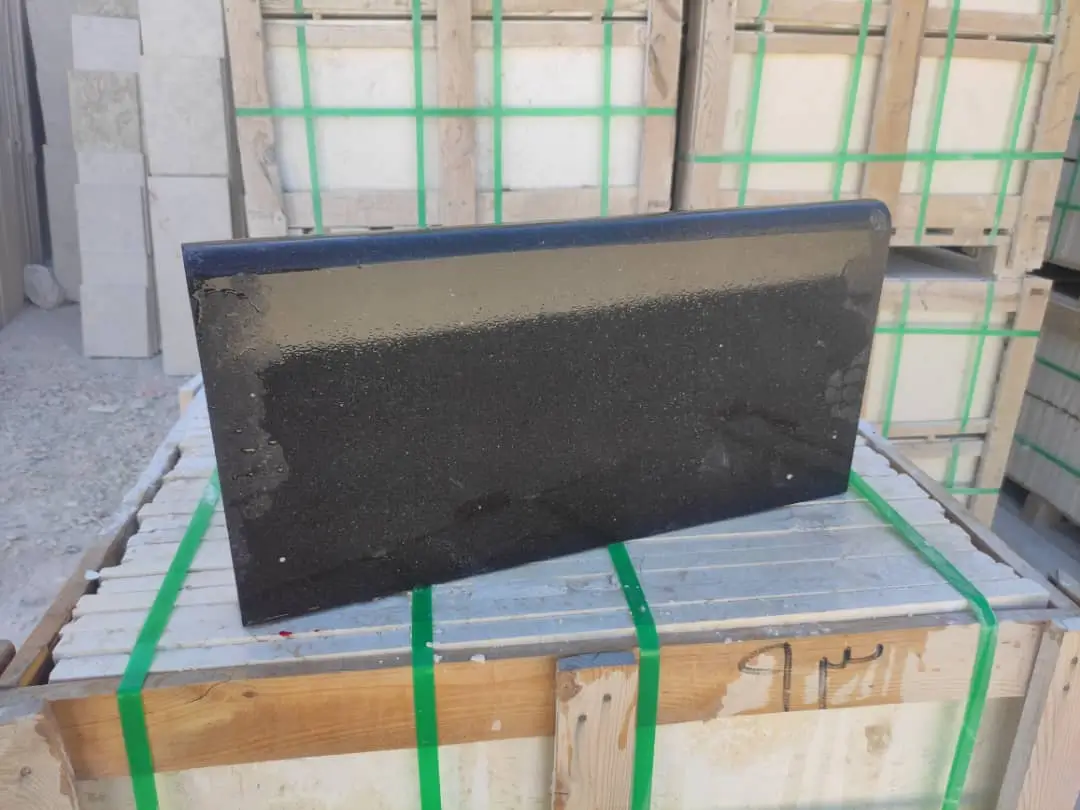
Black limestone’s sealing requirements differ from lighter-toned stones in one important way: penetrating sealers that add any degree of sheen or color enhancement will visually alter the stone’s appearance more dramatically on a dark field. You’ll notice immediately if the sealer shifts the surface from matte to semi-gloss — and on a large-format custom installation, that shift is highly visible. Your specification should call for a dry-treatment, color-neutral penetrating sealer specifically rated for dense limestone.
The application sequence for Arizona special orders black limestone context matters as much as product selection. Apply the first sealer coat within 24 hours of installation completion, before the stone has had time to collect surface contaminants from the construction environment. A second coat 48 to 72 hours later after the first has fully cured completes your initial protection cycle. Reapplication intervals in Arizona’s UV-intense environment should run every 18 to 24 months rather than the 36-month cycle that’s standard in more temperate climates.
- Use dry-treatment, color-neutral penetrating sealers — avoid enhancing sealers on black field stone unless the client has pre-approved the finish shift
- First application within 24 hours of installation completion, second coat at 48–72 hours
- Reapply every 18–24 months in full Arizona sun exposure; 24–30 months for covered or shaded installations
- Test sealer absorption before full application — a properly prepared surface will show the sealer absorbing within 3–5 minutes, not beading on the surface
- Avoid solvent-based sealers in enclosed interior spaces where VOC concentrations become a health concern during application
Lead Times, Logistics, and Warehouse Inventory for Custom Orders
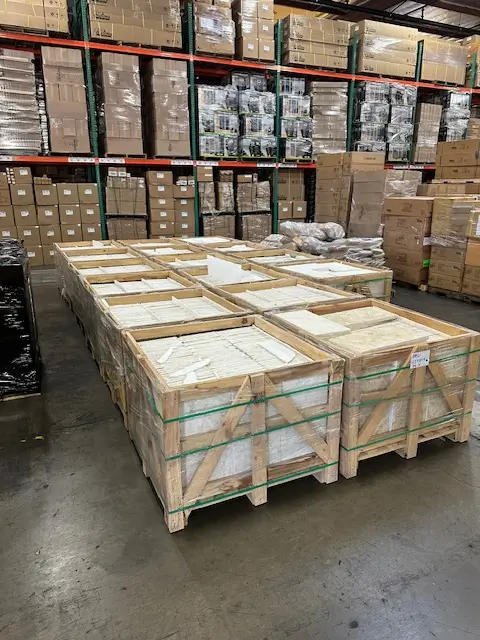
Realistic lead time planning for black limestone custom cutting Scottsdale projects starts with understanding where warehouse stock ends and true custom fabrication begins. Standard stock dimensions held in warehouse inventory typically ship within five to seven business days from order confirmation. Custom dimensions outside the standard range move into a fabrication queue that runs three to five weeks from approved specification submission — and that clock doesn’t start until your spec is complete and confirmed, not when you first initiate contact.
Truck delivery logistics for large-format custom slabs require advance coordination that often gets overlooked until it becomes an issue. Slabs above 30×60 inches ship on flatbed trucks rather than standard enclosed freight, and your site needs to accommodate a 48-foot flatbed with a boom or forklift offload. If your Scottsdale project site has restricted access — gated entry, steep grades, or overhead clearance issues — you need to communicate those constraints before the truck is dispatched, not when it arrives at the gate. Citadel Stone’s warehouse team conducts pre-delivery site checks for larger custom orders specifically to prevent this scenario.
- Standard stock dimensions: 5–7 business day ship lead time from confirmed order
- Custom dimensions outside standard range: 3–5 week fabrication lead time from approved complete specification
- Large-format slabs require flatbed truck delivery — confirm site access before dispatch
- Partial custom orders held for phased delivery introduce additional handling and restacking costs
- Order a minimum 10% overage on custom cuts — matched replacement pieces require re-entering the full fabrication queue
Getting Black Limestone Custom Cutting Specifications Right
Black limestone custom cutting Scottsdale projects demand a level of specification precision that’s genuinely different from standard paver installations — not because the material is difficult, but because the combination of large formats, dark aesthetics, and Arizona’s thermal environment compresses the margin for dimensional and installation error. The projects that perform well over 20-plus years are the ones where the specification was complete, the base preparation was honest, and the delivery logistics were confirmed before they became surprises. Getting those fundamentals in sequence is what separates a project that ages beautifully from one that requires remediation in year seven. As you plan your order timeline and confirm warehouse availability for your upcoming project phases, Black Limestone Slab Inventory Availability for Phoenix Immediate Needs provides current stock information that may help you bridge the gap between your schedule requirements and custom fabrication lead times. Our black natural limestone paving in Arizona creates a seamless transition.