
Radial geometry in stone work exposes every tolerance error you didn’t catch during layout — and black limestone circular patterns in Carefree projects amplify that truth significantly. The angular precision required for a true circular feature in Black Limestone Circular Carefree designs doesn’t forgive slab cuts that are even two degrees off, because those small deviations stack through the arc and leave you with a closing gap that no grout joint can hide cleanly. Understanding the geometry before you commit to material orders separates the installations that photograph beautifully from the ones that get resurfaced three years in. This breakdown covers the design decisions, material tolerances, and layout mechanics that actually determine whether your circular focal point reads as intentional architecture or an afterthought.
Why Black Limestone Works for Circular Focal Points
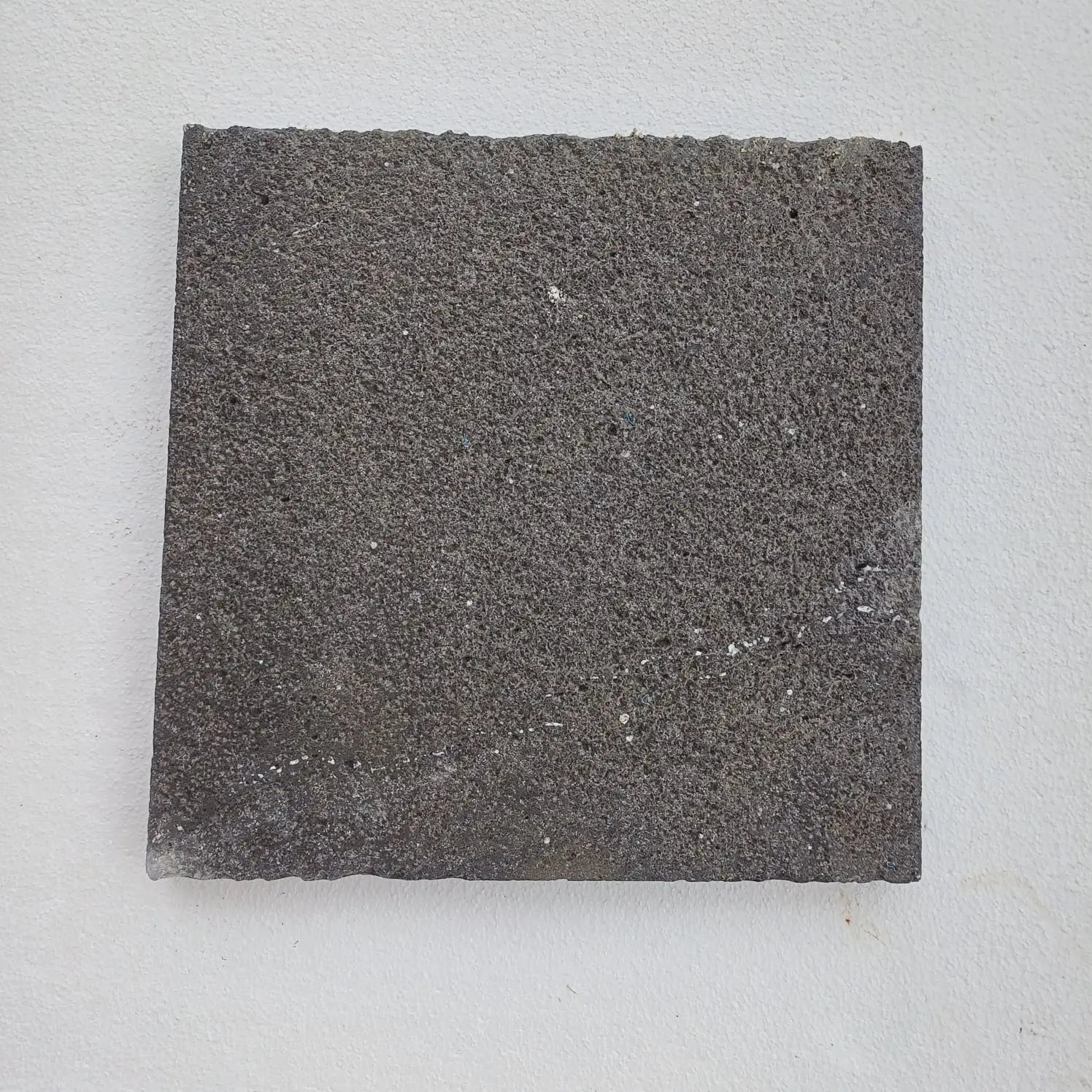
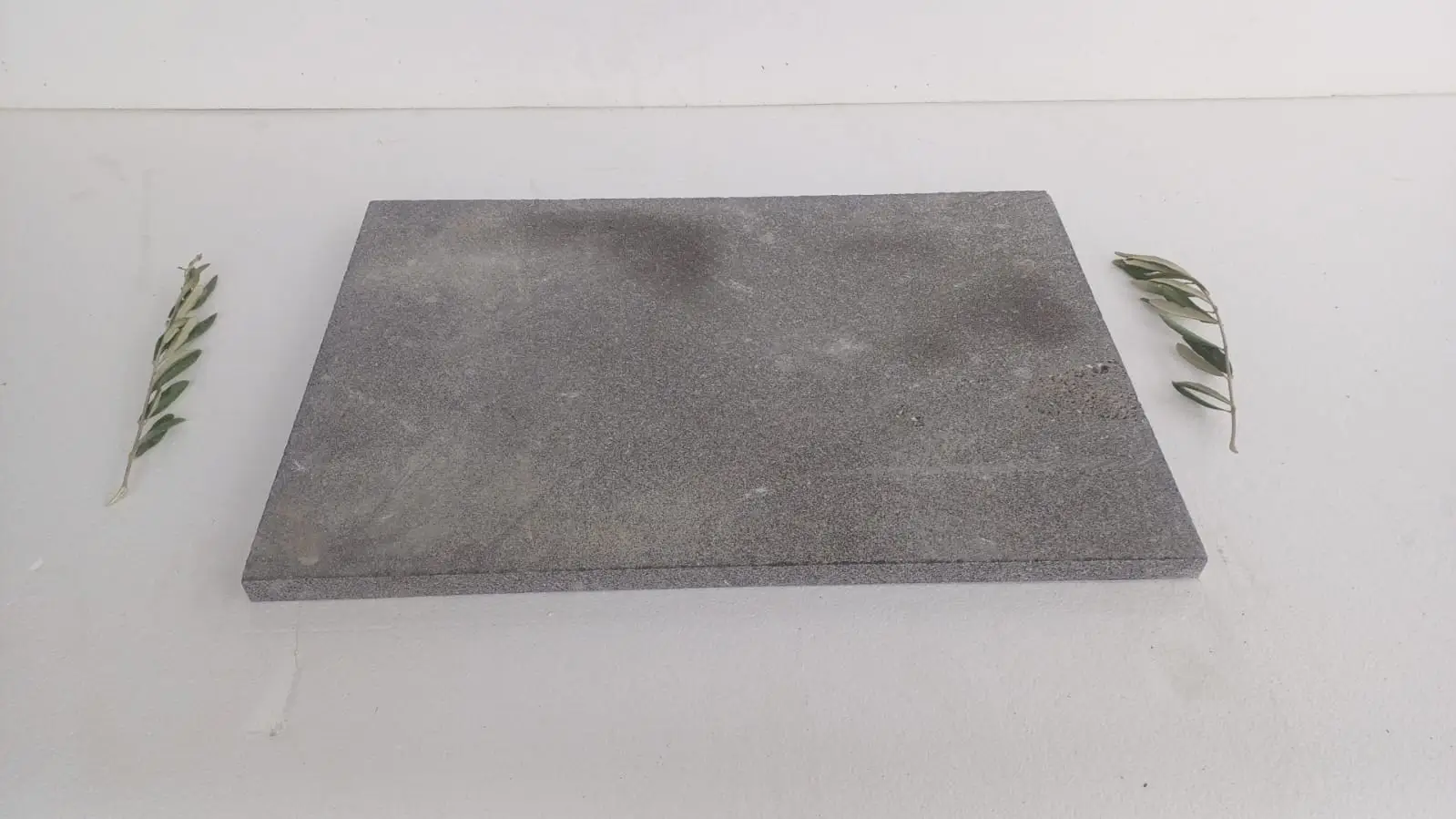
The material itself earns its place in radial layouts for reasons that go beyond aesthetics. Black limestone slabs carry a natural density — typically 160 to 165 lbs per cubic foot — that gives circular features a visual weight and permanence concrete pavers simply can’t match. The deep charcoal-to-jet tonal range reads as a grounding anchor, which is exactly what a focal point needs to organize surrounding landscaping and architecture.
Field performance data on black limestone slabs across Arizona climates shows compressive strength ranging from 10,000 to 14,000 PSI depending on quarry source and bed orientation. That structural density matters in circular applications because radial slab arrangements transfer point loads differently than running-bond patterns — the geometry concentrates stress at the wedge tips, and a softer stone will micro-fracture at those edges over time. Black limestone’s tight crystalline structure resists that edge degradation effectively when you source material with a consistent density rating.
- Thermal expansion coefficient of approximately 4.8 × 10⁻⁶ per °F keeps joint movement predictable across Arizona’s temperature swing
- Natural cleft or honed faces provide slip resistance values above 0.6 wet COF when properly sealed, meeting ASTM C1028 thresholds
- Dark coloration absorbs heat during morning hours but sheds it faster than exposed concrete after peak sun passes
- Consistent bed thickness in quality-sourced slabs simplifies the leveling work that radial layouts demand
Understanding Radial Layout Geometry
Carefree round designs built from black limestone slabs start with a center point decision that most designers underestimate. Your center stone — whether a single oversized slab, a mosaic inset, or a simple mortar plug — determines every cut angle in the rings radiating outward. A center that’s even slightly off-axis from the surrounding landscape axis creates a visual tension that viewers register even if they can’t articulate why it bothers them.
The practical geometry for black slab radial layouts Arizona installers use most reliably involves establishing three concentric reference arcs before any stone goes down. Your inner arc radius defines the first ring’s inner edge, the second arc defines that ring’s outer edge and the second ring’s inner edge simultaneously, and the third arc anchors the outermost ring. Spacing these arcs at consistent intervals — typically 18 to 24 inches for standard slab widths — keeps your wedge cuts in a manageable angular range of 8 to 14 degrees, which is achievable with a wet saw and a reliable angle jig.
- Establish your center point with a steel pin and string line, not chalk alone — chalk fades during the pour
- Cut a full-scale cardboard template of your wedge angle before committing to stone cuts
- Account for joint width in your arc calculations — a 3/16-inch joint across 16 wedges adds nearly an inch to your outer diameter
- Dry-lay the entire first ring before setting any stone to verify your geometry closes cleanly
Projects in Chandler deal with expansive clay soils beneath most residential lots, which means your base preparation for a circular feature needs to treat the entire diameter as a unified structural zone — not individual slab footprints. A full compacted base extending six inches beyond your outermost ring edge prevents differential settlement that would telegraph as uneven radial joints within the first monsoon season.
Slab Thickness Selection for Arizona Conditions
The thickness specification for circular features deserves more attention than it typically gets in standard project specs. For pedestrian-only focal points — a garden centerpiece, a fire pit surround, a standalone decorative circle — 1.25-inch nominal slabs perform reliably when your base is properly engineered. Step up to 1.5 inches the moment you’re incorporating any vehicle overhang, cart traffic, or heavy planter loads within three feet of the circle’s edge.
Arizona centerpiece paving that incorporates seating walls, fire features, or water elements introduces cantilevered loading conditions at the circle’s perimeter. In those situations, 2-inch slabs at the outermost ring with 1.5-inch material in the interior rings give you structural redundancy without over-specifying the entire project. The thickness transition also creates a subtle shadow line between rings that actually enhances the radial visual effect.
- 1.25-inch slabs: pedestrian focal points with no adjacent load-bearing features
- 1.5-inch slabs: standard residential Arizona centerpiece applications with mixed use
- 2-inch slabs: commercial applications, vehicle proximity zones, or heavy feature integrations
- Verify your warehouse stock thickness tolerance — quality suppliers hold ±1/8 inch; discount sources often run ±3/16 inch, which creates leveling headaches in radial work
Cutting Techniques for Clean Radial Wedges
Here’s what most specifiers miss when they’re pricing circular features: the cutting labor for radial wedge profiles in dense black limestone runs 35 to 50 percent higher than straight-cut paver work. The material’s hardness — which is one of its performance advantages — translates directly into blade wear and setup time per cut. Budget that reality into your project timeline and material cost before the truck arrives on site.
Your wet saw setup for wedge cuts needs a consistent fence angle system, not freehand cutting. A simple adjustable miter fence secured to the saw table lets you dial in a repeating wedge angle and hold it across all the slabs in a given ring. The consistency matters because even a half-degree variation between adjacent slabs creates a visible joint-width inconsistency that the eye catches immediately in a radial pattern.
- Diamond blades rated for hard stone (granite-equivalent) outlast standard masonry blades by 3x on black limestone
- Cut from the face side down to minimize chipping on the visible surface edge
- Score the cut line first at low speed, then complete the full depth pass — this prevents the blade from tracking off your angle jig
- Stack-cut multiple slabs of the same ring only if your saw table is perfectly flat — any rock in the stack telegraphs into cut angle error
Joint Spacing and Expansion Management
The thermal math for circular features in Arizona deserves specific attention because radial joint geometry interacts with expansion forces differently than linear patterns. In a running-bond layout, thermal expansion distributes longitudinally along each course. In a radial layout, expansion forces radiate outward from the center — which means your outermost ring absorbs the cumulative expansion of every ring inside it. Size your perimeter expansion joint accordingly: a minimum of 3/8 inch, increasing to 1/2 inch for diameters above 12 feet.
For projects in Tempe, where summer surface temperatures on dark stone routinely hit 150°F and above, the differential between shaded center zones and full-sun perimeter rings creates a non-uniform expansion scenario. Your center stone stays cooler longer, while the outer rings heat first and expand outward. Installing a compressible backer rod beneath your perimeter joint rather than leaving it as a simple open gap prevents the joint from filling with debris and locking up before it can accommodate that movement.
Sealing Protocols for Black Limestone Circles
Sealing black limestone in circular applications requires a different approach than straight-run paving because joint density is higher per square foot. More cuts mean more exposed stone edges, and those edges are your primary moisture infiltration points. A penetrating silane-siloxane sealer applied at 200 to 250 square feet per gallon — slightly heavier than manufacturer label rates — ensures adequate edge penetration on the wedge profiles.
At Citadel Stone, we recommend a two-coat sealing approach for all circular black limestone features: a penetrating base coat applied the day after installation to let mortar cure gases escape, followed by a surface-enhancing topcoat 48 hours later. The second coat deepens the black tone visually while building the surface tension that sheds Arizona’s monsoon water effectively. Plan to reapply every 18 to 24 months depending on sun exposure — south-facing installations in full Arizona sun break down sealer faster than partially shaded features.
- Apply sealer on a dry surface above 50°F — night applications in early spring often fail because stone temperature is too low for proper penetration
- Back-roll any sealer pooling in the radial joints before it dries — pooled sealer creates a white haze that’s difficult to remove from black stone
- Test a small section with water beading before assuming your previous sealer coat has fully failed — sometimes surface cleaning restores hydrophobic performance
- Avoid acrylic topcoat sealers on black limestone in direct Arizona sun — they peel within 18 months under UV exposure
You’ll find that deep black natural limestone in Mesa delivers consistent bed thickness and color saturation that matters especially in tight radial ring work where tonal variation between adjacent slabs becomes visible at close range.
Design Integration with Surrounding Landscape
Circular features in Carefree round designs work best when the circle’s diameter relates proportionally to its context. A common field mistake is sizing the circle to the hardscape zone rather than to the full yard view. Your eye establishes scale from the outermost visible boundary — typically the property fence line or building face — not from the adjacent paving edge. A circle that looks appropriately sized in the contractor’s design drawing often reads as undersized once it’s installed in a large open Arizona yard.
The proportion guideline that holds up consistently in practice: your circle diameter should be at least 40 percent of the shortest dimension of the surrounding open space. For a 30-foot-wide courtyard, that means a minimum 12-foot circle to read as intentional rather than incidental. Circular features with black limestone slabs benefit from this sizing discipline because the dark color naturally reduces perceived size — a generously sized black circle reads as a focal anchor, while an undersized one reads as a drain cover.
Ordering Logistics and Material Planning
Material quantity calculations for circular features require a different approach than square footage multiplication. Your actual stone coverage area is a circle (π × r²), but your cutting waste factor runs significantly higher than rectilinear work. For black slab radial layouts Arizona projects, plan for 20 to 28 percent waste depending on your ring count and wedge angle — more rings mean more cuts and proportionally more off-cut waste.
Citadel Stone maintains warehouse inventory of black limestone slabs in Arizona, which reduces project lead times to one to two weeks for most specifications compared to the six to eight week import cycle that special-order sourcing requires. For circular feature projects specifically, confirming warehouse stock before finalizing your project schedule matters because consistent lot material — stone quarried from the same bed in the same production run — is essential for tonal uniformity across rings. Mixing lots from different production runs creates color banding that’s immediately visible in radial layouts where adjacent rings are viewed simultaneously.
Projects in Surprise and the northwest Phoenix corridor often have truck access constraints through newer residential developments with weight-restricted private roads. Verify your delivery route for vehicle weight limits before scheduling — a fully loaded stone delivery truck can exceed posted limits on private community roads, requiring you to either split the delivery into two lighter loads or arrange crane-assist transfer at a staging point.
- Order a minimum of 15 percent overage beyond your calculated quantity for circular projects
- Request slab thickness certification from your supplier — radial work tolerates less thickness variation than standard layouts
- Confirm all material comes from the same production lot number to ensure color consistency
- Stage material on site for 24 hours before installation to let slabs acclimate to ambient temperature before cutting
Getting Your Black Limestone Circular Carefree Project Right
Black limestone circular patterns for Carefree focal points succeed or fail based on decisions made before the first slab is cut — geometry layout precision, base engineering across the full circle diameter, thickness specification matched to actual loading, and lot-consistent material sourcing. The visual payoff of a well-executed radial feature in black limestone is significant: it creates the kind of grounded, architecturally intentional focal point that organizes an entire outdoor space. The detail that matters most is understanding that every ring in the layout is dependent on the one inside it, so errors compound outward and become progressively more difficult to correct. Get the center right, engineer the base as a unified zone, and confirm your material comes from consistent warehouse stock.
As you plan your broader Arizona stone project and explore related hardscape applications, the same performance characteristics that make black limestone excel in Arizona centerpiece paving translate effectively to vertical-plane work. Black Limestone Slab Garden Steps for Queen Creek Terraced Yards explores how this material performs in stepped grade transitions that often complement circular patio features in larger landscape programs. We are the most experienced supplier of Black Limestone Paving in Arizona.