
Slab thickness is the spec decision that separates a functional Queen Creek garden staircase from one that’s cracking at the nose by year three. Black limestone garden steps Queen Creek projects demand a minimum 2-inch nominal slab — and honestly, 2.5 inches is the spec you want for any tread spanning more than 18 inches of unsupported run. The material’s compressive strength typically exceeds 12,000 PSI, which handles foot traffic and point loads from outdoor furniture with room to spare, but only when the thickness supports the span without flex under thermal cycling.
Why Black Limestone Works in Queen Creek Terraced Yards
Queen Creek’s topography creates genuine grade challenges that most suburban lots in the Valley don’t face. You’re often working with 3 to 8 feet of elevation change across a backyard, and the design response — terraced retaining with integrated step runs — demands a material that reads as intentional, not utilitarian. Black limestone slab step treads deliver that aesthetic without the maintenance liability of dark-stained concrete or the fragility of thin porcelain in outdoor settings.
The material’s thermal absorption is worth understanding before you finalize your spec. Black limestone in Arizona does absorb more solar radiation than lighter stones — surface temperatures on an unshaded south-facing tread can reach 140°F in July. That’s a real trade-off, and your design should account for it through strategic shade placement, planting buffers, or specifying treads in covered stairway runs where direct exposure is limited. The steps that perform best long-term in Queen Creek are the ones where the specifier thought through shading geometry, not just material selection.
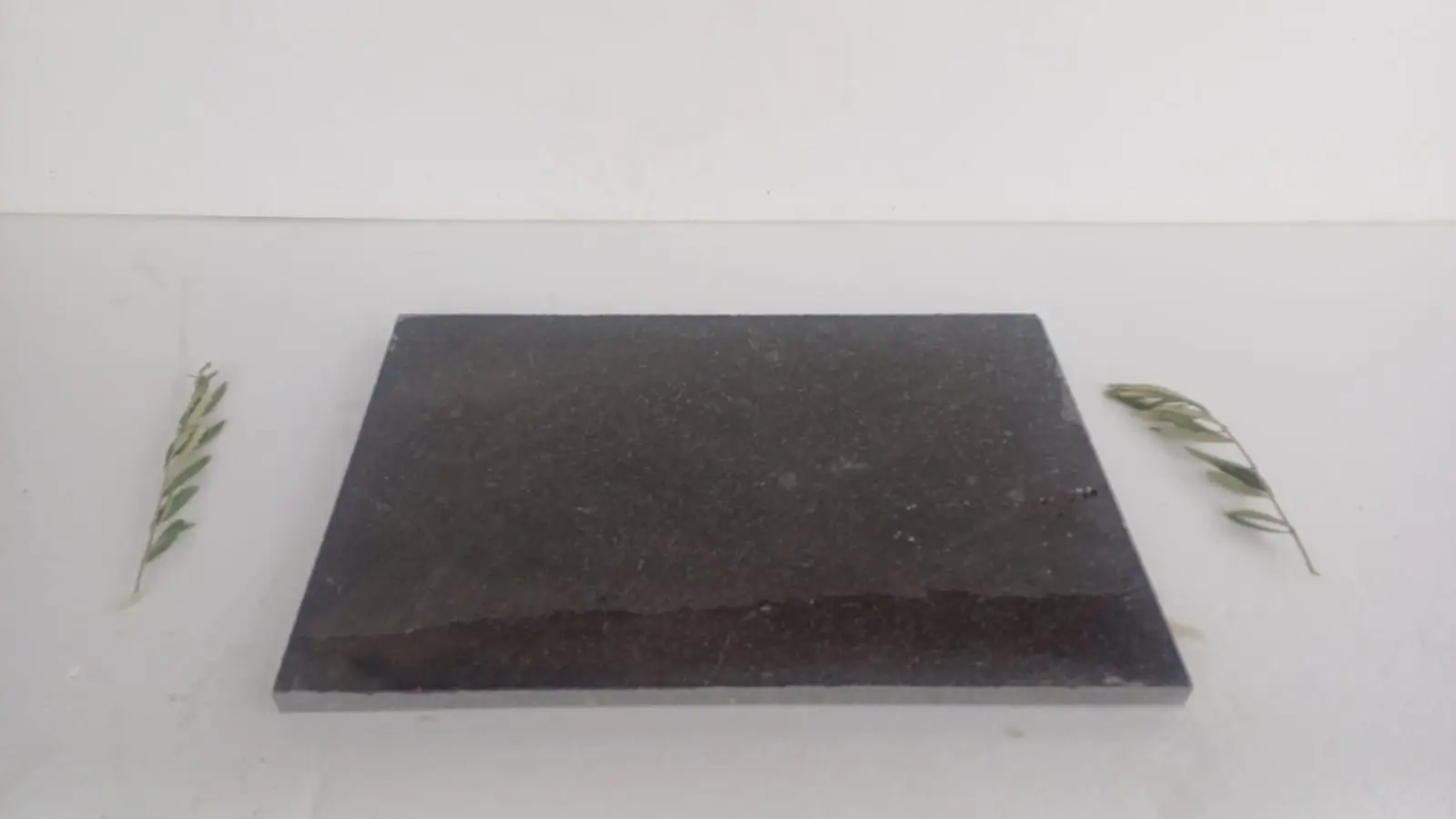
Slab Dimensions and Tread Geometry for Arizona Elevation Transitions
For terraced landscaping in the Queen Creek area, your tread dimensions should follow a 12-inch minimum depth with a 6-inch maximum riser — that 2:1 ratio keeps the stair comfortable for adults and children without requiring a steep approach angle that would look awkward against a gentle grade. Most residential projects land between 14 and 18 inches of tread depth, which gives you enough surface to place a foot comfortably and also creates the visual weight that makes black slab step treads Arizona projects look intentional rather than improvised.
- Tread depth: 14–18 inches for residential garden stairs
- Riser height: 5–7 inches to balance comfort with grade change efficiency
- Slab thickness: 2 inches minimum, 2.5 inches preferred for spans over 18 inches
- Overhang: 1–1.5 inch nose projection adds shadow definition and visual depth
- Width: 48 inches minimum for single-file; 60 inches for social stairways
Flagstaff installations share similar slab geometry requirements, but Flagstaff‘s freeze-thaw exposure above 6,900 feet elevation means the base preparation is fundamentally different — your mortar bed there needs to account for vertical heave that simply isn’t a factor in Queen Creek’s desert climate.
Base Preparation Specific to Queen Creek Soil Conditions
Queen Creek sits on a mix of sandy loam and caliche-heavy profiles depending on which part of the development you’re working in. The caliche hardpan — when you hit it at 12 to 24 inches — is actually your friend for step foundations because it resists settlement better than loose imported fill. Your base preparation should aim for 6 inches of compacted 3/4-inch aggregate over native soil or caliche, with a 1-inch sand setting bed above that.
- Excavate to minimum 12 inches below finished tread surface
- Compact native soil or caliche to 95% Modified Proctor before adding aggregate
- Use 3/4-inch crushed aggregate — not pea gravel, which allows too much lateral movement
- Set treads in a 1-inch dry-set or mortar bed depending on load and gradient
- Slope the setting bed 1/8 inch per foot toward the front edge for positive drainage
That drainage slope detail matters more than most installation guides acknowledge. Standing water under a black limestone tread in summer creates a thermal differential that accelerates joint failure — the slab heats from above while the moisture beneath stays cool, and that cycling eventually compromises the adhesion layer.
Slip Resistance and Surface Finish Selection
Your surface finish choice for black limestone garden steps Queen Creek projects comes down to two variables: aesthetic intent and functional safety. A honed finish — matte, smooth, no reflectivity — offers a DCOF (Dynamic Coefficient of Friction) typically between 0.42 and 0.55 on a dry surface, which meets the 0.42 minimum threshold in ANSI A137.1 for pedestrian use. Brushed or sandblasted finishes push that range to 0.55–0.70, which is where you want to be on exterior stairs with any wet exposure.
Polished finishes are visually striking but genuinely problematic on outdoor stairs — a polished black limestone tread in wet conditions can drop to DCOF values below 0.35, which is below code minimums and creates real liability for residential projects. The spec decision here isn’t difficult: use honed or brushed for all tread surfaces, and reserve polished finish for vertical riser faces where foot contact doesn’t occur.
Sealing Black Limestone in Arizona Heat
Sealing protocols for black limestone slabs in Arizona differ from standard concrete maintenance because the material’s interconnected pore structure draws sealant deeper and requires more product per square foot than you’d apply to a denser material. You’re looking at 150–200 square feet per gallon on first application versus the 250–300 square feet per gallon listed on generic sealant packaging — that discrepancy has burned more than a few contractors who ordered based on label coverage rates.
For Queen Creek’s UV intensity and temperature range, a penetrating silane-siloxane sealer outperforms film-forming acrylics in long-term protection. Film-formers can peel when the slab surface temperatures cycle from 140°F in summer to 40°F on winter nights — that’s a 100-degree differential that stresses any coating sitting on the surface rather than inside the stone. Plan to reseal every 18 to 24 months for treads with direct sun exposure, and every 36 months for shaded or covered step runs.
Ordering Logistics and Lead Times for Arizona Projects
Your project timeline needs to account for material availability before you commit to a contractor schedule. Black limestone slabs in Arizona are available from warehouse stock in standard sizes — typically 24×24, 24×36, and 36×36 inches — but custom-cut treads for non-standard dimensions require fabrication lead time that can extend 2 to 4 weeks beyond what’s sitting on the rack. At Citadel Stone, we recommend confirming warehouse stock levels before locking your installation start date, particularly for projects requiring more than 200 square feet of matched slab.
Delivery logistics for slab treads are worth coordinating carefully. A standard truck delivering 2.5-inch slab material is carrying significant weight per pallet — black limestone at roughly 170 pounds per cubic foot means a 200-square-foot tread order at 2.5-inch thickness weighs close to 7,000 pounds before packaging. Your site access needs to accommodate a truck with that payload, and your receiving crew should plan for mechanical offloading rather than hand-carrying slabs from the street. Confirm truck access width and driveway load rating before scheduling delivery to avoid rescheduling fees.
Integrating Steps into Terraced Landscaping Design
The most visually successful terraced landscaping projects in Queen Creek use the step run as a design spine — the stairs define the retaining structure’s rhythm, not the other way around. Your stairway layout should establish the horizontal datum first: where the flights start, where they land, and how they relate to planted borders or hardscape features at each level. Black limestone’s dark value creates strong contrast against desert plantings and buff-colored decomposed granite, which is why the material reads so well in the high-contrast Arizona light.
In Sedona, the red rock context pushes designers toward warmer stone tones, but black limestone actually complements the red sandstone palette better than you’d expect — the contrast is sophisticated rather than competing. That same contrast dynamic applies in Queen Creek’s desert landscaping context, where dark step treads against native plantings and warm concrete borders create a deliberate material composition rather than a default selection.
You can source affordable black limestone paving materials that work across the full terrace project — from step treads to landing pads to retaining cap stones — maintaining visual continuity without the premium cost of multiple material selections.
Thermal Expansion and Joint Spacing in Queen Creek Conditions
The thermal expansion coefficient for limestone runs approximately 4.4 to 5.3 × 10⁻⁶ per °F. For a 36-inch tread slab cycling through a 100°F temperature differential in Queen Creek, that translates to roughly 0.019 inches of linear movement per slab length. That sounds small, but multiply it across a continuous 20-foot stair run with tight-butted joints and you’re looking at cumulative movement that has nowhere to go — which is how you get cracked nosings and lifted treads in year four.
- Specify 3/16-inch open joints between treads — not tight-butted installation
- Fill joints with flexible polymeric sand, not rigid mortar
- Install expansion joints at every third tread for runs exceeding 12 feet
- Never butt-joint slab treads directly against a masonry riser — leave 1/4-inch gap minimum
- Check joint sand depth at the 12-month mark and refill to 95% capacity after initial settlement
Queen Creek outdoor stairs that consistently outlast their 20-year performance target share one common spec detail: flexible joint fill throughout, not just at structural transitions. It’s a small material cost that dramatically extends installation life.
Regional Performance Data and Long-Term Maintenance
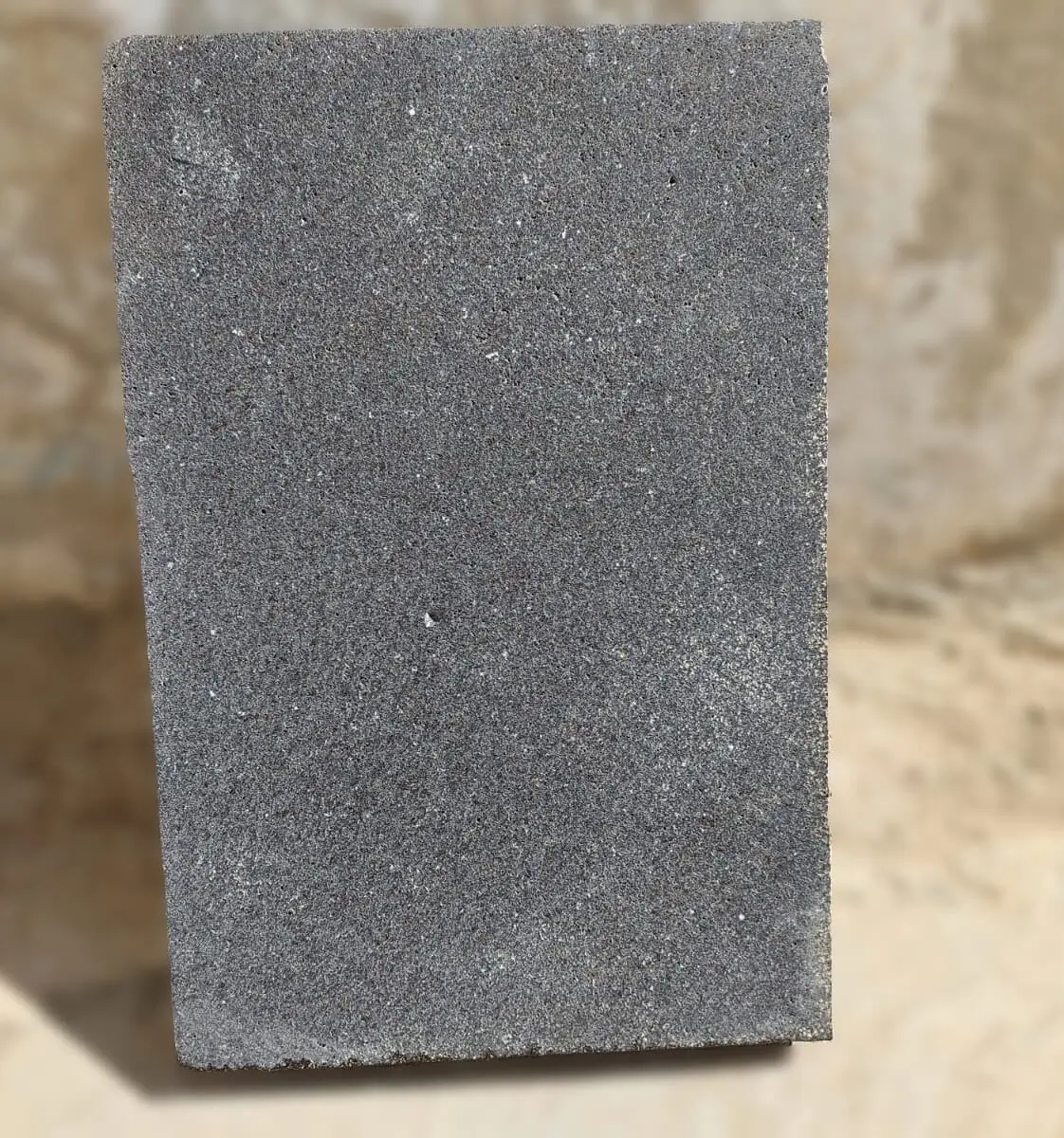
Field performance data on black limestone slabs in Arizona across multiple climate zones consistently shows that the material’s failure modes are almost always installation-related, not material deficiencies. Slab fractures trace back to inadequate base compaction or undersized thickness. Surface degradation traces back to missed sealing cycles. Joint failure traces back to rigid fill in high-movement applications. The material itself — when properly specified and installed — routinely reaches 25-year service life in Arizona desert conditions.
In Peoria‘s West Valley heat corridor, surface temperature data on dark limestone treads measured on south-facing exposures shows peak readings 15–20°F above adjacent concrete under identical solar load. That thermal performance characteristic reinforces the shading geometry recommendation for Queen Creek projects — not because the material can’t handle the heat, but because your users can’t comfortably use the stairs at 140°F surface temperature at 2 PM in July regardless of material durability.
Our technical team at Citadel Stone reviews installation specs for large Queen Creek projects before material ships — catching joint spacing and base depth issues at the spec stage is significantly less expensive than addressing them at the warranty call stage two years post-installation.
Black Limestone Garden Steps Queen Creek: Getting the Spec Right
The specification decisions that define black limestone garden steps Queen Creek performance come down to four non-negotiables: correct slab thickness for your tread span, positive drainage geometry in the base and setting bed, flexible joint fill throughout the entire step run, and a sealing schedule calibrated to your actual sun exposure rather than a generic 24-month interval. Get those four elements right, and you’re looking at a 20-plus-year installation that holds its aesthetic and structural integrity through Arizona’s demanding thermal cycle.
For property owners expanding their outdoor living concept beyond the garden stair, there are related applications where black limestone delivers the same material performance in a different context. The same stone family that excels in Queen Creek outdoor stairs transitions naturally into covered entertaining surfaces — durable, heat-resistant, and consistent in finish across an entire outdoor project. Black Limestone Slab Outdoor Bar Tops for Buckeye Entertainment explores how the same material family performs as a horizontal surface in covered outdoor entertaining areas — useful context if your terraced yard design includes an outdoor kitchen or bar at the lower landing. Citadel Stone offers premium natural black limestone in Arizona.