
Calibration tolerances on black limestone slabs come down to a narrower margin than most project managers expect — and in Fountain Hills, where outdoor living spaces demand both visual precision and structural reliability, those tolerances define whether your installation looks custom-built or pieced together. Black limestone calibrated Fountain Hills projects succeed when the thickness deviation stays within ±1mm across every slab in the batch, because even a 2mm swing between adjacent pieces creates lippage that no amount of mortar adjustment fully corrects. The stakes are higher here than in a typical patio application because Fountain Hills homeowners generally spec tighter grout joints, which amplifies any dimensional inconsistency.
What Calibrated Actually Means for Black Limestone
The term “calibrated” gets used loosely in the stone trade, so it’s worth pinning down what it should mean before you commit to a material source. A properly calibrated black limestone slab has been machine-ground on the back face to achieve a consistent nominal thickness — most commonly 20mm or 30mm — with a tolerance band of ±1mm. That grinding process also removes the natural undulation from the quarry face, which is what makes the back of a calibrated piece feel almost polished compared to an uncalibrated “riven” back.
The distinction matters for your installation in two ways. First, a consistent back face allows your setting bed to work at a uniform depth, which means your mortar consistency and notch trowel size can stay constant throughout the pour. Second, calibrated thickness means your tile saw depth setting doesn’t need constant adjustment between cuts, which reduces waste and labor time. For projects where the Fountain Hills uniform thickness standard is non-negotiable — think large-format feature walls, pool surrounds, or precision outdoor kitchen counters — calibration is the specification decision that everything else depends on.
Thickness Grades and Performance Trade-Offs
Black limestone slabs in Arizona come in several nominal thicknesses, and the right choice isn’t always the thickest option available. Here’s how the common grades perform in Fountain Hills conditions:
- 20mm nominal (±1mm): Suitable for pedestrian patios, outdoor dining areas, and low-load pathway applications where point loads from furniture legs don’t exceed standard residential use
- 30mm nominal (±1mm): The workhorse specification for pool decks, driveways, and outdoor kitchen platforms where vehicle overhangs, heavy furniture, or thermal cycling demand additional structural mass
- 40mm nominal (±1.5mm): Typically reserved for commercial applications or unusually long span installations where substrate deflection is a known variable
- Custom milled thickness: Available for specialty applications but adds 3–4 weeks to lead time and increases material cost by 20–30%
The 30mm grade handles Fountain Hills summer conditions particularly well because the added thermal mass moderates surface temperature spikes. Field temperature readings on 30mm black limestone calibrated Fountain Hills installations in direct sun peak roughly 8–12°F lower than 20mm material on identical substrates, because the thicker mass absorbs and redistributes heat before it concentrates at the surface. That difference is meaningful when your barefoot pool deck temperatures matter.
Dimensional Precision for Large-Format Installations
For black slab precise dimensions in Arizona projects, the length and width tolerances matter as much as thickness when you’re working with large-format pieces. A 600mm × 1200mm slab with a 3mm width variance across a run of 50 pieces will accumulate 150mm of misalignment by the time you reach the far wall — that’s more than a 6-inch drift that no grout joint can absorb invisibly.
Reputable calibrated stone suppliers cut to a length/width tolerance of ±2mm for standard formats. Verify this specification in the purchase order, not just on the sales representative’s word. Request a sample batch of 5–10 pieces and measure them physically before committing to a full truck delivery. Warehouse stock that’s been sitting for six months or more sometimes includes mixed batches from different production runs where the calibration equipment was set differently.
In San Tan Valley, the expansive soil conditions mean your substrate is already working against you — a precisely calibrated slab with Arizona consistent sizing, set over a well-prepared base, still holds up, but dimensional variation in the stone itself removes the margin of error that keeps your installation flat through seasonal movement cycles.
Surface Finish Options and Slip Resistance
Black limestone calibrated Fountain Hills projects typically specify one of three surface finishes, each with distinct performance characteristics:
- Honed: Machine-ground to a smooth matte surface, COF (coefficient of friction) typically 0.42–0.55 dry — requires non-slip additive in sealer for wet zone applications per ASTM C1028 guidelines
- Brushed: Wire-brushed to create micro-texture that raises wet COF to approximately 0.60–0.70, the most common specification for pool decks and exterior walkways
- Flamed: Thermal treatment that opens the surface crystalline structure, producing a highly textured finish with wet COF above 0.80 — the specification of choice for steep-grade applications or areas with consistent water exposure
The honed finish showcases the rich, near-black depth of the material most effectively, which is why interior designers frequently spec it for covered outdoor kitchens and shaded loggia applications. Building slip resistance into your sealer selection — rather than relying on surface texture alone — is essential for wet areas. A penetrating sealer with a non-slip aggregate additive at 2–3% concentration maintains the aesthetic while meeting the wet traction threshold most liability-conscious contractors require.
Base Preparation for Calibrated Stone in Arizona Heat
Your base preparation strategy for a calibrated black limestone installation needs to account for two variables that generic specification sheets typically underplay: Arizona’s extreme thermal cycling and the region’s tendency toward expansive subgrade soils. A compacted aggregate base alone isn’t sufficient — you need a minimum 4-inch Class II base rock layer compacted to 95% Modified Proctor density, with a 1-inch sand setting bed on top.
The sand bed depth tolerance for calibrated stone should stay between 3/4 inch and 1-1/4 inch maximum. Running a thicker sand bed might seem like a forgiving buffer for minor substrate irregularities, but it introduces a compressible layer that allows calibrated slabs to settle unevenly under repeated point loads. The whole advantage of specifying Arizona consistent sizing in your calibrated stone is that you can achieve true thin-set precision — and that precision only holds when your substrate is equally consistent.
For projects in Avondale, the clay-heavy soils common to that corridor demand an additional moisture barrier layer between the native subgrade and your aggregate base. Without it, moisture migration through clay expansion cycles can undermine even a well-compacted base over 18–24 months, producing differential settlement that destroys the calibration advantage you paid for at the stone level.
Ordering Logistics and Warehouse Lead Times
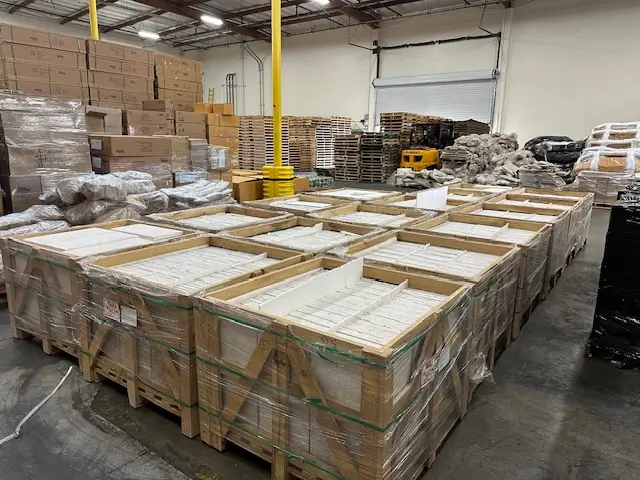
Planning a black limestone calibrated Fountain Hills installation requires honest lead time accounting. Calibrated stone isn’t always warehouse-stocked in the same volume as standard pavers, because the machine-grinding process adds a processing step that some importers bypass to move product faster. Confirm warehouse stock availability before finalizing your project schedule — not after your substrate is poured and curing.
At Citadel Stone, we maintain direct relationships with quarry operations that produce calibrated black limestone to consistent specification, and our warehouse team performs incoming quality checks that verify thickness tolerance on every pallet before it ships. That verification step catches out-of-spec batches before they reach your jobsite, which is a detail that sounds minor until you’re halfway through an installation and discovering that 15% of your slabs need grinding adjustments on-site.
Standard warehouse lead times for calibrated black limestone run 1–2 weeks for stocked formats. Custom dimensions or non-standard thickness specifications can extend that to 6–8 weeks for an import cycle, so your project timeline needs to reflect that reality. Truck delivery scheduling to Fountain Hills and surrounding communities is typically straightforward from the Phoenix metro warehouse network, but confirm access constraints at your jobsite — particularly for hillside properties where the driveway grade or turning radius limits what delivery configuration is practical.
For project planning that extends across the Phoenix region, reviewing resources on authentic natural black limestone in Tucson provides useful benchmark data on how this material performs across Arizona’s varied climate conditions.
Jointing and Grout Selection for Precision Installations
Calibrated stone earns its specification value most visibly in the joint line. With consistent Fountain Hills uniform thickness and precise dimensions, you can achieve joint widths as tight as 3mm without the lippage risk that undermines thin-joint work on uncalibrated material. Here’s where many installers give back the precision they paid for in the material specification:
- 3mm joints: Achievable with calibrated stone, requires epoxy grout or sanded tile grout rated for narrow joints — standard unsanded grout at this width lacks sufficient binding aggregate
- 5mm joints: The practical sweet spot for most Fountain Hills outdoor applications — accommodates minor dimensional variation while maintaining clean visual lines
- 8–10mm joints: Appropriate when mixing calibrated and uncalibrated material in the same plane, or when substrate conditions introduce expected movement
- Expansion joints: Mandatory at 12-foot intervals for exterior installations in Arizona’s thermal environment — use backer rod and flexible polyurethane sealant, never rigid grout
The grout color selection interacts with black limestone’s depth of tone in ways that the standard color chart doesn’t predict. A medium gray grout reads as visually wider than the actual joint dimension because the contrast between grout and stone exaggerates the line. If your design intent is a monolithic surface appearance, a dark charcoal grout in the 3–5mm joint range achieves the closest approximation of a continuous stone plane.
Sealing Protocols for Black Limestone in Arizona
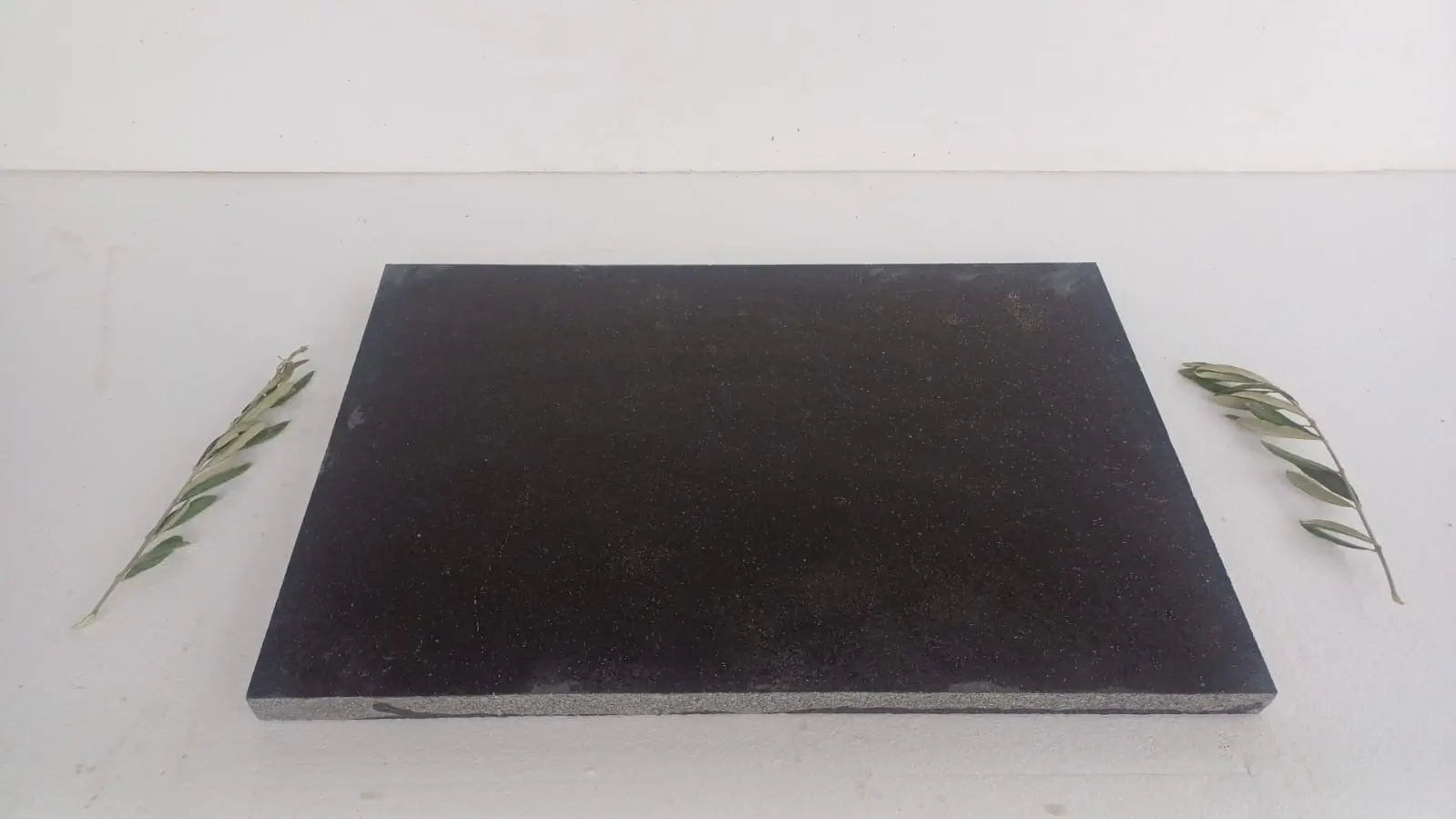
Black limestone slabs in Arizona require a sealing approach calibrated to both the material’s porosity characteristics and the UV intensity of the Sonoran Desert climate. The interconnected pore structure of most black limestone varieties produces absorption rates in the 3–7% range, which means unsealed material will show oil staining from cooking residues within weeks in an outdoor kitchen environment.
A penetrating silane-siloxane sealer applied in two coats — with a 24-hour dry interval between coats — provides the baseline protection level for exterior Fountain Hills applications. The first coat saturates the pore structure; the second coat fills the residual capacity that the first coat’s cure cycle opens up. A single-coat application leaves approximately 30–40% of the sealing benefit on the table.
Resealing intervals in Arizona’s UV environment should be compressed relative to national product guidelines. Most sealer manufacturers specify 3–5 year resealing cycles based on temperate climate testing. In Yuma and other high-UV Arizona locations, the UV degradation rate on sealer chemistry runs roughly twice the temperate baseline, meaning practical resealing intervals of 18–24 months for direct-sun applications deliver significantly better long-term protection than following the label schedule.
Expert Summary
Black limestone calibrated Fountain Hills projects succeed or fail at the specification stage, not the installation stage. Your material tolerances need to be locked in the purchase order, your base preparation needs to reflect Arizona’s soil and thermal realities, and your sealing schedule needs to account for desert UV conditions rather than generic label guidance. The calibrated stone specification is an investment in precision that pays dividends through the life of the installation — but only when every downstream decision maintains the same standard of black slab precise dimensions Arizona contractors have come to rely on.
The detail most specifiers overlook is the interaction between calibration tolerance and grout joint width. Calibrated stone is purchased specifically to access the tight joint aesthetic, yet that advantage gets undermined by grout selections or expansion joint placement that reintroduces the dimensional variability you were trying to eliminate. Lock in your jointing strategy before the stone arrives on the truck, not after you’ve seen the first course laid out. For those considering related stone hardscape work, Black Limestone Paving DIY Installation for Cave Creek Labor Savings provides practical guidance on how Citadel Stone materials perform in self-managed Arizona installation projects. Citadel Stone offers black limestone slabs in Arizona for outdoor kitchens.