
Black natural limestone porosity Prescott projects reveal a performance variable that catches even experienced specifiers off guard — the relationship between absorption rate and diurnal temperature swing. Prescott’s elevation sits around 5,400 feet, which means your stone isn’t just dealing with heat; it’s cycling through a 30–40°F temperature drop most nights, and every pore in that limestone is responding to that shift. Understanding how black limestone’s interconnected pore structure interacts with Prescott’s specific moisture and freeze conditions separates installations that hold up for 25 years from ones that start showing spalling and joint failure within a decade.
What Limestone Porosity Actually Means for Your Project
Porosity isn’t just a percentage on a spec sheet — it describes the three-dimensional network of voids within the stone’s matrix. Black limestone typically exhibits porosity values between 3% and 8% by volume, but the distribution of those voids matters more than the number itself. Tight, disconnected pores resist moisture migration far better than an open-channel pore structure even when the total void percentage is identical.
Request absorption test results under ASTM C97, not just porosity data, because Prescott water absorption behavior tells you how aggressively the stone actually pulls moisture under real-world pressure. Black limestone from quality quarries commonly shows absorption rates of 0.5% to 2.5% by weight — and anything under 1% gives you meaningful margin in Prescott’s freeze-thaw environment. At Citadel Stone, we conduct warehouse quality checks specifically for absorption consistency before material ships, because batch variation from the same quarry can be surprisingly wide.
Prescott’s Climate and How It Loads Moisture Into Stone
Prescott receives roughly 19 inches of annual precipitation, with a concentrated monsoon season from July through September delivering intense, short-duration rainfall events. That pattern creates a specific stress cycle for porous stone — rapid saturation followed by fast evaporation, repeated dozens of times per season. The pore structure doesn’t just fill; it expands slightly under hydrostatic pressure, then contracts as moisture leaves.
The elevation factor compounds this. Prescott sits at 5,400 feet, which puts it well above the Phoenix basin’s thermal floor. Freeze events occur regularly between November and March, and a stone sitting at 85–90% moisture saturation when temperatures drop below 32°F is under serious mechanical stress — water expands roughly 9% when it freezes, and that expansion works against the pore walls with each cycle.
- Monsoon saturation events can push surface moisture content to near-saturation within minutes
- Nighttime temperatures in Prescott regularly drop 35–40°F below daytime highs, accelerating moisture migration
- Freeze-thaw cycles typically number 20–40 annually at Prescott’s elevation — enough to degrade improperly sealed stone within 3–5 years
- South and west-facing installations dry faster but experience more aggressive thermal shock
Permeability vs. Porosity: The Distinction That Matters
These two terms get conflated constantly in project specs, but they describe different properties. Porosity tells you how much void space exists; black limestone permeability Arizona discussions need to address how readily fluid actually moves through that void network. A stone can be highly porous but nearly impermeable if the pores are isolated rather than interconnected — and vice versa.
For your Prescott paving application, low permeability combined with manageable porosity is the target profile. This combination means the stone resists moisture ingress under typical rainfall intensity while any absorbed moisture has limited pathways to migrate deeper into the slab. Dense black limestone varieties — particularly those sourced from well-consolidated Carboniferous formations — tend to hit this profile naturally, with permeability coefficients below 0.01 mD in well-tested samples.
The practical test you can run on-site before committing to a batch: place a few drops of water on the face of a slab and time absorption. If the water beads for 15–20 minutes, you’re working with a low-permeability stone. If it disappears within 2–3 minutes, plan your sealing schedule accordingly and consider a penetrating consolidant before the primary sealer coat.
Sealing Strategy for Arizona Conditions
Porous stone management starts with sealer selection, and the Prescott environment narrows your options more than most specifiers realize. Topical sealers — the film-forming acrylic and polyurethane types — trap moisture under the coating when applied to stone that hasn’t fully equilibrated to ambient humidity. In Prescott’s monsoon season, that means you’re frequently applying sealer to stone that reads as dry at the surface but carries residual moisture 3–5mm into the slab.
Penetrating silane-siloxane sealers are the correct specification for Prescott water absorption management. They don’t form a film; they bond to the pore walls and reduce surface energy, causing water to bead rather than absorb without blocking vapor transmission. This matters enormously at elevation — your stone needs to breathe or you’ll trap moisture that has no escape route.
- Apply penetrating sealer to stone that has equilibrated for minimum 72 hours after any rainfall
- Two-coat application at 20–30 minute intervals outperforms single heavy-coat application for pore wall coverage
- Resealing intervals at Prescott’s elevation: every 18–24 months for horizontal surfaces, every 3 years for vertical
- Test sealer performance annually with the water bead test — when water no longer beads within 10 seconds, it’s time to reseal
- Avoid solvent-based sealers during monsoon season; humidity above 60% compromises cure chemistry
For Flagstaff installations just north of Prescott where freeze-thaw cycles are even more frequent, push that resealing interval to annual on exposed horizontal surfaces — the UV and freeze loading there is measurably more aggressive. Prescott sits in a slightly more moderate band, but don’t let that lead you to treat it like a low-desert installation.
Base Preparation and Drainage Geometry
Drainage geometry is your primary moisture defense — sealer is your secondary. Black natural limestone paving in Arizona that sits in standing water long enough will eventually compromise even the best sealer system. Your base preparation needs to create positive drainage before the first paver goes down.
Specify a minimum 1.5% cross-slope on all horizontal surfaces, and verify it with a level and tape — don’t rely on visual inspection. Prescott’s monsoon events can deliver 1–2 inches of rain in under an hour, and a flat installation will pool at low points every time. Underneath the stone, a 4–6 inch compacted Class II aggregate base with a minimum 4% void content allows water that does penetrate the joint system to migrate laterally and exit at the slab perimeter.
In Prescott’s granitic soil zones — which make up most of the residential areas — natural drainage is actually better than the clay-heavy soils you’d encounter in lower Arizona elevations. Arizona moisture handling requirements shift considerably in these granitic zones; you won’t typically fight the same hydrostatic pressure buildup that plagues installations in heavier soils, but you should still verify sub-base drainage capacity before pouring your setting bed.
Joint Specification and Porous Stone Management
Joint design is where black natural limestone porosity Prescott projects either succeed or fail at the system level. The joints aren’t just aesthetic spacers — they’re the primary path for moisture to enter and exit the installation. Tight butt joints look stunning but create a moisture trap where the stone edges meet; over time, edge absorption accelerates at those contact zones.
Specify a minimum 3mm joint width for Prescott applications, filled with a polymer-modified joint sand rather than a rigid grout. Rigid grout cracks under thermal cycling, and those cracks become direct moisture channels straight to your setting bed. Polymer joint sand flexes with the stone’s thermal movement — and at Prescott’s elevation, you’re getting 0.003 inches of dimensional change per linear foot of stone for every 20°F temperature swing, which adds up across a large patio.
For projects in Sedona, where red soil and iron-rich moisture creates additional staining risk at joint edges, specify a stain-inhibiting joint sand alongside the penetrating sealer protocol — the iron content in that soil migrates under capillary action and can discolor limestone edges even without direct contact.
Thickness and Load Considerations for Prescott
The relationship between stone thickness and moisture resistance isn’t immediately obvious, but thicker slabs provide a meaningful buffer zone — moisture absorbed at the surface has more distance to travel before it reaches the setting bed or causes through-slab stress during freeze events. For Prescott patio and walkway applications, 1.25-inch nominal thickness represents the practical minimum; 1.5 inches gives you meaningful additional protection for black natural limestone porosity Prescott conditions.
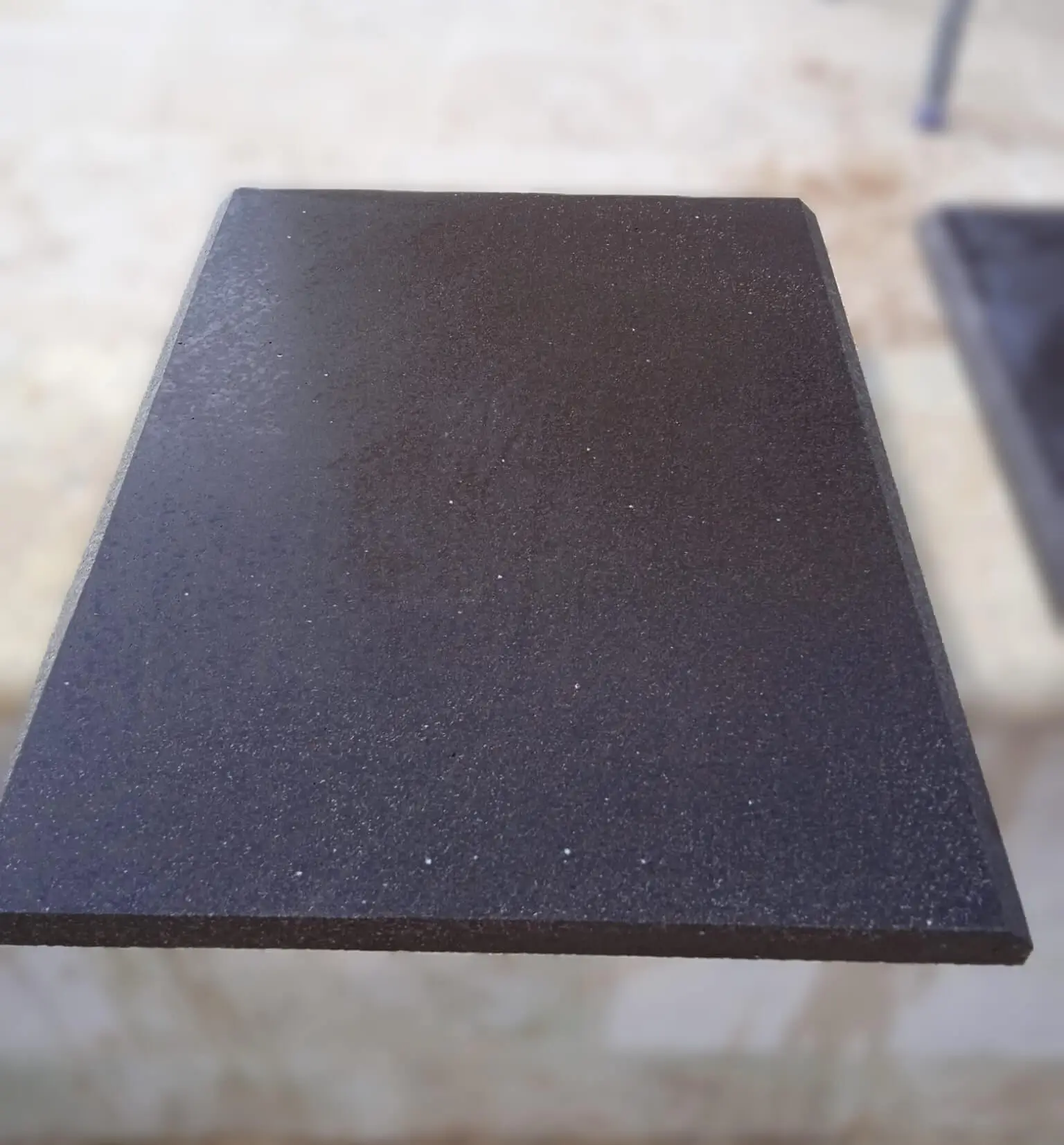
Driveway and vehicular applications require a different calculation. Point loads from vehicle tires concentrate stress at pore boundaries within the stone’s compression zone, and moisture-saturated stone under load exhibits measurably lower effective compressive strength than dry stone of the same specification. For any vehicular application, you’re looking at 2-inch nominal minimum with a rigidly bounded edge — no cantilevered overhangs beyond the aggregate base perimeter.
- Pedestrian patios and walkways: 1.25 to 1.5-inch nominal thickness, 4-inch compacted aggregate base
- Pool surrounds: 1.5-inch nominal, verify drainage slope to deck drain — moisture dwell time at pool edge is consistently high
- Driveways: 2-inch nominal minimum, 6-inch compacted aggregate base with edge restraint
- Vertical features: 0.75-inch nominal adequate, but back-seal all cuts before installation
Explore the full product range for your project through Citadel Stone black natural paving limestone in Prescott, where thickness options and absorption data are available for direct comparison before you commit to a specification.
Installation Timing and Moisture Conditions
Arizona moisture handling during installation is a variable most specs don’t address explicitly — and it’s one of the most common sources of field problems. Black limestone absorbed at 60–70% of its capacity when laid into a mortar bed creates a moisture equilibrium problem as it dries: the stone and mortar are competing for moisture at different rates, which can compromise bond strength at the interface.
Schedule your Prescott installations outside the core monsoon window when possible — early June and October offer low humidity and manageable temperatures. For projects that can’t wait, install during morning hours before ambient humidity climbs with afternoon storm buildup. Stone delivered by truck directly to the site should acclimate under shade cover for 24 hours before placement, especially if it’s coming from a warehouse environment with controlled humidity.
Projects in Peoria operate under a very different moisture baseline — the low desert humidity there means stone arrives and installs in near-dry conditions year-round. Prescott’s variable humidity profile requires you to treat installation timing as a technical specification decision, not just a scheduling convenience.
- Optimal installation temperature range: 50–85°F ambient
- Avoid installation when rain is forecast within 48 hours of mortar cure completion
- If installing during monsoon season, tent the freshly laid section overnight to control cure moisture
- Verify truck delivery scheduling to avoid stone sitting in direct sun on the bed before installation — surface temperatures on black stone in direct Arizona sun can exceed 140°F, which affects mortar open time
Long-Term Maintenance and Performance Monitoring
Your maintenance schedule for black natural limestone porosity Prescott installations isn’t guesswork — it’s a repeatable protocol based on measurable surface indicators. The water bead test, run twice annually, gives you objective data on sealer performance without requiring laboratory equipment. Mark your test locations with a paint pen on the underside of a nearby piece of scrap stone so you’re testing the same exposure conditions each time.
Beyond resealing, watch for efflorescence along joint lines — the white mineral deposits that form when moisture carries salts through the stone and deposits them at the surface during evaporation. Efflorescence in the first 12 months is normal as the installation’s residual moisture works its way out. Efflorescence appearing after 3–5 years typically signals a drainage failure or a compromised sealer zone that’s allowing new moisture infiltration pathways to develop.
- Annual inspection: check joint sand levels and top up any areas showing settlement or washout
- Biennial resealing: penetrating silane-siloxane, two coats, dry conditions only
- After significant freeze events: inspect for micro-spalling at slab edges and corners — these are the first stress indicators
- Five-year deep clean: pH-neutral stone cleaner to remove accumulated surface deposits before resealing
Getting Your Prescott Limestone Specification Right
Managing black natural limestone porosity in Prescott comes down to respecting the full system — not just the stone itself. The material’s absorption profile, your sealer selection, joint geometry, base drainage, installation timing, and maintenance cadence all interact, and a weakness in any one layer shows up as a field failure eventually. Prescott’s elevation creates a freeze-thaw loading that the low desert never sees, which means specifications appropriate for Phoenix are systematically under-engineered for this market.
The best performance comes when you approach black limestone as a living system that exchanges moisture with its environment rather than treating it as an inert surface. Penetrating sealers that preserve vapor transmission, adequate joint width for thermal flex, and verified positive drainage create the conditions for 20–25 year installation life without structural remediation. The material is capable of that performance — it just requires the specification to match the climate.
As you develop your full Prescott stone specification, it’s worth noting that stone character goes beyond performance properties — aesthetic considerations like natural inclusions can define a project’s visual identity just as much as durability does. Black limestone permeability Arizona and absorption criteria give you the technical foundation, but the material’s visual qualities matter equally in design contexts. Black Natural Limestone Paving Fossil Inclusions for Marana Character explores how natural stone features contribute to project design in Arizona contexts, which can inform your material selection process alongside the technical criteria covered here. Our black limestone slabs for sale in Arizona are ready for pickup today.