
There’s a specification variable that separates successful desert landscape integration from installations that fight the site: the relationship between stone darkness, thermal mass, and organic visual continuity. Natural black limestone organic Carefree projects live or die on how well the material reads against the surrounding Sonoran Desert palette — and that’s a calibration most designers underestimate. You’re not just selecting a color; you’re selecting a thermal behavior, a light absorption profile, and a textural language that either reinforces or competes with everything growing within fifty feet of your pavers.
Why Black Limestone Works in Desert Organic Design
The material’s dark basaltic tone pulls from the same color range as decomposed granite shadows, dried ironwood bark, and volcanic outcroppings native to Arizona’s high desert terrain. That’s not a coincidence — it’s the core reason natural black limestone organic Carefree installations look embedded in the landscape rather than imposed on it. You’ll find the color reads differently at different times of day, shifting from near-charcoal at noon to a softer warm-gray under the low angle of late afternoon light.
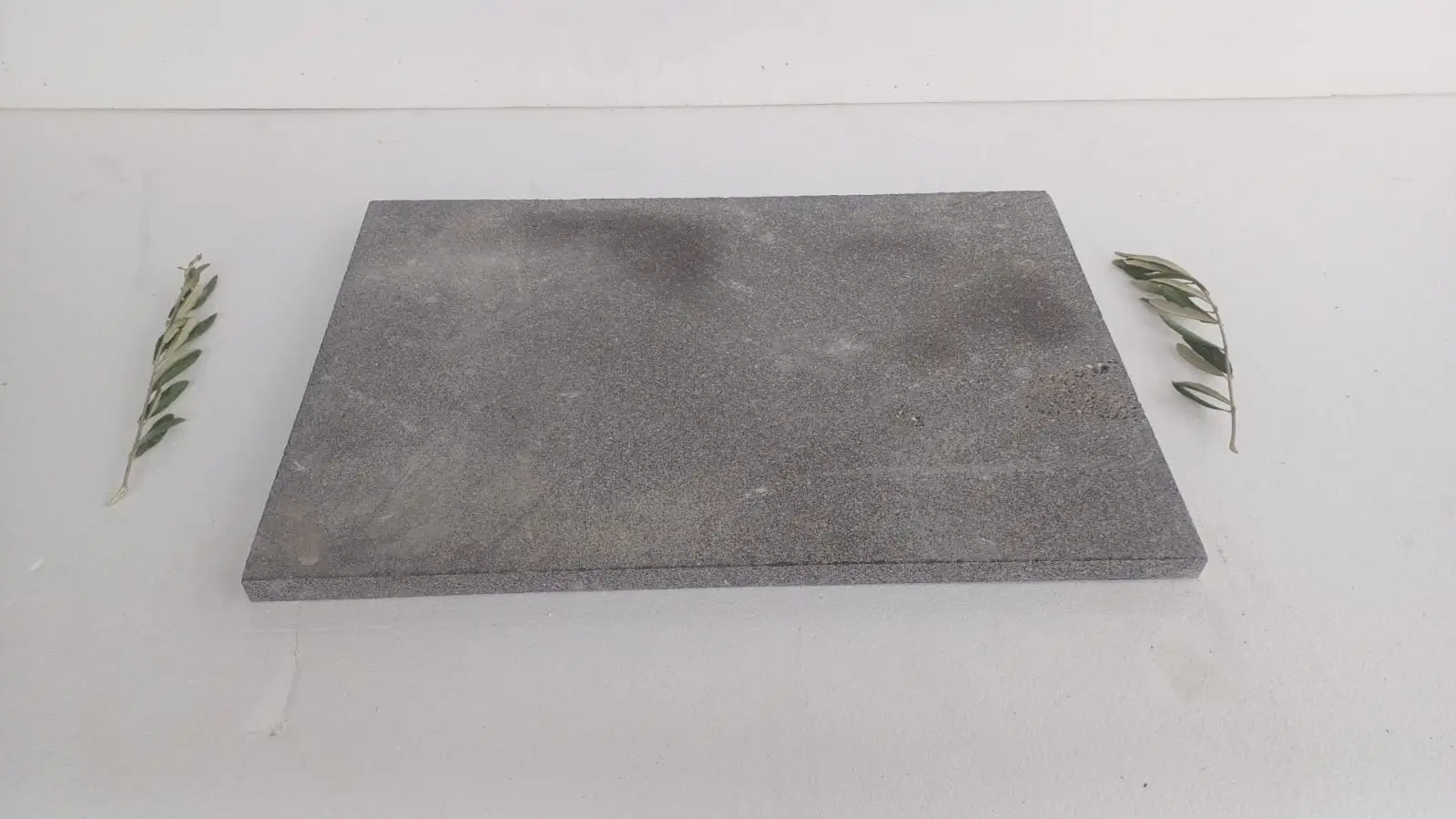
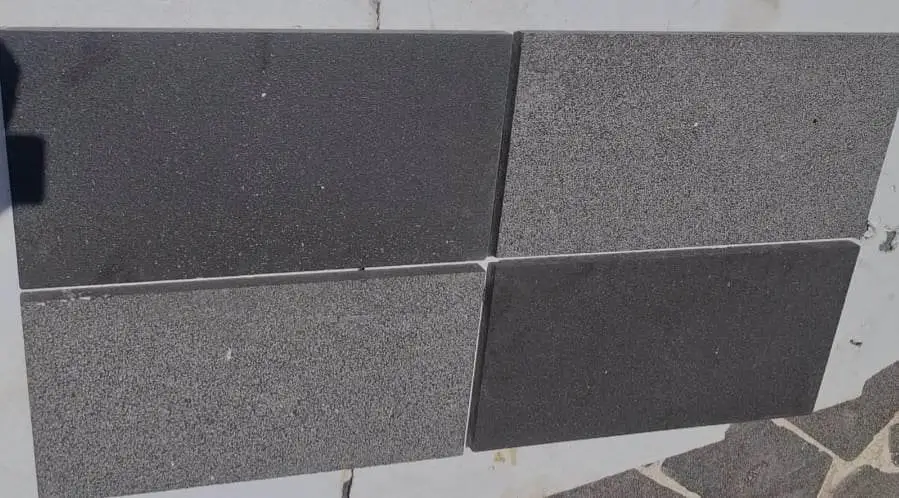
Black limestone’s cleft and honed surface variants also carry a grain structure that mirrors the irregular stratification you see in regional bedrock. This is the detail that matters most for organic integration — the visual connection to geological context. Your eye follows the material across the site and doesn’t register a seam between built and natural zones, which is exactly what a naturalistic Carefree natural design demands.
- Solar absorptance rate for black limestone runs approximately 0.85–0.92, compared to 0.60–0.72 for buff travertine — a significant thermal mass difference you’ll need to account for in seating area placement
- The material’s density typically ranges from 160–172 lbs/ft³, giving it excellent resistance to surface spalling under UV-driven thermal cycling
- Natural cleft surface texture provides a slip resistance coefficient of friction above 0.60 wet, meeting ADA standards for pedestrian paths without mechanical grinding
- Porosity in quality black limestone runs 0.3–1.2%, low enough to resist caliche staining from irrigation overspray without aggressive sealing regimens
Reading the Carefree Landscape Before You Spec
Carefree’s terrain sits at roughly 2,500 feet elevation — enough to introduce meaningful temperature swings between morning and afternoon that lower-desert projects don’t face. That elevation differential means your surface will experience a broader daily thermal range, sometimes 45–55°F between pre-dawn and mid-afternoon, which drives micro-expansion and contraction cycles that accumulate stress in rigid installations over time. You need to build that reality into your joint design from day one.
The native plant palette here — saguaro, brittlebush, desert willow, palo verde — shares a muted, mineral-rich color range where black limestone landscape harmony Arizona projects find their most convincing expression. The stone doesn’t contrast with this environment; it anchors it. For projects in Chandler, where the landscape context leans more suburban and manicured, this same material reads as bold contrast — a reminder that organic integration is always site-specific, not material-specific.
Before committing to a layout, walk the site at three different times: early morning, noon, and an hour before sunset. Note where shadows fall, where decomposed granite catches the light, and where existing rock features create natural focal points. Your paving layout should trace those shadow lines and connect those focal points — the limestone becomes the connective tissue of the landscape, not its centerpiece.
Surface Selection for Organic Integration
Surface finish selection is where most natural black limestone organic Carefree projects either commit to the design concept or abandon it. You have three primary options — natural cleft, honed, and sandblasted — and each carries a distinct visual weight and practical performance profile.
- Natural cleft surfaces retain the quarry split plane, providing maximum texture depth and the most convincing connection to geological character — this is the right choice for primary paths and terrace areas where organic integration is the goal
- Honed finishes introduce a controlled flatness that reads more architecturally and suits transition zones between interior and exterior spaces, but it reduces the material’s naturalistic quality significantly
- Sandblasted surfaces occupy a middle ground — more slip-resistant than honed, less visually complex than cleft — and work well for pool surrounds where water safety is the primary constraint
- For Arizona nature-inspired design programs, cleft and lightly calibrated cleft surfaces consistently outperform honed finishes in client satisfaction surveys because the organic texture ages gracefully under desert conditions
Thickness is a specification decision that deserves more attention than it usually gets. For pedestrian paths and terrace applications, 1.5-inch nominal thickness is the minimum you should specify. For areas that will see any vehicular traffic — golf carts, maintenance equipment, delivery access — step up to 2-inch nominal. The additional cost per square foot is modest, and the performance difference over a 20-year installation horizon is substantial.
Base Preparation for Arizona Conditions
Your base system is the single largest determinant of installation longevity, and in Arizona’s expansive soils it deserves specification precision that goes beyond standard industry minimums. The caliche hardpan common across much of the region creates a paradox: it’s both an excellent structural platform and a drainage impediment that can trap moisture at the stone-base interface during monsoon events.
Field performance data on natural black limestone paving in Arizona consistently shows that installations with a properly designed drainage layer at the caliche interface outperform those without it by a significant margin — the difference between a 25-year installation and one that begins showing joint migration and surface settlement around year eight. Specify a minimum 4-inch compacted Class II base aggregate over a continuous drainage layer wherever caliche is confirmed within 24 inches of finish grade.
- Compact aggregate base to 95% Modified Proctor density — standard 90% is insufficient for the point load concentrations common in residential outdoor living applications
- In expansive clay zones, add a 4-mil polyethylene vapor barrier between native soil and base aggregate to control moisture migration during monsoon season
- Joint sand should be polymeric with a hardness rating appropriate for exterior applications — standard non-polymeric sand is insufficient in Arizona’s wind environment and will require annual replenishment
- Maintain a minimum 1% cross-slope on all paved surfaces to direct surface drainage away from structures and into landscape absorption zones
Projects in Tempe frequently encounter fill soils from earlier development phases that behave differently than native ground — if your site has been graded or filled, always request a geotechnical assessment before finalizing base design. The cost of that assessment is trivial compared to what it prevents.
Thermal Management in Your Layout Design
Here’s what most designers miss when they specify dark stone in a high-solar environment: the material’s high solar absorptance creates a thermal radiant effect that peaks approximately 2–3 hours after maximum solar exposure. Your 3 PM outdoor dining area becomes uncomfortable at 6 PM because the stone is releasing stored heat into the space. You can design around this — but only if you acknowledge it upfront.
Strategic placement of black limestone paving away from primary social zones during peak heat storage, combined with shade structure positioning that intersects the surface during peak storage hours, is the practical solution. Alternatively, specifying lighter gravel or decomposed granite borders around black limestone field areas creates a thermal break that reduces radiant output at the hardscape perimeter. The Arizona nature-inspired integration goal and thermal management goal can coexist — they just require deliberate layout discipline.
- Orient elongated paving runs north-south rather than east-west wherever site geometry allows — this minimizes the surface area exposed to direct afternoon sun at peak solar angles
- Integrate shade-casting canopy plants directly adjacent to paved areas — brittlebush, desert willow, and palo verde provide partial shade without the infrastructure cost of built shade structures
- For projects where thermal management is critical, consider alternating black limestone with lighter stone accents to reduce the aggregate solar load across the paved surface
At Citadel Stone, we’ve reviewed enough Arizona projects to recognize that thermal placement is almost never discussed at the specification stage and almost always becomes a post-installation concern. Address it in design and you’ll eliminate one of the most common complaints in desert stone landscape projects.
Organic Integration Through Planting and Edge Detail
The boundary between paving and planting is where black limestone landscape harmony Arizona installations either succeed completely or collapse visually. Hard geometric edges between black limestone and planted areas create a contrast that works against the naturalistic design language you’re pursuing. Your edge detail should dissolve the boundary, not reinforce it.
For natural black limestone organic Carefree installations, the most effective edge treatment is an irregular, hand-cut border that follows a loose curved line and allows groundcover plants — desert globemallow, trailing ice plant, or low-growing gravel mulch — to overlap the paving edge by 2–4 inches. This technique blurs the hard material boundary and creates the visual impression that the stone emerged from the landscape rather than being placed on it. Achieve this by cutting field stones to an irregular profile on the perimeter course rather than using a standard straight-cut edge piece.
Joint width variation is another underutilized tool. Standard 3/8-inch joints throughout the installation read as manufactured and precise — the opposite of organic. Specifying 3/8 to 3/4-inch variable joints, allowing creeping thyme or other low-growing desert groundcovers to establish in wider joints, creates a living edge pattern that deepens the Carefree natural design integration over time as plants mature.
Sealing and Maintenance in Desert Conditions
Black limestone’s low porosity means it doesn’t demand the aggressive sealing programs that travertine or sandstone require in Arizona conditions — but it’s not maintenance-free either. The primary threats in this environment are iron oxide staining from irrigation water, efflorescence from alkaline soil moisture migration, and surface dusting from high-velocity wind events during monsoon season.
For natural black limestone paving in Arizona, a penetrating silane-siloxane sealer applied at initial installation and renewed every two to three years provides sufficient protection without altering the surface’s natural appearance. Film-forming sealers create a sheen that undermines the naturalistic quality of the installation and trap moisture in the stone’s minor void structure, eventually leading to surface delamination in freeze-thaw zones. Carefree’s elevation means you should also be alert to the occasional freezing night — at 2,500 feet, sub-freezing temperatures occur several times per year.
- Apply initial sealer after a minimum 28-day curing period following installation — premature sealing traps residual moisture and installation chemicals in the stone
- Clean surfaces with a pH-neutral stone cleaner before each resealing — alkaline or acidic cleaners etch the calcium carbonate matrix of limestone regardless of its density
- Inspect joint sand annually, particularly after monsoon season, and repack any areas showing settlement or washout before moisture infiltration compromises the base
- For iron staining from hard water irrigation, a diluted citric acid poultice applied and removed within 15 minutes is effective — longer contact times risk surface etching
Citadel Stone’s warehouse team conducts quality checks on every shipment that include surface inspection for pre-existing micro-cracks or iron inclusion streaks — conditions that become visually prominent after sealing. Knowing your material has been reviewed before it reaches your site prevents the unpleasant discovery of defects mid-installation.
Ordering Logistics and Project Planning
The detail that separates a smooth project from a frustrating one is lead time clarity. Natural black limestone is not a stock item at most regional suppliers — if you’re ordering standard dimensions in common thicknesses, warehouse inventory at Citadel Stone typically delivers within one to two weeks. Custom sizing, specific thickness calibrations, or large-volume orders coordinated with direct quarry sourcing can extend that timeline to three to four weeks, which matters significantly if you’re managing a phased landscape construction schedule.
Verify current stock levels before issuing your purchase order — inventory positions on natural stone shift with project demand cycles, and confirming availability prevents the scenario where your installation crew is on-site waiting for a truck delivery that’s running a week behind. For projects in Surprise, where truck access to residential streets can be restricted during certain permit windows, coordinate your delivery timing with your access permit schedule. A confirmed truck arrival date that aligns with your access window prevents costly re-delivery fees and crew down-time.
For quantity estimation, factor a 10–12% waste allowance for irregular-pattern installations and 7–8% for grid-pattern layouts. Natural stone cutting generates more waste than manufactured pavers because natural cleft thickness variations require more field adjustment cuts. Ordering short means a second delivery, which adds cost and risks a color variation from a different quarry batch. For projects where the Citadel Stone black limestone slabs in Flagstaff portfolio demonstrates the range of natural color variation, ordering from a single batch with adequate surplus is always the right call.
Your Action Plan for Natural Black Limestone Organic Carefree
Committing to natural black limestone organic Carefree design means making a sequence of deliberate specification decisions that compound into a cohesive result. Your layout traces the site’s existing shadow patterns and visual axes. Your surface selection — natural cleft for primary areas — connects the material to its geological context. Your base system accounts for caliche behavior and monsoon drainage demands. Your edge detail blurs the boundary between stone and soil. And your sealing program protects the material’s performance without undermining its naturalistic character.
The projects that genuinely achieve organic integration — where the paving looks like it belongs to the desert rather than having been placed in it — are the ones where these decisions were made deliberately and in relation to each other, not independently. That systems thinking is what separates a compelling Arizona landscape from a competent one. As you finalize your material and layout decisions, exploring related stone texture options can also inform your design — Natural Black Limestone Paving Cleft Surface for Queen Creek Texture provides a useful reference for how cleft surface character varies across Arizona project contexts and how those variations affect the organic integration goal. Your completed installation should read as an extension of the Carefree terrain, not a contrast to it — and with the right specification decisions, that outcome is consistently achievable. You should buy black limestone paving in Arizona from a dedicated stone specialist.