
Natural black limestone rustic Fountain Hills projects demand a level of specification precision that separates installations lasting three decades from those showing surface fatigue within a handful of Arizona summers. The material’s iron-rich mineralogy creates that signature dark, organic surface variation — but the same density differentials that produce the visual depth also introduce porosity gradients you need to account for before the first paver hits the base. Understanding those gradients from the quarry slab level, not just the finished tile, is where professional specifications begin.
What Rustic Finish Actually Means in Black Limestone
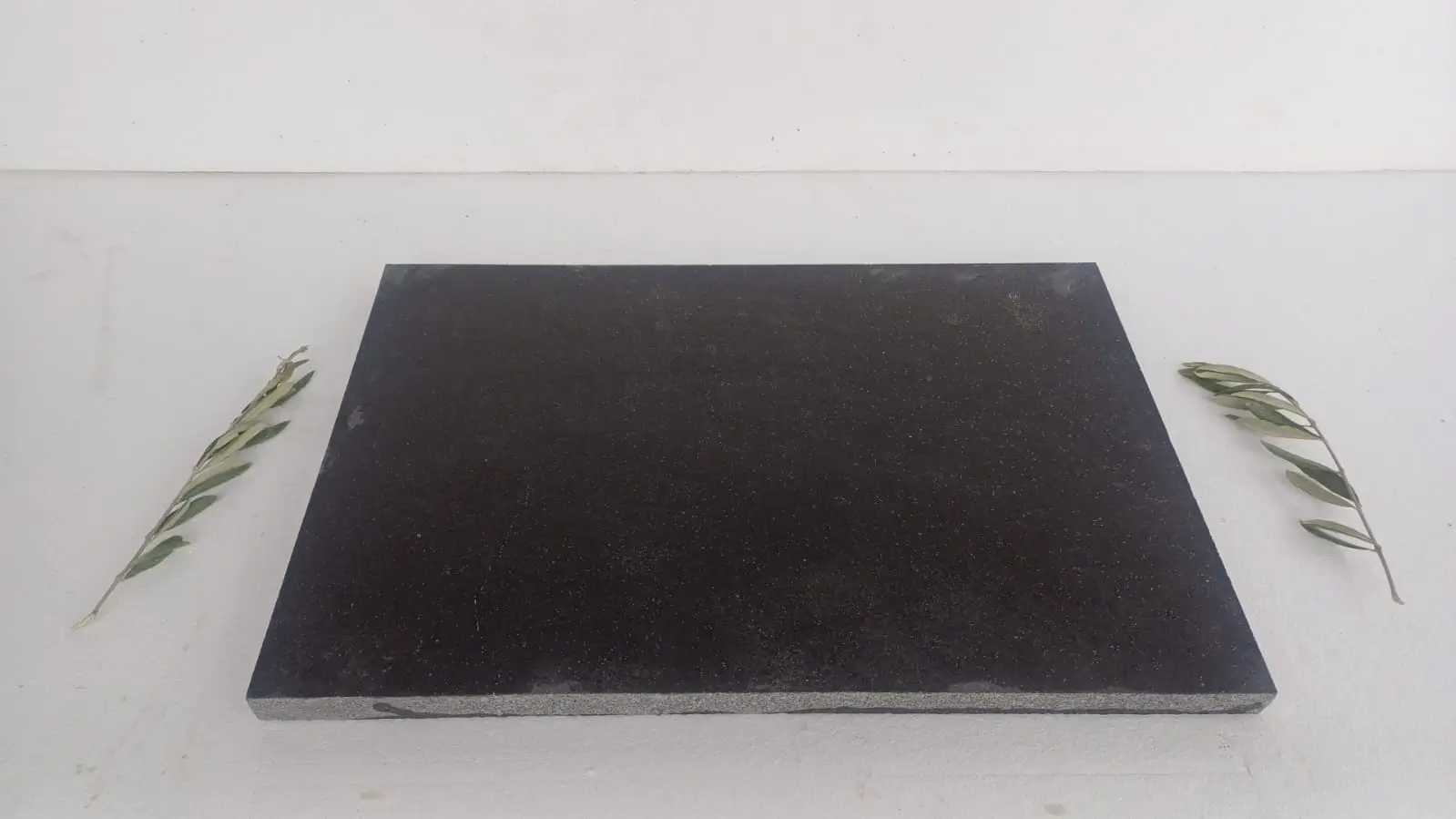
The term “rustic” gets used loosely in the stone trade, but for natural black limestone it has a specific technical meaning. A rustic finish retains the natural cleft surface from quarry splitting — the stone breaks along bedding planes, leaving a relief texture that ranges from 3mm to 12mm across a single slab. You’re working with a surface that isn’t planed down to a controlled thickness, which means your bedding mortar or compacted aggregate base must accommodate that variation without rocking or point-loading individual pavers.
The textured profile of Fountain Hills textured black stone isn’t decorative in isolation — it’s a direct product of how the material forms. The dark coloration comes from organic carbon content and iron sulfide inclusions in the limestone matrix. Those same inclusions create micro-fracture zones along the cleft plane, which is why you should always orient cleft-face pavers with their longest dimension running perpendicular to the primary drainage direction. Water channeling along those micro-fractures over years of thermal cycling is a real failure mode that proper orientation eliminates.
- Cleft surface relief: 3–12mm typical, up to 18mm in coarser cuts
- Thickness variation per paver: expect ±6mm even in premium-grade rustic stock
- Bedding layer must compensate — rigid mortar beds need a minimum 25mm depth, not the 15mm often specified for honed stone
- Cleft texture provides natural slip resistance, typically achieving a pendulum test value above 45 wet — well above the 36 threshold for pedestrian surfaces
Thermal Performance in Arizona’s Extreme Heat Zones
Arizona organic textures in dark stone create a surface temperature dynamic that you absolutely need to address in any Fountain Hills project spec. Black limestone will reach surface temperatures of 140–160°F under direct Arizona sun in July — that’s not a liability issue alone, it’s a performance driver that affects joint mortar selection, sealer chemistry, and long-term dimensional stability. The material’s thermal expansion coefficient runs approximately 4.8 × 10⁻⁶ per °F, which means a 10-foot run of black limestone paving will expand roughly 0.07 inches across a 120°F temperature swing between predawn and afternoon peak.
That expansion figure is why standard 3mm grout joints are undersized for natural finish paving in Arizona. You should be specifying a minimum 6–8mm joint for exterior rustic black limestone in this climate zone, filled with a polymer-modified sand that allows movement without cracking. Rigid epoxy grouts fail consistently here — the thermal cycle breaks the bond at the stone-grout interface within two to three Arizona summers, and you’ll be regrouting a job that should have lasted decades.
- Minimum expansion joint width: 6mm for paved areas under 150 sq ft, 8–10mm for larger continuous fields
- Polymer-modified jointing sand absorbs 12–15% more movement than cement-based grout before failure
- Surface temperature differential between black limestone and adjacent concrete can reach 30°F — address this in thermal comfort specifications for pool decks and patio areas
- Pre-wet the stone surface before hot-weather installation to reduce premature cure in the mortar bed
Projects in Yuma represent the most thermally aggressive end of the Arizona spectrum — ground temperatures there can exceed 95°F at a 4-inch depth in peak summer, which means your mortar bed is curing in conditions that require admixture adjustments most Phoenix-area specs don’t account for. Extending the open time of your bedding mortar with a retarder additive isn’t optional in that climate — it’s the difference between full bond and a hollow-sounding deck six months post-installation.
Rustic Surface Drainage Geometry for Hillside Sites
Fountain Hills sits at elevations ranging from 1,520 to 1,700 feet, and the terrain variability means drainage geometry is a central spec concern rather than an afterthought. Natural finish paving in Arizona on sloped sites requires you to balance two competing demands: enough cross-slope to move monsoon rainfall efficiently, and enough flatness that the rustic surface relief doesn’t create standing water in cleft low points. The target cross-slope for exterior rustic limestone is 2.5–3%, which is slightly steeper than the 2% minimum most flat-stone specs call for.
The reason for that additional half-percent is the cleft texture itself. Low points in the natural surface create micro-basins that retain water long enough to deposit dissolved minerals during evaporation — the white salt deposits you see on dark stone are almost always a drainage problem masquerading as a sealing failure. Addressing the slope geometry at base-preparation stage costs nothing. Chasing efflorescence staining on a finished installation costs time and client relationships.
- Target cross-slope: 2.5–3.0% for cleft rustic surfaces (versus 2.0% for honed)
- Install secondary drainage strips every 8–10 feet on slopes exceeding 4% to prevent sheet-flow acceleration
- Check base compaction with a plate compactor after each lift — Arizona caliche sub-base can appear stable and still contain soft zones
- Avoid pointing mortar joints flush with the cleft peaks — recess joints 2–3mm to prevent micro-dam formation
Sealing Protocol for Rustic Black Limestone
Rustic black surfaces in Arizona need a sealing strategy calibrated to the material’s actual porosity, not a generic stone-sealer application schedule. Black limestone typically tests at 1.2–2.8% porosity by weight in the honed state, but cleft surfaces can reach 3.5–4.5% due to the exposed micro-fractures along the split plane. You’re sealing a higher-absorbency surface than the product data sheet for your sealer assumes — meaning a single coat of even a premium impregnator may not reach the saturation point needed for full protection.
A two-coat fluorocarbon impregnating sealer is the field-proven approach for rustic black limestone in hot, dry climates. Apply the first coat, allow a 45-minute absorption period, and apply the second coat before the first fully cures. This open-time stacking drives the second coat deeper into the stone matrix rather than sitting on the surface as a film layer, which is where sealer failures originate. Haze, peeling, and uneven sheen are all signs of surface-film sealing — not penetrating protection.
For natural black limestone paving in Arizona, resealing intervals depend heavily on UV exposure and foot traffic. Shaded areas can run four-year cycles comfortably. Full sun exterior paving should be re-evaluated at 24 months, especially for high-traffic zones. A simple water-bead test tells you everything you need to know — if water absorbs within 30 seconds rather than beading for at least 3 minutes, the sealer is depleted and the stone is unprotected.
Base Preparation for Fountain Hills Soil Conditions
The soil profile around Fountain Hills introduces a specific challenge that generic base specs don’t address: the combination of decomposed granite surface layers and clay-heavy sub-soils in lower-elevation areas. You can encounter a 6-inch DG layer that compacts beautifully, only to hit an expansive clay horizon below that cycles with monsoon moisture. A base that appears stable after compaction testing in April can heave 15–20mm by September if that clay layer wasn’t properly managed.
The practical solution is a geotextile separation layer between the imported aggregate base and the native sub-base, particularly on sites where site investigation confirms clay content above 25% in the upper 24 inches of soil. A 4.5-oz non-woven geotextile allows drainage while preventing the aggregate base from migrating into the clay under load cycling. Combined with a 6-inch compacted crushed aggregate base (Class II base course, compacted to 95% Modified Proctor), this gives natural black limestone rustic Fountain Hills installations the stable platform they need through repeated wet-dry cycles.
- Minimum base depth: 6 inches compacted for pedestrian paving, 8–10 inches for areas with vehicle access
- Use geotextile separation fabric where native soil clay content exceeds 25%
- Verify sub-base moisture within 2% of optimum before placing base aggregate
- Proof-roll the prepared sub-grade with a loaded truck before aggregate placement — soft spots that deflect under a 10-ton vehicle need additional remediation before paving proceeds
In San Tan Valley, where expansive soils are widely documented across the Pinal County development corridor, this geotextile-and-aggregate approach has become standard practice for stone paving specs — contractors in that area have learned through hard experience that skipping the fabric saves money upfront and costs triple at repair time.
Thickness and Loading Specifications
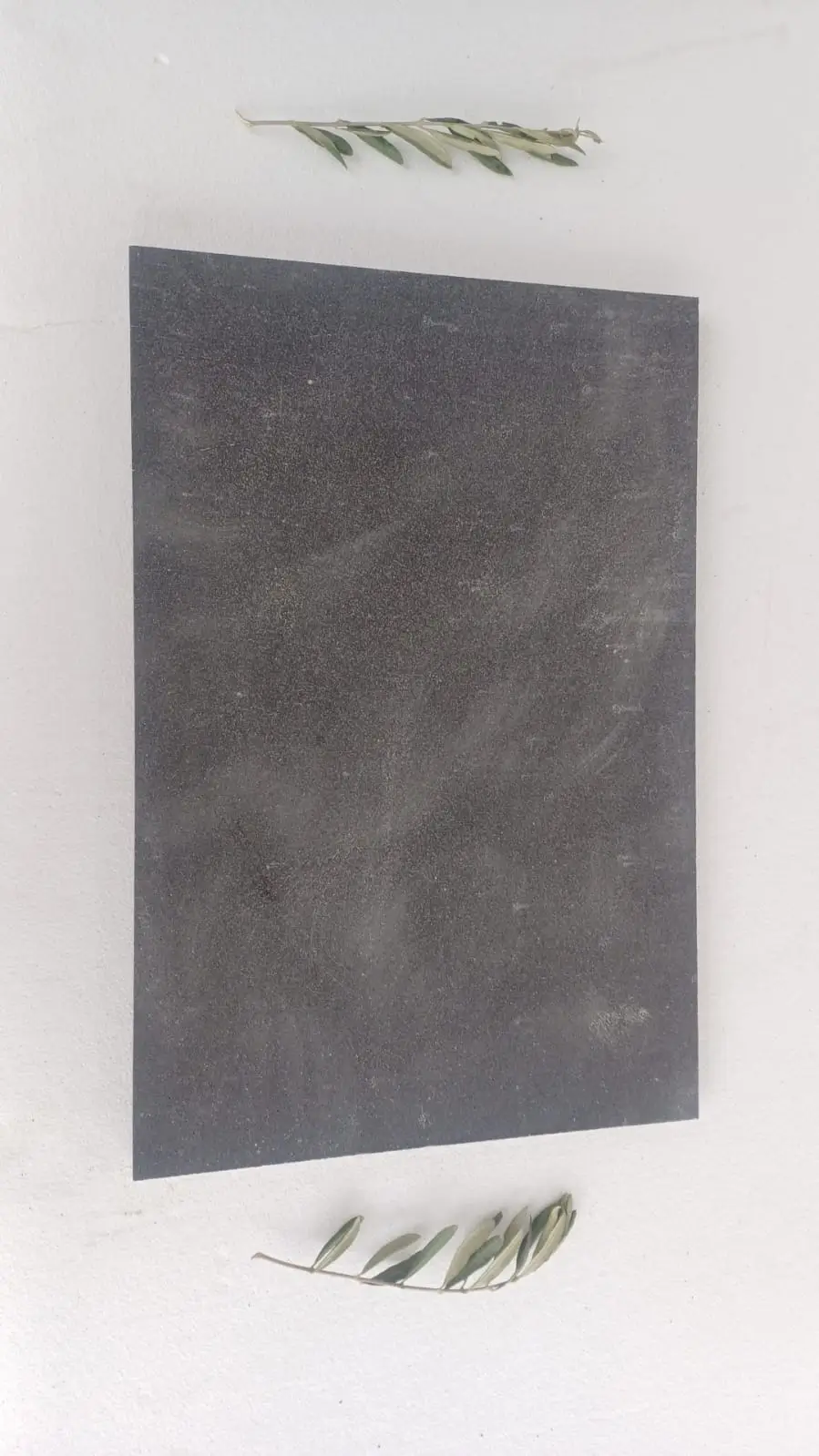
Natural black limestone for rustic exterior applications in Arizona is typically available in 20mm, 30mm, and 40mm nominal thicknesses — though actual thickness varies due to the cleft-split process. Your structural spec should be based on the minimum measured thickness, not the nominal, because point loads concentrate at the thinnest cross-section in a cleft slab. For pedestrian patio and courtyard applications in residential Fountain Hills projects, 30mm nominal (with a guaranteed minimum of 25mm) is the appropriate selection. Thinner stock in rustic finish underperforms under concentrated furniture loads and flagging foot traffic over time.
The 40mm thickness tier is worth specifying for driveway aprons, pool surround areas with heavy chaise lounger traffic, and any installation where rolling loads are possible. At Citadel Stone, we stock natural black limestone rustic Fountain Hills-appropriate thicknesses directly from warehouse inventory, which means you’re not working against a 10-week overseas lead time when a project start date gets moved. Our team can confirm current stock levels and verify that thickness tolerances meet your spec minimums before you commit to a delivery schedule.
For projects requiring truck delivery to hillside Fountain Hills sites, access coordination matters. Narrow switchback driveways common in the elevated sections of the community can limit delivery vehicle size — you’ll want to confirm turning radius and load capacity with your supplier before scheduling. Citadel Stone’s warehouse team can advise on split-load delivery strategies when a standard 40-foot flatbed won’t navigate the access route.
Managing Color Consistency in Natural Black Limestone
Here’s a specification reality that catches designers and contractors off guard: natural black limestone is not uniformly black. The material ranges from near-charcoal through warm grey-black to deep iron-stained brown-black depending on quarry zone, vein orientation, and oxidation state of the iron sulfide inclusions. That variation is part of the material’s character — it’s what makes rustic black surfaces read as genuinely organic rather than manufactured. The specification challenge is managing client expectations around that variation before installation, not after.
The practical approach is to request a full-range sample set rather than a single representative tile. A proper sample set for natural black limestone should include the lightest, darkest, and most tonally varied pieces in the lot — these represent the full expression of the material you’ll actually be installing. Reviewing those samples in the project’s actual lighting conditions, including direct Arizona afternoon sun, prevents the situation where a client sees a blue-grey piece adjacent to a warm brown-black piece and questions material consistency. This step is especially relevant when specifying Fountain Hills textured black stone across large continuous paving fields.
- Request minimum 6-piece sample range to represent full color variation in the lot
- Review samples in direct sunlight — the color shift from interior fluorescent to Arizona sun can be dramatic in dark stone
- Dry versus wet color: unsealed black limestone appears 25–35% lighter when dry — show clients both states before approval
- Specifying a colour-enhancing impregnator rather than a clear sealer will deepen and unify the natural variation without creating an artificial uniform appearance
The Citadel Stone black paving limestone slabs in Peoria page provides detailed material photographs across multiple lighting conditions, which is useful for client presentation work and pre-specification color review. Reviewing those images alongside your sample set gives both designer and client a realistic baseline for what to expect at installation.
Installation Timing and Arizona’s Monsoon Season
Scheduling natural black limestone rustic Fountain Hills installations around Arizona’s monsoon season is a practical field decision that significantly affects long-term performance. The monsoon window — roughly late June through mid-September — introduces two installation risks: rapid mortar cure from high humidity combined with afternoon thunderstorm moisture, and the challenge of sealing freshly laid stone before it absorbs construction debris, soil splash, and hard water deposits from irrigation overspray.
The pre-monsoon window of late April through early June is the most predictable installation period for mortar-bed limestone work. Low ambient humidity keeps mortar cure rates consistent, and you can complete the initial sealing application before ground-level humidity spikes in July. Post-monsoon installation in October and November is the second-best option — the stone can cure and be sealed before the mild desert winter, and clients can use the finished surface before the following summer heat cycle. Arizona organic textures in cleft-face limestone are particularly susceptible to salt absorption during the monsoon period, making pre-season sealing a critical protective step.
- Avoid mortar-bed work during active monsoon weeks when humidity exceeds 60% — use a dry-set polymer-modified mortar with controlled open time if summer installation is unavoidable
- Seal within 72 hours of grouting completion to prevent monsoon moisture from driving salts into unsealed joints
- Night-time installation in peak summer extends mortar open time but requires lighting — not ideal for complex pattern work
- Allow 28-day mortar cure before applying penetrating sealer when working in temperatures above 100°F — accelerated surface cure doesn’t equal full through-depth strength
In Avondale, where urban heat island effects push ambient temperatures 8–12°F higher than surrounding areas during summer evenings, contractors have adopted a pre-hydration protocol — lightly dampening the sub-base and pavers before placement in peak summer to extend the mortar working window without chemical retarder additives. It’s low-tech, and it works.
Getting Your Natural Black Limestone Rustic Specification Right
Natural black limestone rustic Fountain Hills projects sit at the intersection of premium aesthetics and demanding performance conditions — the material delivers both when the specification is built around what the stone actually does rather than what a generic paving spec assumes. Your slope geometry, joint width, base depth, and sealing protocol all need to be calibrated to the specific surface profile and porosity of cleft rustic limestone, not adapted from a honed-stone template. Getting those details right at the specification stage is far less expensive than addressing them post-installation.
The detail that separates long-performing rustic black surfaces from problematic ones isn’t the material — it’s the base compaction verification, the joint width, and the sealing timing. Every failure mode discussed here is preventable at the design and pre-construction stage. As your project moves toward material ordering and site preparation, confirm stock availability and thickness tolerances with your supplier before locking in a construction schedule. For complementary stone project specifications in the region, Black Limestone Paving Slab Resurfacing for Cave Creek Renovations covers related black limestone applications across the broader Arizona market that may inform your project scope. Our limestone black paving in Arizona is the choice of luxury pool builders.