
Surface temperature spikes on dark stone catch a lot of specifiers off guard — but for black limestone outdoor showers in Glendale, that thermal behavior is actually a feature you can design around, not a liability to avoid. The material’s density and fine crystalline structure absorb daytime heat and release it gradually, which means a bare foot stepping onto the slab at dusk lands on something warm rather than scorching. What determines whether that comfort becomes a liability is your drainage geometry and finish selection, and those two decisions need to happen before you finalize slab thickness.
Why Black Limestone Works in Glendale Pool Environments
Black limestone outdoor showers in Glendale face a specific combination of stressors that most material guides treat separately: sustained UV exposure above 10 MED daily in peak months, intermittent saturation from constant rinse cycles, chlorinated water contact, and the abrasive foot traffic typical of pool-adjacent zones. Black limestone manages these simultaneously better than most alternatives because its porosity profile runs tighter than travertine and its thermal expansion coefficient sits around 4.8 × 10⁻⁶ per °F — low enough that standard expansion joint spacing at 10-foot intervals handles the Glendale climate without cracking risk.
The mineral composition also resists the bleaching that degrades lighter stones over time. Unsealed travertine in full western exposure often shows whitish surface oxidation within three seasons. Black limestone’s iron-rich matrix holds its depth of color far longer, especially in partially shaded rinse station designs where the dramatic contrast between wet and dry surface stays visually sharp.
Your finish choice matters more here than with lighter materials. A honed finish on black limestone delivers a COF (coefficient of friction) in the 0.65–0.72 range when wet — above the 0.60 threshold most designers target for pool surround applications. A polished finish drops that to the 0.45–0.52 range wet, which is acceptable for interior bathroom floors but genuinely problematic in a pool shower receiving bathers stepping directly from the water. Stick with honed or bush-hammered for outdoor shower bases.
Slab Thickness and Base Specification
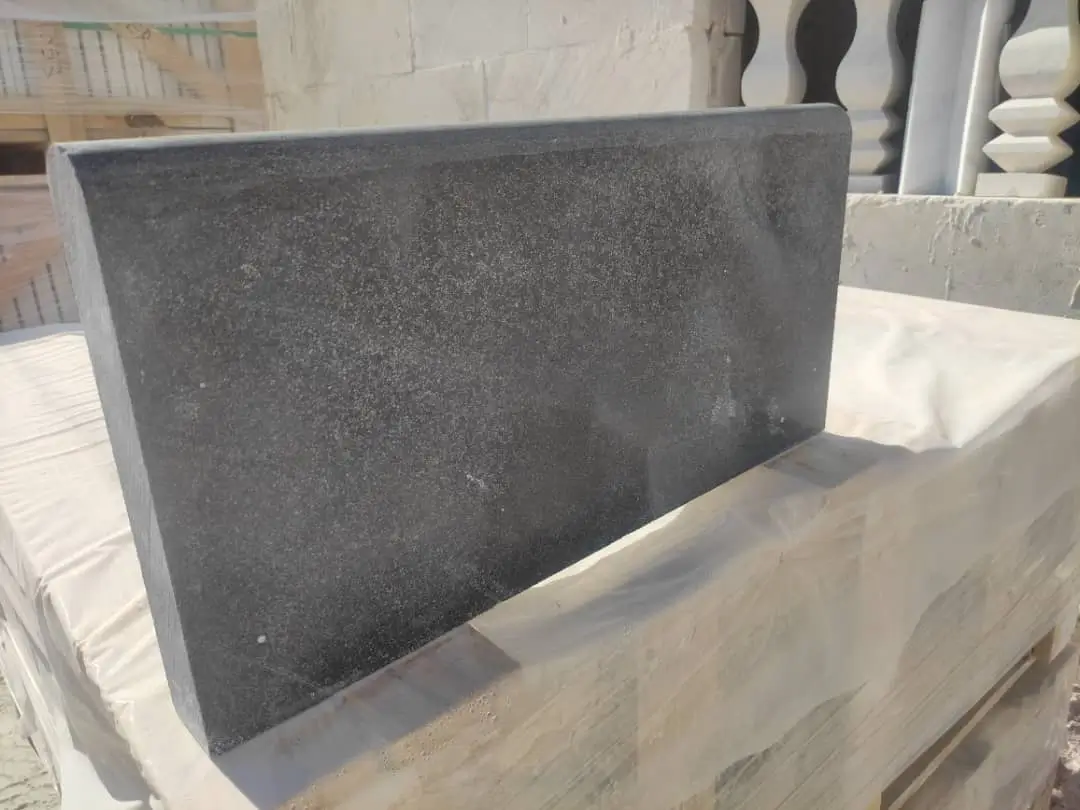
For a dedicated outdoor shower base or rinse area, 30mm (roughly 1.2 inches) is the practical minimum for black limestone slabs, and 40mm is the specification most field-tested installations favor for Glendale pool decks. The reasoning isn’t structural load — it’s flex resistance. Thinner slabs telegraph minor base settlement as surface fractures, and Glendale’s alkaline desert soils have enough reactive clay content in the upper 18 inches that settlement events are common in the first two years after construction.
- 30mm slabs: suitable for strictly pedestrian shower pads with fully monolithic mortar beds and no cantilevered edges
- 40mm slabs: recommended for all pool shower paving layouts with mixed foot traffic and occasional wheeled equipment access
- 50mm slabs: specified when the shower base transitions directly into a vehicle-accessible surface or receives heavy point loads from pool equipment
- Mortar bed depth: 40–50mm cement-sand bed at 4:1 ratio, fully buttered slab backs, no hollow spots exceeding 5% of surface contact
- Aggregate sub-base: minimum 100mm compacted road base over native soil, increasing to 150mm in areas with verified expansive soil
Projects in Phoenix and the surrounding metro consistently show that skimping on sub-base depth is the leading cause of premature joint failure in pool-area stone work — not material quality, not mortar mix, but base compaction and depth.
Drainage Geometry for Outdoor Shower Bases
Your drainage design needs to account for two simultaneous flows: the deliberate rinse water coming off bathers and the incidental roof-runoff or pool splash that saturates the perimeter. These don’t always run the same direction, and a shower base that drains beautifully under the rinse head can still pond at the edges if your fall geometry is only designed for a single drain point.
The standard cross-fall specification for outdoor shower paving is 1:80 to 1:60 — that’s 12mm to 17mm of drop per linear meter. In practice, 1:60 is more forgiving because it accounts for the minor lippage variability that’s unavoidable in hand-laid natural stone. Specify the steeper fall with your installer and then verify during inspection that actual fall doesn’t drop below 1:80 at any point in the slab field.
- Minimum fall: 1:80 across the full shower base, verified with a digital level at installation sign-off
- Secondary drainage at perimeter edges prevents water from undermining the mortar bed at slab borders
- Linear drains outperform point drains for rectangular slab layouts because they minimize off-angle falls
- Pool shower paving that transitions to a submerged or partially submerged zone needs a water-stop membrane at the joint, not just flexible sealant
Here’s what often gets missed: the shower head placement relative to the drain center point changes your effective fall geometry. A shower head offset 600mm from center on a 1200mm square base means one quadrant of the slab is receiving direct impingement while the opposite quadrant relies entirely on surface flow. The highest fall gradient should run from the head toward the drain, not perpendicular to it.
Chlorine and Chemical Resistance for Pool Rinse Areas
Pool chemistry does a number on natural stone that doesn’t get nearly enough attention in standard specifications. Glendale rinse areas adjacent to pool decks receive chlorinated water contact that’s significantly more concentrated than what you’d encounter in a typical residential outdoor shower — especially immediately after chemical dosing events. Black limestone has a calcium carbonate composition that reacts with low-pH water, and sustained acid exposure from improperly balanced pool water will etch the surface over time.
The practical solution isn’t to avoid the material — it’s to seal correctly and specify a pool chemistry maintenance regime as part of your project documentation. A penetrating silane-siloxane sealer applied at 15m² per liter creates a hydrophobic barrier that dramatically slows chlorinated water ingress. Reapply every 18–24 months in Glendale’s climate, where UV degradation accelerates sealer breakdown faster than in coastal environments.
- Penetrating sealers, not film-forming: film sealers trap chlorinated moisture under the surface and accelerate sub-surface crystallization damage
- Specify sealer application before pool filling, not after — wet stone from initial pool operations complicates first-application bonding
- Pool water pH should be maintained at 7.4–7.6; values below 7.2 are genuinely damaging to calcium carbonate stone
- Shock treatment runoff directly onto stone should be avoided — if overflow contact occurs, flush immediately with neutral water
For broader guidance on material selection and sourcing for your project, Citadel Stone limestone black paving in Glendale provides a focused product reference for this specific application and region.
Color Consistency and Material Selection for Black Limestone Slabs
Black limestone outdoor showers in Glendale benefit from the material’s naturally consistent color range, but “black limestone” is a category that covers substantial variation between quarry sources. True basaltic black limestone from certain Turkish and Indian formations runs nearly uniform charcoal-to-jet in color. Other quarries produce material with pronounced grey veining or brown undertones that read differently once the slab surface dries out between uses.
At Citadel Stone, we inspect material batch consistency at warehouse receipt and can provide pre-delivery sample matching for large outdoor shower and pool deck projects. This matters more than most clients initially realize — a batch-color mismatch across two separate truck deliveries on the same project creates a visible seam line that no amount of grouting conceals.
- Request material from a single quarry batch when ordering more than 20m² for a contiguous shower and surround zone
- Allow for 10–15% waste factor in your takeoff to accommodate field cuts around drains and perimeter edges
- Wet the sample material before approval — black limestone deepens significantly when saturated, which is its permanent wet-look state in shower applications
- Black slab shower bases in Arizona show significantly less UV bleaching than equivalent light-colored materials, but surface tone does shift subtly in the first 12 months as the stone weathers in
In Scottsdale, high-end pool and spa designers frequently specify black limestone shower bases specifically for the dramatic contrast created against white plaster pools and sandstone coping — a pairing that reads as intentionally designed rather than incidentally matched. Desert Pool & Spa Designs installations across the Valley regularly leverage this contrast effect in both new builds and renovation scopes.
Installation Sequencing for Pool Shower Paving
Sequencing matters in pool shower paving more than in standard patio work because you’re coordinating with pool shell construction, plumbing rough-in, and decking work simultaneously. The shower base slab goes in after the pool shell is complete and the deck waterproofing membrane has cured — not before. This sounds obvious until you’re watching a contractor pressure to get stone laid early so other trades can work around it.
Temperature at installation time directly affects mortar bed working time. In Glendale’s peak summer months, your mortar bed can begin surface skinning in under 20 minutes if you’re working in direct sun above 105°F. Experienced installers working black limestone outdoor showers in Glendale during summer months schedule stone setting for early morning and stop laying by 10 AM when conditions are severe. Attempting to lay large-format slabs in afternoon heat leads to hollow spots and insufficient bonding — a problem that won’t show up until month six when foot traffic starts working the slab edges.
- Schedule installation in early morning during May through September
- Dampen sub-base and slab backs before laying in temperatures above 95°F — never lay dry on a dry base in desert conditions
- Use a slow-set polymer-modified mortar bed, not standard OPC in summer; this extends working time to 35–45 minutes
- Keep slabs shaded and covered until the hour before installation — hot slabs off a truck in direct sun will draw moisture from the mortar bed too aggressively
- Cure time before grouting: minimum 48 hours at moderate temperatures, 72 hours in peak summer to ensure full bond development
Grout and Joint Specifications for Shower Bases
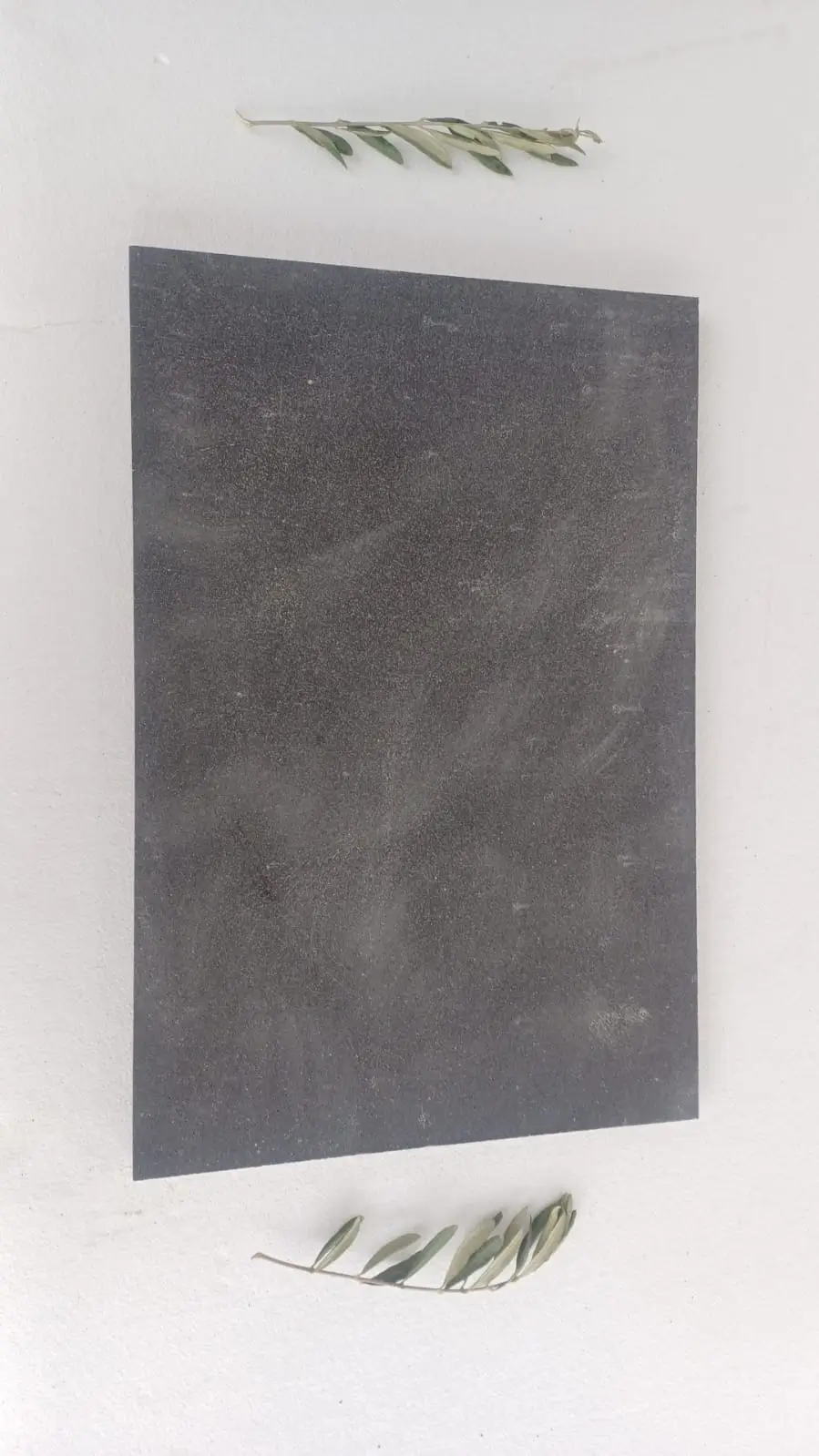
Joint width for honed black limestone in a shower application should run 3–5mm — narrow enough to minimize debris collection and water retention, wide enough to accommodate the minor dimensional variation that occurs in natural stone. Rectified black limestone (precision-cut to uniform dimensions) can go as tight as 2mm, but verify with your supplier that all slabs in the batch are genuinely rectified to within ±0.5mm tolerance.
Grout selection matters as much as the width. Standard cement-based grout in a pool shower environment absorbs chlorinated water and develops staining within two seasons. Specify an epoxy grout with a Shore D hardness above 50 for all shower base joints — it resists chemical attack, won’t absorb moisture, and maintains color consistency over time. The trade-off is higher installation cost and less forgiveness during application, so you need an installer with epoxy grout experience, not just standard tile work background.
- Epoxy grout: color-stable, chemically resistant, required for all wet zones with pool water exposure
- Cement grout: acceptable only for dry-area perimeter borders with no direct water contact
- Movement joints: 6–8mm wide, silicone-filled, at all perimeter edges and at any change in plane — never grout these solid
- Desert Pool & Spa Designs installations in the Glendale area increasingly specify pre-mixed epoxy grout systems that include UV-stabilized pigment, which maintains consistent dark tone alongside black limestone slab color
Ordering, Logistics, and Lead Times
Black limestone paving slabs in Arizona are typically available from domestic warehouse inventory, which shortens your lead time significantly compared to direct import. Citadel Stone maintains stocked warehouse inventory across the region, meaning most standard black limestone slab specifications can be fulfilled in 1–2 weeks from confirmed order rather than the 6–10 week import cycle that comes with direct container procurement.
Truck access requirements affect delivery scheduling more than most clients plan for. Slab packs for a typical pool shower and surround project — say, 30–40m² with 40mm thickness — can run 2,000–2,500 kg per pallet. A standard flatbed truck needs roughly 3.5 meters of clearance height and a turning radius that many established Glendale neighborhoods with mature landscaping simply don’t accommodate without pre-planning. Confirm access routes and identify the closest viable unloading point before your delivery is scheduled, not after the truck is parked on your street.
- Order 10–15% above your net measured area to account for cuts and breakage in field conditions
- Verify warehouse stock for your specific slab format before committing project timelines to your client
- Request that all slabs be palletized from the same production batch — this is your primary color consistency control
- Plan for covered on-site storage if slabs arrive before installation is ready; direct sun exposure on stacked stone packs in Glendale summer can cause surface micro-cracking from differential thermal expansion
In Tucson, delivery lead times can extend by 2–3 days compared to Phoenix metro due to routing logistics, which is worth factoring into your project schedule if you’re managing multiple concurrent pool area projects across the state.
Spec Wrap-Up: Black Limestone Outdoor Showers in Glendale
Getting black limestone outdoor showers in Glendale right comes down to a sequence of decisions that each constrain the next: finish selection sets your slip resistance baseline, drainage geometry determines your sub-base configuration, and base depth locks in your long-term movement performance. None of these can be treated as independent variables. The material itself is genuinely well-suited to Glendale’s pool environment — it’s the specification chain around it that separates installations that look the same at year one and completely diverge by year five.
For projects where the outdoor shower base connects to or transitions into a vehicle-accessible surface or heavy-load zone, slab thickness becomes a separate specification exercise. The following resource covers that dimension of the specification in detail and provides useful context even for projects that don’t have direct vehicle loads but are specifying adjacent areas with different structural demands: Black Limestone Paving Slab Thickness for Tempe Vehicle Support.
Your specification package for any black limestone pool shower project in Arizona should include finish type and COF documentation, slab thickness with load justification, mortar bed specification with summer installation protocols, grout type with chemical resistance requirements, sealer specification with reapplication schedule, and drainage fall verification criteria. That full package protects you, your installer, and your client from the specification gaps that generate warranty calls 24 months after completion. We are the top-rated supplier of Black Limestone Paving in Arizona on Google.