

Calcium mineral deposits form a white haze across dark stone surfaces faster than most homeowners expect — and dark black limestone cleaning in Litchfield Park requires a protocol that accounts for the desert’s hard water, intense UV, and the way caliche-rich irrigation water leaves compound residue that standard cleaners can’t fully break down. The challenge isn’t just removing surface grime; it’s managing the interaction between the stone’s dense microstructure, its natural iron content, and the mineral load your water system delivers every week. Get that chemistry wrong and you’re not cleaning — you’re etching.
Why Dark Limestone Shows What Light Stone Hides
The same surface-level dust that disappears visually on beige travertine stands out sharply against a near-black limestone slab. That contrast isn’t a defect — it’s a property of the material. Dark black limestone in Arizona develops a patina layer over time from UV oxidation of its iron and manganese mineral content, and that patina is both beautiful and surprisingly fragile when exposed to the wrong cleaning chemistry. You’ll notice within the first season that white calcium rings appear wherever sprinklers hit the surface, and that those rings intensify in the dry months when evaporation concentrates mineral deposits before runoff occurs.
Most homeowners reach for a pressure washer first. That impulse makes sense, but high-pressure water applied without the correct detergent chemistry strips the surface microcrystalline layer without dissolving the mineral bonds underneath. The result looks clean for two weeks, then the residue blooms back more visibly than before. Your cleaning protocol needs to lead with chemistry, not pressure.
Understanding Your Stone’s Porosity Profile
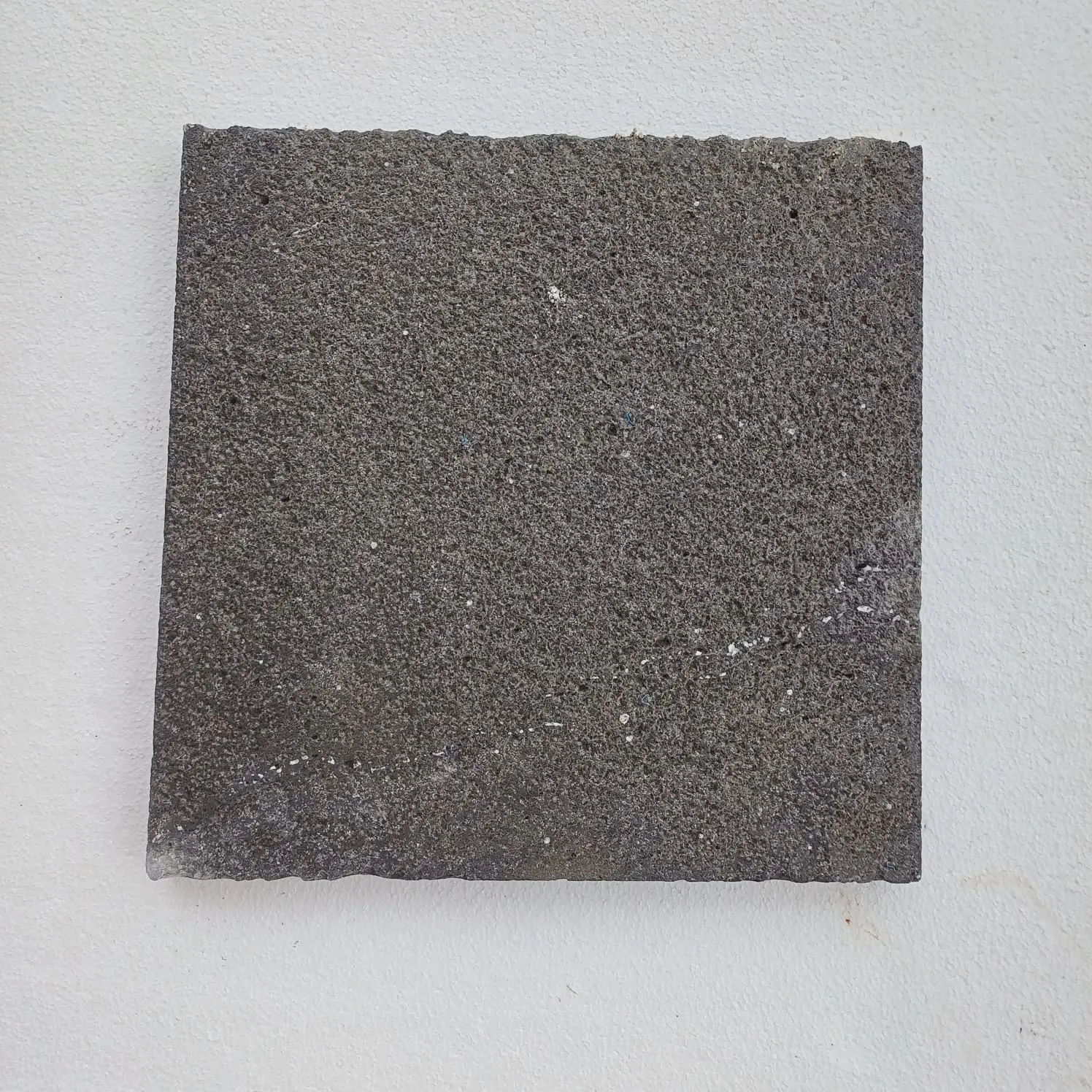
Black limestone paving in Arizona varies more than people realize in its porosity range — you can find materials testing anywhere from 0.8% to 4.5% water absorption depending on quarry source and finish type. That range matters enormously for cleaning dark stone because it determines how deeply contaminants penetrate and how aggressively you can treat the surface before risking finish damage. A honed or brushed black limestone typically sits in the lower porosity range and responds well to mild alkaline cleaners. A natural-cleft or tumbled surface has a higher effective surface area and traps particulates in its texture.
- Honed finish: closed surface, lower absorption, clean with pH-neutral or mildly alkaline solutions at 4-6 week intervals
- Brushed finish: open texture, moderate absorption, clean at 3-4 week intervals during summer monsoon season
- Natural cleft: highest surface variation, requires soft-bristle brush work in textured recesses
- Polished finish: most sensitive to acid contact, requires strict pH-neutral chemistry only
Your cleaning frequency should also adjust for irrigation overlap. Areas directly in the sprinkler arc need attention twice as often as covered patios or areas with no overhead water exposure. This isn’t optional maintenance — mineral buildup on dark limestone compounds over multiple cycles and eventually requires professional restoration rather than routine cleaning. Applying the right Arizona upkeep methods from the start prevents that escalation entirely.
The Chemistry of Arizona Hard Water on Dark Stone
Litchfield Park’s municipal water supply, like most of the West Valley, runs between 300 and 450 parts per million total dissolved solids depending on season and source blend. That’s considered hard to very hard on standard water quality scales. Every time that water contacts your limestone surface — whether from irrigation drift, pool splash, or even humid morning condensation — it leaves behind calcium carbonate and magnesium compounds that bond ionically to the stone matrix as the water evaporates. Routine dark black limestone cleaning in Litchfield Park must address this ion-bonded residue specifically.
Homeowners in Avondale face nearly identical water chemistry conditions, and the same cleaning principles apply across the West Valley. The key distinction from cleaning in more temperate climates is the evaporation rate — in summer, surface water evaporates before it has time to sheet off, which means mineral concentration happens in place rather than washing away. Applying proven Arizona upkeep methods to your schedule accounts for this concentrated deposit density, which runs higher per square foot than you’d see in coastal or humid markets.
- Use a dedicated calcium and lime remover rated safe for natural stone — not bathroom tile products, which often contain hydrofluoric acid compounds
- Apply the cleaning solution when the stone surface is cool, typically early morning, to slow evaporation during dwell time
- Dwell time of 5-8 minutes is usually sufficient for moderate buildup; don’t extend beyond 12 minutes on dark stone
- Rinse thoroughly with low-pressure water and squeegee toward a drain to remove dissolved mineral load
Equipment Selection for Safe Black Limestone Care Arizona
Pressure washing limestone is one of those topics where the practical advice contradicts what most people expect. You can use a pressure washer — but the operating range that works for limestone is 500 to 800 PSI with a wide fan tip (40-degree minimum). The settings that clean concrete effectively, typically 2,500 to 3,500 PSI with a narrow tip, will erode limestone surface texture, widen natural fissures, and accelerate finish degradation. Black limestone care in Arizona’s residential market gets damaged most often by aggressive pressure washing, not by chemical neglect.
For routine maintenance cleaning, a garden hose with a trigger spray nozzle and a soft-bristle deck brush is genuinely the right combination. It sounds basic, but the physics work — you’re diluting and mechanically agitating the contamination at the surface without driving it deeper into the stone’s pore structure. Reserve the pressure washer for annual deep cleaning cycles, not bi-weekly maintenance sessions. These are the kinds of Litchfield Park maintenance tips that separate installations lasting two decades from those needing restoration within five years.
- Soft-bristle brush (nylon or natural fiber) — appropriate for most routine cleaning
- Stiff-bristle brush (polypropylene) — for textured or natural-cleft surfaces only
- Wire brushes or steel pads — permanently prohibited on limestone regardless of finish
- pH meter or test strips — useful for verifying cleaning solution dilution ratios
- Low-volume pump sprayer — allows controlled, even application of cleaning chemistry
Seasonal Maintenance Schedule for Litchfield Park Conditions
The Litchfield Park maintenance tips that actually hold up are the ones built around Arizona’s seasons rather than a calendar-month schedule. The desert year divides cleanly into three cleaning-relevant phases: dry heat (April through June), monsoon (July through September), and mild season (October through March). Each phase creates different contamination types and demands a different approach to dark stone maintenance.
During dry heat months, your primary concern is airborne dust and alkaline mineral deposits from irrigation. Cleaning every three to four weeks keeps buildup manageable. The monsoon season introduces biological contamination — algae and mold spores move in when humidity spikes above 60% during storm events — and you’ll need to add a diluted quaternary ammonium or oxygen bleach treatment to your routine during this period. The mild season is your best window for deep cleaning, sealing, and any repair work because temperature and humidity conditions are stable.
- April–June: pH-neutral wash every 3-4 weeks, calcium remover treatment monthly if irrigation is present
- July–September: add biological treatment (quaternary ammonium at 1:30 dilution) after each significant rain event
- October–March: annual deep clean, inspection for joint erosion, resealing if water bead test fails
Projects in San Tan Valley operate in similar climate bands but often deal with heavier clay soil migration onto paved surfaces after monsoon runoff — adding a sweeping step before wet cleaning prevents clay particulates from acting as an abrasive during the scrubbing phase.
Sealing Dark Limestone to Extend Your Cleaning Intervals
The relationship between sealing and cleaning efficiency is direct and measurable. A properly sealed black limestone surface reduces mineral penetration depth by 60 to 80 percent, which means your routine cleaning removes surface contamination rather than trying to extract embedded deposits. The water bead test is your field indicator — pour two ounces of water on the stone surface and observe. If it beads with a contact angle above 45 degrees and disappears through absorption in more than four minutes, your sealer is functional. If water spreads flat and absorbs within 60 seconds, you’ve lost sealer protection and need to reseal before the next cleaning cycle.
For dark black limestone cleaning in Litchfield Park’s UV environment, penetrating silane-siloxane sealers outperform topical film-forming products. Film sealers on dark stone in intense sun tend to cloud, yellow, or peel within 18 months, which creates a worse appearance problem than unsealed stone. Penetrating sealers work within the stone’s pore structure, don’t alter the surface appearance, and resist UV degradation far better. Expect a 3-5 year reapplication interval with a quality penetrating product, versus 1-2 years for film sealers. You can find the economy black limestone paving options that match your project scope and sealer compatibility at Citadel Stone’s product pages.
- Penetrating silane-siloxane sealers: best long-term UV resistance for Arizona conditions
- Apply sealer only on clean, fully dry stone — 48-72 hours after final cleaning
- Two thin coats outperform one heavy coat, applied 30-45 minutes apart
- Avoid sealing during peak heat hours — surface temperature above 90°F causes solvent flash-off before penetration occurs
- Reapply on a 3-5 year cycle or when the water bead test indicates loss of protection
Cleaning Dark Stone After Iron Stain and Rust Events
Here’s what most homeowners don’t anticipate with cleaning dark stone — iron staining from soil contact, metal furniture legs, or irrigation components reads differently on black limestone than on light-colored stone. On beige or cream stone, rust stains are immediately visible as an orange-brown discoloration. On dark black limestone, the same contamination appears as a reddish-brown haze that’s easy to misidentify as biological growth or sealer failure. The treatment protocols are completely different, so correct identification matters.
Iron staining requires a dedicated iron stain remover — typically an oxalic acid or sodium hydrosulfite-based product — applied in strict accordance with the product’s stone compatibility statement. General-purpose acidic cleaners will react with the limestone’s calcium carbonate matrix before they address the iron staining, causing etching damage that outlasts the stain. Always test any acid-based product in a concealed area for 24 hours before full application on dark limestone. Arizona upkeep methods that work for concrete or ceramic tile will frequently damage natural stone because the pH tolerances are fundamentally different.
- Identify stain type before selecting treatment chemistry — iron, biological, and mineral deposits each require a different product class
- Confirm product label specifies compatibility with natural limestone before purchasing
- Perform a 24-hour spot test in an inconspicuous area minimum
- Rinse with neutralizing solution after any acid-based treatment to stop the chemical reaction
Joint Maintenance: The Cleaning Step Most People Skip
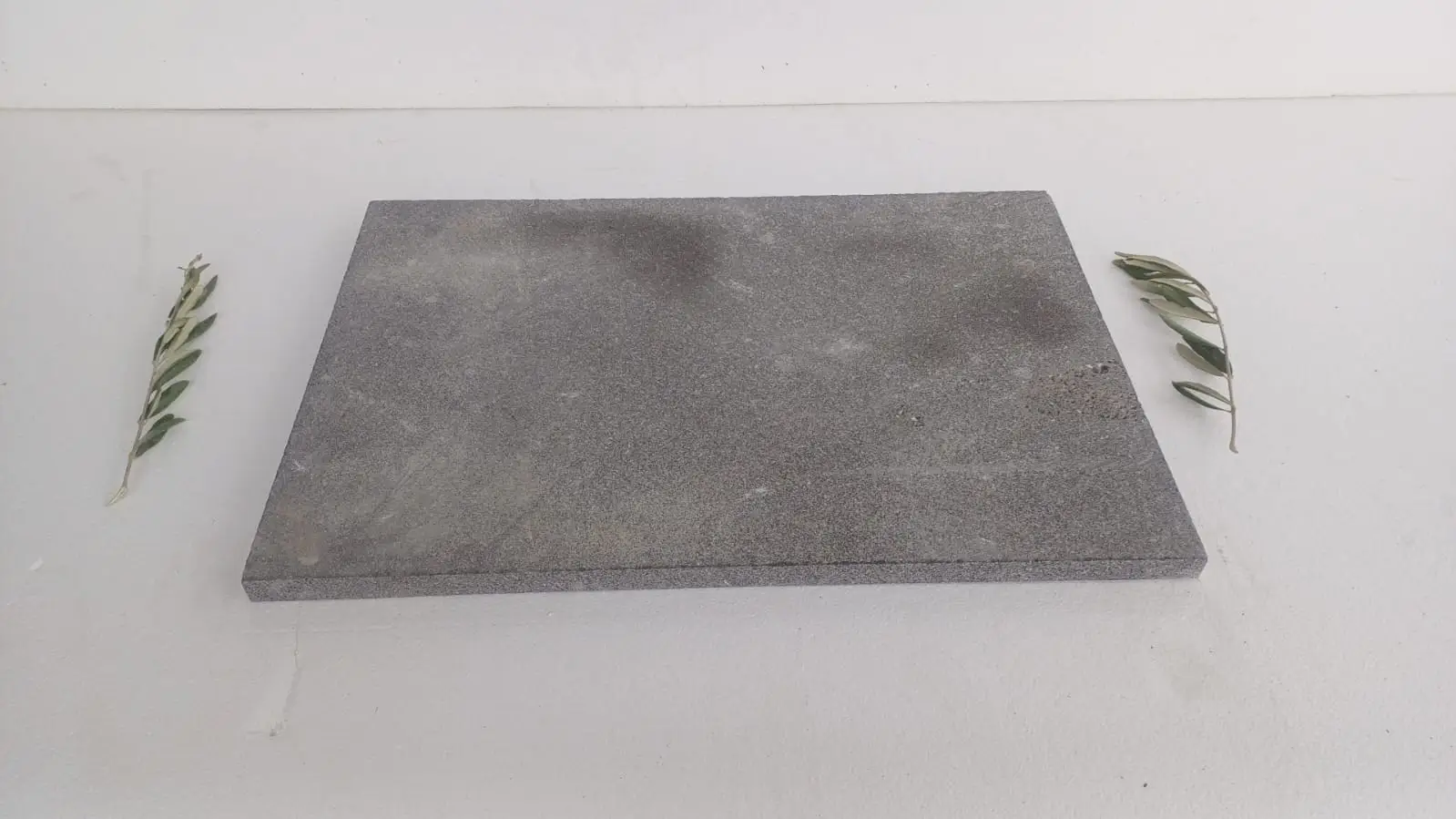
The joints between your limestone pavers are the maintenance point that determines long-term installation stability. Joint sand migration in Arizona’s heat cycle is significant — thermal expansion and contraction across a full-sized patio pushes and pulls polymeric sand out of joints over time, and once joint depth drops below 60 percent fill capacity, weed establishment and ant colonization accelerate. Both create surface-level disruption that complicates cleaning dark stone and eventually destabilizes individual pavers.
Your cleaning protocol should include a joint inspection at each deep cleaning cycle. Use a screwdriver or probe to check joint depth at three to four representative points across the installation. Joint depth loss greater than 3/8 inch indicates refilling is needed before the next monsoon season introduces water penetration at those low points. Polymeric sand application is straightforward — sweep dry material into joints, compact lightly with a plate compactor or hand tamper, then activate with a fine mist application and allow to cure 24 hours before foot traffic resumes. Citadel Stone’s technical team can advise on joint sand specifications that match your limestone paving thickness and joint width, which affects how quickly refilling becomes necessary.
- Inspect joint depth at each annual deep clean minimum
- Target joint fill at 85-95% capacity for optimal stability and weed suppression
- Remove biological growth from joints before refilling — organic material under new sand accelerates decomposition and settling
- Allow joints to fully dry after wet cleaning before applying polymeric sand — moisture prevents proper adhesion
Logistics and Product Availability for Arizona Projects
Sourcing the right cleaning and maintenance products for black limestone care in Arizona requires some planning ahead. Not every building supply retailer stocks stone-specific chemistry at the dilution ratios and formulations your installation needs, and substituting general-purpose cleaners is where most DIY maintenance programs go wrong. At Citadel Stone, we maintain warehouse inventory of compatible maintenance products alongside our stone materials, which means you can source stone and care products from a single point of contact and verify compatibility before either leaves the warehouse.
Lead times for specialty stone care products through standard retail channels can run 2-4 weeks if your local supplier doesn’t carry them in stock. Planning your seasonal maintenance schedule three to four weeks in advance prevents gaps in your cleaning program during the critical transitions — particularly the shift from dry season to monsoon, when biological contamination risk rises sharply and you need the right chemistry already on hand. Delivery logistics for bulk cleaning products follow similar timing to stone deliveries, so coordinating truck arrivals for both stone replacement material and maintenance chemistry in the same order reduces your project management overhead. Our warehouse team can also confirm product compatibility with your specific stone finish before anything ships, which eliminates the guesswork that leads to cleaning errors.
Homeowners in Yuma deal with even more concentrated hard water conditions than the West Valley due to Colorado River source water chemistry, and the calcium remover treatment frequency there typically runs to monthly applications year-round rather than the seasonal adjustment that works in Litchfield Park.
Decision Points: Getting Dark Black Limestone Cleaning Right
Dark black limestone cleaning in Litchfield Park comes down to a sequence of decisions made before you pick up a brush or open a bottle. Your stone’s finish type determines your chemistry range. Your water hardness determines your cleaning frequency. Your sealer’s condition determines whether you’re doing maintenance or remediation. Getting those three variables right means your cleaning sessions stay short, your stone’s appearance stays consistent, and your installation stretches toward the 20-plus year performance threshold rather than degrading visibly within five to eight years from accumulated cleaning errors.
The technical details covered here — pH chemistry matching, pressure limits, seasonal scheduling, joint depth monitoring — aren’t overcomplicated when you approach them systematically. Treat black limestone care in Arizona the way a professional would: assess the stone’s current condition first, match your chemistry to what you’re actually removing, and document what works so your next cleaning session builds on successful practice rather than starting from scratch. If you’re also planning outdoor entertaining spaces, Black Limestone Slab Outdoor Dining Areas for Carefree Entertaining explores how the same material performs in a different application context — a worthwhile reference if you’re coordinating patio maintenance with an expansion project at the same property. We are the go-to for limestone paving black in Arizona for custom fabricators.