
Black limestone stain resistance in Peoria comes down to one factor most homeowners overlook entirely — the stone’s absorption rate at the time of installation, not just its nominal porosity rating. Freshly cut black limestone can absorb surface contaminants within 8 to 12 minutes of contact if left unsealed, and in Peoria’s outdoor cooking and entertainment culture, that window closes fast. Understanding exactly how this material responds to grease, tannins, iron oxide, and organic pooling gives you a genuine performance roadmap rather than a vague promise of easy maintenance.
Why Black Limestone Stains Differently Than Other Paving Materials
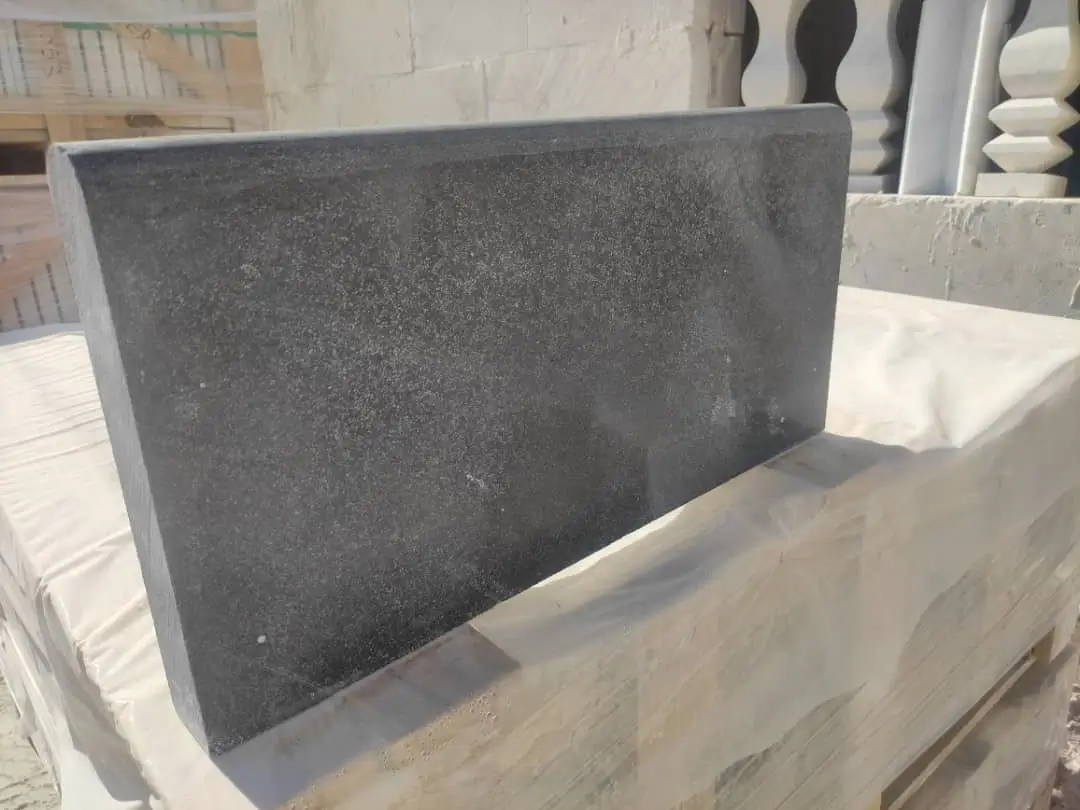
The deep charcoal and near-black coloration that makes this material so striking in outdoor living spaces also makes staining a more visible concern than it would be on lighter stone. Contrast is the enemy here — a grease splash on a cream travertine blends into the background, but the same splash on dark basaltic limestone creates an obvious discoloration. Your maintenance strategy needs to account for this visual sensitivity, not just the stone’s physical absorption characteristics.
Black limestone’s interconnected pore network typically registers between 2% and 5% porosity by volume, which sits in a moderate range compared to tumbled travertine at 8–12% or polished granite at under 0.5%. The pore geometry matters as much as the number — elongated capillary pores draw in liquids faster than rounded voids, and most black limestones from quarries in the Middle East and Southeast Asia tend toward capillary structures. This means a liquid spill wicks inward rather than beading, especially in the first few years before the stone’s surface has developed natural calcite sealing from mineral migration.
How Peoria’s Climate Amplifies Stain Risk
Arizona’s West Valley heat profile creates a specific stain amplification effect that you won’t read about in standard installation guides. Surface temperatures on exposed black limestone paving in Peoria regularly exceed 155°F during July and August peak hours. At those temperatures, cooking oils and barbecue drippings don’t just sit on the surface — they thermally thin and penetrate the pore structure in seconds rather than minutes, essentially becoming a heat-assisted infiltration event.
Seasonal monsoon moisture also plays a role that surprises many property owners. The rapid transition from bone-dry conditions to high humidity causes thermal shock across the stone’s surface that can microscopically widen existing pores. Projects in Peoria that sit through two or three monsoon seasons without resealing will show measurably higher stain uptake than freshly sealed installations, particularly in shaded areas where moisture lingers longer after storms.
- Grease and cooking oils represent the highest-risk stain category for outdoor kitchen settings — heat-assisted penetration makes them particularly aggressive
- Tannin staining from fallen citrus fruit and leaf decomposition creates organic brown discoloration that deepens over multiple seasons
- Iron oxide from nearby steel furniture or irrigation hardware produces rust-tone staining that requires acidic treatment — which itself can etch limestone if misapplied
- Hard water mineral deposits from Arizona’s high-alkalinity water supply create a gray-white haze on dark stone that reads as staining but responds to different chemistry
- Pool chemical splashback, particularly chlorine-based treatments, accelerates surface etching that creates rough zones with elevated stain retention
Stain Prevention Starts With Sealer Selection
The sealer decision is where black limestone stain resistance in Peoria projects gets either solved or compromised. You’re choosing between two fundamentally different protection philosophies — penetrating impregnators that occupy the pore structure and repel liquids from within, versus topical film-formers that create a sacrificial surface layer above the stone. For Arizona outdoor living applications, penetrating sealers almost always outperform topical coatings once you account for UV degradation and thermal cycling.
Fluoropolymer-based impregnating sealers rated for oil and water repellency (look for a contact angle above 100° in the technical data sheet) give you the best dual-phase protection in high-heat environments. These products don’t change the stone’s appearance when applied correctly at the manufacturer’s specified coverage rate — typically 150 to 200 square feet per gallon on moderately porous limestone. Solvent-based carriers penetrate more deeply in hot conditions than water-based formulations, which matters in Peoria’s summer installation windows when surface temperatures work against you.
- Apply sealer when stone surface temperature is below 90°F — early morning application in summer prevents premature evaporation and shallow penetration
- Two thin coats outperform one heavy coat — excess sealer on the surface creates a milky residue that’s difficult to remove from dark stone
- Allow 24 to 48 hours cure time before any foot traffic or furniture placement, extending to 72 hours in monsoon-adjacent humid conditions
- Reapplication frequency in Peoria’s UV environment averages every 18 to 24 months — the water bead test tells you when protection is declining before visible staining begins
For projects where you want budget-friendly black limestone paving that still performs at a high level, the sealer investment represents the highest-ROI maintenance decision you can make — proper sealing at installation typically prevents remediation costs that run 3 to 5 times the original sealer expense.
A Realistic Black Paving Maintenance Approach for Arizona
Routine cleaning chemistry matters more than most homeowners expect. Standard household cleaners, particularly anything alkaline above pH 10, can cause surface chalking on black limestone that strips the stone’s optical depth and creates permanent whitish hazing. Your Peoria dark stone cleaning protocol should use pH-neutral stone cleaners formulated specifically for calcium carbonate-based materials — not general-purpose deck cleaners, not diluted bleach, and definitely not vinegar or citrus-based products which bring their own acidic etching risks.
Black paving maintenance in Arizona works best on a weekly sweep-and-rinse schedule with a monthly pH-neutral wet clean during the outdoor living season. Address spills within 15 minutes when possible — grease stains that sit overnight in high-heat conditions may require poultice treatment rather than surface cleaning alone. A poultice made with diatomaceous earth and a compatible degreasing agent draws absorbed oils back to the surface through osmotic action, typically requiring a 24-hour application period covered with plastic sheeting.
Installation Details That Protect Long-Term Stain Resistance
The base system underneath your black limestone paving directly influences how staining and drainage interact at the surface. A well-constructed 4-inch compacted aggregate base over 4 inches of compacted native soil provides adequate drainage geometry for most Peoria residential projects, but the critical variable is slope — you need a minimum 1/8-inch-per-foot fall away from structures to prevent pooling. Standing water on black limestone doesn’t just enable biological growth; it creates sustained contact time that allows dissolved minerals and organics to penetrate beyond what any surface sealer can block.
Joint sand selection also affects stain prevention more than most installers acknowledge. Polymeric joint sand that cures to a semi-rigid mass resists weed intrusion and prevents the organic debris accumulation that feeds biological staining along joint lines. Standard silica sand joints can harbor moisture and organic material for extended periods, creating discoloration pathways that run along the joint edges — this produces the characteristic staining pattern where joints appear darker and more saturated than field tiles over time.
- Specify a minimum 20mm tile thickness for outdoor paving — thinner formats absorb more thermal stress per unit depth, which accelerates surface micro-fracturing and stain vulnerability
- Pre-seal the backs and sides of tiles before installation to reduce moisture wicking from the substrate through the tile body to the surface
- Install a drainage membrane under the aggregate base in clay-heavy soil zones to prevent hydrostatic pressure buildup after heavy rain events
- Use tile adhesive or mortar with a waterproofing additive when installing over concrete substrates — plain mortar bonds can transmit substrate moisture directly into the limestone
Comparing Stain Resistance Across Black Limestone Product Formats
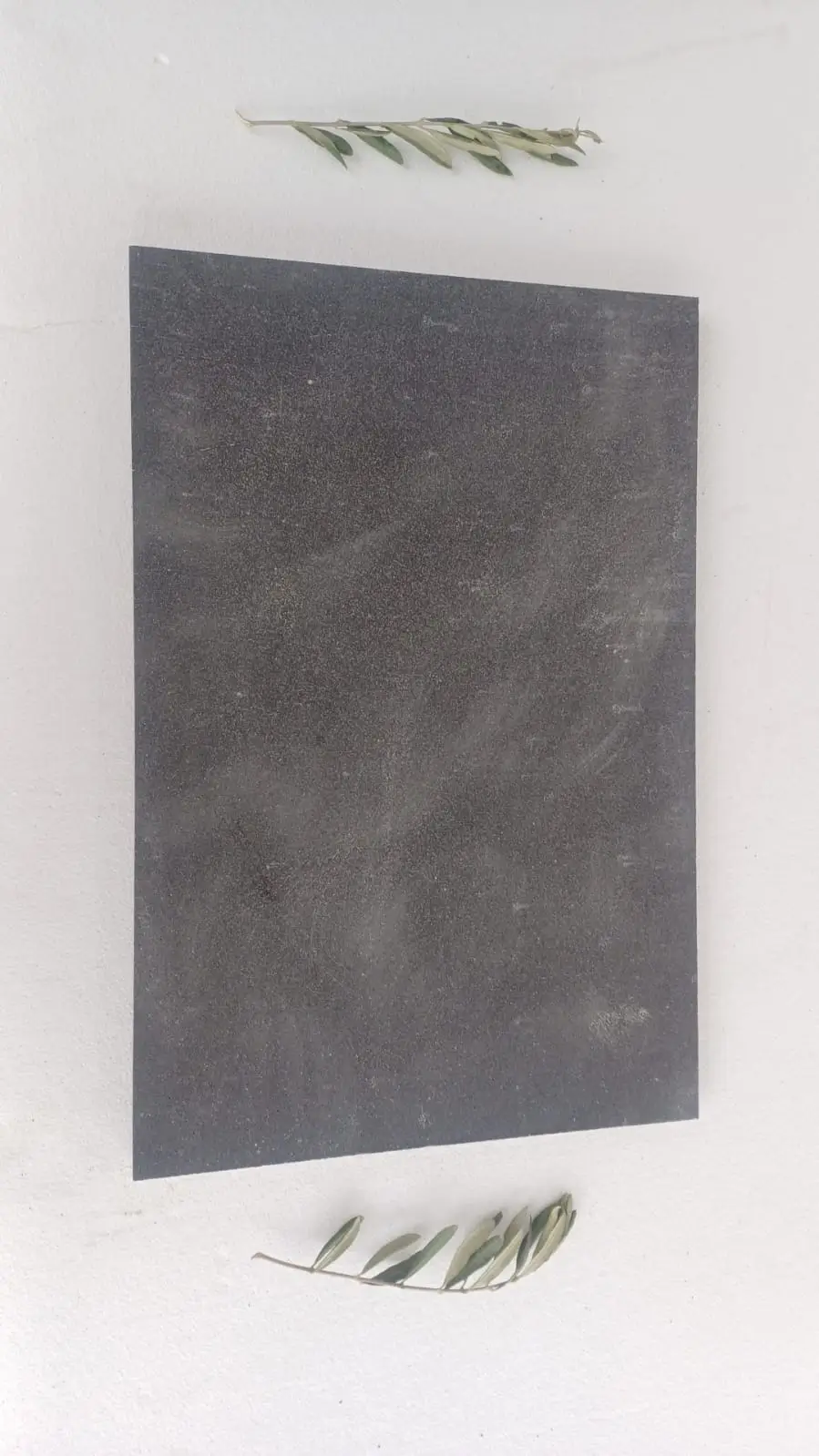
Black limestone paving Arizona projects encounter several product formats with meaningfully different stain performance profiles. Honed finishes — the most common specification for outdoor use — provide a matte, non-reflective surface with moderate porosity at the cut face. Flamed or bush-hammered finishes create textured surfaces with higher slip resistance but also higher exposed surface area, which translates to faster stain uptake if sealing is delayed. Brushed finishes sit in between, offering the most predictable sealing coverage per gallon because the surface irregularity is controlled.
In Mesa and neighboring West Valley communities with similar outdoor living profiles, honed black limestone in 24×24-inch formats has shown the most consistent field performance in residential installations — the larger format reduces joint frequency, which decreases total grout line exposure and limits the organic accumulation pathways that drive biological staining. At Citadel Stone, we inspect incoming shipments for surface finish consistency precisely because batch variation in honing depth can alter sealer absorption rates by 15 to 20%, which affects how you schedule your first maintenance cycle.
Handling Existing Stains on Dark Stone
Remediation approaches depend entirely on stain chemistry — misidentifying the stain type and applying the wrong treatment can permanently alter the stone’s surface. This is particularly unforgiving on dark limestone because etching and chemical damage reads clearly against the deep background tone. Effective Peoria dark stone cleaning in remediation scenarios requires matching the treatment chemistry precisely to the stain type before any product touches the surface.
- Oil-based stains respond to alkaline poultice treatment — acetone or mineral spirits as the carrier with an absorbent drawing agent, left in place for 24 to 48 hours
- Organic stains from leaves, citrus, or food residue respond to 12% hydrogen peroxide solution applied with a dwell time of 10 to 20 minutes, then neutralized and rinsed thoroughly
- Rust stains require an iron-specific stone-safe rust remover — avoid oxalic acid concentrations above 5% on limestone as etching risk increases sharply at higher concentrations
- Hard water mineral deposits respond to a diluted phosphoric acid solution (5% or less) applied carefully with a dwell time under 3 minutes and immediate thorough rinsing
- After any remediation treatment, allow complete drying before resealing — moisture trapped under a new sealer coat creates adhesion failure and optical hazing
The stain prevention category matters here: for projects in Gilbert and similar communities where outdoor kitchen use is intense and frequent, maintaining a stain response kit on-site — pH-neutral cleaner, poultice materials, and compatible spot treatment chemistry — is far more practical than waiting for a scheduled maintenance visit after damage has set.
Ordering, Logistics, and Arizona Easy Care Planning
Project timelines for black limestone paving need to account for warehouse availability and delivery scheduling, particularly for larger outdoor living installations where material consistency across the full job is critical. Lot variation between shipments can produce subtle color shifts that read noticeably on dark stone — ordering all material from the same production batch eliminates this risk. Citadel Stone maintains regional warehouse inventory in Arizona, which typically reduces lead times to 1 to 2 weeks compared to the 6 to 8 week import cycle most direct-import projects face.
Your truck delivery logistics also affect the installation timeline in ways that connect directly to stain resistance outcomes. Material that sits on pallets in direct sun exposure for extended periods before installation can develop surface bloom — a temporary whitish calcium carbonate migration that requires cleaning before sealing and can delay your protection timeline by several days. Scheduling truck delivery to align with your installation window, ideally with material stored in shade for no more than 48 hours before laying, keeps your surface preparation sequence on track.
- Order 10 to 12% overage beyond your calculated square footage to ensure consistent material from the same warehouse batch for repairs and replacements
- Confirm warehouse stock of your specific finish and thickness before finalizing your project schedule — 20mm honed black limestone in large formats can have 2 to 3 week lead times
- Plan your sealing application for within 5 to 7 days of installation completion — unsealed black limestone in Peoria’s outdoor conditions accumulates construction-phase soiling that requires pre-seal cleaning
- Factor in a minimum 3-day dry weather window after truck delivery and before installation to allow any transit moisture to fully dissipate from the stone
The Yuma market demonstrates how critical this planning discipline is — Yuma’s extreme low-humidity conditions accelerate drying times but also mean that any moisture trapped in the stone body during shipping creates differential expansion at the surface that can affect sealer adhesion. Checking stone moisture content with a surface meter before sealing is standard practice in desert-region installations, and it takes less than five minutes to do.
Your Action Plan for Black Limestone Stain Resistance in Peoria
Black limestone stain resistance in Peoria outdoor living spaces is fundamentally a specification discipline, not a material limitation. The stone performs exceptionally well when you pair the right sealer chemistry with correct installation detailing and a practical ongoing maintenance schedule — and it fails predictably when any one of those three elements is shortcut. Your biggest leverage points are the initial sealer selection, the joint system, and drainage slope, because those three factors govern almost every stain vulnerability pathway that field installations encounter.
Build your maintenance calendar before the project is complete, not after the first stain appears. Schedule your sealer reapplication for the 18-month mark and conduct the water bead test at 12 months to get ahead of any UV-driven protection loss. Keep your Arizona easy care cleaning chemistry stocked and pH-verified — it’s the single most common oversight that turns a preventable surface issue into a remediation project. As you plan related stone applications for your Arizona property, Black Limestone Paving Walkway Elegance for Glendale Entries covers complementary black limestone specifications that pair naturally with outdoor living area installations across the West Valley. At Citadel Stone, we supply black limestone paving solutions built for Arizona’s demanding outdoor conditions and long-term performance.